
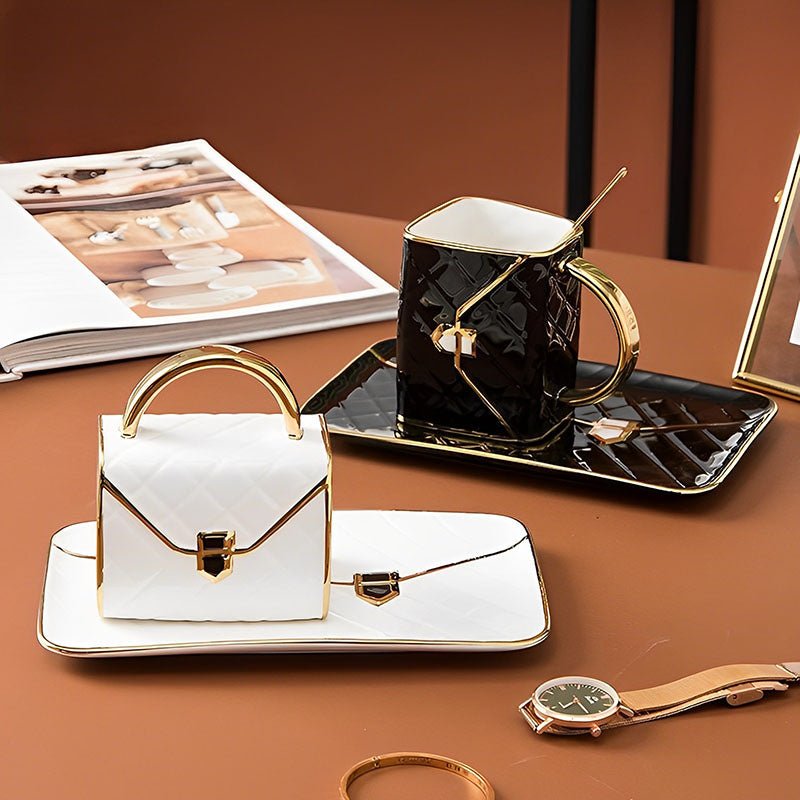
Ceramic Sculptural Mug Compact Kitchen Product Shortlist Guide: 3 Picks
Reading time: about 10 minutes
A mug can clear the cabinet opening and still become the piece nobody reaches for. Its handle crowds the next cup, its widest curve catches the shelf lip, or it cannot sit beside the coffee maker without taking over the work area. We built this ceramic sculptural mug compact kitchen product shortlist guide around those ordinary failures, using the verified capacities and forms of three mugs in our store.
This comparison is about three-dimensional ceramic form, not printed surface artwork. The Flow has a 400 ml capacity and sculptural curves, Ball Handle has a 250 ml capacity and rounded sculptural handle, and Handbag has a 310 ml capacity and purse-shaped silhouette. Exterior dimensions, stacking performance, and dishwasher or microwave compatibility are not included in the verified facts used here, so we will not infer them from capacity or appearance.
Why can the right capacity still be the wrong cabinet fit?
Capacity tells you how much a mug is listed to hold. It does not tell you how much shelf width the handle uses, where the silhouette reaches its widest point, or whether the mug can pass a cabinet door without turning sideways. Those differences matter more in a compact kitchen than they do on an open display shelf.
In our store, we separate liquid capacity from exterior footprint whenever we help shoppers compare sculptural mugs. The smallest-capacity option is not automatically the easiest one to store. A rounded handle may occupy space beside the body, while sculptural curves or a purse-shaped profile can create contact points that a straight-sided mug does not have.
- Cabinet test: Measure the usable height, width, and depth of the exact spot where the mug will live, with the cabinet door able to close normally.
- Widest-point test: Include the handle and every projecting part of the silhouette, not just the main ceramic body.
- Neighbor test: Check whether the mug can sit beside the cups, bowls, or jars that already use the shelf.
- Removal test: Make sure you can lift and turn the mug out without moving several other items first.
A sculptural mug earns its place when its form remains easy to reach and use. If the shape forces daily rearranging, a conventional cylindrical mug is the more practical purchase.
Which counter, shelf, and cleaning-space checks remove poor fits?
Start with the place the mug will spend most of its time, not the largest empty area in the kitchen. We often see shoppers evaluate a clear counter and forget that the mug will actually be stored in a crowded cabinet or left to dry beside the sink.
- Map the daily route. Check the path from storage to the coffee maker or kettle, then from the sink to the drying area. A form that works on the shelf can still be awkward under a low machine outlet or in a narrow drying space.
- Follow the cabinet door. A mug near the front of a shelf must stay clear of the door, hinges, and any raised shelf edge. Test that entire path rather than measuring a single flat surface.
- Account for the handle. The Ball Handle's rounded sculptural handle should be included in the footprint. Do not use its 250 ml capacity as proof that it occupies the least exterior space.
- Check the cleaning setup. If current care instructions permit dishwasher use, confirm that the sculptural form can sit without touching nearby dishes. If hand washing is required or preferred, leave enough drying space that projecting areas will not be bumped.
- Repeat the check at work. For an office mug, measure the usable desk or cupboard area and consider cables, notebooks, and shared storage before choosing on appearance alone.
How does a ceramic sculptural mug compact kitchen product shortlist guide compare three use cases?
The useful shortlist is not simply smallest to largest. Each recommendation below connects a normal drinking pattern to the verified capacity and sculptural feature, followed by a clear reason to skip it.
| Option | Verified capacity and form | Best match | Main reason to skip |
|---|---|---|---|
| The Flow | 400 ml with sculptural curves | Larger coffee or tea servings | The curved form has not been measured against your storage space |
| Ball Handle | 250 ml with a rounded sculptural handle | Smaller servings and shoppers who specifically want the handle form | Frequent refills or a handle that conflicts with neighboring items |
| Handbag | 310 ml with a purse-shaped silhouette | Mid-sized servings, visible shelving, or object-focused gifting | Dense cabinet rows or a preference for visually neutral drinkware |
Larger daily pour: The Flow 400 ml
The The Flow 400 ml sculptural mug has the largest listed capacity of the three. Choose it if your normal coffee or tea serving is too large for the other options and you would rather fill one mug than return for a refill. Its defining feature is the sculptural curve, so compare the widest visible part of that form with your intended shelf, counter, and appliance space before ordering.
Skip it if: you usually make a small drink, need confirmed stackability, or have not verified that the curved silhouette can share space with nearby dishes. Extra capacity does not help if the mug is too inconvenient to store.
Smaller serving with a distinctive grip: Ball Handle 250 ml
The Ball Handle 250 ml coffee and tea mug has the smallest listed capacity and a rounded sculptural handle. It belongs on the shortlist for a shopper who deliberately makes smaller servings and prefers that rounded handle form over a conventional loop. It can also make sense as a dedicated desk mug when frequent refilling is not a problem.
Skip it if: your regular drink approaches the capacity of the larger options or you need the mug to fit tightly beside straight-sided cups. The 250 ml figure describes liquid capacity, not total shelf footprint, so the rounded handle still needs its own clearance check.
Mid-sized drink and display value: Handbag 310 ml
The Handbag 310 ml sculptural mug sits between the other two capacities and uses a purse-shaped silhouette. Choose it when you want a mid-sized mug that also reads as a visible object on an open shelf. That combination can suit gifting, provided the recipient likes expressive drinkware and has somewhere practical to keep it.
Skip it if: the mug must disappear into a tightly packed cabinet, match a uniform row of round cups, or serve as neutral office drinkware. The purse-shaped profile is the point of the design, but that same feature makes storage planning more important.
Which capacity matches the drink you actually make?
Do not estimate your serving from the size of your current mug. Fill that mug to your normal level, transfer the liquid to a marked measuring jug, and compare the result with the three listed capacities. Leave room below the stated capacity if you carry the mug between rooms, add milk or foam, or use ice.
- Comfortably below 250 ml: Start with Ball Handle and decide whether the rounded handle suits your grip and shelf.
- Above 250 ml but comfortably within 310 ml: Handbag offers the middle capacity with the most explicitly object-shaped silhouette.
- Above 310 ml but comfortably within 400 ml: The Flow is the relevant larger-capacity option.
If you need a sealed lid for commuting or a high-volume iced drink, a purpose-built travel mug or tumbler is a better category. None of the verified product facts in this shortlist establishes a lid or travel function.
How should you inspect and care for sculptural ceramic?
Three-dimensional details create more edges and junctions to check during unboxing. Our team recommends inspecting a sculptural ceramic mug under good light before first use, especially if it is a gift that has traveled through parcel delivery.
- Look around the drinking rim, base, handle attachment, and outermost sculptural points for chips or hairline cracks.
- Set the empty mug on a flat, dry surface and check for unexpected rocking.
- Follow the current product label or care instructions before washing or reheating.
- Do not assume dishwasher or microwave compatibility from the ceramic material alone. Confirm the current product information or ask our store if the listing does not answer the question.
- If dishwasher use is permitted, position the mug so the handle or sculptural areas cannot knock against neighboring dishes during the cycle.
- For hand washing, use a soft sponge to reach curved transitions and give the mug enough drying space to avoid contact with metal utensils or other ceramics.
Ceramic can chip after impact, and projecting forms are natural contact points in a crowded sink or rack. A simpler mug will require less placement care if dishes are routinely stacked together or washed in a tightly loaded machine.
When is a conventional mug the smarter purchase?
Skip sculptural drinkware if stacking is non-negotiable, exterior dimensions must fit an exact space that you cannot verify, or several people share one crowded cabinet. A straight-sided mug may also be better if you care more about efficient storage than three-dimensional form.
The same applies to travel. If you need a sealed top, vehicle cup-holder fit, or impact-resistant construction, choose a product designed and listed for those jobs. These three options are being compared as ceramic coffee and tea mugs, not as travel vessels.
Which option survives a two-minute shortlist?
Use this ceramic sculptural mug compact kitchen product shortlist guide as an elimination tool. A product should remain on your list only if its capacity matches your drink and its defining form works in the space you measured.
- Name the exact cabinet, shelf, counter, or desk where the mug will live.
- Measure the usable space and include the door, shelf edge, neighboring dishes, and removal path.
- Measure your usual drink and compare it with 250 ml, 310 ml, and 400 ml.
- Choose the sculptural feature you genuinely want: rounded handle, purse-shaped silhouette, or flowing curves.
- Read the skip reason again. If it describes your kitchen, remove that option.
- Confirm current care instructions before ordering if dishwasher or microwave use affects your decision.
Frequently asked questions
How do I use a ceramic sculptural mug compact kitchen product shortlist guide for open shelves?
Measure the shelf's usable depth, width, and overhead clearance, then compare those figures with any current exterior dimensions available for the mug. Include the widest point of the handle or silhouette. Open shelves make sculptural form more visible, but they do not remove the need for secure placement and easy access.
Is the 250 ml Ball Handle automatically the smallest mug to store?
No. The 250 ml figure is its listed liquid capacity, while storage fit depends on the full exterior form. Its rounded sculptural handle may use space differently from the Flow's curves or the Handbag's purse-shaped silhouette.
Should I choose the 310 ml Handbag or the 400 ml Flow for daily coffee?
Choose according to your measured normal pour first. Handbag is the middle-capacity option at 310 ml and emphasizes a purse-shaped silhouette, while The Flow provides 400 ml and sculptural curves. Confirm the exterior form against your storage area after narrowing by capacity.
Are these ceramic sculptural mugs dishwasher and microwave safe?
Those compatibility claims are not part of the verified facts used for this shortlist. Check the current product page, packaging, or care label before using either appliance. If the information is unclear, ask our store rather than assuming that every ceramic mug has the same care requirements.
Which sculptural mug is the most practical gift for a compact kitchen?
Handbag is a strong candidate for someone who likes an object-shaped silhouette and uses a mid-sized 310 ml mug. Ball Handle suits smaller servings, while The Flow suits someone who prefers the larger 400 ml capacity. If you do not know the recipient's storage space or drink size, a simpler conventional mug may be the safer gift.
Measure the intended storage spot and your normal pour, then browse our unique coffee mugs collection. Compare only the forms whose skip reasons do not apply, and choose the capacity you will use most often.
More from our blog
Read more
Hot Toddy Mug Weekend Coffee Practical Purchase Checklist: 400 vs 480 ml
Measure your Saturday pour, compare verified 400 ml and 480 ml capacities, and assess handle fit without assuming insulation or care compatibility. This checklist maps common weekend routines to Th...
Read more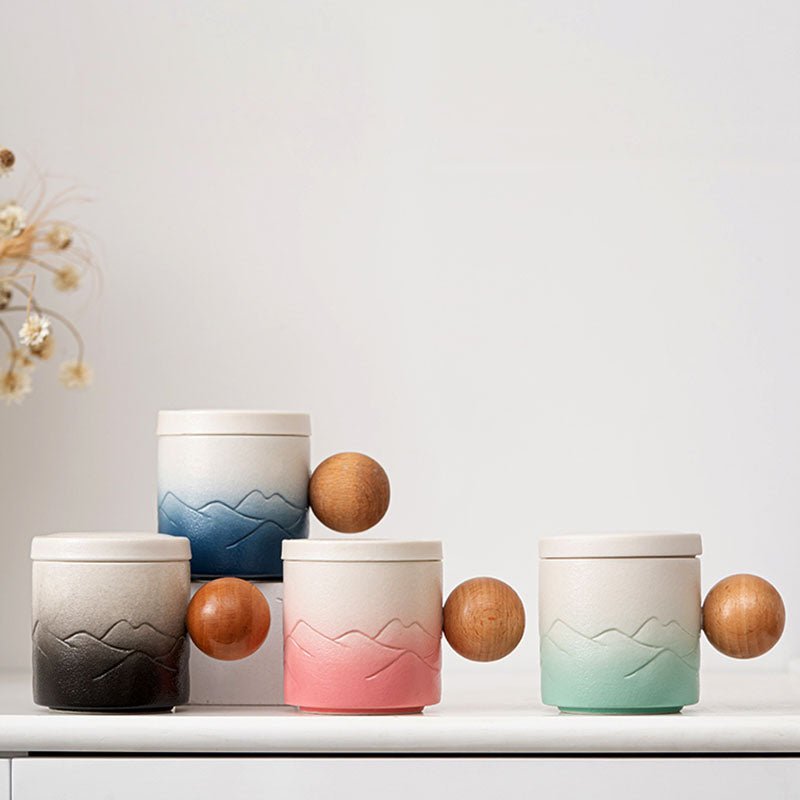
Piccolo Cup Compact Kitchen Product Shortlist Guide: 170, 250, 270 ml
Compare the Retro 170 ml, Ball Handle 250 ml, and Emerald 270 ml against real cabinet, counter, and pouring constraints. Each option includes clear reasons to choose it, skip it, or verify its exte...
Read more
Leave a comment
This site is protected by hCaptcha and the hCaptcha Privacy Policy and Terms of Service apply.