




Ceramic Mug Shapes Home Office Product Shortlist Guide
Reading time: about 10 minutes
Three mugs can crowd a laptop tray before 9 a.m.: a small cup left from a tea break, a mid-size mug from a meeting, and a large mug from a deep-work pour. This ceramic mug shapes home office product shortlist guide keeps the lens on those three moments—desk, meeting, and break—and avoids claims about portability or spill performance that a product photo cannot prove.
We sell and handle these mugs in our store, so we look at the same things buyers do: listed capacity, visible silhouette, handle clearance, rim feel, base footprint, and whether the interior is easy to wipe. For the three options below, the verified facts are the listed capacities: 200 ml, 250 ml, and 400 ml. Anything else—exact weight, base diameter, glaze test results, material—should be confirmed on the current product page before checkout.
How do desk, meeting, and break routines shape this ceramic mug shapes home office product shortlist guide?
The first useful split is cup versus mug, then capacity. FDA guidance describes cups as normally having curved sides and mugs as cylindrical sides; both are small ceramic hollowware normally used for hot drinks, normally around 240 mL (8 fl oz), and made with a handle. That is a definition, not a ranking. A curved cup and a straight-sided mug can both work on a desk.
For a home office, build the shortlist around three routines:
- Focused desk session: small listed capacity and a simple rim; less to manage while typing.
- Meeting mug: mid-size listed capacity and a handle you can verify for finger room.
- Break routine: larger listed capacity, but check spout clearance and base footprint.
If you are visually comparing a cylinder, belly, barrel, tapered latte cup, flared rim, diner mug, or handleless yunomi, use the same three checks. Our unique coffee mugs collection is the browse point for silhouettes; then narrow by capacity.
Why does the 200 ml Pleated cup suit short desk breaks but not a long meeting?
The Pleated Coffee and Tea Cup is listed at 200 ml. Using NIST's approximate conversion of 29.57 mL per fluid ounce, that is roughly 6.8 fl oz—smaller than the 8 fl oz reference point in the FDA mug description. That matters if your desk routine is a short coffee, a tea top-up, or a deliberate pause rather than a mug you nurse through a two-hour block.
The pleated body is the visible silhouette cue. It gives the cup a distinct look on an open desk, and the smaller listed capacity keeps the pour modest. In our experience, that is the kind of cup buyers reach for when they want a visible boundary between a quick break and a long work session.
Choose it if: you drink espresso-length coffee, make tea in small rounds, or want a desk cup that does not invite a giant pour.
Skip it if: you want one vessel for a full morning, regularly make a large latte, or need a handle you can hook with a full hand. The listing name says cup, not handled mug; check the current photos and dimensions before assuming handle clearance. If the pleats continue inside, ask how easy the interior is to wipe.
Is the 250 ml Ball Handle mug the safer middle for meeting-heavy days?
The Ball Handle Coffee and Tea Mug is listed at 250 ml—about 8.5 fl oz by the same conversion. That lands just above the FDA's 8 fl oz reference point, which makes it the middle option in this shortlist. For many home-office routines, the middle is the practical choice: enough room for a standard coffee or tea, not so large that every refill becomes a commitment.
The ball handle is the geometry to check. A rounded handle can be comfortable when the opening is sized for your hand, but only the listing photos and dimensions can tell you whether your fingers fit without scraping. We would not call a handle ergonomic from the product name alone. Check opening height, distance from the body, and handle thickness.
Choose it if: you want one mug for meetings, email blocks, and short breaks, and you are willing to verify handle clearance before buying. This is also the better starting point if you are choosing between a small cup and a large mug and do not want to overcorrect.
Skip it if: you routinely drink more than 250 ml in one sitting, or you have limited hand strength and need a handle with a clearly generous opening. A 400 ml mug or a different handle style may suit you better; do not force the middle size if the grip is wrong.
When does the 400 ml Flow mug earn desk space—and when should you skip it?
The Flow Coffee and Tea Mug is listed at 400 ml, roughly 13.5 fl oz. That is the largest listed capacity on this shortlist. It earns its place when the desk routine is long: a full coffee during a deep-work block, a tea session with fewer refills, or a break where you do not want to get up again.
The trade-off is the listed capacity. Four hundred milliliters is double the 200 ml cup here, so it suits a different pour size. Check the base footprint if your desk is tight, and check the height under your coffee machine spout if you brew directly into the mug. The capacity label does not establish either dimension, and the current photos are the place to confirm body profile and handle clearance.
Choose it if: you want fewer refills, you have open desk space, and you prefer a larger vessel for long coffee or tea sessions.
Skip it if: you work at a compact desk, use a low-clearance brewer, or your meeting table has little spare room. A 200 ml or 250 ml option is the better fit for a tight setup.
Which capacity math and cup-versus-mug labels should you check before buying?
Capacity labels are not interchangeable with cup names. The FDA wording separates a cup with curved sides from a mug with cylindrical sides, but shoppers use cup and mug loosely. Use the listed milliliter figure as the anchor, then convert it if you think in ounces.
| Option | Listed capacity | Home-office scenario | Reason to skip |
|---|---|---|---|
| Pleated Coffee and Tea Cup | 200 ml | Focused desk break, small coffee, tea top-up | Not a long-meeting or large-latte mug; verify handle |
| Ball Handle Coffee and Tea Mug | 250 ml | Middle-ground meeting and break mug | Verify handle opening; not for very large pours |
| The Flow Coffee and Tea Mug | 400 ml | Long coffee or tea session with fewer refills | Check spout clearance and desk footprint; not for tight desks |
NIST's household table treats 1 cup as 240 mL and 1 fluid ounce as about 30 mL in cooking contexts, while its approximate conversion uses 29.57 mL per fluid ounce. For a shortlist, the difference is small; the bigger risk is assuming that a 200 ml cup and a 400 ml mug serve the same routine.
What handle clearance, rim feel, and interior corners cause returns after week three?
In our store, the returns conversations rarely start with color. They start with handle clearance, rim thickness, and whether the interior is easy to wipe. A mug can pass the first-week look test and fail by week three because the handle pinches a finger, the rim feels awkward, or coffee residue collects in a corner.
- Handle finger room: check opening height and body clearance; a ball handle needs enough space for your usual grip, not just one finger.
- Rim comfort: a thick, rounded rim can feel different from a thin lip; if you are sensitive to drips, look for a clean pour edge rather than a decorative flare. We would not promise a drip-free pour from a photo.
- Interior corners: pleats, facets, and square shoulders can look great but create more places for residue; smooth rounded interiors are easier to wipe. If the pleats or facets continue inside, ask before buying.
- Base and stacking: a wide foot may be stable but take more shelf space; check whether the mug stacks upside down without the handle blocking the shelf.
- Dishwasher routine: shared-office dishwashing rewards simple shapes; delicate rims and narrow openings need more careful placement.
Food-contact safety belongs here too. FDA guidance sets a lead guideline of 0.5 micrograms per milliliter for ceramic cups and mugs and cites ASTM C738 among the test methods; the safety variable is glaze and firing, not silhouette. If a listing does not state food-use status or test results, ask before buying. We do not assign glaze or lead-test claims to the three products above in this article; confirm on each listing.
What should tea drinkers, iced-coffee drinkers, and shared-office dishwashers skip?
Tea drinkers often need a different shortlist from coffee drinkers. A wide opening can make a cup feel more approachable for aroma and cooling, but it also gives heat more room to escape; a narrower opening may hold warmth differently, yet it can be harder to clean. We would not crown one shape as the best tea shape without controlled side-by-side measurements of wall thickness, fill level, and opening area.
Iced coffee is another mismatch. A 400 ml mug may have the listed capacity, but a tall, narrow vessel with a lot of ice behaves differently from a small hot-coffee cup. Check the interior width if you plan to add ice, and do not assume a mug that fits a hot pour will be easy to spoon or clean.
Shared-office dishwashing favors fewer crevices, stable bases, and handles that do not hook onto other items. If your mug goes into a communal rack, skip heavily faceted or square bodies unless you are prepared to hand-wash more often. And if you need one mug for everything, the 250 ml middle is the safer compromise; choose the 200 ml only if small pours are the norm, and the 400 ml only if you have verified the space and clearance.
Frequently asked questions
Is 250 ml enough for a home-office coffee?
For many desk routines, yes: 250 ml is about 8.5 fl oz, just above the FDA's 8 fl oz reference point for a typical mug. It is not enough if you routinely drink 400 ml in one sitting; in that case, choose the larger listed capacity and check spout clearance.
Should I choose a cup or a mug for a desk?
Use the FDA distinction as a starting point: cups normally have curved sides, while mugs have cylindrical sides. Neither is automatically better for a desk. Choose the shape that matches your pour size and the handle you can verify for finger room.
How do I check handle clearance before buying?
Look for opening height, distance from the body, and handle thickness in the listing dimensions or photos. If those details are missing, ask the seller. A ball handle can look generous but still pinch if the opening is small.
Does mug shape keep coffee hotter?
Do not rely on silhouette alone. More surface area and thinner walls increase conductive heat flow, and an open top adds evaporation that a lid removes. Shape, wall thickness, fill level, and time on the desk all matter together.
Which mug should I start with if my desk routine is mixed?
Start with the 250 ml middle, then use this ceramic mug shapes home office product shortlist guide to check handle clearance, rim comfort, and interior cleanup. If you mostly make small pours, size down; if you want fewer refills and have the desk space, size up to 400 ml. Compare the three listed capacities in our unique coffee mugs collection before you commit.
More from our blog
Ready to pick your mug? Two ways to save on today's order:
Ordering 1–3 mugs? Get an extra 10% off your 1st order with code 10_OFF Apply 10% Off & Shop Wooden-Handle Mugs →
Gifting 4+ mugs? Buy 3, Get the 4th Free applies automatically at checkout (no code needed; offers do not stack) · Free standard shipping (Nov pre-Christmas delivery: 15–20 calendar days US) · Free replacement if chipped in transit.
Popular mug buying guides: Ceramic Tea Cups & Infuser Mugs · Ceramic Mugs with Lids Compared · Wooden-Handle Tea Infuser Mugs Compared · Christmas & Secret Santa Mugs 2026 · Espresso & Cortado Cups Guide · Cup & Saucer Gift Sets · All 25 Mugs Spec Table · Mug Size Guide · Shipping & Promo FAQ
FIRST ORDER 10% OFF (CODE: 10_OFF) · OR BUY 3, GET THE 4TH FREE


Read more
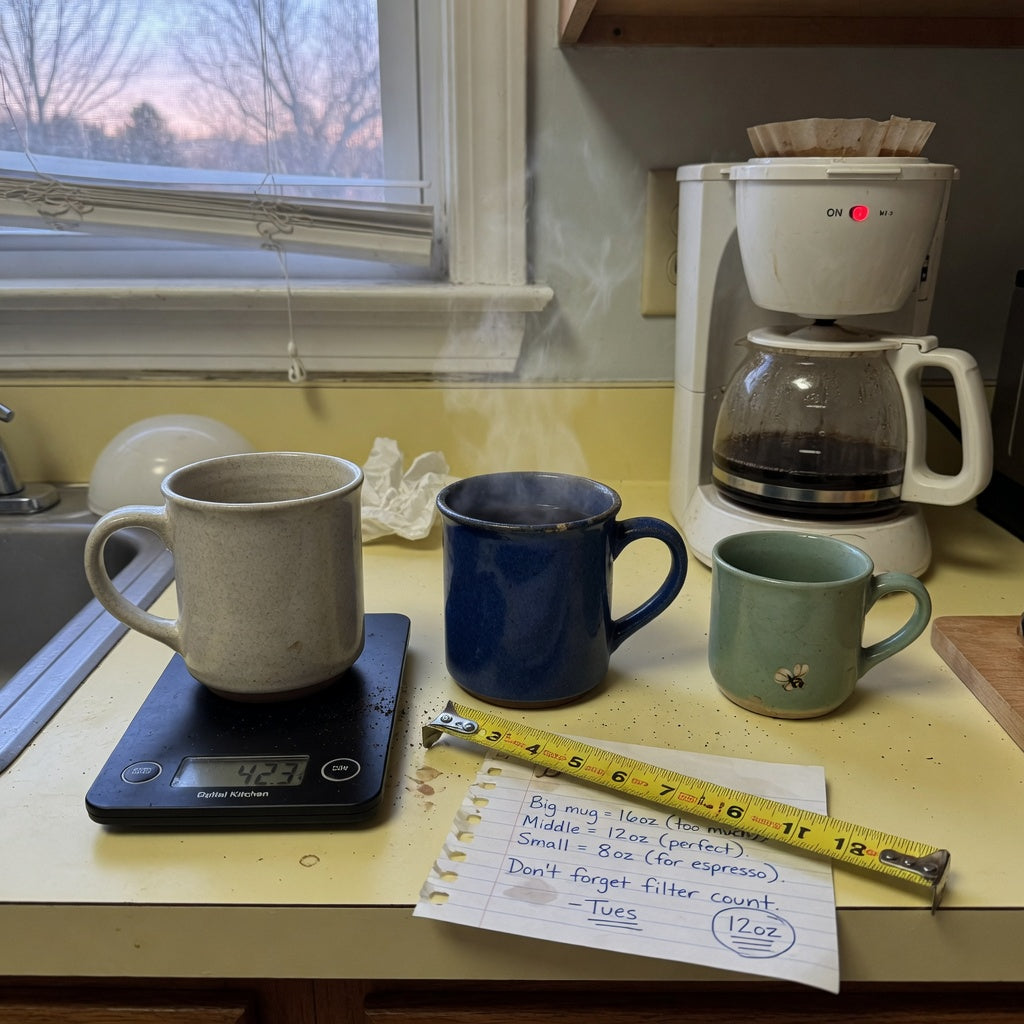
14 oz Ceramic Coffee Mugs Morning Routine Product Shortlist Guide
A practical 14 oz ceramic coffee mugs morning routine product shortlist guide built around volume, headroom, handle fit, and care claims. Compare 400 ml, 440 ml, and 480 ml options by the drink you...
Read more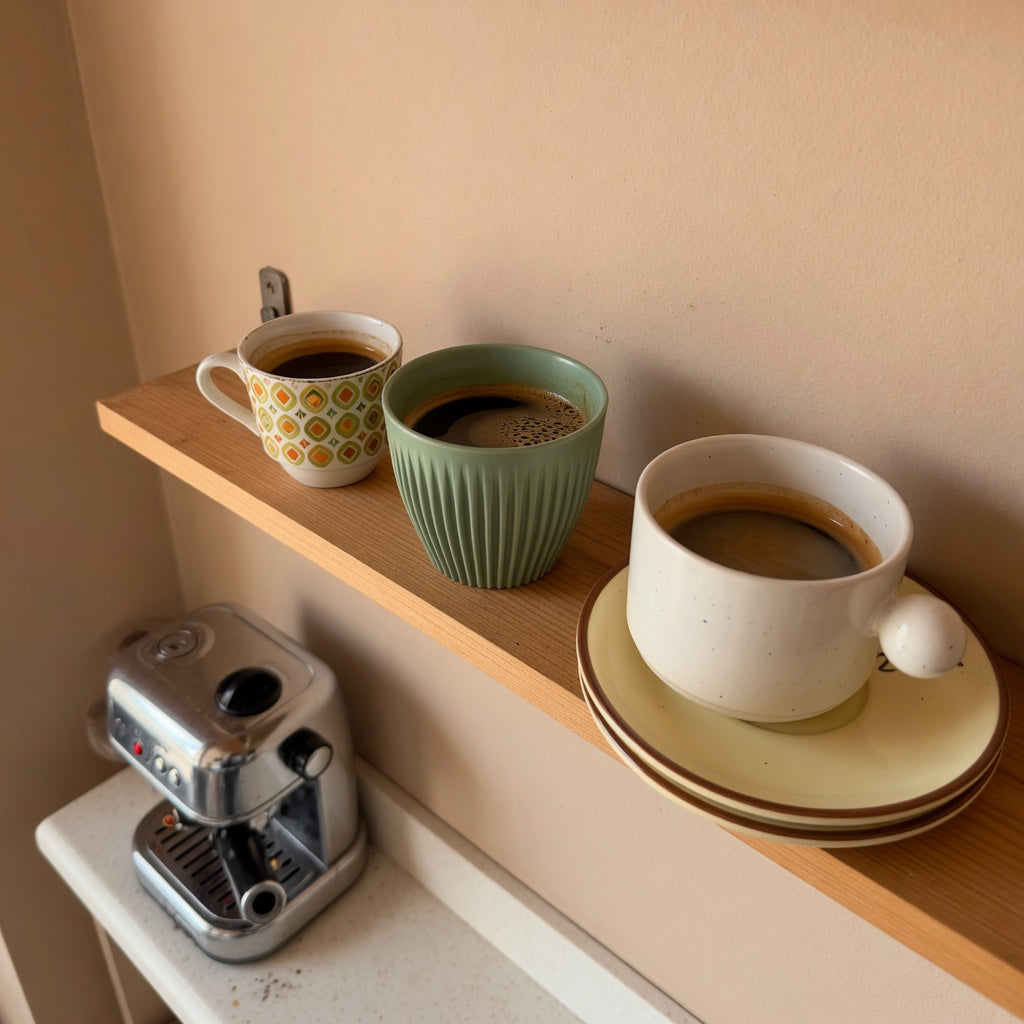
Unique Espresso Cups Compact Kitchen Product Shortlist Guide: 3 Picks
A three-cup shortlist for small kitchens: how our 170 ml, 200 ml and 250 ml ceramic cups map to doubles, cortados and tight shelves, plus the routines where each one is the wrong buy.
Read more
Leave a comment
This site is protected by hCaptcha and the hCaptcha Privacy Policy and Terms of Service apply.