
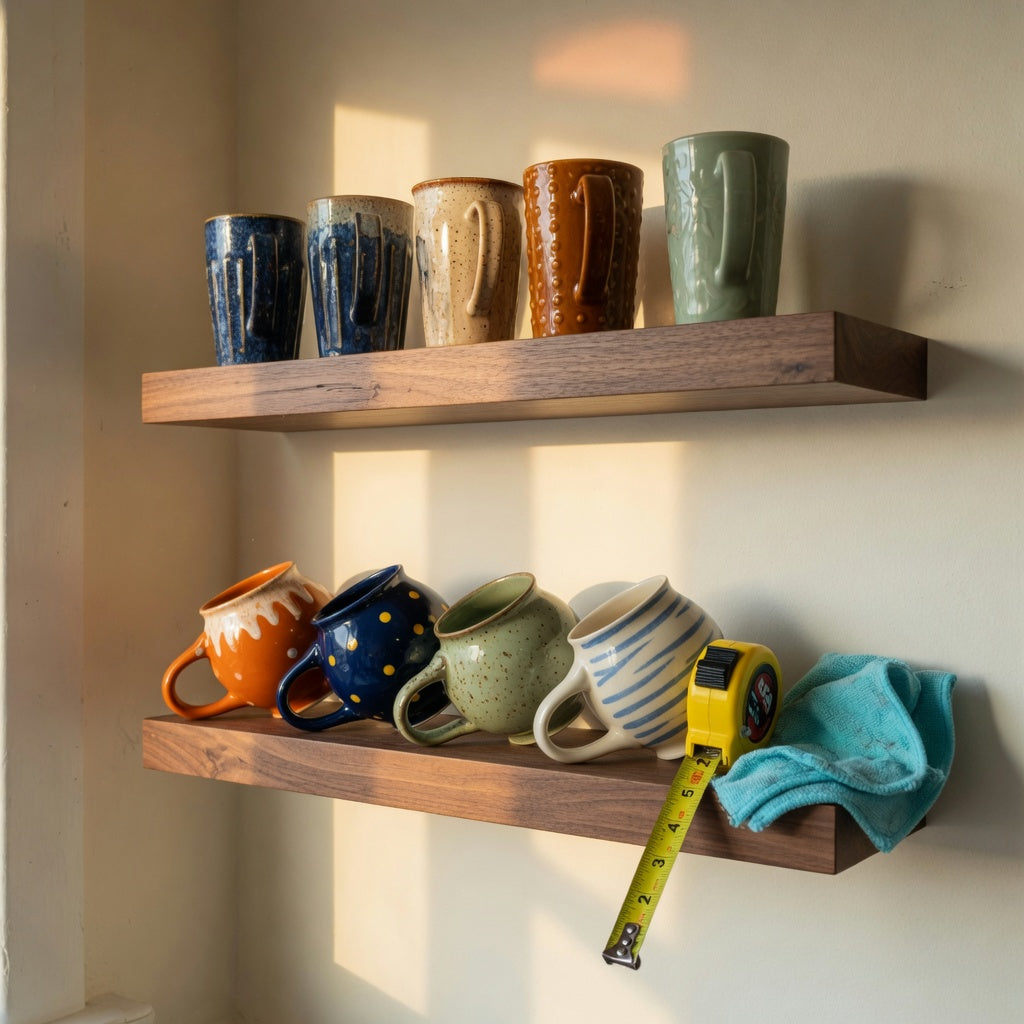
Ceramic Mug Shelf Ideas: Clearance, Load, and Dust Compared
Reading time: about 8 minutes
Last month a customer emailed us a photo of her brand-new floating shelf with a confession attached: the cabinet above it sits barely 4 inches over the shelf surface, and every one of her taller mugs had to move to a drawer. She bought the shelf first and measured second. Scroll through most ceramic mug shelf ideas online and you'll see the same pattern — beautiful photos, zero numbers. This guide is the numbers: clearance, load, dust, and what each setup genuinely costs you in weekly effort.
Which ceramic mug shelf ideas hold up to daily use?
We pack and ship ceramic mugs every week, and in our experience five setups cover nearly every kitchen we've seen. Each one trades something — reach against capacity, dust protection against drill holes, install effort against rentability.
| Setup | Dust exposure | Typical capacity | Install effort | Best for |
|---|---|---|---|---|
| Wall-mounted display shelf | High | 6–12 mugs per shelf | Moderate — stud finder and level required | Collectors who rotate pieces |
| Plain floating shelf | High | 5–10 mugs | Moderate | Minimalist kitchens that want a clean wall line |
| Shelf with hanging hooks below | Medium | Shelf mugs plus 4–6 hanging | Higher — the mount must carry both loads | Small kitchens short on counter space |
| Leaning ladder shelf | High | 15–30 mugs across tiers | Low — no drilling, but it needs floor space | Renters and frequent movers |
| Glass-front cabinet | Low | 20+ mugs | High — the heaviest install on this list | Heirloom and display-only pieces |
Hook rails deserve one honest caveat. A hanging mug rests its entire weight on the handle every single day, and the handle is usually the most delicate part of any piece — we've unpacked more returns with handle damage than body damage. If a handle already carries a hairline crack, a hook will find it within weeks. Shelf display is gentler on older, heavier, or thick-walled stoneware.
What should you measure before you order anything?
Most standard ceramic mugs run roughly 3.5 to 4.5 inches tall and 3 to 4 inches across the body — but "most" is doing heavy lifting in that sentence. Tall latte-style silhouettes can clear 5 inches, and mugs you plan to stack need different clearance than a single row.
| Measurement | Working rule from our own shelf setups and returns |
|---|---|
| Clearance above the tallest mug | Add about 2 inches so you can lift a mug out one-handed without knocking the shelf above |
| Shelf-to-shelf spacing for stacks | Two stacked standard mugs need roughly 7–8 inches; three-deep stacks look cluttered and put sustained pressure on rim glaze |
| Shelf depth | 6 inches fits a mug body only; 8 inches fits a mug with the handle turned out, or a mug plus one small decor piece |
| Mugs per shelf length | On a 24-inch shelf, plan for five to six standard mugs with handles angled outward |
Tall silhouettes are where buyers get burned, which is why we tell people to read the listed height on any mug instead of guessing from photos. Our Landscape tall coffee and tea mug is exactly the kind of elongated shape that turns a 6-inch gap into a much tighter one once shelf trim gets involved — so check the current listing's dimensions before committing to a rail with fixed spacing.
How much weight will your wall actually take?
Ceramic adds up faster than shoppers expect. Weigh, multiply, then mount:
- Weigh one mug on a kitchen scale. A sturdy stoneware piece often lands near a pound; oversized pieces can run heavier.
- Multiply by the collection. Twelve mugs at roughly a pound each is 12 pounds of ceramic — before the shelf itself weighs anything.
- Add the shelf's own weight and any decor for your true total load.
- Match the anchor rating to that number with headroom. Most packaged anchors print a pound rating; we want the rating comfortably above the load, never equal to it.
- Hit a stud for anything carrying a full collection. Drywall alone is a countdown, not a mount.
Borrow a habit from the furniture world here: the CPSC's tip-over anchoring guidance exists because leaning, top-heavy storage hurts people when it fails. A loaded ladder shelf deserves the same respect — strap it to a stud, especially in a home with kids or pets who pull on things.
Open shelf, hooks, or glass doors — which one actually beats dust?
Nobody photographs the dust. In a working kitchen, an open display collects a fine film within weeks, and near a cooktop it collects grease that a damp cloth smears instead of lifts. Glaze condition matters too: a crazed glaze — the web of fine cracks you sometimes see on older pieces — traps both, and no quick wipe fixes it. Your options, in order of protection:
- Open shelf: rinse a displayed mug before its first pour, keep the display a few feet from the frying zone, and do a quick weekly pass with a dry microfiber cloth so dust never settles into glaze texture.
- Cloche or covered tray: protects two or three favorites without giving up the styled look.
- Glass-front cabinet: the only low-maintenance answer for a large collection — at the cost of doors, more drilling, and a more formal look than most renters want.
The trade-off is real: closed storage protects, open storage invites. Most customers land in the middle — daily mugs in easy reach, delicate or rarely used pieces behind glass.
Which vintage and handmade mugs should stay display-only?
Flea-market finds and inherited pieces are the reason display shelves exist — but display is all they should do.
Display, don't pour. FDA consumer guidance has long cautioned that older, handmade, or glaze-damaged ceramicware can leach lead or cadmium into food and drink, and there's no reliable way to judge safety by looks alone. If a piece is unmarked, decorative, or predates modern standards, keep it on the shelf and add a "not for food use" tag so family and guests don't assume otherwise.
We field this question at the gift-wrap counter more than almost any other, and our answer never changes: if you can't confirm the maker's food-safety standard, the mug is a sculpture. That's not a downgrade — styled well, those pieces are often the best-looking thing on the wall. Building a shelf-first collection rather than a sink-first one? Our unique coffee mugs collection is where we'd send you for display-worthy, giftable pieces.
No drill allowed — what works in a rental or small kitchen?
Some of the smartest ceramic mug shelf ideas require zero holes:
- Leaning ladder shelf: the most capacity without a single anchor, but it needs a floor footprint and a wall strap to stay honest.
- Two-tier countertop riser: doubles counter storage and costs you nothing on the deposit.
- Under-cabinet tension rod with S-hooks: fine for lightweight everyday mugs — skip it for heavy stoneware, which works cheap hooks loose over time.
- Windowsill above the sink: free, though steam and splashback near the faucet are worth watching with any decorated glaze.
How do you arrange mugs so the display still works a year from now?
- Heavy stoneware goes low. It reads better visually and keeps the load where the mount can handle it.
- Stack no more than two, and only when the top mug's foot ring is smooth glaze — a gritty unglazed foot can scratch the rim beneath it over months of sitting still.
- Handles forward or angled out. Guests grab by the handle, so let the face of each mug do the showing.
- Give round bodies room. A rounder profile like our Round coffee and tea mug reads beautifully front-on, but deep-bodied rounds generally need more shelf depth than straight-sided pieces — verify the listed diameter before squeezing one onto a 6-inch shelf.
- Rotate seasonally. Every piece gets handled, inspected, and dusted instead of sitting ignored for a year.
Three setups we see customers actually keep up: a two-shelf "daily driver" near the coffee station with everyday mugs handle-out; a single high shelf reserved for display-only and giftable pieces; and a renter's countertop riser that moves with the lease. Pick the one that matches how you actually make coffee, not the one that photographs best.
The 60-second checklist before you order a mug shelf
- Measure your tallest mug, then add 2 inches of lift-out clearance.
- Count the collection and weigh one mug; multiply for total load.
- Confirm a stud location or an anchor rating comfortably above that load.
- Answer the dust question honestly: open shelf, cloche, or glass doors.
- Renters: pick no-drill before picking pretty.
- Set aside any vintage glazed piece for display-only labeling.
Then fill the shelf. Browsing the unique coffee mugs collection before checkout is the fastest way to see whether your spacing fits tall silhouettes, squat rounds, or a deliberate mix of both.
Frequently asked questions
How much clearance should a shelf above mugs have?
Measure your tallest mug and add about 2 inches so you can lift it out one-handed. If you stack, plan on roughly 7–8 inches between shelves for two stacked standard mugs, since most standard mugs run 3.5–4.5 inches tall.
What are the best ceramic mug shelf ideas for a rental?
Leaning ladder shelves, two-tier countertop risers, and under-cabinet tension rods with S-hooks all avoid drilling. A ladder gives the most capacity — often 15–30 mugs across its tiers — but strap it to a stud and accept the floor footprint.
How do I keep dust off mugs on an open shelf?
A weekly pass with a dry microfiber cloth prevents the film that a damp cloth just smears around. Keep the display a few feet from the cooktop, rinse a mug before its first pour, and move heirloom or rarely used pieces behind glass or under a cloche.
Can I drink from vintage ceramic mugs I want to display?
Treat them as display-only unless the maker confirms they meet modern food-safety standards. FDA guidance has long cautioned that older, handmade, or glaze-damaged ceramicware can leach lead or cadmium into food and drink, and you can't judge that by looks alone.
How many mugs fit on a 24-inch shelf?
Plan for five to six standard mugs with handles angled outward. Tight rows of seven or more only fit if you tuck handles back, which makes grabbing awkward and risks chipping rims against neighboring pieces.
More from our blog
Read more
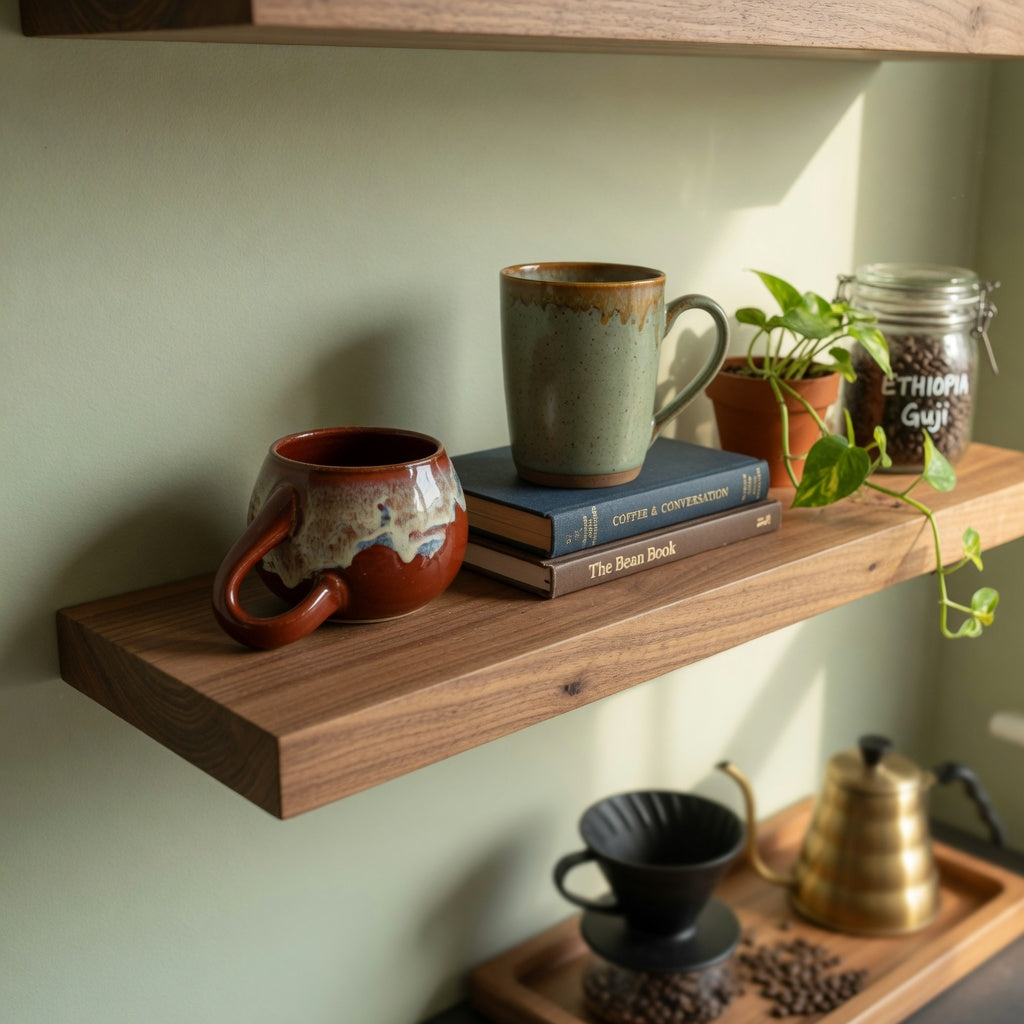
Ceramic Mug Pair Shelf Styling Ideas: What Buyers Should Compare
Two mugs either read as a styled vignette or as clutter — height offset, spacing, and one anchor object decide which. We compare matched vs split layouts, shelf and hook safety checks, care questio...
Read more
Espresso Cups for Gifting: What to Compare Before You Wrap
Size, glaze safety, rim care and set makeup decide whether an espresso gift gets used or shelved. We compare our 170, 200 and 250 ml compact cups against the classic 2–3 oz demitasse, map each size...
Read more
Leave a comment
This site is protected by hCaptcha and the hCaptcha Privacy Policy and Terms of Service apply.