



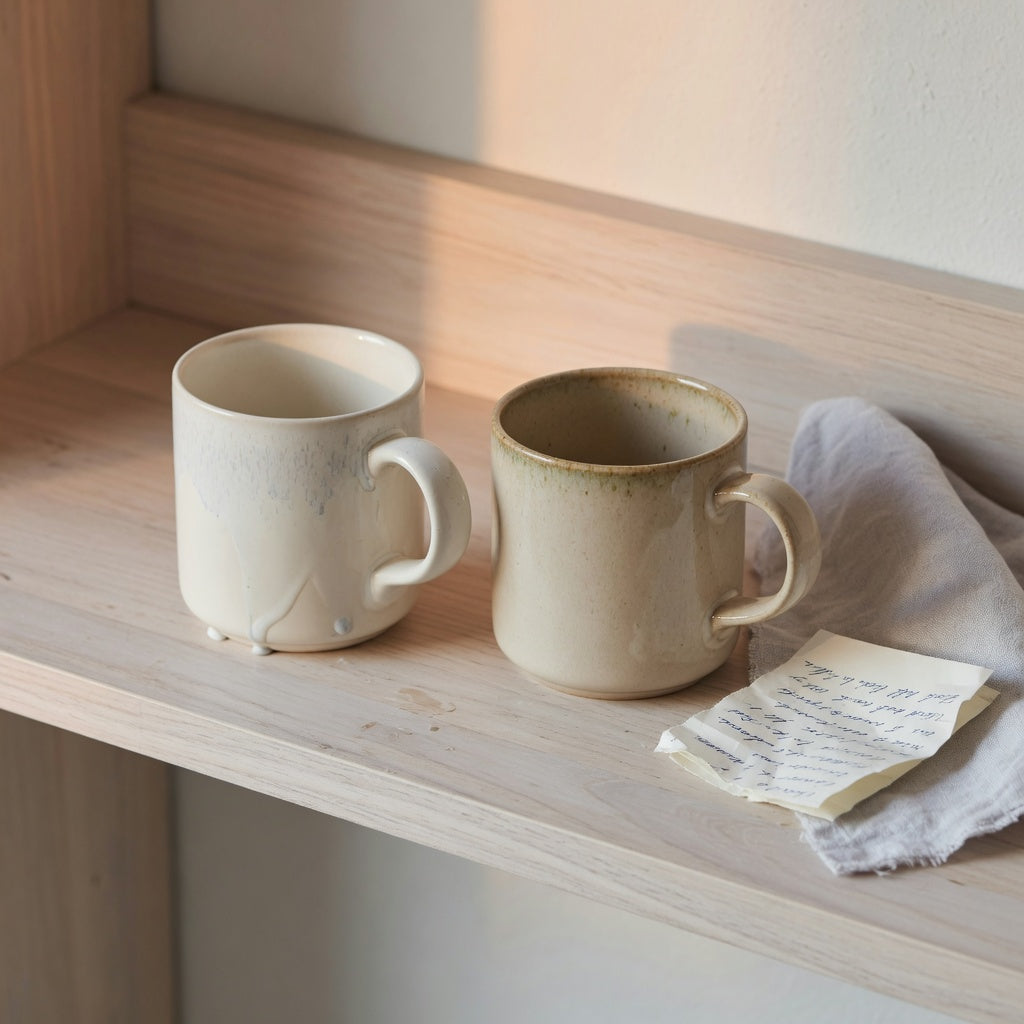
Ceramic Mug Pair Gift Styling: Shelf, Size, and Labels
Reading time: about 14 minutes
Last week a customer lined two mugs up on our packing bench and asked why they looked like a set in the product photo and like strangers on her open shelf. The colors were close. The handles were not. One turned into the cabinet; the other stuck into the walkway. That mismatch is what ceramic mug pair gift styling has to solve: the cups should read as one gift when they sit together, and they still have to take a Tuesday pour of coffee or tea.
In our store the request usually comes from someone buying for a couple, newlyweds, an anniversary, a housewarming, Valentine's Day, or two close friends. A shared pair beats two unrelated mugs when both people will use them side by side. It is a poor gift when only one person drinks hot coffee, when the cups are tiny and the household lives on large mugs, or when the artwork is so personal that a guest will not touch the second cup.
Who a shared pair is actually for
A pair is one object split across two hands. It lives on one shelf, one tray, or one coffee station. Two good mugs with nothing in common can still fail once the tissue is gone, because the shelf no longer explains why they were bought together.
We point people toward a true pair when a few conditions line up:
- Both people drink a similar volume most mornings, so you are not forcing an espresso cup next to a soup-bowl mug.
- The kitchen has one open shelf or a narrow coffee station where the two cups will be seen as a unit.
- The occasion is shared: anniversary, new apartment, wedding, Valentine's Day, or a holiday meant for two.
- The wording should fit the couple. His-and-his, hers-and-hers, or no gendered line at all often lands better than a his-and-hers slogan, and the pair can still look planned.
Buy one stronger single mug instead if their drink habits clash. Wedding favors are a separate decision. One mug per guest is usually more practical than a pair per couple, unless you already know those couples want matching cups at home. Spare pairs turn into cabinet clutter quickly.
Ceramic mug pair gift styling from the shelf to the table
The photo is the easy part. The harder test is the move from shelf to table and back again. Before you compare slogans, picture where the handles will point after someone sets the cups down half-awake.
Handle direction changes the whole gift. Both handles turned outward can look balanced in a picture and still catch a sleeve in a tight galley kitchen. Both handles turned the same way, toward the hand that reaches first, are easier to grab and look deliberate when the glazes agree. Handles facing each other help a heart-shaped or split-image pair read as one picture. Handles turned away keep front lettering visible when the cups sit side by side.
On a glossy glaze, leave about a finger's width between the bodies so the rims do not knock every time a cabinet door shuts. Stacking saves a few inches and hides the second mug. It also invites a chip, especially if one cup is heavier. Side-by-side is the arrangement people actually use. If the shelf is short, measure two bodies, two handles, and that gap before you decide the pair fits.
The table is a different picture from the shelf. At breakfast both cups usually come down together. By evening one may be in the sink and the other still up top. A split phrase or a heart that only makes sense as a pair falls apart the moment one cup leaves. An identical match, or two complementary glazes that share a handle shape, still looks related when the cups are separated.
| How the pair is styled | Holds up when | Falls apart when |
|---|---|---|
| Identical match | You want a calm shelf and an easy replacement later | The form is plain and the room needs a second color |
| Complementary glaze | Handle shape and body still echo each other | One finish is glossy and the other is fully matte |
| Split phrase or image | The mugs will stay side by side, in order | One cup lives at an office most weekdays |
| Heart-shaped or nested pair | The rim still pours cleanly and the handle fits a real grip | Daily coffee matters more than the unboxing photo |
Raised dots, sculpted figures, and thick lettering look cozy in a photo. On a real counter they hold coffee film, and a proud detail can snap off against a neighboring plate in the dishwasher. If the pair is for every morning, choose a smooth glazed surface and put the personality in color or a small mark. Heavy relief belongs on a cup that mostly stays on display.
Round listing or tall listing for their counter
Shape is a shelf problem before it is a style problem. Shoppers who describe a low open shelf, a tray beside the kettle, or a cabinet with little headroom usually ask us about a rounder cup. Shoppers who want the pair to read as a vertical set, or who have depth but not much width, ask about a taller profile. Those are starting points. The dimensions on the live listing are the decision.
Two pages come up constantly at our bench. For the low shelf or the tray, we send people to the round coffee tea mug and ask them to read the current dimensions before they order two. When they want more vertical presence, we open the landscape tall coffee tea mug and have them check height on that page before they assume it clears the shelf. Do not assume those listings share a capacity, a clay body, a handle, or a care label. Ordering two of the same listing is how you build an identical pair, and only if that page is selling the single mug you think it is. Mixing the two listings is a styling choice you are making, not a pre-packed couple set, unless the current page explicitly sells them together.
Using one of each can still look intentional if the glazes relate and the handles shown on the current pages echo each other. It looks accidental if they do not. Capacity is the use test, not the photo test. An espresso-sized pair is a nice after-dinner gift and a bad daily driver for someone who fills a mug and leaves the kettle. If a listing does not state ounces or milliliters, do not guess from the photo.
Clay claims are maker-specific as well. Everyday stoneware is often thicker and sits more comfortably next to a steel kettle. Bone china and fine porcelain are lighter and more formal, and a thin rim chips if it knocks a faucet. Neither name tells you the cup is safe for food, the microwave, or the dishwasher. Those are separate lines on the listing. If neither page quite matches the shelf, browse our unique coffee mugs, pick the form that fits the space, and only then compare care language. For day-to-day handling once a taller cup is home, our gift care notes for a landscape ceramic coffee mug cover habits that protect a rim. They do not replace the specification lines on the product you are buying.
Names, initials, or no lettering at all
Personalization is the question that arrives after the glaze is settled. A full name feels specific and fails on one wrong letter. Initials are shorter, cleaner to print or fire, and still personal. A shared symbol, a date, or map coordinates works when the couple already uses that mark. Mixing is fine: one mug with a name, the other with an initial or a symbol, as long as the type, color, and placement match so the pair still looks planned.
If you barely know them, skip the lettering. A neutral glaze and a short handwritten note will age better than the wrong names. A small bag of coffee or tea they will actually finish is enough of an extra. Do not pack the cavities so full that the rims carry the weight in transit.
Custom work is also the wrong tool when the party is this weekend. Production queues slip. A glazed pair already in stock is the honest housewarming gift for Saturday. Names fired into the clay are a weak idea in a home where guests borrow mugs. The cup becomes a label instead of a spare.
Boxes, soft fillers, and two handles that must not meet
A gift-box photo on a listing is not proof the carton will protect ceramic. Some sets ship in a rigid box with a fitted insert. Others arrive in a mailer you still have to wrap. Read the current page. If it does not say the packaging is gift-ready, plan your own box.
On our bench, a pair gets packed like this:
- Wrap each mug alone, with extra padding around the handle, not pressed into the other cup.
- Put a divider or a thick fold of paper between them so a bump cannot knock glaze on glaze.
- Choose void fill that does not settle. Loose tissue lets ceramics walk inside the box.
- Keep hard objects out of the cavity. A tea tin or a spoon turns into a hammer if the parcel drops.
- Lay the note on top. Do not wedge it under a handle.
A rigid box beats a fabric wrap in a shipping truck. A towel, a reused tin, or a cloth napkin is nicer to keep and weaker on the road. Hand the gift over in person and a towel is enough. Mail it, and the rigid box does the protecting while the fabric is what they see after the tape comes off.
Fillers that finish a plain ceramic gift without adding risk: a few servings of coffee or tea in a soft pack, one handwritten line, and maybe a small extra they will use up. Skip a candle jammed against the glaze and anything that can leak. Two protected mugs are a reasonable parcel. A whole case needs dividers you trust. Handles are the part that fails first.
Food-use labels, lead, and metallic coatings
A pretty cup and a food-safe cup are not the same claim. Some gift ceramics are ornamental. If a piece only looks like a mug, it should not hold coffee.
Before you buy handmade or imported decorative ware, read the U.S. Food and Drug Administration's guidance on lead-glazed traditional pottery. Lead may be present in the glazes or decorations of some traditional pottery. If the piece was not manufactured and fired properly, lead can leach into food or drink prepared, stored, or served in it. Commercially made everyday pottery is described as much less likely to have that problem. Take extra care with ware that looks handmade and irregular, with antiques, with damaged or worn glaze, with a maker you cannot identify, and with bright orange, red, or yellow decoration. Washing, boiling, or other home processing does not remove lead. A stamp such as not for food use means the cup stays empty.
Ornamental ceramicware has its own labeling rule. Under 21 CFR 109.16, a decorative piece that appears suitable for food is treated as food-use ware unless it has both a conspicuous stick-on warning facing the buyer and a permanent statement on the base using the specified not-for-food-use language. Silence is not a yes. If you cannot find a clear food-use statement, ask the seller before anyone pours.
Metallic rims and full metallic coatings are a different hazard from lead. On March 21, 2024, the U.S. Consumer Product Safety Commission announced a Nestlé USA recall of about 440,500 metallic-coated ceramic mugs sold with 2023 Starbucks-branded gift sets, including a holiday gift set of two mugs. If microwaved or filled with extremely hot liquid, those mugs could overheat or break, with burn and laceration hazards. The agency reported 12 incidents and 10 injuries. The recall covered those coated mugs, not every ceramic cup. The narrower lesson we use when we pack gifts: a gold line or a mirror finish can look ready for a present and still be labeled not microwave safe. Read the label on that exact pair. Do not borrow a microwave claim from a plain glazed mug, or from an old screenshot of a similar page.
Run this list on the product page before you pay:
- Food-use wording is present, and there is no not-for-food-use warning on a sticker or on the base.
- Microwave guidance is explicit. If the listing is silent, treat microwave use as unconfirmed.
- Dishwasher guidance is explicit. Metallic decoration and a thin rim often want hand washing even when the clay body is sturdy.
- The maker is identified. Unknown-source decorative pottery is the category regulators flag.
- The glaze is intact. Cracks, worn metal trim, and a chipped rim are reasons to retire a cup from drinks, not to test it.
We do not freeze product pages into a blog post. Listings change. Confirm food-contact, microwave, and dishwasher language on the page you are about to buy from.
Four lines worth writing on the care card
The pair lasts longer if the note says what not to do. We slip a short card under the tissue when we gift from the shop. It will not rescue the wrong size or a cup marked decorative only. It does stop the most common first-week damage.
Do not shock the clay. Skip a very hot pour into a mug that just came out of the fridge, and do not rinse a hot cup under cold water.
Keep metal spoons and heavy pans off a fine rim in the sink. A spoon left in the cup is a frequent way a hairline crack starts.
If the glaze crazes, pits, or a metallic trim wears through, stop serving drinks in that cup.
Wash raised detail by hand unless the listing clearly says dishwasher safe. The texture that looks cozy is the texture that holds residue.
The same card can say which mug you meant for whom, without firing the wrong name into the clay.
Frequently asked questions
How should ceramic mug pair gift styling work on a narrow shelf?
Set the mugs side by side with about a finger of space, handles turned the same direction so neither one blocks the walkway. Measure two bodies, two handles, and that gap before you order a wide pair for a short shelf. Stacking hides the second mug and raises the chance of a rim chip. If headroom is the limit, compare the listed heights on the current pages instead of guessing from a styled photo.
Should the two mugs match exactly or only complement each other?
Match them when you want a calm coffee station and an easy replacement later. Complement them when the shelf needs a second color and you can keep a related glaze plus a similar handle. Split phrases and heart-shaped pairs only work if the two cups stay in order. If one person will take a mug to the office, an identical or complementary pair survives the split better than a design that needs both halves on the table.
Are gold-detail or metallic couple mugs safe to microwave?
Not by default. Some gift mugs with metallic coatings are explicitly not microwave safe. In 2024 the CPSC recalled metallic-coated mugs sold in branded gift sets, including a two-mug holiday set, after cups overheated or broke when microwaved or filled with extremely hot liquid. Check the listing for the exact pair. A plain glazed body and a metallic-rimmed body are different products even when the photos look alike.
What can I put inside the mugs without chipping them?
A few servings of coffee or tea in a soft pack, plus a short note, is enough. Keep tins, spoons, and other ceramic pieces out of the cavity. In transit those hard objects become weight that hits the wall of the mug. If you are handing the gift over in person, a small paper-wrapped extra is fine, still nothing rigid against the glaze.
Are full names better than initials when I do not know the couple well?
No. If you are unsure of spelling, nicknames, or whether they want text on a daily mug, choose a neutral pair. Initials are a middle step when you know the letters and the couple likes monograms. Full names make sense only after you have confirmed the spelling and the cups are truly theirs, not a household spare for guests.
Five checks on the live listing before you wrap
Do this on the product page, not from memory of a similar mug:
- Will both people drink from this size, or is one of them an espresso person?
- Do the handles face a way that works on their shelf, not only in the photo?
- Is the glaze an identical match, a complement, or a split design that falls apart if one mug is in the sink?
- Does the current listing state capacity plus food-use, microwave, and dishwasher guidance?
- Is the packaging actually a protective gift box, or do you still need a rigid mailer and a divider between handles?
If a low shelf or a tray is the constraint, open the round coffee tea mug listing and verify those five lines there. If you need more height, do the same on the landscape tall coffee tea mug page. When neither shape is quite right, use the unique coffee mugs collection and compare two live listings side by side before you commit to a pair. The useful gift is the morning after the box is recycled.
More from our blog
Ready to pick your mug? Two ways to save on today's order:
Ordering 1–3 mugs? Get an extra 10% off your 1st order with code 10_OFF Apply 10% Off & Shop Wooden-Handle Mugs →
Gifting 4+ mugs? Buy 3, Get the 4th Free applies automatically at checkout (no code needed; offers do not stack) · Free standard shipping (Nov pre-Christmas delivery: 15–20 calendar days US) · Free replacement if chipped in transit.
Popular mug buying guides: Ceramic Tea Cups & Infuser Mugs · Ceramic Mugs with Lids Compared · Wooden-Handle Tea Infuser Mugs Compared · Christmas & Secret Santa Mugs 2026 · Espresso & Cortado Cups Guide · Cup & Saucer Gift Sets · All 25 Mugs Spec Table · Mug Size Guide · Shipping & Promo FAQ
FIRST ORDER 10% OFF (CODE: 10_OFF) · OR BUY 3, GET THE 4TH FREE


Read more

Weekend Brunch Mug and Tray: Size, Care, and Lap Fit
A weekend brunch mug and tray fails when the cups cannot take milk, the tray slides on a duvet, or only one piece is safe to heat. Here is how we compare capacity, materials, lap fit, and the listi...
Read more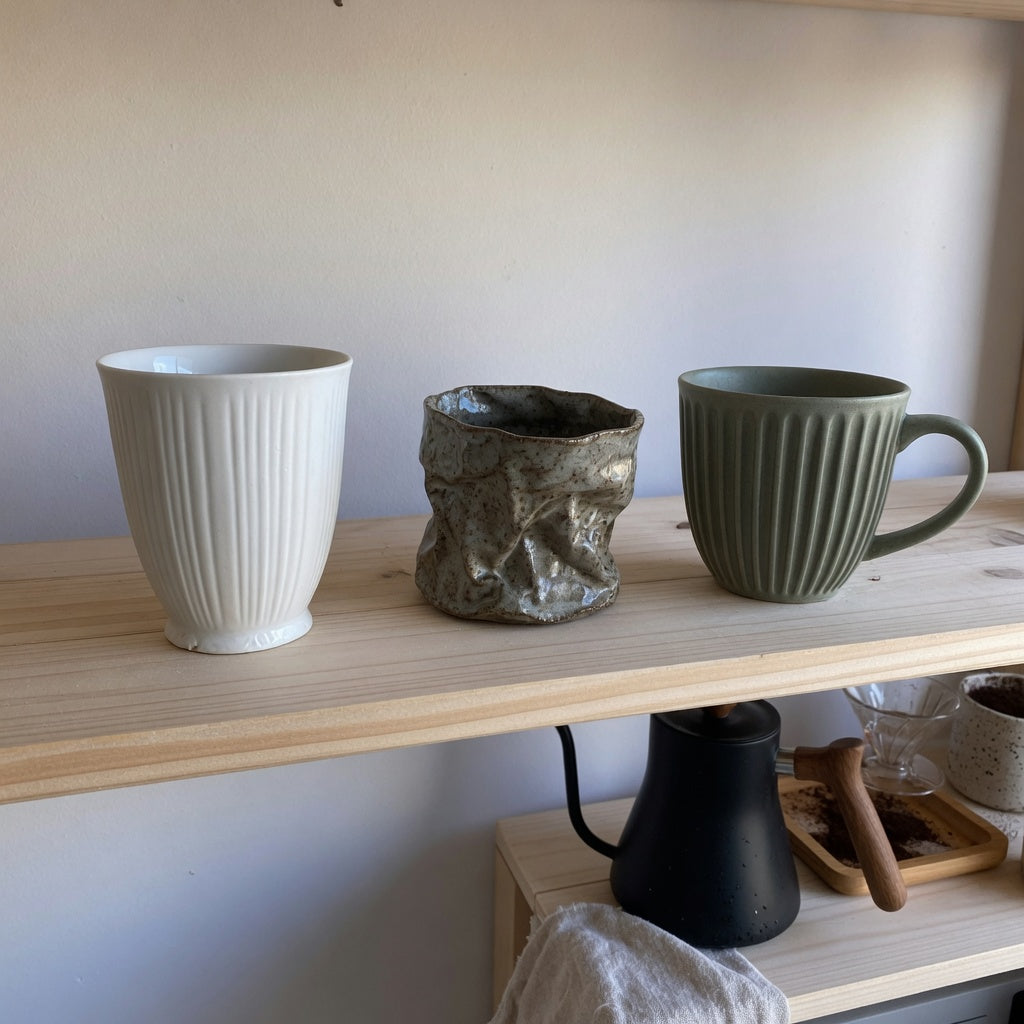
Pleated Ceramic Cup Home Decor Coffee Lovers: What to Compare
A textured cup can look finished on a coffee bar and still be too small for a real pour. We compare pleat styles, capacity, ridge care, and food-contact checks so coffee lovers buy for both the she...
Read more
Leave a comment
This site is protected by hCaptcha and the hCaptcha Privacy Policy and Terms of Service apply.