
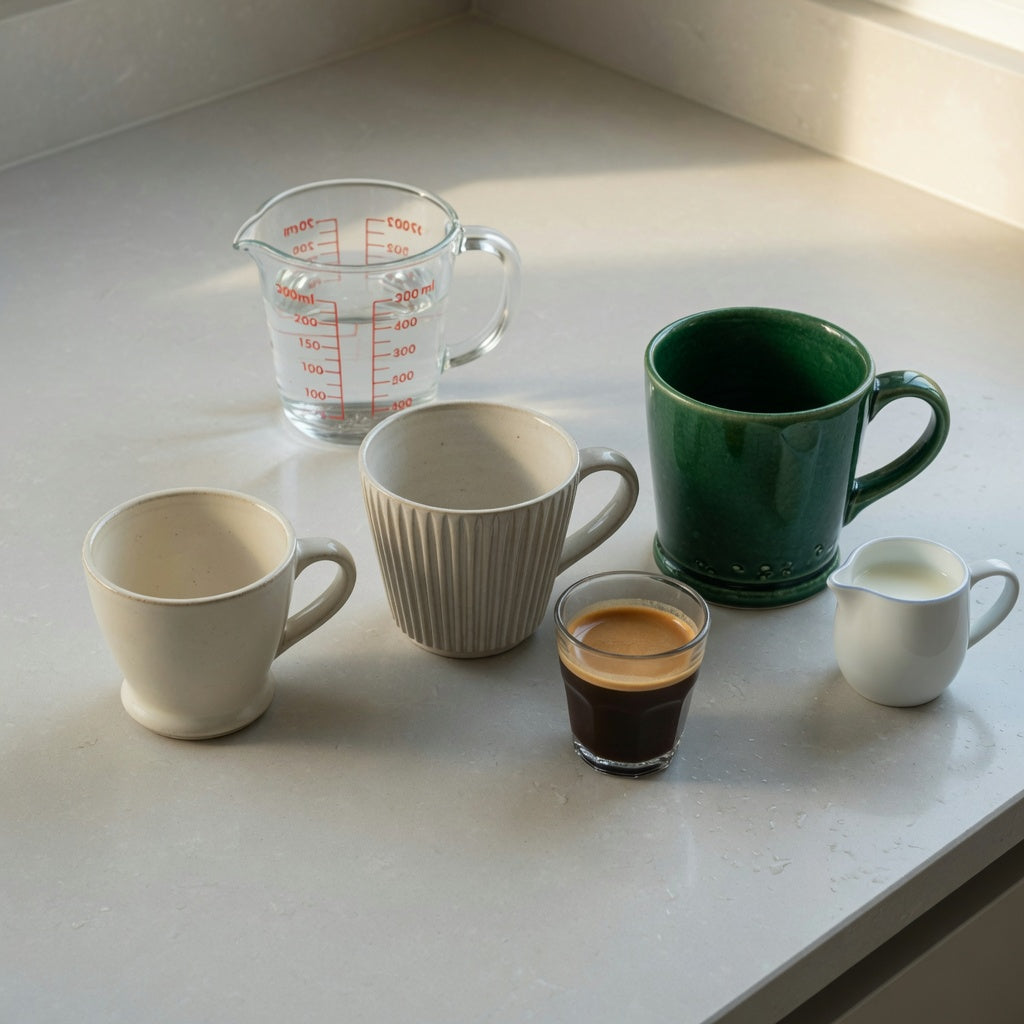
Ceramic Cortado Cup First Time Buyer Practical Purchase Checklist
Reading time: about 9 minutes
The cup arrives, you make the drink you prepare every morning, and the liquid either crowds the rim or sits much lower than the product photo suggested. A ceramic cortado cup first time buyer practical purchase checklist should prevent that mismatch before checkout. At CoffeifyMug, we start with the buyer's finished drink volume and the catalog facts we can verify: Retro 170 ml, Pleated 200 ml, and Emerald 270 ml. We do not describe any of these products as purpose-built, tested, or certified for cortado, and this comparison does not assume heat retention, extraction performance, microwave use, dishwasher use, or cafe durability.
What volume is in your cup after the milk is added?
A first purchase often goes wrong because the shopper compares the espresso dose with the cup capacity. The relevant number is the finished drink, including milk and foam, at the level you actually serve it. Product photos are not a reliable scale reference.
- Make your normal drink in a cup you already own and note the fill line.
- After drinking and rinsing, refill that cup with cool water to the same line.
- Pour the water into a graduated kitchen measure and record the milliliters.
- If your weekday and weekend pours differ, repeat the check and use the larger result.
- Decide how much unused capacity you want for carrying the cup from the counter to a table or office desk.
Add the preferred margin to your measured drink volume. For example, a 135 ml drink plus 35 ml of nominal unused capacity reaches 170 ml. That arithmetic creates a shortlist, but it does not prove the cup has 35 ml of comfortable rim clearance because the listed figure may represent brimful or nominal capacity.
How much nominal headroom do 170 ml, 200 ml, and 270 ml leave?
The table uses two hypothetical finished drink volumes so you can see the capacity differences without treating either pour as a standard cortado recipe.
| Catalog option | Verified listed capacity | After a 120 ml pour | After a 150 ml pour |
|---|---|---|---|
| Retro | 170 ml | 50 ml unused | 20 ml unused |
| Pleated | 200 ml | 80 ml unused | 50 ml unused |
| Emerald | 270 ml | 150 ml unused | 120 ml unused |
These remaining figures are simple subtraction, not measured safe fill lines. Cup geometry determines the vertical distance between the liquid and rim, and that geometry is not part of the verified facts used here. We use nominal headroom only as a planning term. It does not establish thermal behavior, drinking performance, or a comfortable carrying level.
Which capacity fits a fixed pour, a variable pour, or a gift?
Match the situation to the capacity calculation, then use the relevant product page to confirm every detail that matters beyond volume.
- Fixed drink near 120 ml: The Retro coffee tea cup has a verified capacity of 170 ml, leaving 50 ml of nominal unused capacity in this example. It is the smallest capacity in the comparison, but exterior dimensions and grip still need confirmation.
- Pours that vary from 120 ml to 150 ml: The Pleated coffee tea cup provides 80 ml to 50 ml of nominal unused capacity across those examples. Its 200 ml capacity is a practical middle option when your milk quantity changes from one preparation to the next.
- A measured drink plus margin that exceeds 200 ml: Compare the Emerald coffee tea mug at 270 ml. It supplies the largest capacity buffer of the three, although a short drink will sit lower and the mug's external size and weight should be checked before assuming it suits a crowded desk.
- A gift with an unknown drink volume: The 200 ml Pleated is a defensible capacity-first starting point because it sits between the two verified alternatives. That is not a guarantee of fit. After choosing a capacity range, browse our unique coffee mugs collection for a shape and appearance that suit the recipient.
The product name or styling should not make the capacity decision for you. Measure first, choose the required volume range, and only then compare the visual details.
Which listing details are facts, and which still need confirmation?
In our store, we separate confirmed catalog information from what a photo merely suggests. The capacities are verified for this comparison. The following details are not established by the source facts, so recheck the live listing or ask us before buying if they affect your decision.
| Buyer question | Status here | Decision step |
|---|---|---|
| What is the listed capacity? | Verified | Use 170 ml for Retro, 200 ml for Pleated, and 270 ml for Emerald. |
| Is that brimful or comfortable capacity? | Not verified | Ask how the capacity was measured and request a fill reference if rim clearance is critical. |
| Will it fit under an espresso machine or on a shelf? | Not verified | Confirm exterior height and maximum width against your available clearance. |
| How large is the handle or gripping area? | Not verified | Check handle geometry, finger clearance, and product weight rather than judging from a cropped photo. |
| What type of ceramic and glaze are used? | Not verified here | Do not infer stoneware, porcelain, glaze composition, or certification from the broad ceramic category. |
| Is it dishwasher or microwave compatible? | Not verified here | Require an explicit product-page, packaging, or seller statement before using either method. |
| Is thermal or commercial performance documented? | Not verified or claimed | Choose drinkware with published testing or commercial specifications if those qualities are mandatory. |
This distinction matters in a working kitchen. A cup can satisfy your volume calculation yet fail to clear an espresso machine, take more cabinet space than expected, or conflict with your required dishwasher routine. On an office desk, base diameter and weight also matter, but we will not invent those values from photographs.
What should you inspect during the first unboxing?
Our team handles ceramic drinkware by checking condition before testing fit. Keep the packaging until you have reviewed the current return terms, especially during a gift unboxing where the recipient may not inspect the cup immediately.
- Match the item and variant: Compare the delivered cup with the order confirmation before washing or using it.
- Inspect the rim and joins in angled light: Look for chips, hairline cracks, and unexpected glaze pinholes or crazing around the interior, handle attachments if present, and foot ring. Pause and contact the seller if you see damage.
- Check the base: Place the dry, empty cup on a level kitchen counter and press lightly around its edge. Movement can reveal an uneven foot. A rough foot ring should not be dragged across an unprotected desk.
- Check empty-cup ergonomics: Confirm finger clearance, rim comfort, and balance over a protected surface. The capacity can be correct while the hand feel is wrong.
- Verify fill and care: If the return terms permit it, add room-temperature water to your measured drink volume and inspect the practical rim space. Read the packaging and live care guidance before a dishwasher cycle or microwave use.
This is a condition and fit inspection, not a thermal or durability test. If a required detail is absent, ask before first use rather than treating an unknown as approval.
Use this ceramic cortado cup first time buyer practical purchase checklist before checkout
Run through these checks in order. Each answer should come from your own routine or a current product source, not from assumptions based on styling.
- Measure the finished drink after espresso, milk, and foam are added.
- Choose the nominal unused capacity you want above that volume.
- Add those numbers to set your minimum listed capacity.
- Compare that minimum with Retro 170 ml, Pleated 200 ml, and Emerald 270 ml.
- Confirm exterior height, width, base size, and espresso-machine clearance.
- Verify handle or gripping dimensions if hand fit matters.
- Confirm the exact material description and any required care compatibility.
- Review current return terms before washing, heating, or discarding packaging.
- Inspect the rim, joins, glaze, and foot ring during unboxing.
- Select color and styling only after the capacity and must-have details pass.
A no-buy result is useful. If your drink plus desired margin exceeds 270 ml, or a required dimension or care instruction remains unavailable, pause and select a better-documented or larger format.
When is a compact ceramic cup the wrong purchase?
- If you need a lid, leak resistance, or insulation for a commute, use a travel vessel instead of an open ceramic cup.
- If your measured drink plus preferred margin exceeds 270 ml, none of these three capacities qualifies on volume alone.
- If the cup must fit a fixed espresso-machine clearance, vehicle holder, or stacking system, do not buy until exact dimensions are confirmed.
- If microwave or automatic dishwasher use is essential, select a listing with explicit compatibility guidance.
- If you need standardized stacking, repeated commercial washing, or documented thermal performance, choose commercial drinkware with published specifications.
These limits do not make ceramic a poor choice. They define where a capacity-based comparison stops and where a different product style is the more practical purchase.
Frequently asked questions
What belongs on a ceramic cortado cup first time buyer practical purchase checklist?
Start with finished drink volume, desired unused capacity, and verified cup capacity. Then confirm exterior dimensions, handle geometry, exact material description, care instructions, condition, and return terms. Treat any unlisted detail as unknown.
Is a 170 ml ceramic cup large enough for a cortado?
It depends on your measured finished volume, not the drink name alone. A 120 ml drink leaves 50 ml of nominal unused capacity in the Retro 170 ml, while a 150 ml drink leaves 20 ml. Comfortable rim clearance still depends on cup geometry and how the listed capacity was measured.
What is the capacity difference between Pleated 200 ml and Emerald 270 ml?
The verified difference is 70 ml. With a hypothetical 150 ml drink, the Pleated leaves 50 ml of nominal unused capacity and the Emerald leaves 120 ml. That comparison does not establish differences in heat retention or drinking performance.
Can I put these ceramic cups in a dishwasher or microwave?
We cannot confirm that from the verified source facts used for this checklist. Check the live product page, packaging, or contact CoffeifyMug for explicit care guidance before use. The ceramic material category alone does not establish compatibility.
Are Retro, Pleated, or Emerald made specifically for cortado?
We make no purpose-built, tested, or certified cortado claim for these products. This checklist compares their listed capacities and the nominal unused capacity left by example pours. Choose using your measured drink volume and confirmed listing details.
Measure one normal drink now, write down the margin you want, and remove any option whose listed capacity falls below that total. Once capacity is settled, compare the product pages and collection again, but wait to place the order until every must-have dimension and care detail is confirmed.
More from our blog
Read more
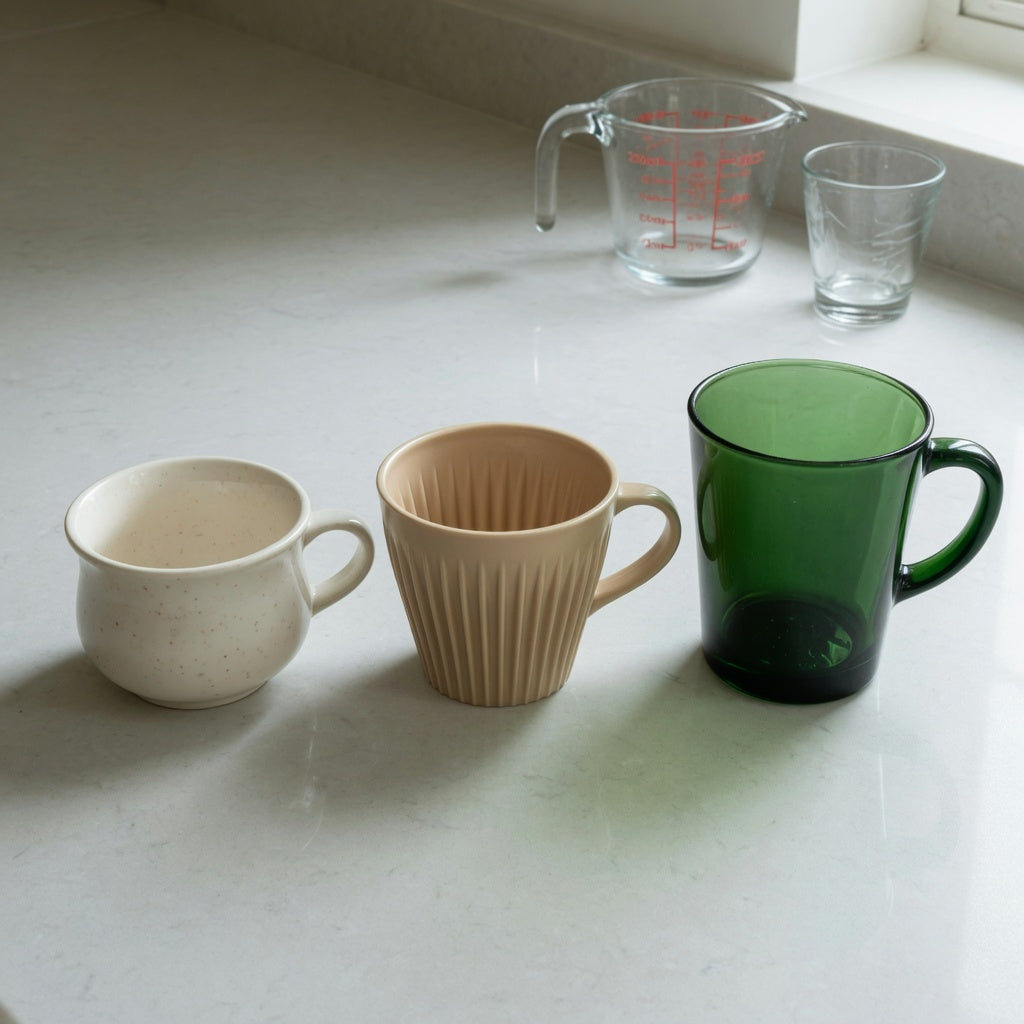
Affogato Cup First Time Buyer Practical Purchase Checklist: 3 Sizes
Compare the verified 170 ml Retro, 200 ml Pleated, and 270 ml Emerald by capacity and visible shape. This checklist also flags unverified material, dimensions, care, temperature-change performance,...
Read more
Hot Toddy Mug Weekend Coffee Product Shortlist Guide: 3 Picks
Compare The Gradient and The Flow at 400 ml with The Rock at 480 ml. This practical shortlist covers serving size, handle fit, ceramic care, and the reasons to choose or skip each mug.
Read more
Leave a comment
This site is protected by hCaptcha and the hCaptcha Privacy Policy and Terms of Service apply.