



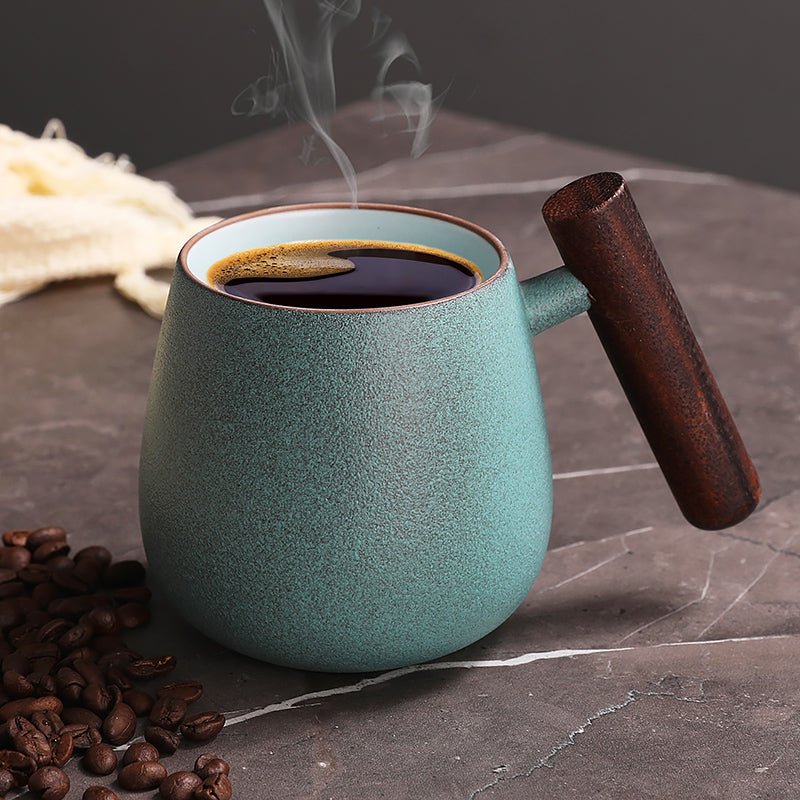
Ceramic Coffee Mug by the Window: What to Compare Before Buying
Reading time: about 9 minutes
At four in the afternoon, a west-facing kitchen window turns into a small greenhouse. The sill is warm to the touch, the light is flat and bright, and the coffee has gone from hot to lukewarm in the time it took to read two pages. That is usually the moment someone starts looking for a ceramic coffee mug by the window — not because they need another mug, but because the one they own is wrong for that particular three feet of counter.
We sell ceramic drinkware and pack it in foam-lined boxes, so the follow-up questions reach us directly. In our experience, the returns almost never come from the glaze. They come from a mug whose base was two centimetres too wide for the ledge, or a handle that only fit two fingers when the other hand was holding a book.
What a ceramic coffee mug by the window actually has to handle
A window sill is a hostile place for drinkware, and most buyers only notice after the first spill. Sun through glass raises the outside temperature of a dark glaze faster than the coffee inside cools. A cross-breeze from an open sash pulls heat off the rim. Condensation leaves rings on painted wood. And the ledge is usually shallower than the mug you already own.
- Footprint — base diameter measured against usable sill depth.
- Mass — empty weight and wall thickness, which set both cooling speed and wrist fatigue.
- Handle geometry — opening height and how far the handle stands off the body.
- Surface — gloss, matte, or textured glaze, and how each shows heat, oil, and water marks.
- Rim — thickness and flare, which decide how the coffee meets your mouth.
Base width and ledge depth: the measurement almost nobody takes
Measure before you fall for a shape. Clear the sill, then measure front-to-back depth at the narrowest point — usually where the window frame, a hinge, or a lock handle intrudes, not at the open front edge. That number, not capacity, is your real constraint.
- Measure usable depth at the tightest point.
- Subtract whatever sits underneath: a coaster, a saucer, a folded napkin. A saucer can add two inches or more across.
- Compare that to the base diameter listed on the current product page.
- Leave a finger's width of clearance so you are not lifting the mug blind.
A wide, shallow mug is the steadier choice on a deep sill: low centre of gravity, harder to clip with a curtain. A tall, narrow mug takes less depth but presents more side area to a breeze and tips more easily when set down off-centre. Neither is universally better. The ledge decides.
Round body or pleated cup — which silhouette suits your sill?
Two shapes cover most window-side setups, and they solve different problems. Compare them on the variables that actually change your morning, not on how they photograph.
| What you are comparing | Round coffee and tea mug | Pleated coffee and tea cup |
|---|---|---|
| Silhouette | Rounded, familiar mug profile | Fluted body that catches low sun |
| Likely sill | Deep ledge, bay-window bench, wide stone shelf | Decorative sill used for shorter pauses |
| Grip consideration | A rounded body is generally easier to wrap a full hand around | Fluted profiles sometimes taper; check the handle opening clears your fingers |
| Verify on the current listing | Base diameter, capacity, care instructions | Base diameter, capacity, handle opening, care instructions |
If you want a familiar silhouette that reads as a classic coffee mug
The round coffee and tea mug suits the reader with a deeper ledge — a kitchen sill, a bay window bench, a wide stone shelf — who wants a recognisable profile and a handle they can grab without looking. Check the current listing for capacity, base diameter, and care guidance, then hold those numbers against your sill measurement. We keep specs on the product page rather than in this article because listings change and articles do not.
If you want the mug to catch the light
The pleated coffee and tea cup appeals to anyone treating the window as a small styling moment — afternoon tea, a slow Sunday, a sill that gets an hour of low sun. Fluted forms are visually busier, which means two things belong on your checklist: the listed base diameter, since decorative profiles sometimes taper in ways that change the footprint, and whether the handle opening clears your hand comfortably. If grip strength or arthritis is a factor, a smoother body is the safer pick.
Browsing before you commit? The unique coffee mugs collection is where we keep the non-standard silhouettes — the ones that make a sill look intentional rather than accidental. For a straight size-to-base comparison across styles, see our breakdown of size, grip, and base for a window seat mug.
Does a heavier wall keep window-side coffee warm longer?
Yes, up to a point — and the point arrives at your wrist. Thick-walled ceramic stores more heat in the body of the mug, so the first few minutes of cooling run slower than in thin porcelain. But an unheated mug steals heat from the coffee on contact no matter how thick the wall is, which is why a 30-second swirl of hot tap water before you pour does more for temperature than an extra hundred grams of stoneware.
Two trade-offs worth naming. Heavy walls and a broad base feel solid and stay put; they also make a full mug a two-handed object, awkward when you are reaching across a sill. Thin porcelain rims feel finer and let you sip without tilting far; they shed heat faster and chip more readily at the rim, which is exactly where a mug meets a window frame. And if you drink slowly over 45 minutes, no open ceramic mug wins — that is a job for a lidded tumbler, and we say so to customers who ask.
The one-handed lift test: handle clearance and rim shape
Stand at your sink and pick up a mug the way you would on a sill: fingers through the handle, thumb on top, other hand occupied. If your knuckles scrape the body or the handle only fits two fingers, that mug will end up on a desk instead.
Look for an opening tall enough to clear your fingers with slack, and a standoff that keeps knuckles off a hot wall. A thumb rest — the small flattened area at the top of the handle — helps when you carry a full mug across a room. On the rim side, a slight outward flare is more forgiving when you sip while looking out the window rather than down at the cup; a very thin, sharp rim encourages a faster pour and a hotter first sip.
If reading is part of the ritual, our comparison of heat retention versus grip for coffee and reading goes deeper on handle shape.
Glaze and texture under direct sun
Gloss glaze reflects light and hides nothing: coffee films at the rim, hard-water rings, fine scratches from a spoon. Matte glaze softens reflections and photographs beautifully but holds onto oils and mineral deposits more stubbornly, and it can feel chalky against dry lips. Textured and fluted exteriors throw small shadows in low sun, which is half the reason they look good on a sill in the first place.
Two details a generic guide skips. Dark glazes absorb more radiant heat than pale ones, so a black or deep-blue mug left in direct sun will feel noticeably hotter on the outside. And crazing — the fine web of hairline cracks some glazes develop after repeated hot-cold cycles — is usually cosmetic, but it can trap colour from coffee or tea over time. Preheating with warm water before pouring hot coffee reduces the thermal shock that drives it.
Always set the mug on something. Painted wood sills mark, and stone sills stain from the condensation ring a cold mug leaves behind. If you are decorating around the mug rather than just using it, our guide to matching ceramic mugs to home decor covers palette and finish pairing.
Where a window-side ceramic mug falls short
We would rather tell you now than process the return.
- It is not a thermos. An open ceramic mug loses heat steadily. If coffee needs to be hot 90 minutes later, this is the wrong category.
- Deep sills only. A wide, low mug that looks perfect online may not physically fit a narrow interior ledge.
- Windy balconies. Tall mugs catch gusts and curtains. A low cup with a heavy base is the better outdoor-window choice.
- Low sills with pets or toddlers are a bad pairing regardless of how stable the base is.
- Hard water plus matte glaze shows mineral spotting; gloss wipes clean more easily.
- Travel and commuting. A mug that lives by the window will not survive a bag.
If you need one mug for both the sill and the commute, buy two. The compromise mug does neither job well.
A five-minute checklist before you check out
- Measure usable sill depth at the tightest point, then subtract your coaster or saucer.
- Confirm base diameter on the current product listing, not on a styled photo.
- Decide on a preheat habit: hot tap water, 30 seconds, before the pour.
- Check the handle opening against your hand with a book in the other one.
- Choose gloss or matte based on how much you mind wiping water marks.
- Read the care instructions on the listing before the first dishwasher cycle.
Frequently asked questions
Will a ceramic coffee mug by the window keep coffee hot longer than a glass mug?
Usually yes, because ceramic holds more thermal mass than thin glass and releases that stored heat back into the drink. Preheating the mug with hot water first narrows the gap further. Neither stays hot for an hour without a lid.
How do I stop condensation rings on a painted window sill?
Use a coaster, a small saucer, or a folded cloth under the mug every time — not only when the drink is cold. Painted and sealed wood marks quickly, and stone sills can stain. Wipe the sill dry before you set the mug down for the day.
Is a wide mug or a tall mug better for a narrow ledge?
A tall, narrow mug takes less depth but tips more easily and presents more side area to a breeze. If the ledge is narrow and the window opens, look for a low cup with a broad base and accept the smaller capacity.
Can a matte-glazed ceramic mug go in the dishwasher?
It depends on the glaze and on any metallic detailing, so the product listing is the only reliable source. As a rule, hand-washing matte finishes preserves the texture longer and avoids the mineral spotting dishwashers can leave.
What size ceramic coffee mug fits a standard window sill?
Measure the sill rather than assuming — usable depth varies a lot between older and newer windows, and frame hardware eats into it. Match the listed base diameter to that measurement with a finger's width to spare, then size capacity to how much coffee you actually finish before it cools.
Start with the measurement, then pick the shape. If your sill is deep and you want a mug that disappears into the routine, pull the base and handle numbers from the round coffee and tea mug listing and compare them to your ledge. If you want the window to look composed, work through the unique coffee mugs collection base width first and the aesthetics second — that order saves returns.
Ready to pick your mug? Two ways to save on today's order:
Ordering 1–3 mugs? Get an extra 10% off your 1st order with code 10_OFF Apply 10% Off & Shop Wooden-Handle Mugs →
Gifting 4+ mugs? Buy 3, Get the 4th Free applies automatically at checkout (no code needed; offers do not stack) · Free standard shipping (Nov pre-Christmas delivery: 15–20 calendar days US) · Free replacement if chipped in transit.
Popular mug buying guides: Ceramic Tea Cups & Infuser Mugs · Ceramic Mugs with Lids Compared · Wooden-Handle Tea Infuser Mugs Compared · Christmas & Secret Santa Mugs 2026 · Espresso & Cortado Cups Guide · Cup & Saucer Gift Sets · All 25 Mugs Spec Table · Mug Size Guide · Shipping & Promo FAQ
FIRST ORDER 10% OFF (CODE: 10_OFF) · OR BUY 3, GET THE 4TH FREE


Read more
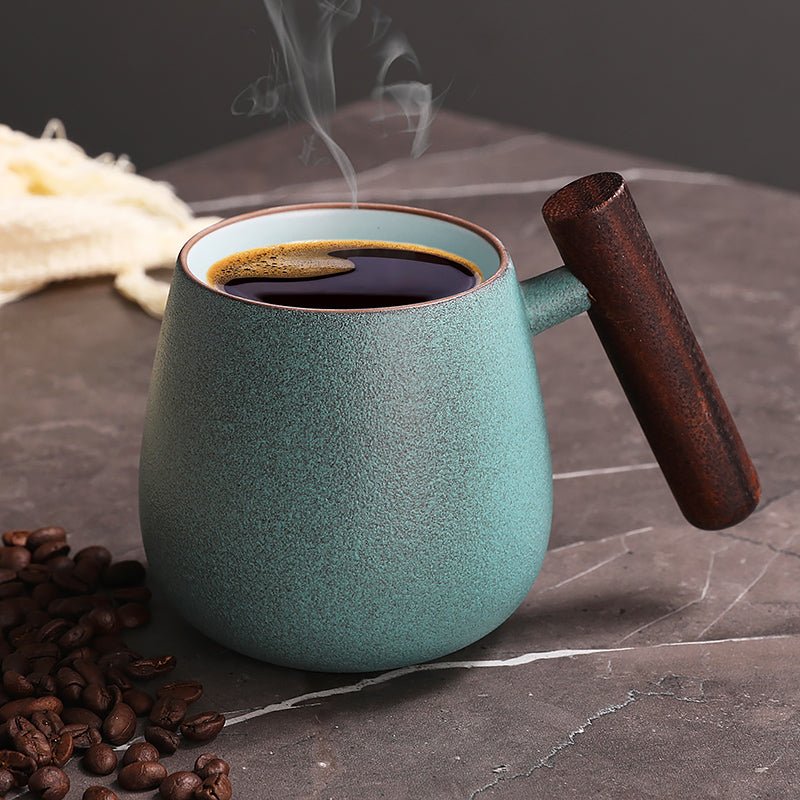
Pair of Ceramic Mugs Shelf Styling: What Buyers Should Compare
Shelf styling with two mugs succeeds or fails on clearance, silhouette, and glaze long before taste enters the picture. Here are the comparisons we would run before checkout — including the situati...
Read more
Ceramic Mugs for Table Styling Ideas: What Buyers Compare First
Two ceramic mugs can carry a whole table setting — if the heights, glazes, and rim shapes actually talk to each other. Here is what we compare before recommending a pair, the three setups we build ...
Read more
Leave a comment
This site is protected by hCaptcha and the hCaptcha Privacy Policy and Terms of Service apply.