



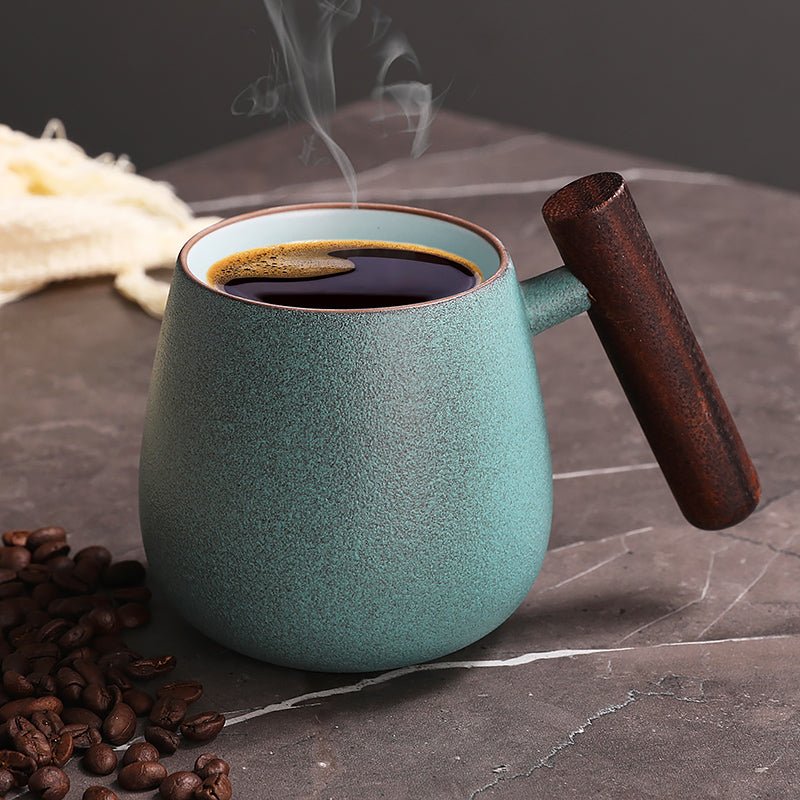
Pair of Ceramic Mugs Shelf Styling: What Buyers Should Compare
Reading time: about 10 minutes
Two mugs on a shelf is a decision, not a decoration. We can usually tell from across the room whether a pair of ceramic mugs shelf styling was measured or improvised — the improvised version has one mug floating too high, a handle jammed against a book spine, or a glaze that quietly disappears at dusk.
It is a fit problem before it is a design problem. In our store we watch this play out most weekends: a shopper buys two mugs to dress an open shelf, gets them home, and the taller one does not clear the shelf above, or the finish goes dead in a hallway with no window. The mugs were fine. The shelf was not.
Here is the comparison we would run before checkout, in the order it actually decides the result.
Pair of ceramic mugs shelf styling: why the shelf decides before the mug does
Take five measurements before you look at a single listing. Most buyers take one and guess the rest.
- Clear opening between shelves. Measure from the underside of the shelf above down to the surface the mug sits on. Shelf thickness eats into nominal spacing, so the number on a bookcase spec sheet is usually more generous than the gap you can actually see.
- Mug height at its highest point. On plenty of mugs the handle arcs slightly above the rim. Measure the whole silhouette, not just the cylinder of the body.
- Handle swing and lift room. A mug comes out by the body, not the handle. Leave a finger's width above the rim and keep the handle side clear of books, plants, or a shelf edge.
- Shelf depth against footprint. A deep shelf swallows a small round mug; a shallow one lets a wide handle overhang the lip and feel insecure every time you reach past it.
- Distance to the nearest light. A shelf tucked under a cabinet or in a corridor corner reads far darker than any product photo. Glaze that looks rich in a bright listing shot can go muddy in place.
Height on the wall matters as much as height between shelves. Eye level or one shelf below is where mugs read as objects. The top shelf of a bookcase shows the underside of the rim and turns almost any mug into clutter. On kitchen open shelving, keep the pair at least one shelf away from the hob — airborne cooking grease settles as a film that lifts off matte glaze noticeably harder than off gloss.
Round or tall — which silhouette earns the front spot?
Two silhouettes do most of the work on a styled shelf, and they solve opposite problems.
The Round Coffee & Tea Mug is the calmer of the two. A round body reads lower and wider in a real room, which is what you want when the shelf is shallow, when the pair sits at eye level, or when the mugs need to hold their own beside a book stack without turning into a tower. Open the listing for exact height, capacity, and glaze before you commit — round mugs vary enormously between compact and generous, and that difference decides whether the pair looks like a set or like two unrelated objects that happen to share a shelf.
The Landscape Tall Coffee & Tea Mug does the other job: it gives a shelf vertical lift. Tall shapes earn their space when the shelf is wide and empty, or when the pairing needs a height step so the eye has somewhere to travel. They are the weaker choice on a high shelf, where the shelf edge crops the top of the silhouette, and on a narrow ledge where a tall body on a modest base has less margin for a knock.
| What you're comparing | Round Coffee & Tea Mug | Landscape Tall Coffee & Tea Mug |
|---|---|---|
| How it reads on a shelf | Low, horizontal, steady | Vertical, graphic, lifting |
| Where it usually earns the front spot | Eye-level shelf, shallow depth | Wide shelf that needs height |
| Pairs well beside | Two or three stacked books, a low tray | Trailing plant, single-stem vase |
| Weaker choice when | The shelf looks flat and needs lift | The shelf is high or the ledge is narrow |
| Confirm on the listing | Height, capacity, glaze, care line | Height, capacity, glaze, care line |
Read the material and care line on each listing rather than assuming. "Ceramic" covers stoneware, earthenware, and porcelain, and they behave differently in a dishwasher and under a sudden temperature change. If you want to widen the choice beyond these two shapes, our unique coffee mugs collection is the fastest way to see what else is currently in the lineup.
Matched or mismatched: what each pairing actually costs you
Both photograph well. They behave very differently in a real room.
- A matched pair reads calm and formal, is gift-safe, and carries one practical advantage nobody mentions: if one chips, you reorder the same shape instead of restyling the shelf around a replacement.
- A mismatched pair reads collected and personal, but it is harder to balance. One mug becomes the main character, and the second needs a job — a different height, a heavier glaze, a different texture — or it just looks like a spare.
- The middle path is the one we recommend most often to shoppers standing in front of our shelf: same family of glaze, two different heights. The result looks intentional, and you still get variation.
One trade-off worth hearing before you buy: two identical mugs placed shoulder to shoulder can read like a retail display rather than a home. If the shelf sits in a hallway you walk past daily, mismatch usually wears better over months. If the shelf is the backdrop to a coffee station where the mugs actually get used, matched wins — you can swap their positions without rethinking the composition. If you want the same logic applied to a counter or dining table, our breakdown of pair of ceramic mugs table styling: compare colors & heights covers how viewing distance changes the answer.
Which glaze survives your shelf's real light?
This is where most styling advice falls apart. A glaze judged on a bright product page is not the glaze you will see at 7pm in a hallway.
- Gloss reflects. Near a window it throws a bright highlight that can read as a white blob from across the room. It also wipes clean easily, which matters on an open shelf.
- Matte absorbs. Beautiful in good light, flat in poor light. Matte also holds dust and grease film more stubbornly — plan on a soft brush, not just a damp wipe.
- Speckle and reactive glazes vary between pieces. No two are identical, so even a matched pair will show visible variation. That is the finish doing its job, not a defect — worth knowing before you open the box and wonder.
- Dark glazes lose detail in dim corners. Charcoal and deep blue look striking in daylight and turn into silhouettes at dusk.
- Warm whites sit well with oak and walnut; cool whites sit well with painted or black shelving. Match the glaze temperature to the shelf, not to your kitchen walls.
A two-minute test beats all of it: photograph the empty shelf on your phone in the light you actually have, at the time of day you actually look at it. Then hold that photo next to the listing. The gap between the two is the honest answer.
What belongs beside the pair — and what to leave off entirely
A pair alone can look stranded. Three objects is the reliable grouping: two mugs plus one companion.
- One companion, not three. A small plant, a pillar candle, a short stack of two or three books, or a small tray. Pick one.
- Build a height ladder. Tallest at the back or the far end, the pair stepping down in front. Nothing should hide a handle.
- Leave roughly a third of the shelf width empty. Negative space is what makes the pair read as a choice rather than storage.
- Keep the handle side open. Two mugs wedged between books look styled in a photo and are annoying every single morning.
Leave off anything that casts a shadow across the mugs, anything that has to be moved to reach them, and anything competing at the same visual weight — a large vase beside two mugs makes the mugs look like an afterthought. On a short or narrow shelf the whole approach changes; our guide to ceramic pair coffee mugs for a minimal shelf covers stackable and low-profile options.
How do you keep a displayed pair from looking dusty and tired?
Mugs that live on a shelf still get dirty. Open shelving collects dust, and a kitchen shelf collects a fine grease film on top of it. Rotate the pair into actual use — a mug that is only ever displayed still needs washing, and a mug that gets used gets checked for chips at the same time.
- Read the care line before the first wash. Metallic rims, decals, and hand-applied detail are commonly hand-wash only, and a dishwasher cycle can dull them permanently. Check the specific listing, not the category.
- Warm the mug before a boiling fill. A mug that sat on a cold shelf overnight is more stressed by a sudden pour than one already at room temperature. This is basic ceramic handling, not a marketing claim.
- Don't hang mugs from the handle long term. The handle is an attached joint and the part most likely to fail under sustained load.
- Don't nest a heavy mug inside a light one. Grit trapped between two glazed surfaces scratches both.
- Skip the stack if the glaze feels soft. If you must stack, put a felt pad or a napkin between rims.
When is a styled pair the wrong purchase?
We would rather say this than process the return. A styled pair is a display purchase, and it is a poor fit for a few common situations:
- You need daily volume. If two people each drink two coffees before 9am, two mugs is not your working set — buy the pair for the shelf and a separate stack for the cupboard.
- The shelf is very shallow. Under roughly a hand's width of depth, a wide handle overhangs and the mug feels like it is about to tip whenever you reach past it.
- Toddlers and low open shelving. Ceramic on a reachable shelf is a chip waiting to happen.
- The shelf is pure storage. If the goal is fitting twelve mugs into a cupboard, styling advice is the wrong tool.
- You are gifting to someone whose taste you don't know. A strong glaze statement is memorable and also harder to place. Neutral finishes travel better.
If you want the wider version of this comparison — different heights, different shelf types, different finishes — our ceramic mug shelf styling ideas guide picks up where this one stops.
Frequently asked questions
Do the two mugs on a shelf have to match exactly?
No. Matching reads calmer and is easier to replace if one chips; mismatching reads more personal but needs a clear height or glaze difference to avoid looking accidental. The safest compromise is the same glaze family in two different heights.
How much clearance do I need above a mug on a shelf?
Enough to lift the mug out by its body, plus room for the handle to swing. In practice that means measuring the clear opening between shelves, then measuring the mug at its highest point — including any handle that arcs above the rim — and leaving a finger's width of spare room.
What should I measure first for pair of ceramic mugs shelf styling?
The clear opening between shelves, not the mug. Shelf thickness reduces the usable gap, and it is the single measurement that most often rules out an otherwise perfect pair. Depth and handle swing come next, then the distance to your nearest light source.
Can display mugs go in the dishwasher?
Only if the listing's care line says so. Metallic rims, decals, and hand-painted detail are frequently hand-wash only, and repeated dishwasher cycles can dull a glaze that looked fine after the first wash. Check the exact care instructions for the specific mug you buy rather than the category in general.
Which mug should sit in front, round or tall?
Put the taller of the two at the back or the outer end and the round one forward — it keeps both handles reachable and gives the shelf a height step. On a high shelf, reverse the logic and skip the tall mug altogether, because the shelf edge will crop it.
Ready to pick your mug? Two ways to save on today's order:
Ordering 1–3 mugs? Get an extra 10% off your 1st order with code 10_OFF Apply 10% Off & Shop Wooden-Handle Mugs →
Gifting 4+ mugs? Buy 3, Get the 4th Free applies automatically at checkout (no code needed; offers do not stack) · Free standard shipping (Nov pre-Christmas delivery: 15–20 calendar days US) · Free replacement if chipped in transit.
Popular mug buying guides: Ceramic Tea Cups & Infuser Mugs · Ceramic Mugs with Lids Compared · Wooden-Handle Tea Infuser Mugs Compared · Christmas & Secret Santa Mugs 2026 · Espresso & Cortado Cups Guide · Cup & Saucer Gift Sets · All 25 Mugs Spec Table · Mug Size Guide · Shipping & Promo FAQ
FIRST ORDER 10% OFF (CODE: 10_OFF) · OR BUY 3, GET THE 4TH FREE


Read more
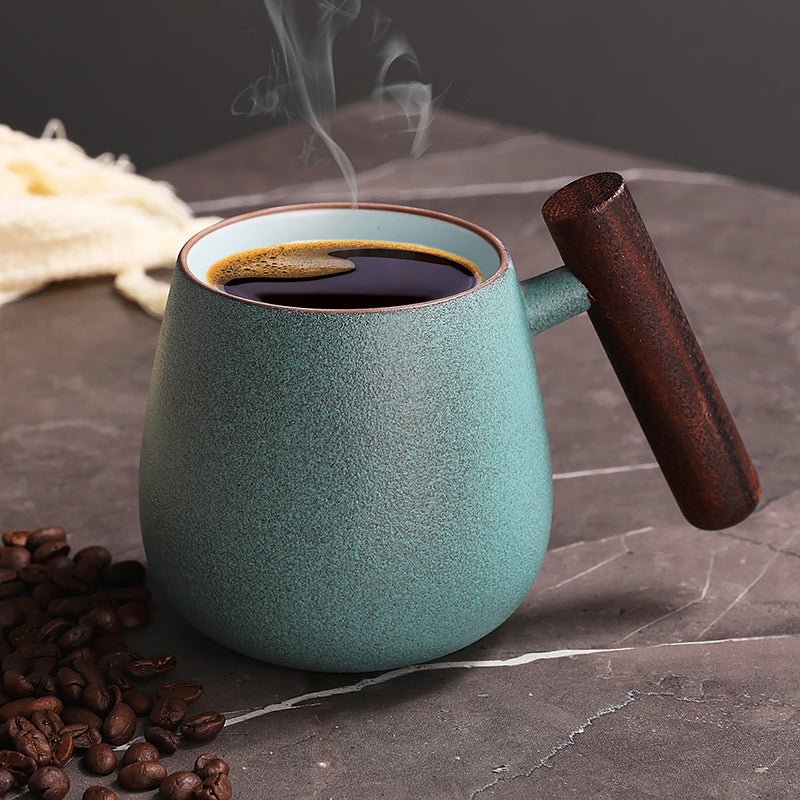
Best Ceramic Mug for Coffee Counter: What Buyers Compare
A counter mug has to survive daily pours, dishwasher cycles, and a permanent spot in your sightline. We break down footprint, wall thickness, glaze type, and the two shapes worth comparing before y...
Read more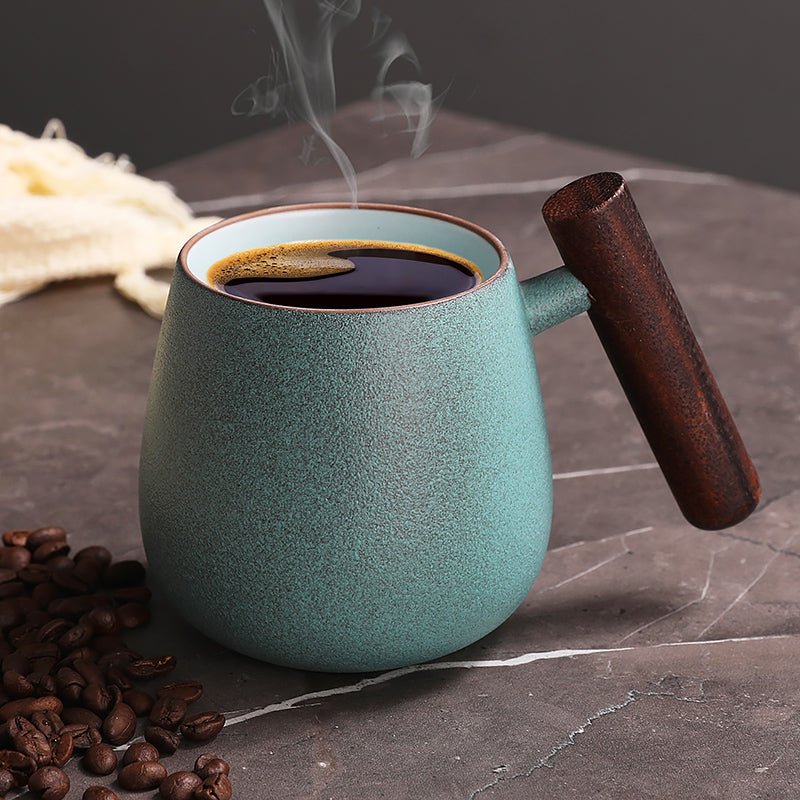
Ceramic Coffee Mug by the Window: What to Compare Before Buying
A window sill asks different things of a mug than a desk does: a footprint that fits the ledge, a handle you can clear one-handed, and a glaze that holds up to direct sun. What to measure, what to ...
Read more
Leave a comment
This site is protected by hCaptcha and the hCaptcha Privacy Policy and Terms of Service apply.