

Cacao Cup Shared Household Product Shortlist Guide: 3 Choices
Reading time: about 9 minutes
At 7:15 a.m., one housemate leaves half of a large cacao drink beside a laptop while another refills a smaller cup before leaving for work. A cacao cup shared household product shortlist guide should solve that mismatch before it turns into unfinished drinks and crowded shelves. We handle and pack this category in our store, and the recurring issue is simple: people can share a kitchen without sharing a serving size. The useful comparison is not which cup looks most impressive on its own. It is which cup matches each person's normal pour, mixing method, desk time, and washing routine.
The verified catalog points give us three clear references: the Ball Handle is listed at 250 ml with an 11.2 cm diameter, the Round at 390 ml, and the Spittoon at 400 ml. These are separate product listings, not a bundled or matching set. We are comparing them as everyday drinkware for cacao based on capacity and the visible opening shown on each product page. We do not present them as traditional, ritual, certified, or purpose-built cacao vessels.
Why does one shared house cup often fail?
The largest difference in this group is not between 390 ml and 400 ml. It is between the 250 ml Ball Handle and the two near-400 ml choices. The Round and Spittoon differ by only 10 ml, so they occupy essentially the same serving band for most household decisions. Treating the Round as a medium cup and the Spittoon as a dramatically larger one would overstate the catalog facts.
Before opening product pages, ask each regular drinker to check four details:
- The amount of liquid normally poured before milk, foam, or other additions
- How much headspace is needed for stirring without leaving cacao on the counter
- Whether the drink is finished quickly or sits through a long desk session
- How much shelf, coaster, drying-rack, and dishwasher space is actually available
Listed capacity is a comparison value, not a requirement to fill a cup to the rim. A comfortable working pour usually needs room for mixing and carrying. External size also cannot be inferred from capacity alone. The 250 ml Ball Handle has a listed 11.2 cm diameter, so a smaller volume should not automatically be treated as a narrow-footprint choice.
Who gets the 250 ml Ball Handle?
The 250 ml Ball Handle coffee and tea mug is the clearest small-serving option in this shortlist. Its listed 11.2 cm diameter gives shoppers a concrete measurement to compare with a coaster, desk corner, or cabinet shelf. That number should not be assumed to be the inner-rim measurement unless the current product page specifically identifies it that way.
- Choose it: One person regularly wants a short morning cacao and tends to leave larger servings unfinished.
- Choose it: The household needs an obviously different capacity so the light pourer can identify a preferred cup quickly.
- Skip it: The regular serving is above 250 ml or includes enough ice, foam, or milk to consume most of the available volume.
- Skip it: The user wants a conventional loop handle with full finger clearance rather than the listed ball-handle form.
This option also makes sense for a brief office-desk drink, but measure the available surface first. Small capacity does not guarantee a small external footprint. It is not the strongest choice for someone who dislikes refills or routinely prepares a long evening drink.
Is the 390 ml Round a true middle choice?
The 390 ml Round coffee and tea mug suits a household member who wants a fuller serving with room for additions. It is a practical step up from 250 ml, but it is not a mathematical midpoint in this three-product group. It sits only 10 ml below the 400 ml Spittoon.
- Choose it: A drinker normally wants one near-400 ml serving for breakfast, an evening cacao, tea, or coffee.
- Choose it: The Round profile and visible opening shown on the page fit the user's grip, stirring method, and cabinet better than the Spittoon style.
- Skip it: Most drinks are short pours that cool before the cup is empty.
- Skip it: You are expecting a noticeably smaller alternative to 400 ml; a 10 ml difference will not create that separation.
For couples with one light drinker and one fuller-pour drinker, the Round can fill the larger role beside the 250 ml option. It is not insulated drinkware, and this comparison makes no extended heat-retention claim. An open cup left beside a laptop will still lose heat over time.
Does the 400 ml Spittoon add useful capacity?
The 400 ml Spittoon coffee and tea mug has the highest listed capacity of the three. The gain over the Round is only 10 ml, however, so its strongest reason for making a household shortlist is the product's visible profile and opening rather than a major increase in serving volume.
- Choose it: The drinker wants the highest listed capacity in this comparison and prefers the style shown on the product page.
- Choose it: A generous single cacao pour is more useful than a clear small-versus-large capacity split.
- Skip it: You need a substantially larger alternative to 390 ml; this is not that jump.
- Skip it: The household mainly prepares 250 ml servings or needs a more conventional mug profile.
The product name should not be read as a claim of traditional, ceremonial, or specialized cacao use. We treat it here as the everyday coffee and tea mug listed by our store. Buyers who dislike the name or profile should choose a different style rather than letting the extra 10 ml drive the decision.
Which cup earns each role in a cacao cup shared household product shortlist guide?
A useful shortlist assigns a job to each option. It does not assume every household should buy every cup.
| Option | Verified size detail | Best household role | Main reason to skip |
|---|---|---|---|
| Ball Handle | 250 ml; listed 11.2 cm diameter | Short pours, quick morning drinks, visibly smaller serving role | Limited volume or unsuitable handle preference |
| Round | 390 ml | Fuller everyday serving where the Round profile fits the user | Only 10 ml below the 400 ml option |
| Spittoon | 400 ml | Highest listed capacity and a distinct visible style | No meaningful capacity jump over 390 ml |
That is how we use this cacao cup shared household product shortlist guide in practical conversations. The first decision is 250 ml versus a near-400 ml serving. The second decision, if the larger serving wins, is Round versus Spittoon based on the visible opening, handle and profile shown, storage fit, and personal preference. Quantity is a separate decision because these products are not presented as a set.
How do care, opening, and cabinet space break a tie?
A visible opening can help a buyer judge access for a spoon or small whisk, but exact opening dimensions are not verified here for the Round or Spittoon. A more exposed drink surface can be easier to reach during mixing and rinsing, while also allowing heat to escape faster than a narrower opening under similar conditions. Use that as a general trade-off, not as a product-specific heat-retention promise.
- Measure shelf height and depth, then measure the coaster or desk space where the cup will normally sit.
- Review the top and side product images for opening access, handle clearance, and the amount of room the profile appears to require.
- Confirm the current material and care statement on the individual product page. Do not infer dishwasher or microwave compatibility from the product name or photographs.
- During gift unboxing, inspect the rim for chips, the handle junction for hairline cracks, and the base for rocking on a flat counter. Set damaged drinkware aside rather than using it.
- After cacao, rinse residue before it dries and use a soft, non-abrasive cleaning tool consistent with the listed care instructions.
If the current care guidance permits dishwasher use, load the cup so its rim and handle do not knock against neighboring items during the cycle. A household that runs a tightly packed dishwasher every night may value rack fit as much as capacity. Hand-washing households should focus on how easily the visible opening can be reached without forcing a sponge or brush.
What should the household record before ordering?
We suggest a short kitchen-counter check rather than guessing from an existing favorite mug:
- Use a measuring jug to record each person's normal cacao pour, including milk but leaving the preferred headspace.
- Assign each person to the 250 ml band or the near-400 ml band.
- If near-400 ml wins, compare the Round and Spittoon by visible profile and handling preference, not by the 10 ml difference.
- Check shelf space, cleaning routine, and how many days cups wait between wash cycles before deciding quantity.
If none of these three profiles fits the cabinet or the people using it, browse our unique coffee mugs collection for other individually listed shapes. A different handle, footprint, or visible opening may matter more than staying with this exact shortlist.
Frequently asked questions
What cacao cup sizes work for two people with different serving habits?
Use the 250 ml Ball Handle as the clearly smaller option and either the 390 ml Round or 400 ml Spittoon for the fuller-pour role. The Round and Spittoon are only 10 ml apart, so there is little reason to select both purely for capacity. Choose between them using the visible profile, opening, handle preference, and available shelf space.
Does the cacao cup shared household product shortlist guide mean buying all three?
No. The products are individually listed and are not presented as a set. Buy only the capacities and profiles that correspond to real household roles, even if that means selecting one option or repeating the same option for people with similar habits.
Is the 400 ml Spittoon much larger than the 390 ml Round?
No. Its listed capacity is only 10 ml higher, so shoppers should not expect a noticeably larger serving from that difference alone. Compare the product-page images and choose the profile that better fits the user's grip, stirring routine, and storage space.
Can these cups go in the dishwasher or microwave, and what should I check next?
Confirm the current material and care instructions on each product page before using a dishwasher or microwave; this comparison does not make either compatibility claim. Measure each regular cacao serving, choose the 250 ml or near-400 ml role, and inspect the matching product page. If the handle or profile is not suitable, move to the unique coffee mugs collection instead of forcing a poor fit.
More from our blog
Read more
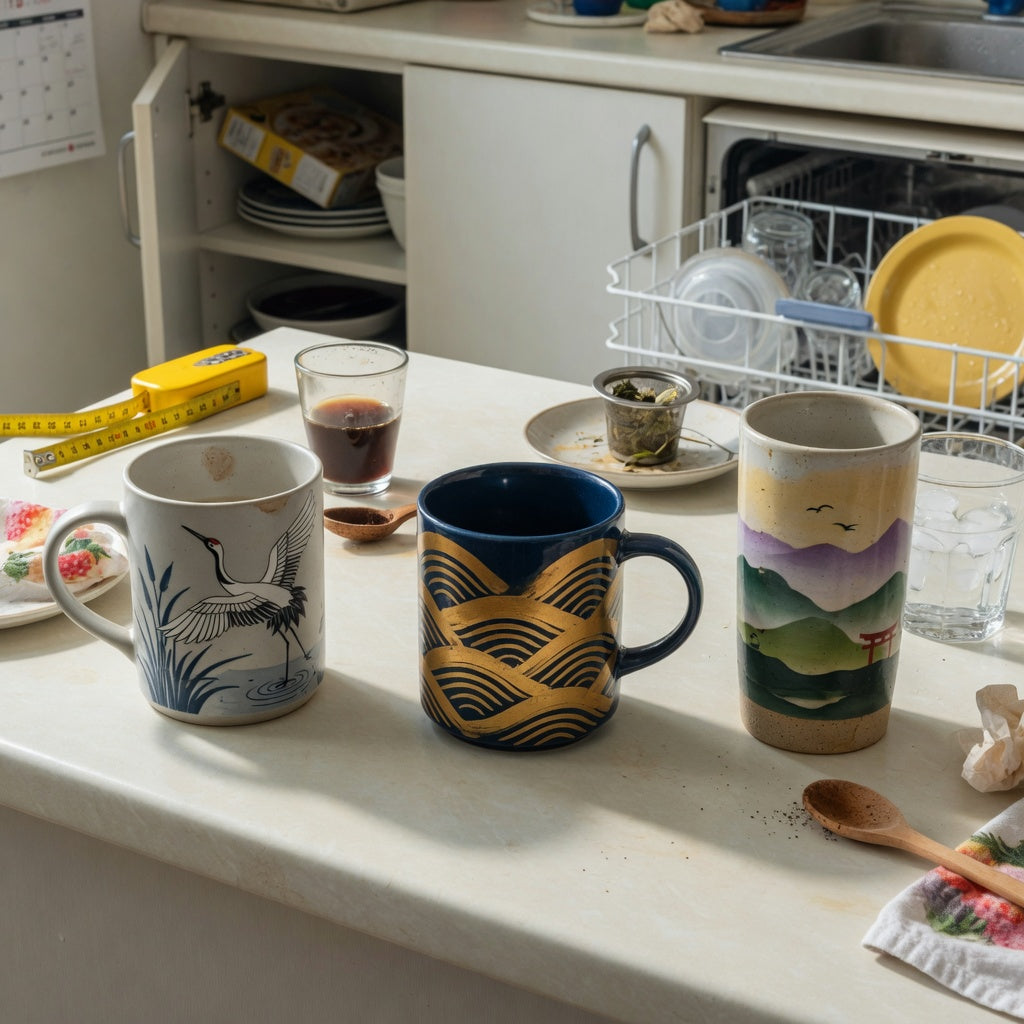
High Quality Ceramic Coffee Mugs: Shared Household Shortlist Guide
Shared kitchens expose mug mismatches quickly. This practical comparison maps The Crane, Golden Waves Kio, and Landscape Tall to specific drink, storage, and visual-ownership scenarios, with clear ...
Read more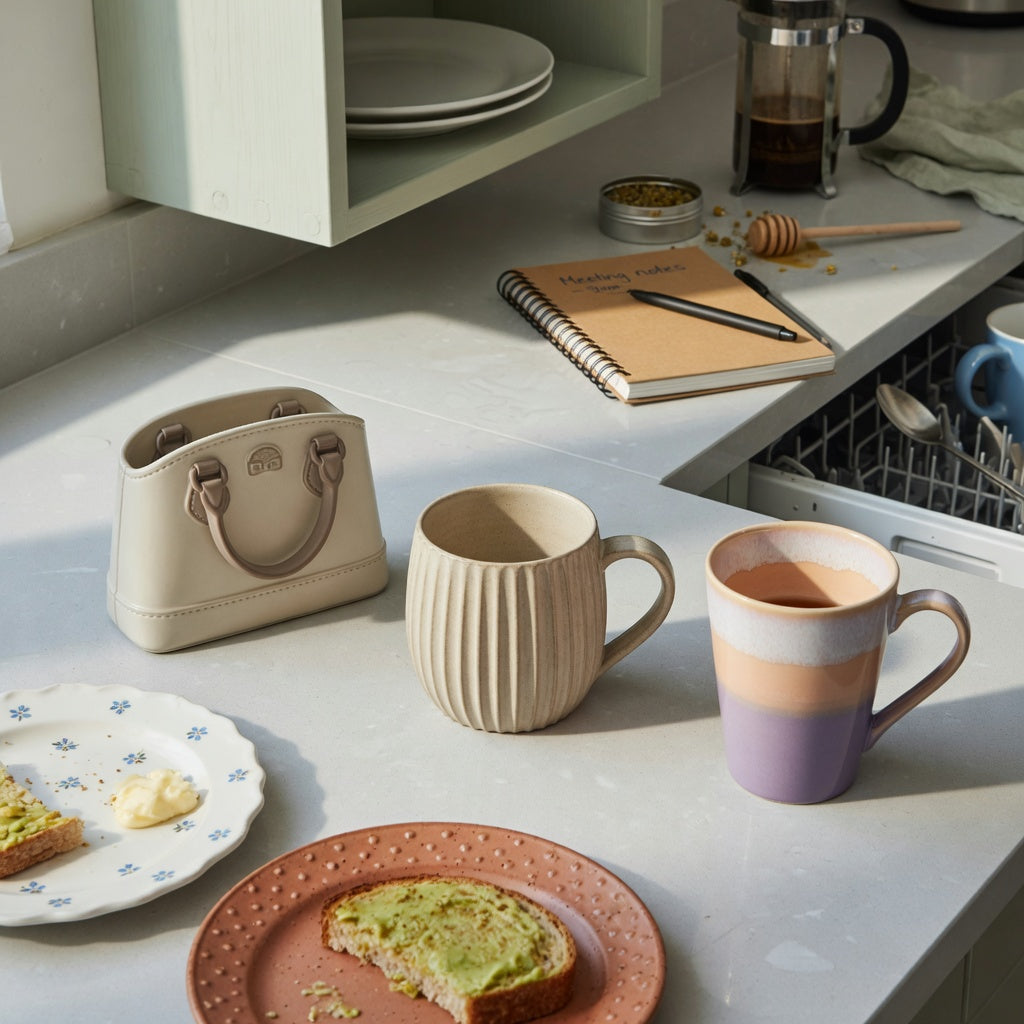
Cute Ceramic Coffee Mugs Shared Household Product Shortlist Guide
Three individual ceramic mug styles matched to shared-home routines: handbag-inspired for visual impact, pleated for texture, and gradient for mixed color preferences, with clear skip conditions an...
Read more
Leave a comment
This site is protected by hCaptcha and the hCaptcha Privacy Policy and Terms of Service apply.