
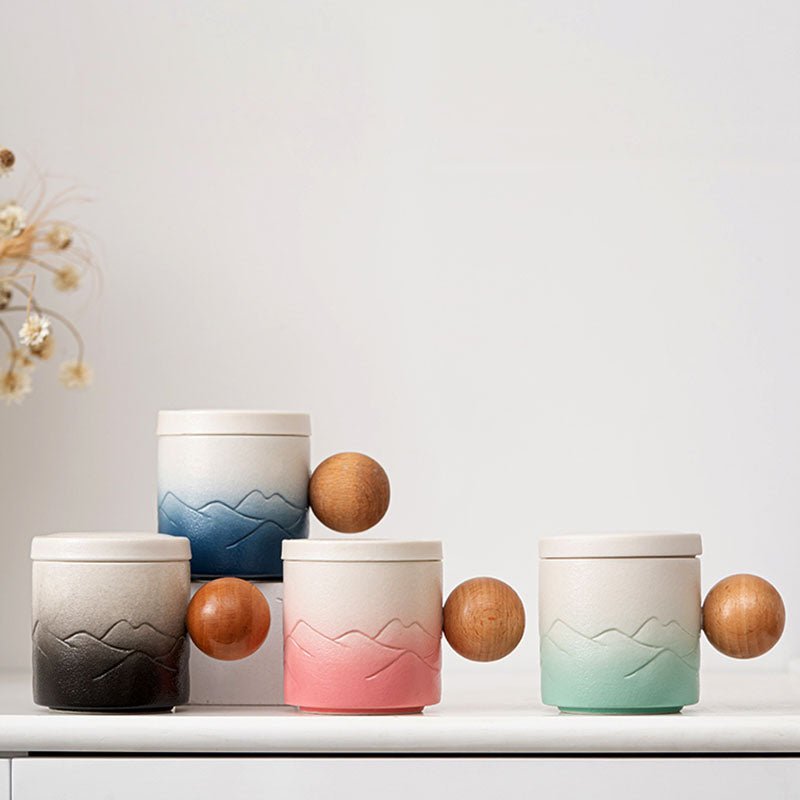
Cacao Cup Compact Kitchen Practical Purchase Checklist: 3 Sizes Compared
Reading time: about 9 minutes
A cup can sit comfortably on the counter and still fail the cabinet test: the rim catches the frame, the handle blocks its neighbor, or there is no room to lift it over the shelf lip. Our cacao cup compact kitchen practical purchase checklist starts with the storage spot, then compares the facts currently available for three CoffeifyMug options: the Ball Handle at 250 ml with a listed 11.2 cm diameter, the Round at 390 ml, and the Spittoon at 400 ml.
In our store, we separate a published specification from what a product photo merely suggests. Capacity is confirmed for all three cups, but only the Ball Handle has a supplied external measurement. Material, height, wall thickness, handle projection, base width, dishwasher compatibility, and microwave compatibility are not established by the verified facts used here. These are everyday drinkware options that can be used for cacao, not traditional, ritual, certified, or purpose-built cacao vessels.
Will the cup clear your cabinet frame and neighboring handles?
Measure the place where the cup will live, not an open patch of counter. Cabinet frames, hinges, shelf lips, and adjacent handles often reduce usable space. A cup also needs an exit path; fitting on the shelf does not help if you cannot lift and angle it out without striking the shelf above.
- Opening clearance: Measure the narrowest point the body and rim must pass through, including the cabinet frame and hinge area.
- Usable shelf depth: Measure to the first rear obstruction, such as another item, rather than relying on the cabinet's outside depth.
- Vertical lift space: Check the room needed to raise the base over any shelf lip and move the cup forward.
- Handle lane: Account for the handle itself and the finger space needed to grip it without moving every neighboring mug.
- Working counter space: Check the landing area beside the kettle, coffee maker, utensil holder, or dish rack.
Repeat this check for an office desk or drink station. A wide-looking cup may fit a shelf but consume too much usable space beside a monitor or paperwork. Capacity alone cannot tell you the exterior footprint, so the 250 ml option should not automatically be treated as the narrowest.
Cacao cup compact kitchen practical purchase checklist
Use this sequence before appearance becomes the deciding factor:
- Choose the exact cabinet, shelf, or counter position where the cup will usually stay.
- Measure the opening, usable depth, vertical lift space, and clearance around nearby handles.
- Pour your normal cacao serving into a measuring jug and compare it with 250 ml, 390 ml, and 400 ml.
- Allow space below the rim for stirring, foam, spices, or toppings. Do not assume the listed capacity is a comfortable carrying level.
- Decide whether you need easy spoon access, a compact handle position, or room for a larger drink.
- Compare your measurements only with dimensions explicitly published for the product.
- Confirm material and care instructions if microwave use or regular dishwasher cycles are part of your routine.
The Ball Handle's listed 11.2 cm diameter is useful only after confirming its reference points. The supplied specification does not say whether that figure includes the handle, measures the rim, or refers to another part of the cup. Do not turn it into a total-width claim without clarification.
What do 250 ml, 390 ml, 400 ml, and 11.2 cm actually prove?
The confirmed capacities help you compare serving volume. They do not establish cabinet fit, and only one supplied measurement offers an external size reference.
| Product | Verified catalog fact | Useful for deciding | Still unresolved |
|---|---|---|---|
| Ball Handle | 250 ml; listed 11.2 cm diameter | Smaller serving preference and one external measurement to investigate | Diameter reference points, height, handle projection, material, and care |
| Round | 390 ml | Larger serving preference and comparison of the visible profile | All external dimensions, material, and care |
| Spittoon | 400 ml | Largest listed capacity and comparison of the visibly open profile | All external dimensions, exact rim opening, material, and care |
The Round and Spittoon differ by only 10 ml in listed capacity. That small capacity difference does not reveal which cup is shorter, narrower, easier to grip, or more efficient on a shelf. Base shape, rim width, handle projection, and overall height can make cups with nearly equal capacities behave differently in a crowded cabinet.
Which CoffeifyMug cup fits your serving and storage situation?
- Your usual cacao pour sits comfortably below 250 ml, and you want the option with the most supplied sizing information: Start with the Ball Handle coffee and tea mug. Its confirmed 250 ml capacity and listed 11.2 cm diameter provide a more concrete starting point, but the distinctive handle still needs clearance and the diameter reference should be confirmed.
- You prefer a larger serving and the rounded silhouette suits your storage plan: Review the Round coffee and tea mug. Its 390 ml capacity is confirmed. It is a reasonable candidate only if its current external dimensions can be checked against a tightly constrained shelf.
- You want the largest listed capacity and prefer the visibly open presentation: Consider the Spittoon coffee and tea mug. The 400 ml capacity leaves more nominal room for a larger drink, while the visible opening may suit a presentation with foam or toppings. Exact rim, base, and total-width measurements remain necessary for a close cabinet fit.
For a desk beside a laptop, none of the supplied facts confirms a lid, sealed top, or spill-resistant design. A larger capacity also gives you more liquid to move around electronics, so a lidded travel cup may be the more practical choice for that setting.
Gift purchases need a different level of caution. The recipient cannot check cabinet fit until unboxing, and you may not know whether hand washing is acceptable to them. Choose from the verified details rather than appearance alone, inspect the item promptly after delivery, and keep the packaging until condition and fit have been checked under the store's current terms.
How does the visible opening affect stirring and counter use?
A visibly open profile can help you judge how the cup may feel with a spoon, small whisk, foam, or toppings, but a photograph is not an exact rim measurement. Perspective and camera angle can make openings appear wider or narrower. If spoon access or hand washing is a deciding factor, ask for the interior opening and depth rather than estimating them from the image.
Do not use the visible opening alone to rank heat retention or cooling speed. Actual interior diameter, material, wall thickness, starting temperature, and room conditions all affect how a drink behaves. Those details are not confirmed here, so we would not claim that one of these cups keeps cacao warm longer than another.
Working headroom matters as much as nominal volume. If your measured drink nearly reaches a listed capacity, stirring and carrying may be awkward. A larger cup can provide more room above the drink, but it may also demand more shelf and counter space once its exterior dimensions are considered.
What should you confirm about material, finish, and daily care?
The verified source facts do not identify the body material or finish, and appearance is not enough to establish either one. They also do not confirm dishwasher use, microwave use, or resistance to sudden temperature changes. If any of those details are non-negotiable, verify the current product instructions before ordering.
- Check for an explicit material and food-contact finish description.
- Look for separate microwave and dishwasher guidance; approval for one does not imply approval for the other.
- Confirm whether any decoration or coating shown on the current page has special care restrictions.
- Request height, widest outer width, base width, rim diameter, and handle projection if cabinet clearance is close.
- Ask whether the published diameter includes the handle and other projecting features.
At unboxing, our practical check starts on a flat, dry counter. Inspect the drinking rim for chips or rough areas, examine both handle joints for hairline cracks, look over the food-contact surface for visible damage, and confirm that the base does not rock. Do this before the first drink or dishwasher cycle. A cup with a damaged rim, cracked handle connection, or unstable base should not be used.
Daily care is also part of compact-kitchen fit. A cup that requires hand washing may be inconvenient when the sink and drying area are already crowded. If frequent dishwasher use is essential, do not treat missing care information as approval.
When is another cup style the more practical purchase?
These options are not a strong match if you need confirmed stackability, a nesting set, a fitted lid, leak resistance, or complete external dimensions before checkout. A straight-sided cup with published measurements may use a narrow cabinet more predictably. A sealed travel cup is better for commuting or carrying cacao around electronics.
A smaller cup may suit a short serving better than leaving a 390 ml or 400 ml cup mostly empty. For shared batches, use a separate serving vessel and individual cups instead of expecting one cup to cover the entire routine. You can compare additional shapes in our unique coffee mugs collection, applying the same storage, serving, and care checks to each option.
Frequently asked questions
How do I use the cacao cup compact kitchen practical purchase checklist before ordering?
Measure the cabinet opening, usable shelf depth, vertical lift space, and room around neighboring handles. Then measure your usual cacao serving and compare it with the listed capacities. Request any missing external dimension or care instruction that could change your decision.
Is the 250 ml Ball Handle guaranteed to use the least shelf space?
No. It has the smallest listed capacity and a listed 11.2 cm diameter, but capacity does not prove exterior size. The diameter's reference points and the handle projection must be confirmed before calling it the most compact option.
Should I choose the 390 ml Round or the 400 ml Spittoon for a larger cacao?
Their listed capacities differ by only 10 ml, so serving volume alone is unlikely to settle the choice. Compare the visible profiles, then verify outer width, height, rim opening, base width, and handle clearance against your storage space.
Can these cacao cups go in a dishwasher or microwave?
The supplied verified facts do not confirm dishwasher or microwave compatibility. Check the current instructions for the specific product, since material, finish, and decoration can affect the correct care method.
Which option is best for a cacao drink beside a laptop?
None of the supplied product facts confirms a lid or spill-resistant design. If the drink will regularly sit near electronics, a purpose-designed lidded cup is a more suitable choice than selecting one of these open drinkware options by capacity alone.
Your next step: Write down your normal pour, cabinet opening, shelf depth, lift clearance, and essential care requirements. Compare those facts with the three linked product pages, and pause before checkout if a measurement or care instruction needed for your kitchen is still missing.
More from our blog
Read more
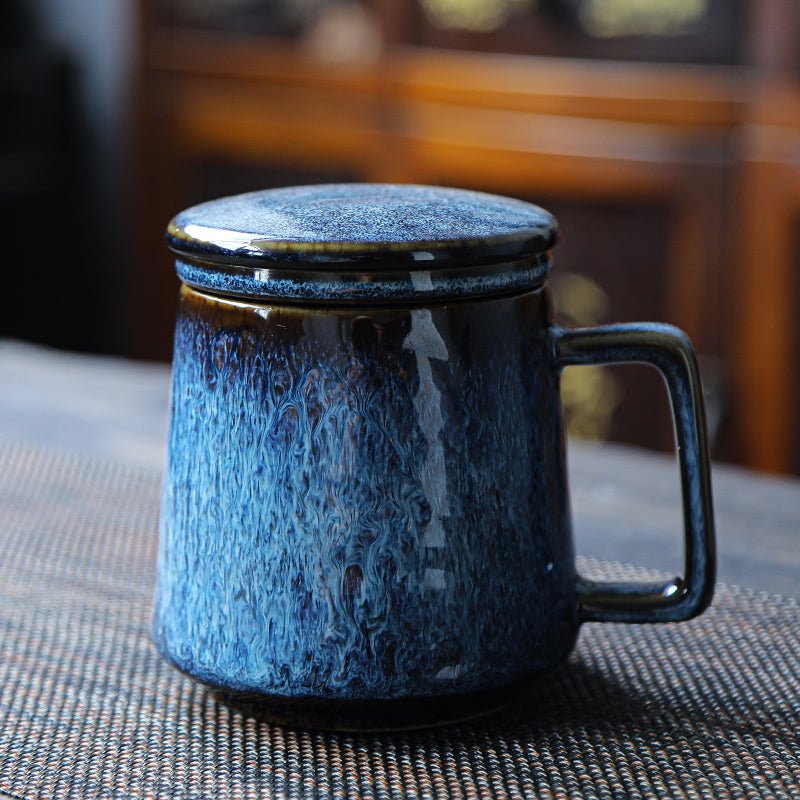
Cafe Au Lait Mug Compact Kitchen Practical Purchase Checklist: 3 Sizes
Compare The Flow 400 ml, Morning and Night 440 ml, and The Rock 480 ml using cabinet clearance, handle reach, serving volume, and listing-specific care checks. This guide separates verified facts f...
Read more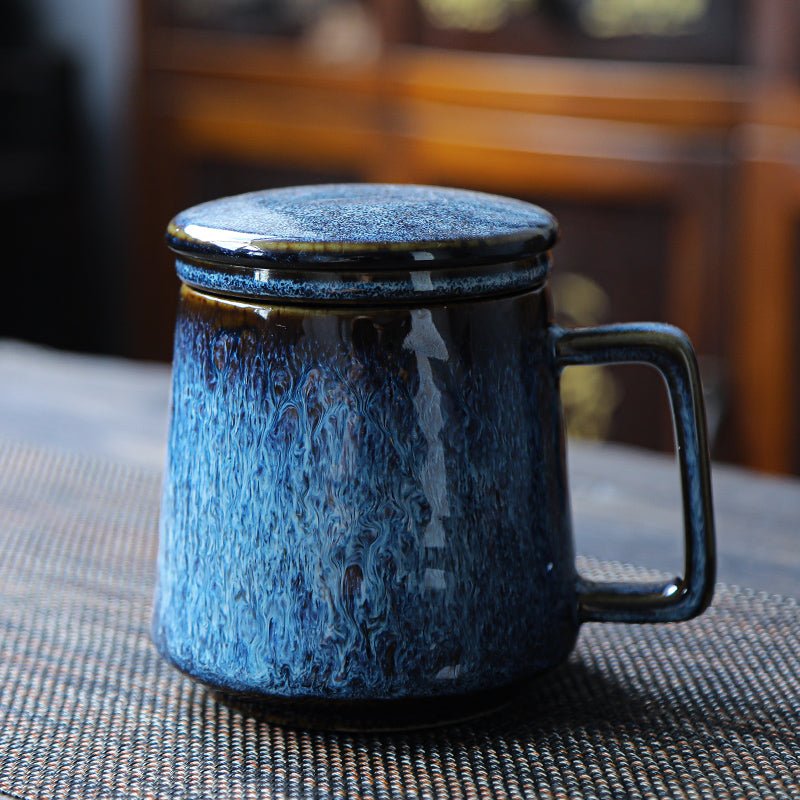
Oversized Ceramic Coffee Mugs: Compact Kitchen Purchase Checklist
The oversized ceramic coffee mugs compact kitchen practical purchase checklist covers shelf height, closed-cabinet depth, handle projection, appliance clearance, care, and filled handling. It also ...
Read more
Leave a comment
This site is protected by hCaptcha and the hCaptcha Privacy Policy and Terms of Service apply.