
Breakfast Coffee Cup Replacement Purchase Practical Purchase Checklist
Reading time: about 10 minutes
A hairline crack at the rim, a cup that rocks on the kitchen counter, or a third trip to the coffee pot is a specific replacement problem, not a reason to buy another mug at random. This breakfast coffee cup replacement purchase practical purchase checklist begins with that failure and compares three current CoffeifyMug choices using the facts we can verify: Retro 170 ml, Pleated 200 ml, and Landscape Tall 350 ml.
In our store, we use listed capacity as the first filter, then ask shoppers to verify the physical and care details that determine daily fit. Capacity does not reveal base diameter, overall height, handle clearance, empty weight, material, or dishwasher and microwave guidance. Those specifications were not included in the verified facts supplied for this comparison, so we will not infer them from product names or photographs. Instead, you will measure the old cup and carry the unanswered questions to the current product page.
Which problem made the old breakfast cup replaceable?
Put the old cup in its normal place beside your breakfast plate before discarding it. The replacement decision becomes clearer when you identify one primary limitation: damage, insufficient volume, excessive table space, awkward storage, or uncomfortable handling. A different color or shape will not fix a capacity problem.
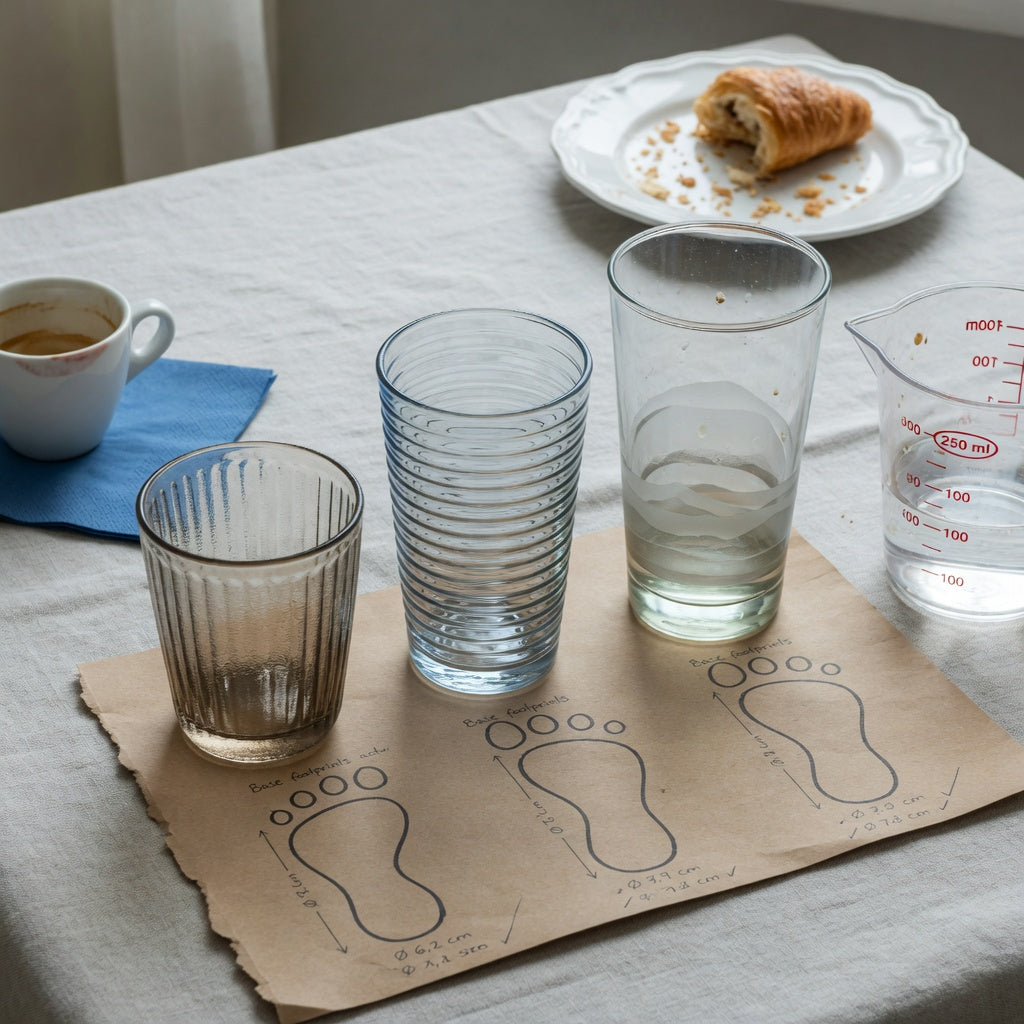
- Measure the normal pour: Fill the old cup to the level you actually drink, then transfer that liquid to a marked measuring jug. Record the everyday amount rather than filling to the brim.
- Record the occupied footprint: Trace the base on paper, then mark the handle's furthest edge. The total occupied width matters beside a plate, phone, butter dish, or shared pot.
- Check storage clearance: Measure the clear opening between shelves, not the cabinet's exterior height. Also record the available width if handles prevent close side-by-side storage.
- Name the handling or damage issue: Note rim chips, visible hairline cracks, an uneven base, limited knuckle clearance, or a cup that becomes uncomfortable at your usual fill level.
If damage alone retired the cup and its volume and table fit were right, look for similar capacity and dimensions. If repeated refills were the real failure, do not let a familiar silhouette pull you back to the same volume.
170 ml, 200 ml, or 350 ml: which refill pattern fits breakfast?
Listed capacity is a comparison point, not a guaranteed everyday fill line. Most people leave headspace so they can lift the cup without spilling, and the usable amount depends on the vessel's form. Compare your measured pour with the listed number, leave a practical margin, and confirm how capacity is defined on the current listing if an exact fit matters.
| Current option | Verified listed capacity | Replacement situation | Remaining check |
|---|---|---|---|
| Retro coffee tea cup | 170 ml | Your normal pour is clearly below the listed capacity, and a short refill is acceptable. | Confirm base width, overall width, height, material, and care guidance. |
| Pleated coffee tea cup | 200 ml | You want a modest 30 ml increase over the Retro or already know that roughly 200 ml suits your routine. | Do not infer grip, dimensions, or care requirements from the product name alone. |
| Landscape Tall coffee tea mug | 350 ml | Your smaller cup caused unwanted top-ups, and you want to shortlist a substantially larger listed capacity. | Confirm base diameter, total height, handle projection, weight, material, and care. |
A shopper whose measured breakfast pour is about 230 ml gets a clear result from the capacity figures: only the 350 ml option is listed above that amount. It still needs enough headspace for comfortable carrying. At about 160 ml, all three remain possible on capacity alone, so table footprint, lifting comfort, storage, and refill preference become the deciding variables.
Test handling with the amount you actually drink, not an empty cup. For scale, 350 ml of water weighs about 350 g before the vessel's own weight, while 170 ml weighs about 170 g. That does not tell us the finished weight of any CoffeifyMug option, but it explains why a larger morning serving can feel meaningfully heavier in the hand.
Why listed capacity cannot answer the footprint question
Two cups can share a capacity while differing in base diameter, rim width, handle projection, and overall height. A product called Tall is not automatically narrow at the base, and a pleated surface does not by itself prove a particular grip. We see better replacement decisions when shoppers treat those as details to verify rather than conclusions drawn from a photo.
- Trace the old cup's base and handle on paper while it sits in its usual orientation.
- Mark the edge of the breakfast plate and any fixed no-go area near the table edge.
- Measure the maximum width, including the handle, plus the clear shelf height available for storage.
- Compare those numbers with the current product-page dimensions. Do not estimate scale from styled photographs.
- If a required measurement is not shown, ask our store before ordering rather than assuming capacity predicts it.
On a crowded table, even a small difference in handle projection can matter more than an extra 30 ml of capacity. Once you know your maximum width and height, use the unique coffee mugs collection to compare only shapes that can fit that measured space.
Which current cup matches each replacement scenario?
These are shortlisting recommendations, not claims that capacity alone guarantees fit. Each option still requires a check of its current dimensions, material, package contents, and care instructions.
Retro 170 ml for an established short-pour routine
Your old cup worked well because you drank a smaller measured serving, and damage rather than volume ended its use. The 170 ml Retro cup is the closest capacity starting point among these three. It is not the practical choice if your goal is to stop refilling a cup that already held around 170 ml or to accommodate a brew setting above its listed capacity.
Pleated 200 ml for a modest capacity adjustment
Your normal serving falls between a short cup and a large mug, or your previous 200 ml cup had the right volume but developed damage. The 200 ml Pleated cup preserves that middle capacity and provides 30 ml more than the Retro on listed figures. That is a modest step, so it is not a convincing fix if 200 ml already left you making repeated top-ups.
Landscape Tall 350 ml when refills caused the frustration
Your 170 ml or 200 ml cup interrupted breakfast because your normal drink required another pour. The 350 ml Landscape Tall mug gives you 150 ml more listed capacity than the Pleated and 180 ml more than the Retro. It is not automatically better for a low shelf, a tight place setting, or someone sensitive to a heavier filled mug; verify those points before treating extra capacity as the answer.
If none of those scenarios matches, widen the search through CoffeifyMug's breakfast-ready unique coffee mug range. Keep the same measured limits. Browsing more styles is useful only after capacity, footprint, storage clearance, and refill preference are fixed.
Which material, care, and package details still need confirmation?
The verified catalog data used here confirms the three product names and their listed capacities. It does not establish material composition, surface finish, exact dimensions, empty weight, stackability, dishwasher compatibility, microwave compatibility, or included accessories. A styled plate, spoon, food item, or drink in a photograph is context, not evidence that it comes with the cup.
- Material and finish: Confirm the exact composition and any finish description on the live product page. Appearance alone is not enough to identify material or predict care.
- Dishwasher and microwave guidance: Treat these as two separate compatibility questions. One claim does not establish the other.
- Dimensions: Look for base diameter, rim diameter, total height, and maximum width including the handle. Capacity cannot substitute for those measurements.
- Package contents: Verify precisely what the selected product or variant includes. Do not assume that tableware, food, drink, or photographic props are bundled.
- Current policies: Review the store's current damage and return terms before washing or using the item, particularly when exact fit is essential.
At unboxing, our practical acceptance check starts before the first dishwasher cycle or hot drink:
- Place the empty cup on a clean, dry, flat counter and check that it sits evenly.
- Use side lighting to inspect the rim, body, base, and handle attachment for chips or visible hairline cracks. Do not drag a finger across a potentially sharp defect.
- Compare the received product and variant with the order, then test its footprint and shelf clearance.
- If anything is damaged or does not match the order, follow the current support instructions before use.
Those are sensible checks for any newly delivered cup, not claims that these three products share a defect. Follow the product-specific care directions supplied with the item. We do not label any option dishwasher-safe or microwave-safe in this article because those claims were not included in the verified source facts.
Run the breakfast coffee cup replacement purchase practical purchase checklist
The breakfast coffee cup replacement purchase practical purchase checklist can fit on one note beside your measurements. Complete it in order so an attractive shape does not override the limitation you meant to solve.
- Write down the old cup's primary failure: damage, volume, footprint, storage, or handling.
- Measure your normal drink in millilitres rather than estimating from the cup's appearance.
- Choose your refill preference: one larger pour or planned smaller top-ups.
- Trace the old base and handle, then record your maximum acceptable occupied width.
- Measure clear shelf height and any side-to-side storage limit.
- Shortlist Retro 170 ml, Pleated 200 ml, or Landscape Tall 350 ml by listed capacity.
- Verify material, dimensions, weight, care compatibility, and package contents on the current listing.
- Inspect the delivered cup on a flat counter before washing or first use.
A successful replacement should fix the named limitation without creating a new one. If the old capacity was right, stay close to it. If refills caused the purchase, size up deliberately and accept that storage and filled weight need a fresh check.
Frequently asked questions
What should a breakfast coffee cup replacement purchase practical purchase checklist include?
Record why the old cup failed, your measured normal pour, the occupied width including its handle, available shelf height, and your preferred number of refills. Then verify the candidate's material, dimensions, care guidance, weight, and package contents before ordering.
Is a 170 ml cup enough for breakfast coffee?
It can be if your measured everyday pour sits comfortably below 170 ml and you do not mind a refill. Do not compare 170 ml only with an unmeasured machine setting, because the drink delivered and the headspace you need both affect fit. Choose a larger listed capacity if one uninterrupted serving is the priority.
Is the 200 ml Pleated cup a meaningful increase from 170 ml?
The listed difference is 30 ml, so it is a modest increase rather than a major change in drinking routine. It can suit someone who needs a little more room or wants to replace an already suitable 200 ml cup. If 170 ml caused multiple refills, measure the full desired serving before assuming 200 ml solves it.
Will the 350 ml Landscape Tall mug use more breakfast-table space?
Capacity and the word Tall do not establish base diameter or maximum width. The 350 ml listing confirms more volume, but you still need the current base, handle, and height measurements to judge table and shelf fit. Do not assume that a taller shape has a narrower footprint.
Are these cups dishwasher-safe and microwave-safe?
Those compatibility claims are not part of the verified facts used for this comparison. Check the current product page, packaging, and care instructions for each selected item before using either appliance. Dishwasher and microwave suitability must be confirmed separately.
Set the cup you are replacing on the breakfast table now. Measure the normal pour, trace the base and handle, record shelf clearance, and circle your refill preference. Then open the matching product page above or compare the unique coffee mugs available from CoffeifyMug while keeping those measurements in front of you.
More from our blog
Read more
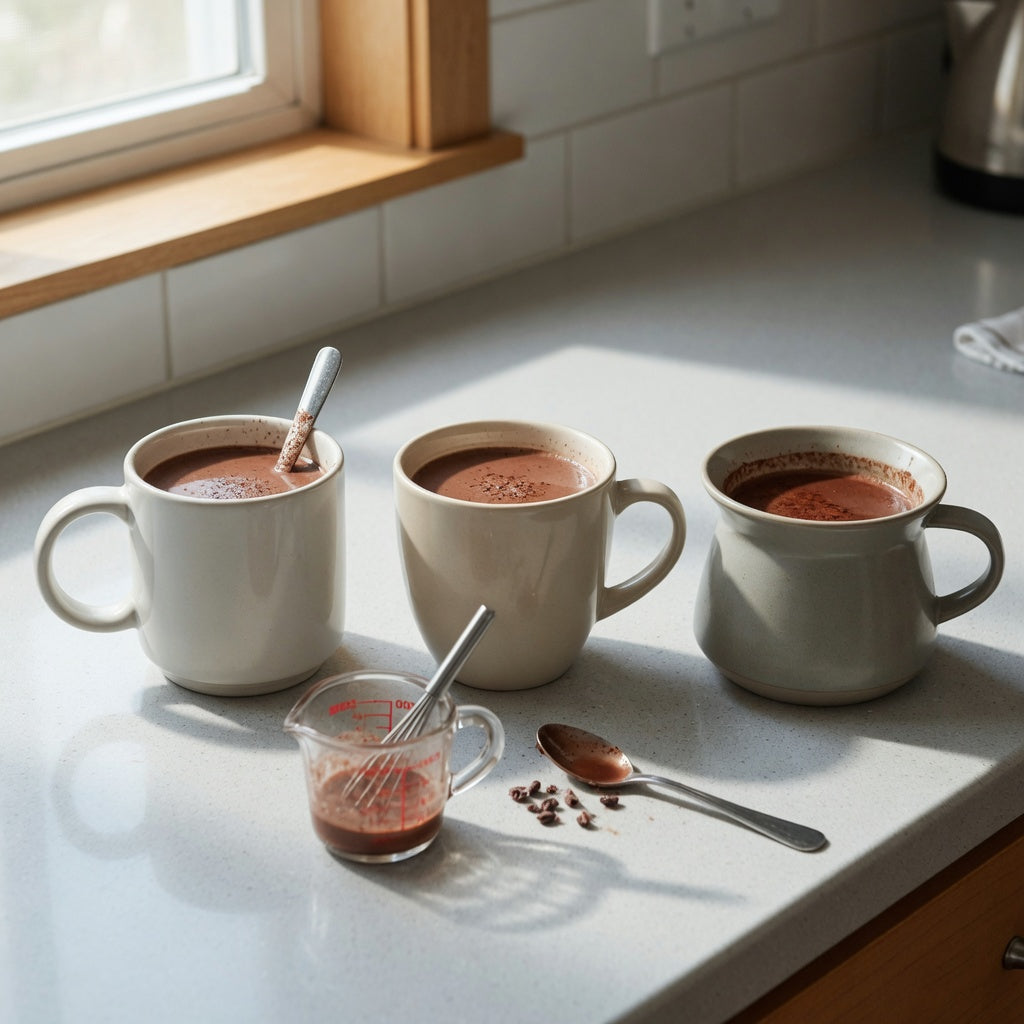
Cacao Cup Gift Choice Product Shortlist Guide: 3 Practical Picks
Compare the Ball Handle 250 ml, Round 390 ml, and Spittoon 400 ml by the recipient's actual serving routine. See why each belongs on a gift shortlist, when to skip it, and which product details sti...
Read more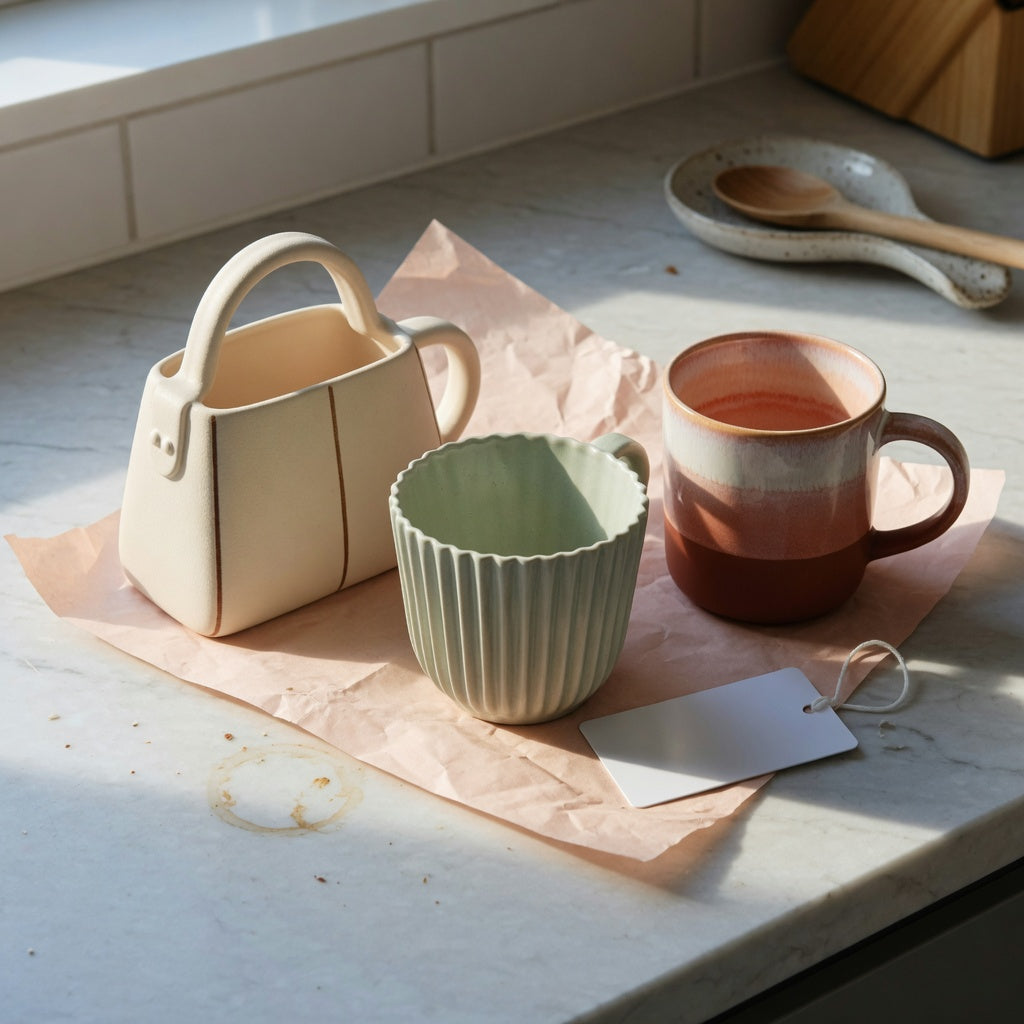
Cute ceramic coffee mugs gift choice product shortlist guide: 3 styles
Compare the Handbag, Pleated, and Gradient coffee and tea designs by recipient routine, storage, cleanup habits, and style. Each option has a clear reason to choose it, skip it, or widen the search.
Read more
Leave a comment
This site is protected by hCaptcha and the hCaptcha Privacy Policy and Terms of Service apply.