
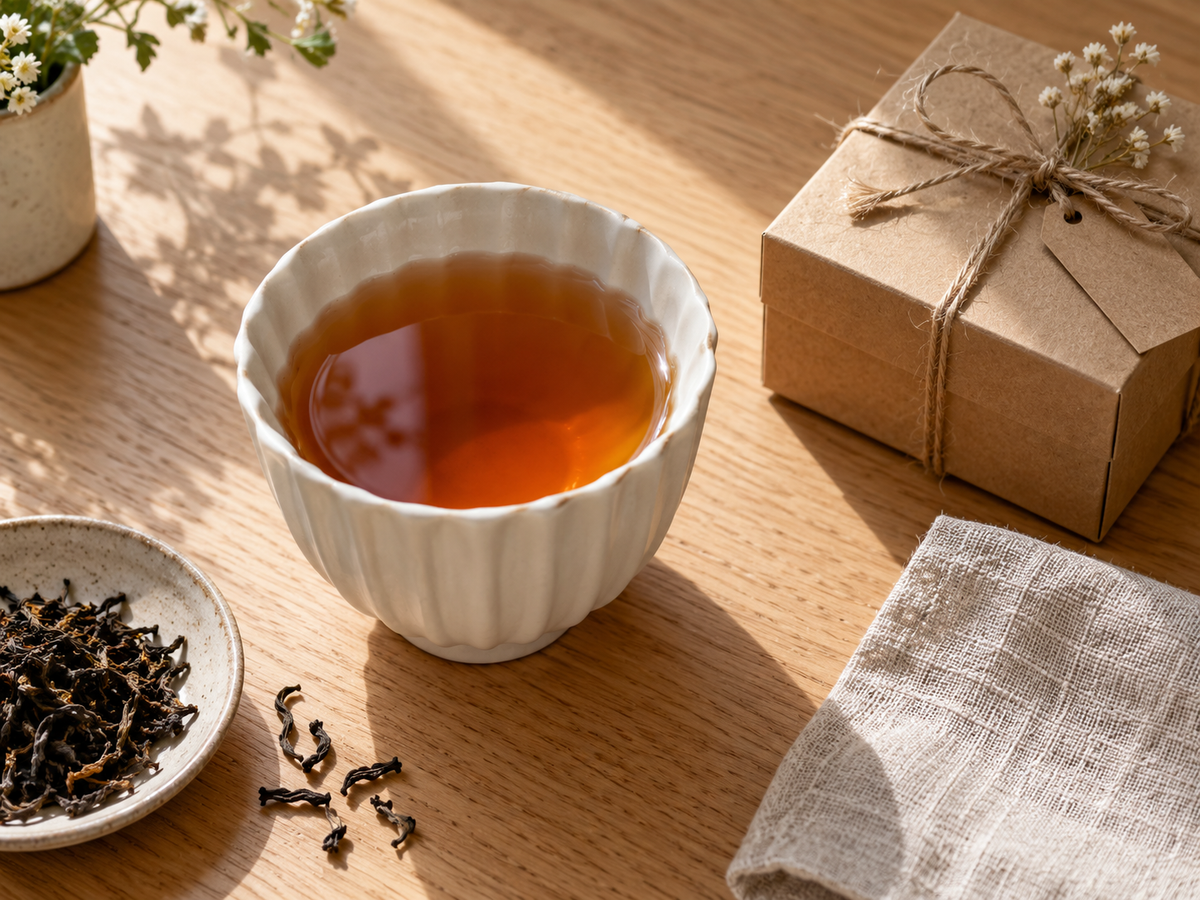
Best Pleated Tea Cups for Gifts: What Buyers Should Compare
Reading time: about 9 minutes
Most of the pleated cups we sell never touch the buyer's own kitchen cupboard. They leave as gifts — hostess presents, Mother's Day parcels, the small wedding-weekend offerings people order in a Thursday panic. That pattern is useful, because it means we hear how these cups behave after the wrapping comes off: which ridges collect tan stains, who loves the grip, and who wishes they had ordered a pair instead of one. This guide turns those conversations into a practical way to compare the best pleated tea cups for gifts — capacity, material, durability, care, and presentation. The short version: our Pleated Ceramic Coffee Cup is a 200 ml ceramic cup, and it is the right gift for some recipients and the wrong one for others. The rest of this page explains which is which.
What does pleated actually mean on a tea cup — and why do listings use four different words?
Retailers have never agreed on terminology. The same family of vertical folds shows up as pleated, ribbed, fluted, or folded depending on who wrote the listing. None of these are official categories, so it pays to search all four terms before you settle on a piece:
- Pleated — softer, fabric-like folds, often slightly irregular, the look our own cup carries.
- Ribbed — more regular, evenly spaced ridges, usually machined rather than hand-formed.
- Fluted — typically wider, shallower grooves; a glassware word that ceramics borrowed.
- Folded — often signals a handmade piece where no two cups match exactly.
The ridges are not purely decorative. They give wet fingers something to hold, which matters more than you would think with a full, hot cup, and they break up light so the piece has more presence on a shelf than a plain cylinder. The honest caveat: texture also changes how a cup wears, which is the next thing worth understanding.
Is 200 ml the right capacity for the person you are buying for?
Capacity is the spec gift buyers most often guess at, and the guess is usually too big. Teacups commonly sit somewhere between 150 and 250 ml, and the cup we stock holds 200 ml — the middle of that range, enough for a proper pour of tea or filter coffee without drifting into mug territory. If the recipient alternates between tea and coffee, that middle size usually avoids buying twice.
Where 200 ml fits well: desk tea, after-dinner cups, anyone who drinks two or three smaller servings instead of one giant mug. Where it does not: espresso drinkers, who want a fraction of that volume, and committed big-mug morning people who will quietly relegate a 200 ml cup to the back of the cupboard. One more honest note — ours is listed as a coffee cup. Tea drinkers should not skip it on that basis, since 200 ml is classic teacup territory, but if your recipient cares about matching labels and sets, the naming may matter to them more than the measurements do.
Ceramic, porcelain, bone china, or stoneware: does the body change the gift?
It changes weight, delicacy, and how the cup should be washed. Bone china is the thinnest and lightest, often translucent, and usually the piece a collector displays rather than drops into a busy dishwasher. Porcelain sits in the middle — refined but more forgiving. Stoneware is the rustic workhorse: heavier, chunkier, happiest in daily rotation. Ceramic is the umbrella term that covers most of these bodies, and our pleated cup is listed as ceramic; the listing itself is the right place to confirm anything more specific.
The gift logic is simple: match the body to the recipient's sink habits, not to your own taste. A delicate bone china pleated cup in a household that machine-washes everything unsorted is a short-lived gift. A chunky stoneware cup handed to someone who wanted something fine for the good-china shelf disappoints in the opposite direction.
Do pleated ridges chip or stain faster than a smooth glaze?
Texture is a trade, and we would rather you know before checkout. Ridge peaks concentrate contact. Knock a smooth wall against a tap and you may get away with it; catch a ridge tip on the same tap and a chip, if one happens, is more likely to show right there. We have not seen independent testing that compares chipping rates between ribbed and smooth glazes, so anyone quoting you percentages is guessing — but the geometry gives ridges more exposed edges, and in our store experience they reward slightly gentler handling.
Staining is the more common complaint. Tea tannins settle into folds, and strongly colored teas can draw faint tan lines along the ridges if a cup sits unwashed overnight. Recipients who rinse promptly never notice. Recipients who let cups soak until morning will notice, and they will assume the cup is faulty rather than the routine.
So who should not receive pleated cups? Three types: households that run everything through an aggressive dishwasher cycle without checking the listing; campers and desk-drawer people who need knockabout durability; and anyone who attacks stains with scouring pads. For those recipients, a smooth-glazed piece from our unique coffee mugs collection will serve them longer — style is worth little in a cup the recipient resents maintaining.
How do you get tea stains out of pleated ridges?
This is the question we field most often after a pleated cup has been gifted, so we now tell buyers to pass these steps along with the present:
- Rinse soon after the last sip, before tannins set into the folds.
- Wash with a soft sponge or cloth and mild dish soap, stroking along the ridges rather than across them.
- For set-in tan lines, mix baking soda with a few drops of water into a paste, dab it along the pleats, let it sit a few minutes, then wipe and rinse thoroughly.
- Skip abrasive pads and steel wool entirely — they scratch glaze, and scratches become permanent stain anchors.
- Avoid swinging a cup from fridge-cold to boiling water; a sudden thermal swing is harder on ceramic than any washing routine.
On dishwashers: suitability depends on the glaze and the maker, so confirm it on the exact listing you are buying — including ours — rather than assuming. What we can say is that even machine-safe textured cups stay looking new longer with an occasional hand rinse of the folds.
One cup, a pair, or a boxed set? Matching pleated teaware to the occasion
The right quantity depends entirely on who is receiving it:
- Hostess gift or office desk present — a single 200 ml cup is enough, especially paired with a small tin of good tea. Thoughtfulness outweighs quantity here.
- Couples and weddings — order a pair at minimum. Nobody wants to watch their partner drink from an old mug while they use the good cup. Ours is listed as a cup rather than a boxed set, so confirm pack contents before counting on two.
- Birthdays and Mother's Day — a single cup works when a handwritten note does the heavy lifting. If a single is the plan, the Pleated Ceramic Coffee Cup is our most giftable starting point.
- Serious tea enthusiasts — ask first. Many have firm opinions about cup shape, wall thickness, and rim profile, and a surprise cup can end up shelved rather than used.
What should you confirm on the listing before you checkout?
Six details separate a pleated cup gift that gets used from one that gets re-gifted:
| What to check | Why it matters for a gift |
|---|---|
| Capacity | 200 ml suits all-round tea and coffee use; smaller suits espresso, larger suits mug people. |
| Pack contents | A single, a pair, or a boxed set with saucers changes both the budget and the occasion it fits. |
| Body material | Ceramic is an umbrella; porcelain and stoneware feel and wear differently, so confirm what you are actually getting. |
| Dishwasher and microwave guidance | It determines whether the cup survives the recipient's real routine. Confirm on the current listing rather than assuming. |
| Shipping and packaging | Ceramics travel badly in thin envelopes. Check how the order ships and whether a gift note is supported. |
| Returns and exchanges | Recipients occasionally want a different color or size, so a workable exchange path protects the gesture. |
Order earlier than feels necessary during gift season — fragile goods and courier backlogs do not negotiate. And add the gift receipt. It feels less romantic, and it saves the recipient from politely keeping a cup in the wrong size.
Frequently asked questions
Are pleated tea cups a good gift for someone who mainly drinks coffee?
Yes. The ridged style is not tea-specific — our own pleated cup is listed as a coffee cup precisely because 200 ml works for both drinks. The comparisons that matter are identical either way: capacity, body material, and whether the recipient will keep up with the modest extra cleaning the folds ask for.
What size should a gift tea cup be?
Most teacups fall roughly between 150 and 250 ml, and 200 ml is the dependable middle: a full, satisfying pour without mug sprawl. If you cannot find out what the recipient already uses, that middle size is the safest bet for a tea-and-coffee household.
Can pleated tea cups go in the dishwasher?
It depends on the glaze and the maker, so check the specific listing — including ours — before promising anything. Even where machine washing is allowed, the folds are where residue hides, so an occasional hand rinse keeps the ridges clean. Never scrape them with abrasive pads.
Is a single cup enough of a gift, or should I buy a set?
For a coworker, host, or desk drinker, one well-chosen cup is plenty — the best pleated tea cups for gifts are not automatically sets. For couples or wedding occasions, buy a pair at minimum so nobody ends up drinking from a mismatched mug.
Do the ridges make pleated cups harder to live with?
Marginally, and that is the honest trade-off. The pleats add grip and character but collect tannin stains if a cup sits unwashed. Someone who rinses cups promptly will never think about it; someone who soaks everything overnight should probably receive a smooth-glazed cup instead.
A 60-second checklist for choosing the best pleated tea cups for gifts
- Match the capacity to the recipient's habits — 200 ml for all-round use, smaller for espresso, larger for committed mug people.
- Decide single, pair, or set before checkout, not after the parcel arrives.
- Read the care guidance on the exact listing you are buying from, dishwasher and microwave included.
- Check how the order ships — pleated ceramics deserve packaging you would hand over directly.
- Tuck in the note and the gift receipt; one handwritten line turns a nice cup into a remembered gift.
When you have compared those points, the shortest path is our Pleated Ceramic Coffee Cup for the single-cup gift, or a slower browse through the unique coffee mugs collection to weigh pleated against smooth styles side by side. Compare first — the wrapping is the easy part.
More from our blog
Read more

Best Ceramic Flat White Cups: What to Compare Before You Order
A practical buyer's comparison of three ceramic cups — 200, 250, and 270 ml — for flat white drinkers: brimful vs. working volume, rim shape for latte art, stoneware vs. porcelain trade-offs, what ...
Read more
Best Cloud Mug Buying Checklist: What Buyers Should Compare
A store-tested checklist for comparing cloud mugs: sculpted versus printed designs, wooden versus ceramic handles, capacity that matches your pour, and the appliance, glaze-safety, and packaging qu...
Read more
Leave a comment
This site is protected by hCaptcha and the hCaptcha Privacy Policy and Terms of Service apply.