
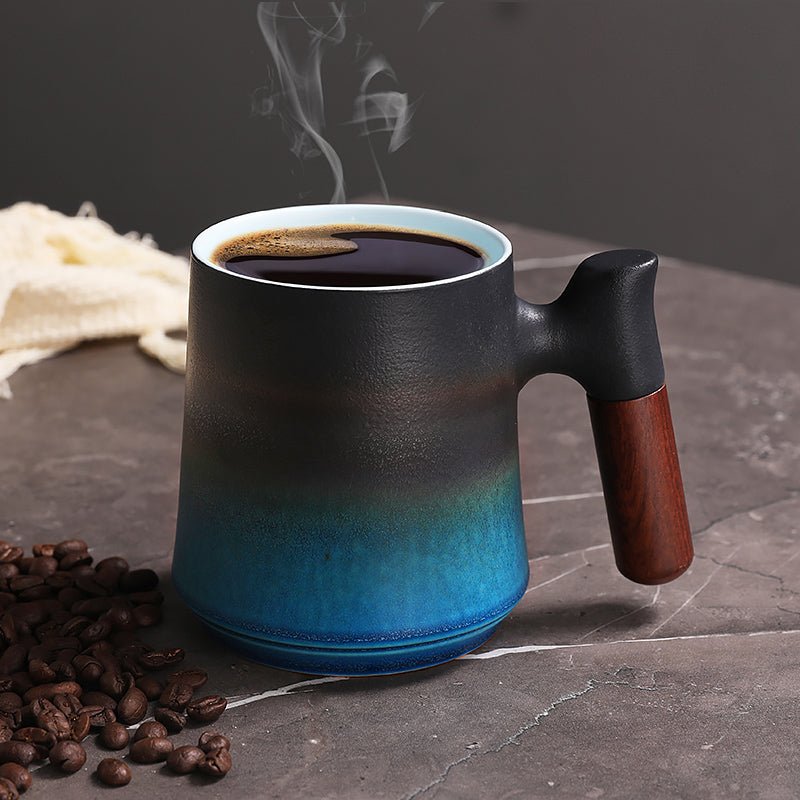
Apple Cider Mug Compact Kitchen Product Shortlist Guide: 3 Picks
Reading time: about 8 minutes
A mug can sit comfortably beside the kettle yet fail the moment its handle blocks a cabinet door or catches the mug next to it. We see this mismatch when shoppers compare serving capacity but overlook the route from shelf to counter to sink. Our apple cider mug compact kitchen product shortlist guide starts with that daily route, because a compact-kitchen mug has to work in motion, not merely look tidy in a product photo.
For this comparison, the verified catalog facts are deliberately limited: The Gradient holds 400 ml, The Flow holds 400 ml, and The Rock holds 480 ml. All three are everyday ceramic mugs. We will not turn those capacities into guessed exterior dimensions. Two mugs can hold the same amount while differing in body profile and handle geometry, so capacity is only the first filter.
Which three measurements decide cabinet and counter fit?
Measure the space with a mug already in it. An empty shelf can make the available room look more generous than it is, especially once handles and neighboring cups enter the picture.
- Usable shelf opening: Measure from the shelf base to the lowest obstruction, including a cabinet frame, hinge, or shelf above. Check the front opening as well as the space farther inside.
- Maximum stored width: Measure from the mug body's outer edge to the farthest point of its handle. Include the room needed to lift it without knocking the mug beside it.
- Counter landing zone: Put your current mug where cider is normally poured, then open the nearest drawer, cabinet, or appliance door. The handle should remain out of that moving path.
Use a current mug that fits well as a physical reference and record its exterior height and maximum width, including the handle. If exact product dimensions are unavailable, do not assume a 400 ml mug will match that reference simply because its capacity sounds compact.
400 ml or 480 ml: Which capacity suits your routine?
Capacity changes how much cider you can pour and how often you refill. It does not establish shelf footprint. A 480 ml mug can carry 80 ml more beverage than either 400 ml option, but the supplied facts do not include empty mug weights or exterior measurements, so we cannot make a responsible total-weight or cabinet-size comparison.
| Mug | Verified capacity | Useful starting situation | Reason to pause |
|---|---|---|---|
| The Gradient | 400 ml | Your preferred pour fits within a 400 ml vessel with comfortable headroom. | You need more volume or must confirm exact exterior dimensions before ordering. |
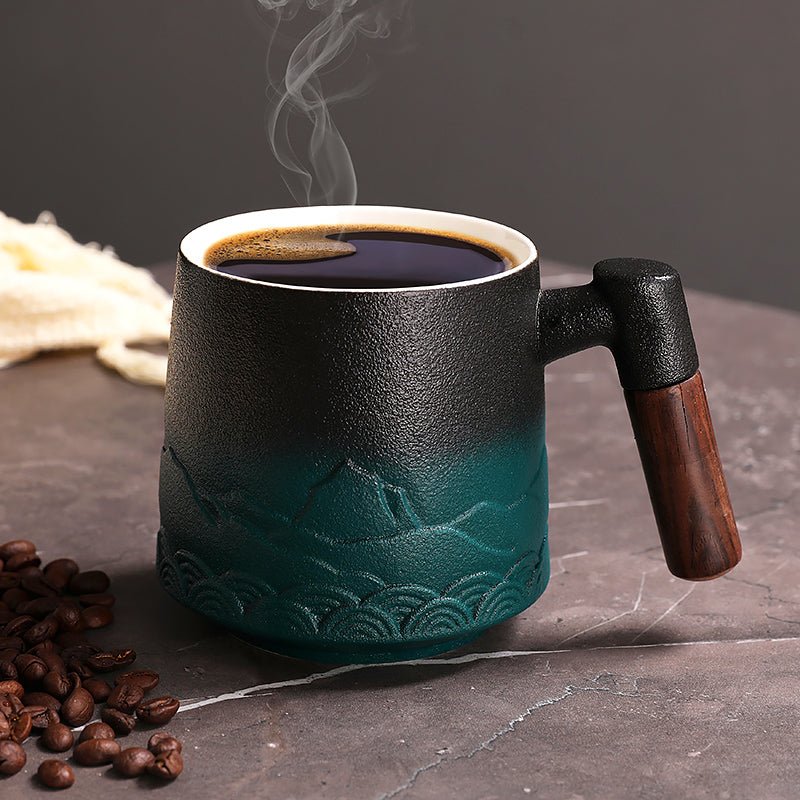
| The Flow | 400 ml | You want a second 400 ml option and plan to compare handle shape in the current product images. | You are assuming it occupies less space than The Gradient without measurements. |
| The Rock | 480 ml | You deliberately want 80 ml more capacity and fewer top-ups. | The extra beverage load is unnecessary, or your storage fit has not been confirmed. |
A quick capacity trial is more useful than guessing. Measure 400 ml into a household vessel large enough to leave your normal headroom, then repeat with 480 ml in a suitable vessel. Lift each from your usual counter position. Water works as a handling proxy for this test, although it does not establish the exact finished weight of every cider recipe or mug.
Your apple cider mug compact kitchen product shortlist guide: Three scenario picks
The point of this apple cider mug compact kitchen product shortlist guide is a short list with honest rejection criteria. Each option should survive your capacity test, handle check, and storage check before style decides the winner.
- Choose The Gradient for a measured 400 ml routine: This is the practical candidate when your usual pour fits a 400 ml vessel and you prefer the design shown on The Gradient 400 ml mug product page. Compare its pictured handle with a mug that already clears your cabinet. Skip it if 400 ml causes unwanted refills or if you require confirmed exterior measurements that are not available to you.
- Choose The Flow when handle shape will break a 400 ml tie: The Flow shares the verified 400 ml capacity, so it belongs on a shortlist where lower beverage volume is already the goal. Review The Flow 400 ml ceramic mug beside The Gradient and use the current images to judge which handle more closely resembles your proven reference mug. Skip it if you are treating its name or silhouette as proof of a smaller footprint; we do not have measurements that support that claim.
- Choose The Rock for fewer refills: A shopper who keeps cider at a home office desk or settles in for a longer drink may value the verified 480 ml capacity. The Rock 480 ml mug holds 80 ml more than the two 400 ml candidates. Skip it if you prefer a lighter pour, have limited wrist comfort, or cannot verify that its exterior shape clears your storage and counter route.
If none of those situations produces a clear pass, compare the wider unique ceramic coffee mug collection. Treat the collection as another comparison step, not as a promise that every design will suit a compact cabinet. Apply the same measurements to each listing.
How does handle shape affect cabinets, racks, and grip?
In our store, handle fit is where an attractive shortlist often becomes a practical one. Product images help screen shapes, but perspective is not a ruler. Check these four points against a mug you already use:
- Outer reach: Include the farthest handle edge when measuring stored width and counter clearance.
- Finger room: Hold the reference mug with your normal grip. Note whether your knuckles touch the body and whether you use one, two, or more fingers inside the opening.
- Door and rack clearance: Rotate the mug through the position used for storage. If dishwasher use matters, verify the mug's official care guidance first and then check whether the handle clears your rack layout.
- Loaded movement: Fill a suitable reference vessel to the amount you expect to drink and carry it from counter to table or desk. A shape that feels fine empty may be less comfortable once filled.
Do not infer dishwasher suitability from ceramic material alone. Care instructions are product-specific. If a narrow margin determines whether the door closes or the rack loads properly, request exterior measurements before checkout.
Where does everyday ceramic fit, and where does it not?
Everyday ceramic makes sense for stationary use on a kitchen counter, dining table, or office desk. It is rigid, familiar in the hand, and available here in the three verified capacities above. It is also breakable. The common damage points we ask shoppers to inspect during unboxing are chips along the drinking rim, hairline cracks where the handle joins the body, and any rough or sharp area in the glazed surface.
Reduce contact damage by giving each handle room instead of forcing mugs tightly together. Do not nest or stack ceramic mugs unless their design and care information specifically support it. Follow the current product instructions for washing and reheating; this guide does not claim microwave or dishwasher suitability without verified care details.
These mugs are not presented here as insulated travel vessels, and the supplied catalog facts do not establish lids, cider ingredients, spoons, gift packaging, or other bundled items. A sealed, insulated style would suit a commute or extended heat retention better. A purpose-built stackable cup is also a better direction when vertical stacking is non-negotiable.
What should you test before committing shelf space?
Run one short rehearsal in the kitchen where the mug will actually live:
- Measure a mug that already fits, recording exterior height and maximum width with the handle included.
- Place that mug in the intended cabinet slot and open the door fully. Remove it without moving adjacent mugs.
- Compare 400 ml and 480 ml pours in suitable household vessels, leaving the headroom you normally use, then carry them through your counter, table, desk, and sink routine.
- Open the relevant product page and compare its current handle images with your reference. Ask for missing exterior dimensions or care details if either one decides the purchase.
Used this way, the apple cider mug compact kitchen product shortlist guide becomes a pass-or-fail filter instead of a guess based on capacity. For a gift, remember that 400 ml describes volume, not guaranteed cabinet fit. Obtain the recipient's storage measurements or choose a seller policy that gives you an acceptable option if the fit is wrong.
Frequently asked questions
Which option does the apple cider mug compact kitchen product shortlist guide favor for limited storage?
It does not name a universal winner because the available capacities are not exterior dimensions. The Gradient and The Flow are both 400 ml candidates, while The Rock is the 480 ml choice for someone who values 80 ml more capacity. Your measured cabinet opening and handle clearance should make the final decision.
Does a 400 ml mug always use less cabinet space than a 480 ml mug?
No. Capacity describes how much the mug holds, while cabinet fit depends on exterior height, body width, base shape, and the handle's outer reach. Without those measurements, it would be misleading to claim either 400 ml option has a smaller footprint than The Rock.
Can these ceramic mugs go in a microwave or dishwasher?
Do not assume that care status from the material alone. Verify the current care instructions on the relevant product listing or contact our store before ordering. If dishwasher use is essential, confirm both approved care and physical clearance in your rack.
What should I check immediately before ordering an apple cider mug?
Write down your maximum stored width including the handle, usable shelf height, counter landing space, and preferred capacity. Then review The Gradient, The Flow, or The Rock against that list. If none can be confirmed, return to the unique coffee mugs collection and apply the same four checks before choosing another design.
More from our blog
Read more
Clay Pottery Coffee Mugs Shared Household Product Shortlist Guide
Compare three individually listed scenic clay pottery mugs against shared-kitchen routines, cabinet fit, grip, and care expectations. Every option includes a concrete reason to choose it and a reas...
Read more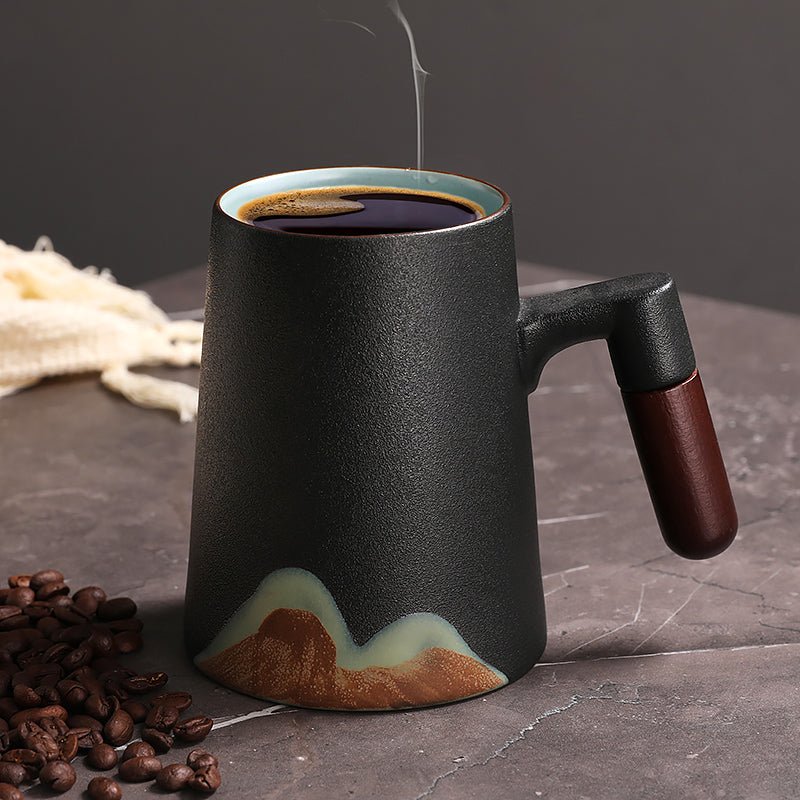
Chai Tea Mug Compact Kitchen Product Shortlist Guide: 3 Capacity Picks
Compare The Flow 400 ml, Morning and Night 440 ml, and The Rock 480 ml against your usual chai serving, cabinet opening, handle clearance, and care routine. Each option has a clear reason to choose...
Read more
Leave a comment
This site is protected by hCaptcha and the hCaptcha Privacy Policy and Terms of Service apply.