
Affogato Cup Gift Choice Practical Purchase Checklist: 170-270 ml
Reading time: about 10 minutes
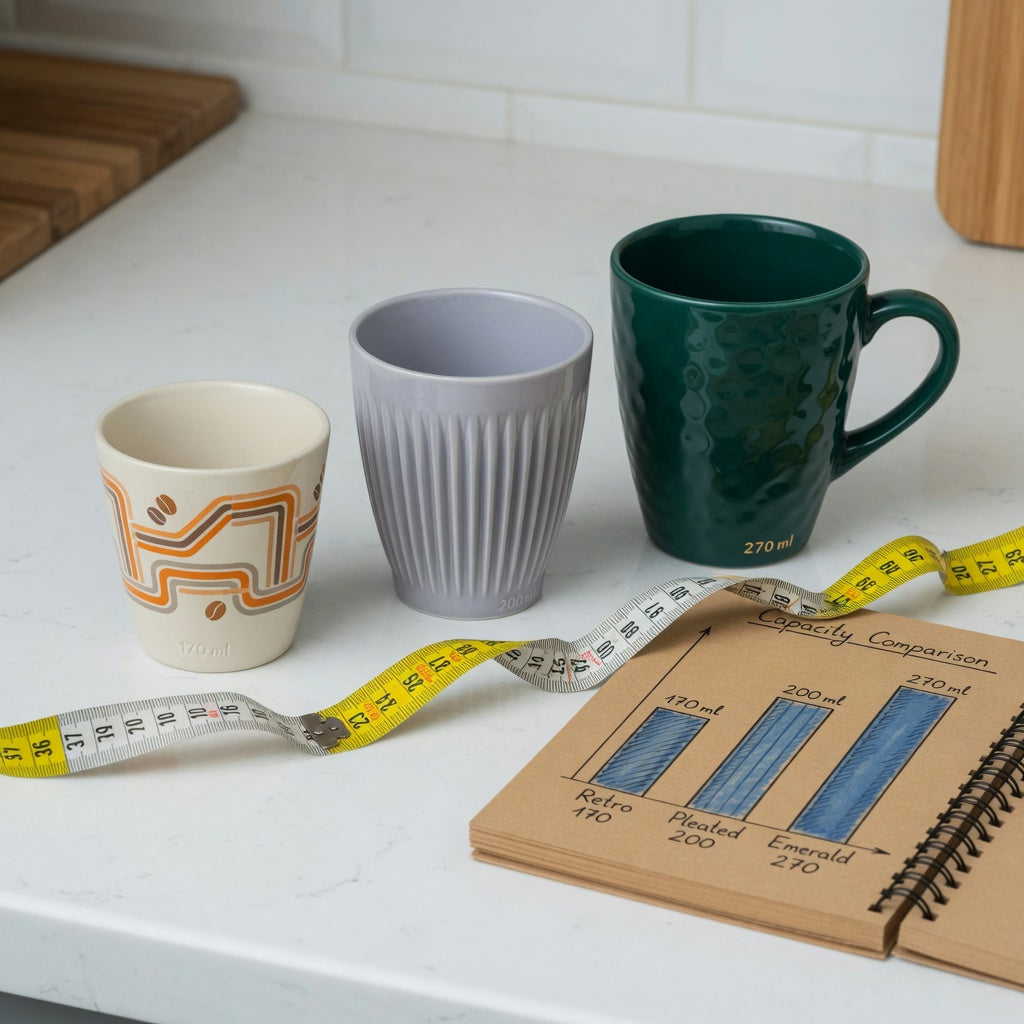
At our store, a common pause happens when a gift buyer compares the 170 ml Retro with the 200 ml Pleated on the counter: will the smaller cup suit the recipient's weekend dessert, or will it look undersized? This affogato cup gift choice practical purchase checklist answers that question by matching the recipient's usual amount, available space, and preferred visible shape before you click a product page.
An affogato is usually a small espresso-and-ice-cream dessert, but portions vary with the person, the time of day, and the amount of ice cream they add. Our verified comparison is deliberately narrow: the Retro is listed at 170 ml, the Pleated at 200 ml, and the Emerald at 270 ml. We compare listed capacity and visible shape only. The available facts do not establish material, exact external dimensions, care instructions, dishwasher or microwave suitability, temperature-change performance, included food or accessories, gift packaging, or personalization. Flag those items for a final check on the relevant product page instead of filling the gaps with assumptions.
Which 170 ml, 200 ml, or 270 ml size fits the recipient's serving?
Start with the amount the person actually serves, not the cup that looks largest in a product photograph. If you can inspect their usual dessert glass or coffee cup, estimate its filled volume with a kitchen measuring jug. You do not need a perfect recipe calculation; you need to avoid the two obvious mismatches: a small cup for a generous pour, or a larger cup for someone who prefers a restrained portion.
| Option | Listed capacity | Visible shape to compare | Recipient situation to test |
|---|---|---|---|
| Retro | 170 ml | Classic, compact-looking retro profile | Modest portions and a preference for a smaller-looking cup |
| Pleated | 200 ml | Distinct pleated wall treatment | A middle-ground serving and a preference for visible texture |
| Emerald | 270 ml | More substantial mug-like profile | A generous serving or a preference for extra room |
Capacity is a fit variable, not a serving instruction. A recipient who combines a short espresso with a modest scoop may find 170 ml proportionate; someone who adds a larger scoop or a longer pour may prefer 200 ml or 270 ml. We cannot promise that a particular portion will sit comfortably without knowing how the person serves it, so treat the numbers as a starting filter.
Some shoppers search for an affogato mug when they really mean a cup for a compact dessert. Search wording does not settle the size. The listed milliliters do, and the visible profile helps you decide how that size will read as a gift.
Does the visible shape suit a kitchen shelf, desk, or dessert tray?
A kitchen counter, a shallow shelf, an office desk, and a dessert tray create different visual tests. During a gift unboxing, the silhouette is also the first product detail the recipient can judge without measuring. A cup that looks at home beside existing coffeeware is more likely to be reached for than one that feels out of place, even when its capacity is technically suitable.
The Retro is the visually quieter choice if the recipient favors a classic, compact-looking outline. The Pleated has a clearly textured wall pattern, so it suits someone who likes a decorative detail that remains visible before the cup is filled. The Emerald reads more like a small everyday mug, which can suit a recipient who wants a more substantial presence for a short coffee or tea break. These are visible-style observations, not claims about weight, insulation, grip, spill resistance, or stability.
For a tight shelf or shallow tray, measure the available depth and check the product listing for external dimensions before ordering. A 170 ml capacity does not prove that a cup will fit a particular cabinet, and a 270 ml capacity does not tell you how much room the base occupies. On an office desk, leave space to place and lift the cup without reaching across a keyboard; the silhouette alone does not establish tip resistance.
If the recipient's strongest preference is distinctive shape rather than a precise serving size, browse the unique coffee mugs collection as a visual starting point. Use it to compare silhouettes, then return to the capacity and care details before checkout.
Which material and care details should be verified before gifting?
The material question deserves its own line on a gift checklist. A product photograph can show color and outline, but it cannot by itself confirm the composition, finish, or care routine. A shopper who runs a dishwasher every evening may care more about explicit care instructions than a 30 ml difference between two options.
- Material and finish: Check whether the current listing names ceramic, porcelain, stoneware, glass, or another material. Do not assign a composition from the cup's color or visible shape alone.
- External dimensions: Find the stated height, diameter, and base footprint if a shelf, tray, or desk is tight. Capacity describes volume, not the space the cup occupies.
- Care: Look for explicit dishwasher and microwave instructions. If they are not stated, we do not promise that a normal dishwasher cycle or workplace microwave routine is suitable.
- Temperature changes: Do not assume a cup tolerates an immediate change from a very hot drink to ice water, or the reverse. No temperature-change performance is verified in this comparison.
- Arrival inspection: At unboxing, inspect the rim, base, and visible surface for chips, cracks, or an uneven edge before use. These are sensible checks for any drinkware delivery, not a claim that these specific listings have a defect.
- Gift expectations: Confirm what is actually included. The verified facts do not promise a spoon, saucer, ice cream, espresso, gift packaging, or personalization.
In our store, we would rather leave an unknown marked as unknown than turn a photograph into a guarantee. If care performance is a non-negotiable part of the gift, make that confirmation before choosing based on capacity or style.
Which recipient routine points to Retro, Pleated, or Emerald?
The same capacity can be right for one person and wrong for another. Map the clue you have about the recipient to a product page, then check the remaining specifications instead of treating a general gift rule as universal.
Weekend dessert maker with a modest serving
If the recipient makes affogato occasionally after dinner and usually serves a restrained portion, start with the Retro coffee tea cup. Its listed 170 ml capacity and compact-looking visible profile align with a small ritual that does not need a large mug presence. The trade-off is less room for a generous scoop or longer pour, so choose the Pleated or Emerald if those are normal parts of the recipient's routine.
Home-office user who wants a middle ground
For someone who keeps a cup beside a laptop and likes a design detail they can see every day, inspect the Pleated coffee tea cup. The 200 ml listing sits between the other two capacities, while the pleated wall gives the gift a more distinctive visible profile. It is a useful middle comparison when you know the recipient enjoys dessert coffee but do not know the exact serving amount; desk space and external dimensions still need a separate check.
Generous pourer or coffee-and-tea crossover
If the recipient adds more room to a dessert or wants a cup with a more substantial mug-like presence, review the Emerald coffee tea mug at 270 ml. That is the largest listed capacity in this set, so it is the logical page to open for a generous-serving routine. The product name includes coffee and tea, but it does not establish heat retention, insulation, or temperature-change performance; choose on the verified capacity and visible shape, then confirm care information.
How does the affogato cup gift choice practical purchase checklist narrow the choice?
The practical value of this affogato cup gift choice practical purchase checklist is that it separates three kinds of information: listed capacity, visible preference, and specifications that still need verification. Run it in this order:
- Name the routine: Decide if the gift is for an occasional weekend dessert, a home-office treat, a short coffee or tea break, or another clearly observed habit.
- Estimate the amount: Note the recipient's usual liquid pour and scoop size. Use their existing cup as a reference rather than assuming every affogato is served in the same portion.
- Choose the visible shape: Select the classic compact-looking Retro profile, the visibly pleated Pleated profile, or the more substantial mug-like Emerald profile according to the recipient's taste.
- Check the location: Measure the shelf, tray, or desk area. If space is limited, verify the product page's external dimensions because capacity alone is not a footprint measurement.
- Match the listed capacity: Use 170 ml for the smallest option, 200 ml for the middle option, and 270 ml for the largest option in this comparison. Do not treat any number as a guaranteed recipe serving.
- Verify material and care: Look for the current listing's material, finish, dimensions, dishwasher or microwave guidance, and any stated limits on temperature changes.
- Check the gift promise: Confirm that the recipient wants the cup itself. Do not assume the order includes food, serving tools, gift packaging, or personalization.
- Reject a category mismatch: If the real need is a large iced coffee vessel, a lidded commuter mug, or a specific care performance, move to a category whose listing explicitly covers that use.
If the answers point clearly to one option, open that product page and stop comparing unrelated mugs. If the recipient cares more about silhouette than capacity, use the unique coffee mugs collection to widen the style search without forcing an unsuitable size.
When is a compact affogato cup the wrong gift?
A compact dessert cup is not a universal coffee gift, and a thoughtful buyer should recognize the mismatch early. We would redirect the shopper to another category in these situations:
- Large-volume routine: The recipient normally drinks from a large mug or makes a tall iced coffee. A 170 ml, 200 ml, or 270 ml cup may become the piece they admire but do not use.
- Commute-first use: The gift needs a lid, insulation, leak control, or car cup-holder compatibility. None of those features are established by the verified facts here, so a purpose-built travel mug is a better starting category.
- Strict care requirements: The recipient needs confirmed dishwasher, microwave, or hot-to-cold performance and the listing does not state it. Guessing can create disappointment after the first care cycle.
- Expectation of extras: The buyer wants a spoon, saucer, dessert ingredients, gift packaging, or personalization to be part of the purchase. Those inclusions are not verified for this comparison.
- Style mismatch: The recipient prefers plain, purely utilitarian drinkware and would not enjoy a retro, pleated, or more mug-like visible profile. A simpler style will serve the relationship better.
That is a fit issue, not a verdict on the cups. The best gift is the one that matches the person's routine, space, and expectations, even if that means choosing a larger vessel or a travel-specific product instead.
Frequently asked questions
How do I use the affogato cup gift choice practical purchase checklist?
Write down the recipient's usual serving, the surface where the cup will live, and the visible style they tend to like. Match those clues to the 170 ml Retro, 200 ml Pleated, or 270 ml Emerald, then verify material and care details on the current listing. The checklist is a comparison aid, not a promise of a specific serving size or performance.
Is the 170 ml Retro too small for an affogato cup gift?
Not necessarily. It is the smallest listed capacity, so it is a sensible starting point for someone who serves a modest portion and prefers a compact-looking shape. Choose the Pleated or Emerald when the recipient's usual pour or scoop is larger.
Is the 200 ml Pleated a better middle choice than the 270 ml Emerald?
The Pleated is the middle capacity and may suit a buyer who wants some room without the largest mug-like profile. It is not automatically the better choice: Emerald fits a recipient who values extra room, while Pleated fits someone who prefers a more moderate capacity and visible pleating.
Can I put these cups through a dishwasher cycle or microwave?
The verified facts used here do not state dishwasher or microwave suitability. Check the current product page or care instructions for the exact cup, and do not infer care performance from its capacity, name, or appearance.
Do these cups come with gift packaging, a spoon, or ice cream?
Do not assume those extras are included. The product facts supplied for this article confirm capacity and visible shape only, so verify the current listing for contents, packaging, and personalization before purchase.
Before checkout, write three notes: the recipient's usual portion, the surface where the cup will live, and the visible shape they would enjoy seeing every week. Then open the matching Retro at 170 ml, Pleated at 200 ml, or Emerald at 270 ml product page and confirm the remaining material, dimensions, and care details. If no option fits the routine, browse the unique coffee mugs collection or move to a larger or travel-specific category.
More from our blog
Read more

Coffee Mug Gift Idea Gift Choice Practical Purchase Checklist
Use this coffee mug gift idea gift choice practical purchase checklist to match a recipient's routine, visual taste, space, and care habits to the right CoffeifyMug design. It also shows when a tra...
Read more
Black Tea Mug Weekend Coffee Practical Purchase Checklist
Compare the Round 390 ml, The Gradient 400 ml, and The Flow 400 ml against your actual weekend pour, handle needs, counter space, and care requirements. This guide separates verified catalog facts ...
Read more
Leave a comment
This site is protected by hCaptcha and the hCaptcha Privacy Policy and Terms of Service apply.