

Affogato Cup First Time Buyer Product Shortlist Guide: 3 Sizes
Reading time: about 9 minutes
One scoop is softening on the kitchen counter while three product tabs all look compact. The problem appears after the pour: a cup can be visually small yet offer too little or too much room for the serving you actually make. This affogato cup first time buyer product shortlist guide keeps the first decision narrow, using only the verified capacities and visible shapes of three CoffeifyMug options.
In our store, first-purchase questions become easier once buyers stop searching for a universal best cup and define the portion and silhouette they prefer. The confirmed catalog facts are simple: Retro is 170 ml, Pleated is 200 ml, and Emerald is 270 ml. We do not use material, exact dimensions, care performance, or included accessories as recommendation points because those details are not confirmed in the source facts for this comparison.
Affogato cup first time buyer product shortlist guide: 170, 200, or 270 ml?
Use capacity as a relative ranking tool, not as a guarantee that a particular scoop and pour will fit. Ice cream scoops vary, espresso volumes vary, and the listed capacity does not tell us whether it was measured to the rim or to a practical serving line.
| Option | Verified capacity | Visible shape | Choose it when | Skip it when |
|---|---|---|---|---|
| Retro Coffee Tea Cup | 170 ml | Low, rounded cup profile | You want the smallest listed capacity and a compact presentation | Your usual serving needs more nominal room |
| Pleated Coffee Tea Cup | 200 ml | Mid-size profile with visible vertical pleats | You want a middle capacity and a more detailed exterior | You already know you prefer the smallest or largest option |
| Emerald Coffee Tea Mug | 270 ml | Taller, straighter mug silhouette | You want the largest listed capacity of the three | You prefer the look of a petite dessert cup |
The Pleated gives you 30 ml more listed capacity than the Retro. The Emerald adds another 70 ml over the Pleated and 100 ml over the Retro. Those differences are exact, but practical headroom remains unknown until scoop size, pour volume, and the capacity measurement method are established. The point of this affogato cup first time buyer product shortlist guide is to identify the most sensible starting option, not to promise a universal serving formula.
Which listing details must be verified beyond the capacity number?
Before checkout, open the current product page and separate what the listing states from what the photography merely suggests. Our team uses the following checks when narrowing compact cup options:
- Capacity wording: Confirm that the current page still states 170 ml, 200 ml, or 270 ml. Do not estimate volume from a hero image or a prop placed beside the cup.
- Measurement basis: Look for an explanation of whether capacity is nominal, measured to the rim, or based on a usable fill level. If the page does not say, treat that point as unknown.
- Shape views: Side and top views can reveal the profile, wall height, and general opening shape. They do not replace numerical height, width, or rim-diameter measurements.
- Material and care: Do not infer material, dishwasher suitability, microwave suitability, or temperature-change performance from gloss, color, or styling.
- Box contents: A styled photograph does not establish that a spoon, saucer, food, drink, or any other serving item is included. Verify the written product description.
A missing detail is an unknown, not evidence of good or poor performance. This distinction matters for a first order. A buyer who needs a cup to pass through daily dishwasher cycles should wait for explicit care information instead of treating a product photo as a care instruction.
Small solo dessert, uncertain gift, or larger pour: which cup fits?
A useful shortlist connects the buyer's routine to one option and one reason to reject it. These three scenarios keep that decision practical.
Small solo serving with a compact look: Retro 170 ml
Reader situation: You usually prepare a restrained after-dinner serving and want the cup to look deliberately small beside an espresso setup. Why it fits: The Retro has the lowest verified capacity and a low, rounded profile in the product imagery. It is the clearest starting point when compact scale matters more than spare volume. Why to skip it: It provides 30 ml less listed capacity than the Pleated and 100 ml less than the Emerald, so buyers who routinely build larger portions should not assume it will leave enough headroom. Compare the current views on the Retro 170 ml cup page with a small cup you already own.
One first purchase or a gift with uncertain portions: Pleated 200 ml
Reader situation: You do not yet know if the cup will be used for a very small serving or something more generous. This also applies to a gift unboxing where you know the recipient likes distinctive cups but do not know the exact scoop routine. Why it fits: At 200 ml, the Pleated sits between the other two capacities without committing to either extreme. Its vertical pleats are also the most obvious visual feature of the three. Why to skip it: It is not automatically the safest choice if the recipient prefers a smooth exterior or has a clear need for maximum volume. Inspect the shape on the Pleated 200 ml cup listing before treating the middle size as the default.
Larger nominal capacity and a mug-like profile: Emerald 270 ml
Reader situation: Your usual serving runs larger, or you prefer an affogato mug silhouette over a petite dessert-cup presentation. Why it fits: The Emerald is the largest option here at 270 ml, and its taller, straighter shape gives it more visual presence on the table. Why to skip it: A small serving may look less substantial inside a larger vessel, and 270 ml should not be mistaken for proof that it suits an all-morning coffee or a large iced drink. Start with the Emerald 270 ml mug page if capacity is your first filter, then verify any other requirements separately.
How do rounded, pleated, and taller mug shapes read at serving time?
Capacity is numerical. Shape is the part you notice immediately on a kitchen counter or during a gift unboxing. We use the visible profile to judge presentation, but we do not turn appearance into unsupported performance claims.
- Retro: The low, rounded outline reads as the most compact and traditional cup presentation of the three.
- Pleated: The vertical pleats make the exterior visually more detailed. They do not, by themselves, prove better grip, insulation, or durability.
- Emerald: The taller, straighter silhouette reads closer to a small mug. Height in a photograph does not establish stability, heat retention, or exact storage footprint.
Avoid calling any option wide-mouthed, stackable, or easy to spoon from unless the current listing provides measurements or a clear statement. Camera angle can exaggerate an opening, and a cropped product image can hide the true proportions.
What if material, dishwasher care, or heat performance decides the purchase?
Pause this shortlist if any of those factors is non-negotiable. We are not confirming material, weight, exact height or width, microwave use, dishwasher care, hand-washing requirements, temperature limits, or resistance to sudden temperature changes. None of the three is presented here as engineered specifically for affogato, either.
The same restraint applies to accessories and contents. Do not assume that a saucer, spoon, ice cream, espresso, or another photographed item arrives with the cup. The written product listing must confirm what is included.
All three should also be skipped if your main goal is a large iced coffee, a full breakfast drink, or a desk mug that lasts through the morning. Those situations call for a broader comparison. Browse the CoffeifyMug unique coffee mugs collection and check current capacities, shapes, dimensions, and care details rather than forcing a compact dessert option into a different role.
How can you test your serving routine before choosing a size?
A measuring jug and a cup or bowl you already use can make these capacity numbers more meaningful. This is the quick check we recommend before a first purchase:
- Measure your usual espresso pour in milliliters instead of relying on the machine button name.
- Decide whether your normal routine uses one scoop, two scoops, or a variable portion. Do not assume there is a universal standard scoop size.
- Fill a familiar cup with cool water to the level you can comfortably carry from the counter to the table, then measure that water. This gives you a practical reference volume.
- Compare that familiar vessel with the 170 ml, 200 ml, and 270 ml options. Do not simply add scoop and espresso volumes mathematically because a rounded scoop leaves air gaps and changes shape as it melts.
- Choose the visible profile you want, then return to the current listing to resolve any material, dimension, care, or box-content questions.
Shortlist rule: Put the Retro first for the smallest capacity and rounded profile, the Pleated first for a middle-size decision, and the Emerald first for the largest capacity and taller mug look. If an unconfirmed detail affects safe or practical use in your home, pause before ordering.
Frequently asked questions
Is a 170 ml cup large enough for one affogato?
There is no universal yes because scoop size, espresso volume, and desired headroom vary. The Retro 170 ml is the smallest verified option and is the logical first shortlist for a restrained serving. It should be skipped if your usual portion already feels crowded in a similarly sized cup.
Is the Pleated 200 ml the safest middle option for a first purchase?
It is the numerical midpoint of these three choices, sitting 30 ml above the Retro and 70 ml below the Emerald. That makes it useful when your portion size is uncertain, but not automatically best. Its visible pleated exterior and current listing details still need to suit the buyer.
Can the Emerald 270 ml replace a regular coffee mug?
The 270 ml capacity may suit some smaller coffee servings, but it should not be treated as a guaranteed replacement for a buyer's usual mug. This comparison does not establish practical fill level, heat performance, or care requirements. Compare 270 ml with the volume of a mug you already use before deciding.
Does this guide confirm cup material, dishwasher use, or thermal shock resistance?
No. This affogato cup first time buyer product shortlist guide compares verified capacity and visible shape only. Material, dishwasher care, microwave use, and resistance to sudden temperature changes remain unconfirmed here and should be checked on the current product listing.
Where should I compare the CoffeifyMug options before buying?
Open the Retro, Pleated, and Emerald product pages side by side, confirm each capacity, and compare the visible profiles at the same screen size. If none matches your serving routine, use the unique coffee mugs collection as the next comparison step rather than settling for the wrong capacity or shape.
More from our blog
Read more

Ceramic Wide Bottom Coffee Mugs Gift Choice Product Shortlist Guide
Use recipient routines, storage limits, grip needs, and care habits to compare three CoffeifyMug options. Each recommendation includes a concrete reason to choose it or remove it from the shortlist.
Read more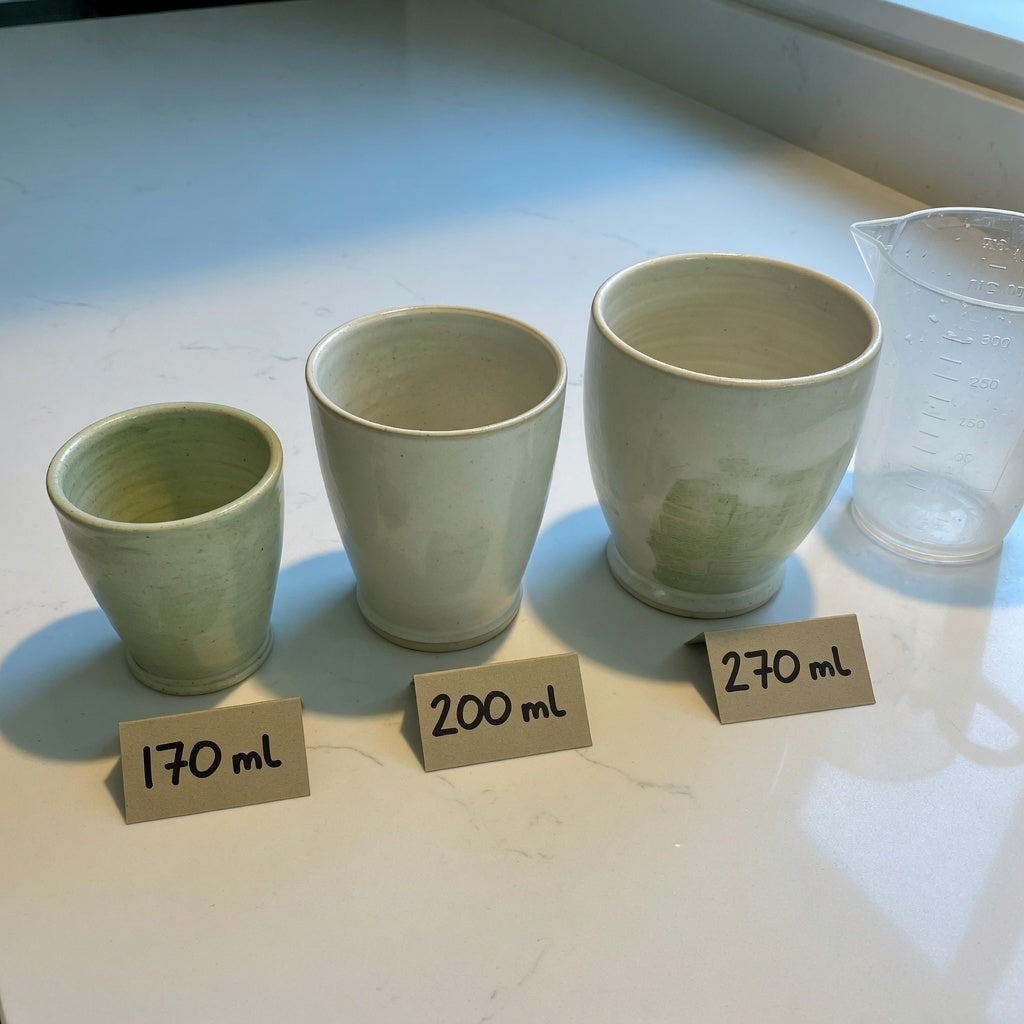
Ceramic Cortado Cup First Time Buyer Product Shortlist Guide: 3 Sizes
Compare CoffeifyMug's verified 170 ml, 200 ml, and 270 ml ceramic options using your measured pour, desired headroom, and nonnegotiable listing details. Each option includes a direct reason to choo...
Read more
Leave a comment
This site is protected by hCaptcha and the hCaptcha Privacy Policy and Terms of Service apply.