




15 oz Ceramic Coffee Mugs Buying Priorities: Capacity, Shape, Space
Reading time: about 11 minutes
A mug can look generous on the counter and still leave your usual coffee sitting uncomfortably close to the rim after you stir in milk. We hear that version of the story often: the capacity matched the listing, the photo looked roomy, and the first cup still sloshed. Choosing well is less about finding a bigger mug than about running the checks in the right order, which is what 15 oz ceramic coffee mugs buying priorities should really describe.
The order we suggest in our store is: measure your actual pour, compare it with the listed capacity, judge the shape and the handle, then confirm the space the mug has to live in. Capacity is both the easiest figure to compare and the easiest to misread, because a listing rarely says whether the number was measured to the brim or to a comfortable fill line.
15 oz ceramic coffee mugs buying priorities: start with the pour, not the photo
One US fluid ounce is roughly 29.6 ml, so a 15 fl oz target lands near 444 ml. That conversion is useful and, on its own, useless as a shopping filter. A mug listed at 440 ml and a mug listed at 480 ml can both be called large and behave completely differently with the same 12 oz coffee inside them, because interior shape decides how high that volume sits.
Do this before you open any product page. Put your normal coffee, your normal milk or creamer, and any foam into a measuring jug together, once. Not an estimate — an actual measurement. Most shoppers we talk to are surprised by the total, and that number is the only reliable input you have.
Then subtract. If your total drink measures 14 fl oz, a mug with 15 fl oz of brim capacity leaves roughly an ounce of clearance before you allow for the gap the rim needs. Whether that feels safe depends on how vertical the walls are and how you carry the mug. That is why capacity comes first, shape second, and shelf space last.
Which of our three listed capacities matches your near-15 oz routine?
Our current lineup keeps three capacities, and the differences are small enough to blur on a search results page. Map each one to a routine rather than to a number:
- Your total drink stays under about 13 fl oz and you refill rather than carry a big cup. The Flow lists 400 ml, about 13.5 US fl oz. It is the smallest commitment of the three on paper, and the one most likely to feel crowded if your pour plus milk already reaches 13 fl oz.
- You want the closest thing to a 15 oz mug we currently list. Morning and Night lists 440 ml, about 14.9 US fl oz. This is the option we point shoppers toward when 15 oz is the target itself rather than an approximation.
- Your additions push the total past 15 oz, or you just like a wide margin. The Rock lists 480 ml, about 16.2 US fl oz. More total volume on paper — but volume is not headspace, and a tall narrow interior can put 480 ml closer to the rim than a shorter wide one puts 440 ml.
| Mug | Listed capacity | Approx. US fl oz | Routine it suits | Confirm before ordering |
|---|---|---|---|---|
| The Flow | 400 ml | 13.5 | Black coffee or tea with a small splash; refill drinkers | Whether your usual pour leaves room below the rim |
| Morning and Night | 440 ml | 14.9 | Shoppers treating 15 oz as the target | Brim measurement versus recommended fill |
| The Rock | 480 ml | 16.2 | Coffee plus milk, foam, or mix-ins at the high end | Height and width for brewer, shelf, and dishwasher rack |
The entire spread between smallest and largest is 80 ml, roughly 2.7 US fl oz. That gap is real but not dramatic, and it will not rescue a pour that is already 6 oz too large. If none of the three fits your measured drink, the unique coffee mug collection is where we would look next. Our capacity comparison of ceramic and porcelain sizes also explains how wall thickness and material change the way a listed volume behaves in the hand.
Where does the headspace go when you add milk or foam?
No standard sets a required usable fill for a 15 oz mug, and we did not find one in the research behind this article. The FDA's own description of a cup or mug uses roughly 240 ml — about 8 fl oz — as its example size, which is a useful reminder that 15 oz is a seller's measurement rather than an industry definition.
So the headspace question has to be answered mug by mug, with your drink in it. A practical test using a mug you already own:
- Pour your measured drink into the candidate mug, not into a jug.
- Add the milk, creamer, or water you normally add, then any foam.
- Look at the distance from the drink surface to the rim. Two fingers' width is comfortable for most people; one finger gets tight the moment you start walking.
- Stir with a spoon the way you actually stir — a full circular sweep — and watch whether anything climbs the wall.
- Carry it to your desk or chair. Spills usually happen in transit, not at the counter.
For a pod or single-serve brewer, measure the delivered output into a jug instead of trusting the brew button's label, since those labels describe the pod rather than what reaches your cup. Our guide to how many ounces are in a mug of coffee covers the measurement side in more detail if you want to check your numbers against common brewer outputs.
Will the handle and the full weight still feel right at 440–480 ml?
Weight is the priority shoppers mention last and regret first. A 15 fl oz serving of liquid weighs roughly 444 grams — a little under a pound — before the mug itself is on the scale, and coffee with milk will land close to that. Pair that with an unknown empty weight and you have a mug some people will not want to lift one-handed at seven in the morning.
We have not published empty weights or handle-opening measurements for The Flow, Morning and Night, or The Rock in the specifications used for this article, so treat both as questions to ask us rather than assumptions to make. If grip strength, arthritis, or a tremor is part of the picture, a smaller mug refilled twice is usually a better answer than a large mug carried once. Handle geometry matters too: a handle that only fits two fingers forces the wrist to do work that a three- or four-finger opening distributes across the palm.
Balance is a separate problem from weight. A mug with a narrow base and a wide belly feels heavier than it is, because the center of mass sits far from your hand. When you cannot hold it first, study the silhouette in the product photos and ask yourself where the widest point sits — high and wide carries differently than low and wide.
Does the mug clear your brewer, cabinet, and dishwasher rack?
Space fails in three places, and they are not the same measurement. Under the brewer, height plus the drip tray decides fit. On the shelf, overall height decides whether the mug slides in without tilting. In the dishwasher rack, total width including the handle decides whether the tines close around it.
Height and width figures are not part of the verified specifications we are working from here, so check the current listing for each mug and ask us directly when a number is missing. Two notes from handling this category: measure the clear space under your brewer with the drip tray in place, because trays are often removable and the "it fits" review you read may have been written with the tray out; and measure cabinet clearance to the shelf above, not to the shelf the mug sits on.
A wide, low mug is generally easier to slide under a dispenser. A tall, narrow one generally stores better on a crowded shelf. You rarely get both, and that trade-off is worth settling before you fall for a design.
What do "microwave safe," "dishwasher safe," and "lead-free" actually cover?
They are three different claims, and none of them implies the others. A mug can carry a microwave-safe instruction and still have a decoration that should not go through a dishwasher, and a microwave-safe statement says nothing about what leaches out of the glaze.
We have not verified care instructions or leach-test results for the three mugs linked above, so ask before you buy if either matters to you — especially for a gift, where you will not be the one washing it. Dishwashing is not a neutral event for a glaze: the California Department of Public Health notes that running a lead-containing dish through the dishwasher can damage the glaze and make later leaching more likely, and that lead cannot be seen in a glaze or a painted design.
On the regulatory side, the FDA's guidance for ceramicware sets a lead guideline for cups and mugs of 0.5 micrograms per ml of leaching solution, judged across six units using methods that include ASTM C738. Its cadmium guidance applies a 0.5 micrograms per ml limit to small hollowware, defined as under 1.1 liters. Every mug discussed here sits well below 1.1 liters, so a 15 oz mug falls into that small-hollowware category. These are limits on what may leach — not certificates that any particular mug passed a test.
Two things follow for shoppers. First, "lead free" is a label with a specific regulatory meaning, and the FDA has documented imported pottery labeled that way that still released extractable lead, so a label alone is weaker evidence than a test report. Second, decorative ceramics not intended for food use must carry a conspicuous warning plus a permanent version on the base, or a hole through the potential food-contact surface, under 21 CFR 109.16. If a mug's base says not for food use, believe it. The CDPH also notes that plain white dishes rarely contain lead, a mild point in favor of undecorated interiors when you are choosing between two glazes.
One honest limitation: if the goal is a drink that stays hot through an hour-long commute, an open ceramic mug is the wrong tool. We do not claim heat-retention times for these mugs, and an insulated travel tumbler will beat any of them at that job. If you are still weighing materials and styles, our breakdown of what coffee and tea drinkers should compare in a ceramic mug is a useful next read.
Frequently asked questions
How much coffee actually fits in a 15 oz mug once I add milk?
Less than the label suggests. A 15 fl oz capacity measured to the brim leaves roughly an ounce of clearance under a 14 fl oz drink, and foam needs room above the liquid. Measure your total drink once and treat that number as the figure capacity has to beat — it is first among the 15 oz ceramic coffee mugs buying priorities for exactly this reason.
Which CoffeifyMug size is closest to 15 fl oz?
Morning and Night, listed at 440 ml, which is about 14.9 US fl oz. The Flow lists 400 ml (about 13.5 fl oz) and The Rock lists 480 ml (about 16.2 fl oz). Check the current product page for dimensions and care details before ordering.
Will a 15 oz mug fit under a single-serve coffee maker?
Capacity cannot answer that. Measure the clear height under your dispenser with the drip tray in place, compare it with the mug's listed height, and do the same for width if the brewer's platform is narrow. If the listing does not show height, ask us and we will check.
Is a full 15 oz ceramic mug too heavy to hold in one hand?
Fifteen fluid ounces of liquid weighs roughly 444 grams before the mug is added, so a full large mug is a genuine lift. If that is a concern, choose a smaller capacity and refill, or ask for the empty weight of the specific mug you are considering.
Does microwave safe mean the glaze is lead free?
No. Microwave suitability concerns how the body and any metallic decoration behave under heat. Lead release is measured by a separate leach test. Ask the seller for the specific claim you need instead of accepting one as proof of the other.
Before checkout: five numbers to confirm on the listing
- Capacity and its basis — the ml figure, plus whether it is brim-full or a recommended fill.
- Overall height and width — including the handle, for the brewer, shelf, and dishwasher rack.
- Empty weight — the number that decides whether a full mug is comfortable to carry.
- Care instructions — microwave and dishwasher, specifically for that mug and that decoration.
- Food-contact testing — any lead or cadmium leach documentation for the finished piece.
For the shortest route: match your measured pour to Morning and Night at 440 ml when you are aiming at a 15 oz routine, step down to The Flow at 400 ml if you refill rather than carry, and move up to The Rock at 480 ml when milk and foam push your total past 15 oz. If your pour falls outside all three, browse the full ceramic mug lineup and compare the numbers before the photographs.
More from our blog
Ready to pick your mug? Two ways to save on today's order:
Ordering 1–3 mugs? Get an extra 10% off your 1st order with code 10_OFF Apply 10% Off & Shop Wooden-Handle Mugs →
Gifting 4+ mugs? Buy 3, Get the 4th Free applies automatically at checkout (no code needed; offers do not stack) · Free standard shipping (Nov pre-Christmas delivery: 15–20 calendar days US) · Free replacement if chipped in transit.
Popular mug buying guides: Ceramic Tea Cups & Infuser Mugs · Ceramic Mugs with Lids Compared · Wooden-Handle Tea Infuser Mugs Compared · Christmas & Secret Santa Mugs 2026 · Espresso & Cortado Cups Guide · Cup & Saucer Gift Sets · All 25 Mugs Spec Table · Mug Size Guide · Shipping & Promo FAQ
FIRST ORDER 10% OFF (CODE: 10_OFF) · OR BUY 3, GET THE 4TH FREE


Read more
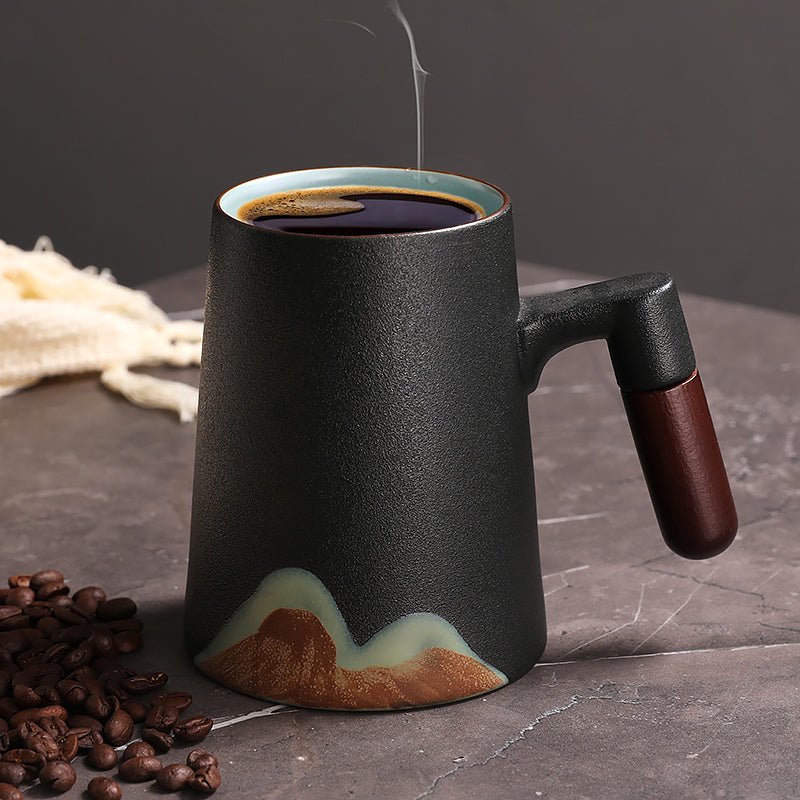
Latte Mugs Tall Buying Priorities: Capacity, Shape, and Space
A tall latte mug has to hold the drink you actually pour, clear your machine and shelf, and still feel balanced when it is full. We compare listed capacities, silhouette, and the care claims worth ...
Read more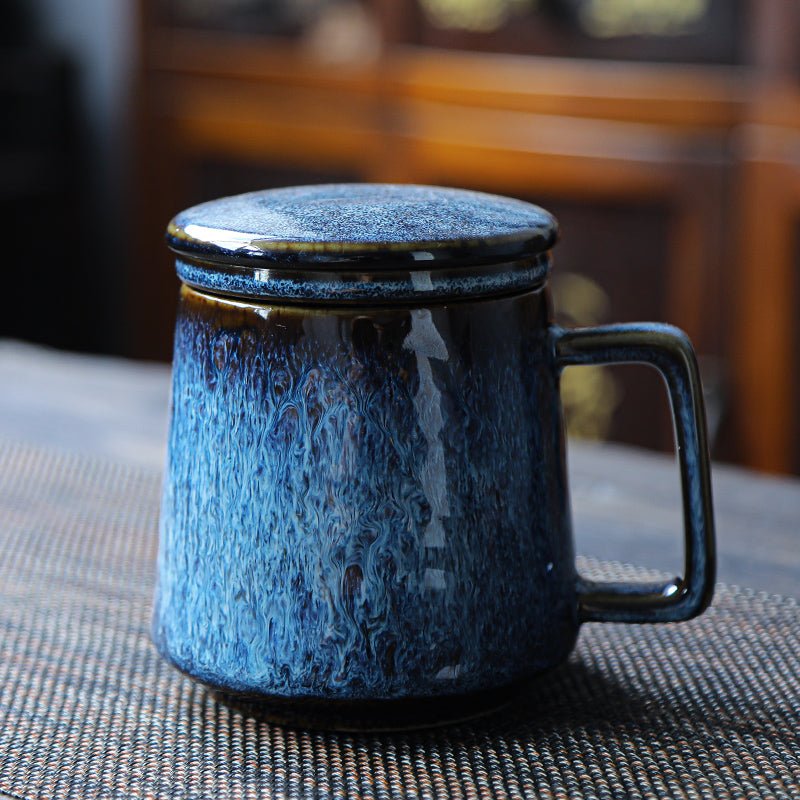
Latte Mugs Tall Size Decision Guide: 400, 440 or 480 ml
Our three tall mugs sit 80 ml apart, and that gap decides headroom, machine clearance, and whether a latte looks full. A practical size decision guide for 400, 440 and 480 ml pours.
Read more
Leave a comment
This site is protected by hCaptcha and the hCaptcha Privacy Policy and Terms of Service apply.