
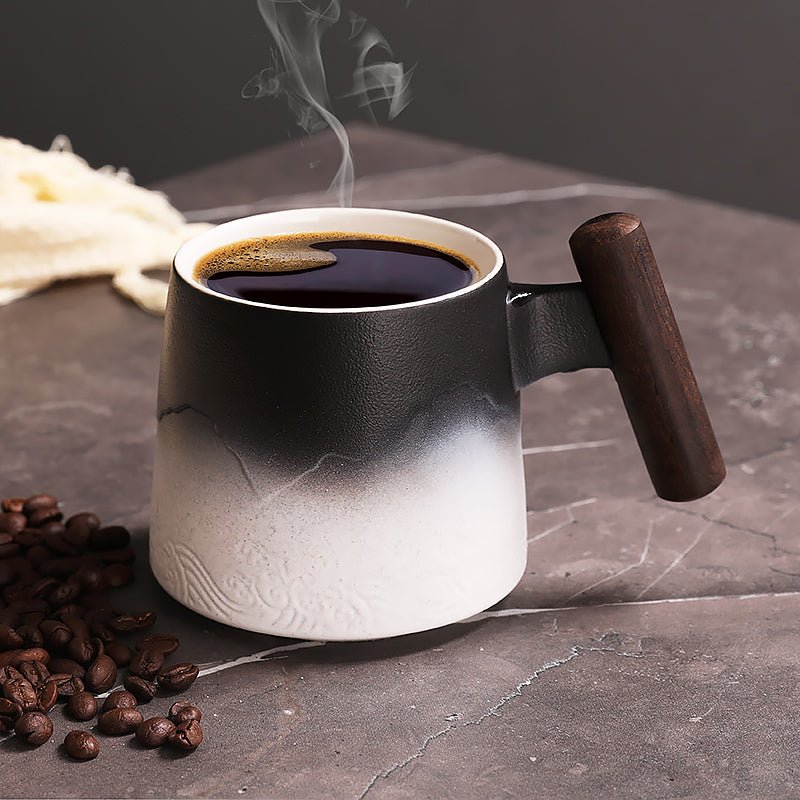
How Many Ounces in a Mug of Coffee? Real Sizes and Buyer Tips
Reading time: about 9 minutes
A customer pours coffee into a mug, fills it right to the lip, and then realizes the first sip is already at spill level. We see that mistake a lot in our store conversations: the number on the mug, the amount in the recipe, and the amount someone actually wants to drink are three different things.
If you are asking how many ounces in a mug of coffee, the short answer is that a typical mugful is usually about 8 to 12 fluid ounces poured for drinking, while the mug itself may hold 11 to 16 ounces or more depending on its shape. The real answer depends on how full you fill it, whether you add milk, and whether you want room for a sleeve of foam, a splash of cream, or nothing at all.
How many ounces is a mug of coffee, really?
For most home coffee drinkers, a mug of coffee is not filled to the brim. A comfortable pour usually leaves room at the top so the drink can move without spilling when you carry it from the kitchen to a desk, couch, or breakfast table.
Here is the practical version we use when helping shoppers compare sizes:
| Mug capacity | Typical coffee poured | Best fit |
|---|---|---|
| 8 oz | 6 to 8 oz | Small drip coffee, espresso drinks, modest portions |
| 10 to 12 oz | 8 to 10 oz | Standard home coffee, tea, daily desk use |
| 14 to 16 oz | 10 to 14 oz | Long pours, milk-heavy drinks, people who want extra room |
| 18 oz and up | 12 oz or more | Large servings, oversized breakfast mugs, big hot chocolate |
One important detail: 8 fluid ounces is one US cup. That matters because a lot of coffee recipes, drip machine markings, and brew ratios are built around that measurement, even if the mug sitting on the counter is larger than the serving you actually drink.
Why does the same mug feel bigger or smaller at different fill levels?
Capacity is not the same as usable volume. A mug with a wide mouth looks generous, but it can still hold less than a taller, narrower mug that reaches higher without feeling crowded. That is why two mugs that both say 12 oz can feel very different in the hand and on the table.
In everyday use, these details matter more than the sticker number:
- Shape: A taller mug often holds heat a little longer than a wide, shallow one because there is less surface area exposed to air.
- Handle size: A comfortable handle should leave enough space for two fingers without scraping the mug body.
- Rim thickness: A thinner rim drinks more cleanly, while a thicker rim can feel sturdier but a little heavier.
- Wall thickness: Thicker walls usually keep the mug warmer in the hand, but they also add weight on a commuting morning or a long office day.
That is why a mug can be a great desk companion and a poor travel choice. If you need something that fits a cup holder and seals closed, you want a travel mug instead. If you want a mug that stays open, feels solid, and sits nicely next to a keyboard, a regular coffee mug is the better tool.
For shoppers comparing everyday styles, our Golden Waves Kio Coffee Tea Mug and The Flow Coffee Tea Mug are the kinds of pieces people usually look at for home coffee, tea, and giftable desk use. If you want to browse the full range first, start with all mugs in our collection.
Which mug size works best for your drink?
The right size depends on the drink, not just the mug. A black drip coffee drinker and a latte drinker often need very different cup volumes.
- Black coffee: A 10 to 12 oz mug usually covers a normal home pour without feeling oversized.
- Coffee with milk or cream: A 12 to 14 oz mug gives more room so the drink does not sit right at the brim after you add dairy.
- Latte or cappuccino: A larger mug works better because foam takes space before the liquid looks full.
- Espresso: A big mug is not the right vessel. It makes the drink look lost and cools too fast.
- Hot chocolate or chai: A 14 to 16 oz mug is usually more comfortable if you like a fuller serving.
There is a trade-off here. Bigger is not always better. Oversized mugs are useful for long office mornings, but they can be awkward for people who like a tighter, hotter drink. Smaller mugs feel more controlled and often better balanced in the hand, but they are less forgiving if you pour too much or add a lot of milk.
If you want a deeper size comparison, our earlier guides How Many Ounces Is a Coffee Mug? Real Sizes and Buyer Tips and How Many Ounces in a Coffee Mug? Sizes, Fits, and Buying Tips cover the broader sizing range shoppers usually compare before buying.
How do you measure your mug at home without guessing?
We measure mugs by what a person can actually drink, not by how much water a mug can hold if filled to the top. That gives you a better answer for morning coffee, office refills, and gift buying.
- Fill the mug with water to the level you would normally drink from, not all the way to the rim.
- Pour that water into a measuring cup and read the fluid ounces.
- If you use a scale, remember that 1 fluid ounce of water is about 29.6 grams.
- Repeat once with cream or milk if that is how you usually drink coffee, because the added liquid changes how full the mug feels.
This simple check is useful because many mugs are sold by capacity, but people drink them by comfort. A mug that technically holds 16 oz may only feel right at 12 or 13 oz when you want space for movement, especially if you are walking from a kitchen counter to a meeting room.
Our team also checks for a few practical issues that do not show up in a product name. Rim chips show up first in daily use. Hairline cracks often start where the handle joins the body. Glaze crazing can appear after repeated dishwasher cycles, especially if the mug sees hot-and-cold temperature swings. Those are not reasons to panic on day one, but they are the signs we look for when deciding whether a mug is built for routine use or just occasional display.
What should you look for if you want a mug for everyday coffee?
If you are buying for daily use, focus on the way the mug behaves on a counter, in a dishwasher, and in the hand. The design details matter more than a catchy name.
- Comfortable capacity: Pick a size that matches your normal pour, not the brim number printed in a listing.
- Stable base: A mug should sit flat and feel secure on a desk or nightstand.
- Easy care: If you rely on a dishwasher, choose a mug that is meant for repeated washing and avoid designs that need hand care only unless that is acceptable to you.
- Good grip: The handle should feel balanced when the mug is full, not just when it is empty.
- Right use case: A mug is ideal for sipping at home or at a desk, but it is not a travel solution and it is not the best choice for a quick espresso shot.
That is the part shoppers sometimes overlook. A beautiful mug can still be the wrong mug if it is too heavy for morning use, too large for your coffee machine, or too shallow for the drink you actually make. We have seen plenty of gift unboxings where the mug looked great on camera but felt awkward after two days on a work desk.
How many ounces in a mug of coffee if you add milk, foam, or ice?
Once you start adding ingredients, the practical serving size changes fast. Milk, foam, ice, and syrups take up space that plain coffee would otherwise fill.
A few common examples:
- With milk: A 10 oz coffee can become a near-full 12 oz mug very quickly.
- With foam: Cappuccino-style drinks need extra headroom because foam sits higher than liquid.
- With ice: Iced coffee behaves differently. A mug can hold the drink, but an open mug is not as practical as a glass with a wider top and more stability for cold drinks.
- With flavored add-ins: Syrups and creamers do not add a lot of volume by themselves, but they do reduce the amount of plain coffee that fits comfortably.
If you want a mug for layered drinks, choose one size up from your usual black coffee cup. That extra room keeps the drink cleaner to carry and less likely to slosh when you move it from a kitchen counter to a sofa arm or office table.
Frequently asked questions
Is a 12 oz mug big enough for coffee?
Yes for most drip coffee drinkers. A 12 oz mug usually gives enough room for a normal home pour while still leaving some headroom. If you add a lot of milk or like a very full mug, a 14 oz size may feel more relaxed.
How many ounces should I pour into a 16 oz mug?
Most people pour about 10 to 14 oz into a 16 oz mug, depending on how much room they want at the top. If you drink while walking around the kitchen or carrying the mug to a desk, leaving extra space is the safer choice.
Do coffee mugs have the same capacity as measuring cups?
Usually no. A measuring cup is designed to measure liquids accurately, while a coffee mug is designed for drinking comfort. A mug may be labeled 12 oz, but its usable pour can feel smaller because of the shape, handle, and rim.
Can I use a big mug for espresso drinks?
You can, but it is not the best fit. Espresso drinks tend to look and taste better in a cup that matches the serving size. A very large mug makes the drink cool faster and can make a small shot feel lost.
What size mug is best for a desk at work?
A 10 to 12 oz mug is usually the easiest daily choice for a desk. It is large enough for a regular coffee pour, but not so large that it becomes bulky beside a keyboard, notebook, or laptop. If you want a larger mug, make sure the handle and base still feel stable on a crowded desk.
What should you compare before you choose your mug?
Before you buy, check these four things together instead of focusing on capacity alone:
- How much coffee you actually drink in one sitting
- Whether you add milk, foam, or cream
- How the mug feels in the hand when it is full
- How easy it is to wash after a normal dishwasher cycle
If you want to compare shapes and everyday sizes side by side, start with our full mug collection, then narrow it down to the mug that matches your routine. If you want more size context before choosing, the guides How Many Ounces Is a Regular Coffee Mug? Buyer Guide and How Many Ounces Is a Standard Coffee Mug? Buyer Guide are useful next reads.
Read more

Tea Ceramic Cup: How to Choose the Right Size and Finish
A tea ceramic cup should feel right in the hand, hold the amount you actually drink, and survive real daily use. We break down size, glaze, shape, and care so you can choose with confidence.
Weiterlesen
Green Coffee Mug Buying Guide for Style, Size, and Daily Use
A green coffee mug can look simple, but the shade, glaze, size, and handle shape change how it feels every day. Here’s how we help shoppers choose one that looks good on the counter and actually wo...
Weiterlesen
Hinterlasse einen Kommentar
Diese Website ist durch hCaptcha geschützt und es gelten die allgemeinen Geschäftsbedingungen und Datenschutzbestimmungen von hCaptcha.