




Workday Coffee Pause Ceramic Mug: Desk Buying Checks
Reading time: about 15 minutes
The second week at a desk is when a mug stops being a photo and starts being a habit. It rocks when you set it beside a keyboard. The handle pinches once the cup is full. A printed line clouds after the shared office dishwasher. A workday coffee pause ceramic mug has a narrow job: hold a hot drink through a short, seated break, then sit still on a coaster. It is not a commute bottle. It is not a focus tool.
In our store, two listings come up when someone describes that seated pause and asks which page to open first. Shoppers hoping for a taller profile on a monitor riser or a narrow shelf start with the Landscape Tall coffee and tea mug, because that is how the listing is named. People who want the round profile in the name, rather than height, start with the Round coffee and tea mug. Those names are a direction, not a measurement. Capacity, glaze, handle clearance, food-use status, and appliance labels are not facts we will guess from a thumbnail. Read them on the current listing before the mug goes on a desk or into a gift bag. If the shape is not the point and you are browsing a print for yourself or a coworker, begin in our unique coffee mugs and run the same checks on whichever page you open.
Why a workday coffee pause ceramic mug stays on the desk
A travel mug earns its keep in a cup holder, a bag, and a meeting you walk into late. Ceramic earns its keep when you are already sitting. The body has weight. The rim is open. Heat moves through the wall into the room. That suits a pause you actually take. It is a poor fit if the drink has to survive a train ride or stay hot for an hour while you are in another room.
We hear the mismatch from buyers who ordered a slogan cup for the office and then tried to use it as a sealed bottle. Ceramic does not seal. Unless the listing explicitly includes a lid made for that exact mug, assume an open rim. An open rim is fine next to a notebook. It is a spill on a laptop sleeve.
What we look for when the use case is a quiet workday pause:
- A footprint that sits flat on a coaster without crowding the mouse or a keyboard tray.
- A handle you can get two or three fingers through when the mug is full, not only when it is empty on a shelf.
- A capacity you will finish during the break, not a large pour that goes cold while you answer mail.
- Care instructions you can follow in a shared kitchen, not only at a home sink.
- A food-use statement you can read on the page, not a decorative object that merely looks like a cup.
If the real problem is heat on a long commute, stop and buy an insulated bottle. A ceramic pause mug will disappoint you there, and that is not a defect in the clay.
What a short mid-morning pause changes, and what it does not
Some shoppers want the mug to do something for focus. The published work is about the break, not the cup. A Baylor University study of 95 employees and 959 break reports, published in the Journal of Applied Psychology, found that mid-morning breaks replenished energy, concentration, and motivation more than breaks taken later. More frequent short breaks were tied to higher resources. Breaks people actually preferred were linked with fewer symptoms such as headache, eyestrain, and lower back pain, with higher job satisfaction, and with less emotional exhaustion.
A 2022 meta-analysis in PLOS One pooled 22 samples and 2,335 people. Micro-breaks showed a small effect on vigor (d = 0.36) and a small effect on reducing fatigue (d = 0.35). The effect on overall performance was not significant (d = 0.16). Longer breaks lined up with a larger performance boost. The authors concluded that recovery from highly depleting tasks may need more than 10 minutes.
A CDC Preventing Chronic Disease report on a cluster-randomized trial of desk-based workers described Booster Breaks as organized, routine work breaks meant to support physical and psychological health, job satisfaction, and work output. People who attended consistently showed potential for favorable shifts in physical activity, sedentary time, and body mass index. Findings differed across study arms.
Read that as a boundary we are willing to say out loud. A short pause can be a reasonable part of a workday. A comfortable mug can make that pause easier to take. Neither finding says a printed cup raises output, and we will not sell one on that promise. If the task in front of you is genuinely draining, the studies point toward a longer break than a sip between messages. The mug still only has to be safe, comfortable, and the right size for the drink you pour.
We compare pour size and how a mug sits beside a morning routine in our morning coffee ceramic mug notes. Use this page when the open questions are food-use, appliances, and daily desk wear.
11–12 oz or 16–18 oz for one seated pour
There is no single best office capacity, and we do not assign one to a listing we have not measured on this page. Buyers comparing desk ceramic usually already know which of two habits they have at home.
| Seated habit | About 11–12 oz | About 16–18 oz |
|---|---|---|
| What the pour is for | A modest cup with a little headroom so coffee does not slosh on the walk from the kitchen | One larger serving for a slower mid-morning sit |
| Wrist and desk | Lighter when full, easier to finish before it cools, less likely to crowd a small standing desk | Heavier when full; the base can shove a notebook off a shallow tray |
| Where it disappoints | You dislike refilling and this pause is the only time you leave the chair | You wanted the last third to stay hot through a long call, or you need a commute cup |
One regulatory note so the numbers do not get mixed up. FDA materials that describe cups and mugs for lead testing call them small ceramic hollowware, commonly used for coffee or tea served above room temperature, normally but not exclusively about 8 fl oz (240 mL), and made with a handle. That is a category description for compliance testing. It is not advice that your work pour should be 8 ounces. Plenty of daily desk mugs are larger. Confirm the ounce or milliliter figure on the product page. If a listing only shows a photo, treat capacity as unknown.
Double-wall ceramic is a separate question we get from people who want a cooler exterior during the pause. A double wall can change how hot the outside feels, but only when the maker states that construction for that exact piece. It does not, by itself, prove microwave safety, and it often changes height and footprint. If the listing does not say double-wall, judge it as ordinary ceramic: hold it by the handle, use a coaster, and do not expect insulation. Do not treat either linked mug as double-wall, insulated, or a stated ounce size until the current page says so.
Food-use glaze, the lead action level, and a lead-free line
The word ceramic does not mean a piece is fit for hot coffee. Food safety depends on whether the ware is made for food, what is in the glaze or decal, and whether the surface is still intact.
The agency is plain about lead: it knows of no safe exposure level, and lead used in pottery can move into food. For cups and mugs, the compliance guide’s action level is 0.5 micrograms of lead per milliliter of leaching solution, and that level applies to any one of six units tested. If the prescribed test finds extractable lead, the piece should not be called lead free. Ware that goes over those action levels can be treated as adulterated.
A marketing line that simply says lead free is not the same thing as a result you can read. Ask what the seller means. If they cannot point to food-use intent, treat the phrase as incomplete. In our experience, that gap shows up on gift-shop ceramics and older hand-me-downs more often than on a page that plainly says the piece is for drinks. Still, read the page you are buying.
Ornamental ceramic is a different object that can look exactly like a coffee mug. Under 21 CFR 109.16, lead is a toxic metal used in some glazes and decorative decals, and food used with ornamental ware can pick up lead. A piece that looks fit for food, but is not meant for it, is required to carry a specified not-for-food-use warning or to have a hole through the surface that would touch food. A hole is a hard stop. That object is not a mug, even if the shape is charming. If food contact is absent from the listing, do not pour coffee in to test the question.
Retire a mug for drinking when the food-contact surface is compromised. Chips at the rim, cracks through the body, and a crazed glaze — that fine crackle that catches coffee stain — are the patterns we tell people to stop using. Crazing can be a look some potters fire on purpose. On a daily hot-drink mug it is also a place for stain, and a sign the surface is no longer a smooth, intact glaze. We would rather you replace it than keep scrubbing a crackle and sipping.
Dishwasher cycles, microwave labels, and a print that has to last
Buyers ask why one ceramic mug is marked dishwasher safe and another, described as the same material, is not microwave safe. The clay body and the decoration are different problems.
A dishwasher cycle is hot water, detergent, and time. A microwave is a different stress. Metallic trim, gold or silver rims, and some luster inks can spark. A mug can survive the rack and still be a bad idea in the microwave. The reverse happens too: a plain body might be fine to reheat, while a surface print is only rated for hand washing because detergent lifts it. Read both labels. If the listing is silent, do not fill in yes from the word ceramic.
Decoration type changes daily care more than the slogan does:
- Surface decals and many sublimation prints sit on or in a coating that dishwashers can haze, fade, or peel. If the page says hand wash, believe it. One office dishwasher run is how a gift mug becomes a pale ghost of the joke.
- In-glaze or underglaze decoration, fired into the surface, generally holds up better to repeated washing. That is still not a microwave certificate. Metal in the design overrides the clay.
- An unglazed foot ring can scratch a bare wood desk. A coaster is not fussy. It is how you keep both the mug and the finish.
Reheating an empty mug is a habit we would rather you skip. Warming a splash of cold coffee is one thing. Running an empty ceramic piece, especially one with any metal mark, is how people crack ware or get a scare from arcing. If you need a warmer cup mid-pause, pour the coffee into a mug whose listing allows the microwave, and stop when the drink is hot, not when the handle is.
Handle opening, foot width, and a lid at a seated desk
Handle comfort is the complaint that shows up after the unboxing, not during it. A handle that looks generous in a photo can still pinch when the mug is full of hot coffee, because your grip changes and the cup is heavier. We suggest a check you can do in the first minute at the desk. Hold the full mug the way you actually pause — sometimes one finger hooked in the opening, sometimes a fist around the handle while you read. If your knuckle hits the hot wall, it is the wrong mug for a longer break, even if the capacity is right.
Left- and right-hand placement matters on printed mugs. Many designs face the drinker when the handle is on the right, which matches a usual right-hand hold. A left-handed coworker then sees the blank side. For a gift, that is worth a few seconds. For your own desk, it only matters if you care that the line faces the room.
Base stability is about the foot, not the rim. A narrow foot on a tall body can feel elegant and tip easier when a cable snags it. A wider foot sits calmer and eats more coaster space. On a keyboard tray, width loses. On a deep desk with a monitor arm, height is usually easier to live with. Do not assume either linked shape is stable, or tall in measured inches, until you read the current dimensions. The names point in a direction. They are not a lab report. If a taller look is what you came for, open the Landscape Tall listing and check height, foot, and capacity there. If a lower, rounder profile is the hope, do the same on the Round listing.
A lid is optional at a desk and often a nuisance. It helps if you step away for a few minutes and do not want a skin on the coffee, or if the mug sits under a dusty vent. It hurts if you are constantly unsealing it during a short pause. A lid says nothing about lead safety or microwave safety. Only trust a lid the listing says fits that mug. A random travel lid from another cup will rock, leak, or trap steam against a print that was not made for it. For a quiet seated break, we usually leave the lid off.
A coworker gift versus the mug that stays at your station
A pause, break, or coffee-slogan mug is a common coworker gift because it is specific without feeling oddly personal. It works when the recipient drinks hot coffee or tea at a desk, has a place to wash it, and will not be put off by the joke. It is a weak gift when they already commute with a bottle, work somewhere mugs are not welcome, or you do not know whether they can microwave or wash the piece. In that case, a plain food-use mug with a clear care line beats a louder print.
Daily-use buyers should weigh durability over the punchline. If the mug will hit a shared dishwasher five days a week, choose a listing that says dishwasher safe, and still look at the print after the first month. If the design is the whole point, hand wash it and keep it off the metal rack. Gift buyers can lean the other way. A charming print that needs hand washing is acceptable if you say so in the note. Surprising someone with a fade-prone mug and no care line is how a funny office cup becomes clutter.
Before you check out, run this pass on the exact page you have open:
- Confirm it is sold for food use, not as a decorative object, and that there is no not-for-food-use warning or hole in the well.
- Read capacity in ounces or milliliters. Decide whether that pour matches a short seated pause or a long sit without a refill.
- Read microwave and dishwasher statements separately. Silence means unverified, not approved.
- Note metallic rims or shimmer inks. Treat those as a microwave caution until the listing says otherwise.
- Picture the handle on your dominant hand, full, not empty. Check which way the print faces.
- Check foot width against the real desk surface, including a coaster.
- Plan to retire the mug if the rim chips, the body cracks, or the glaze crazes and stains.
If a taller profile is the shape you want, open the Landscape Tall coffee and tea mug and tick those seven lines against what it currently states. If you want the rounder everyday curve, do the same on the Round coffee and tea mug. If you are still choosing a print for a desk or a coworker, browse unique coffee mugs and compare options without treating every ceramic cup as the same object.
Frequently asked questions
Is a workday coffee pause ceramic mug microwave safe?
Only if that exact listing says so. Ceramic as a material is not a microwave certificate. Metallic trim, luster, and some printed inks are common reasons a mug should stay out of the microwave even when the clay looks ordinary. If the page does not mention microwave use, do not test it with a full cup of coffee to find out. The handle and the wall can heat even when you only meant to warm the drink, so stop at the drink, not at a hot grip.
Why are some ceramic mugs dishwasher safe but not microwave safe?
A dishwasher and a microwave stress different parts of the mug. Detergent and hot water challenge the print and the glaze. A microwave can interact with metal in a rim or decoration, and with moisture in a body that was not made for that heat. A maker can honestly rate the same mug for one appliance and not the other. Follow both lines, and hand-wash when the decoration is the thing you bought.
How do I tell a food-use ceramic mug from a decorative piece?
Look for a clear food-use purpose on the listing, and look for warning signs of ornamental ware. U.S. rules expect pieces that look food-safe but are not intended for food to carry a not-for-food-use warning or to have a hole through the food-contact surface. A hole means do not drink from it. A vague ceramic or lead-free line, with no food-contact statement, is not enough.
Is about 12 oz or 16 oz better for an office coffee pause?
Neither size wins for every desk. About 11–12 oz suits a shorter pause and a lighter full mug. About 16–18 oz suits people who want one larger pour and have the handle clearance and desk space for the weight. Finish the drink during the break either way. An open ceramic mug is not built to keep the last of the cup hot through a long meeting.
When should I stop drinking from a crazed or chipped office mug?
Stop when the rim is chipped, the body is cracked, or the glaze has crazed and started to stain. Those are condition problems, not character. Intact food-use glaze is part of what makes a daily coffee mug reasonable to keep. A replacement you have already checked for food use is a better plan than scrubbing crackle and hoping the surface is still sound.
More from our blog
Ready to pick your mug? Two ways to save on today's order:
Ordering 1–3 mugs? Get an extra 10% off your 1st order with code 10_OFF Apply 10% Off & Shop Wooden-Handle Mugs →
Gifting 4+ mugs? Buy 3, Get the 4th Free applies automatically at checkout (no code needed; offers do not stack) · Free standard shipping (Nov pre-Christmas delivery: 15–20 calendar days US) · Free replacement if chipped in transit.
Popular mug buying guides: Ceramic Tea Cups & Infuser Mugs · Ceramic Mugs with Lids Compared · Wooden-Handle Tea Infuser Mugs Compared · Christmas & Secret Santa Mugs 2026 · Espresso & Cortado Cups Guide · Cup & Saucer Gift Sets · All 25 Mugs Spec Table · Mug Size Guide · Shipping & Promo FAQ
FIRST ORDER 10% OFF (CODE: 10_OFF) · OR BUY 3, GET THE 4TH FREE


Read more

Remote Work Coffee Station Mug Pair: What to Compare
Two cups have to survive long calls, daily washing, and a tight desk tray. We compare shape, care, camera appearance, and the listing facts to verify before you buy a remote work coffee station mug...
Read more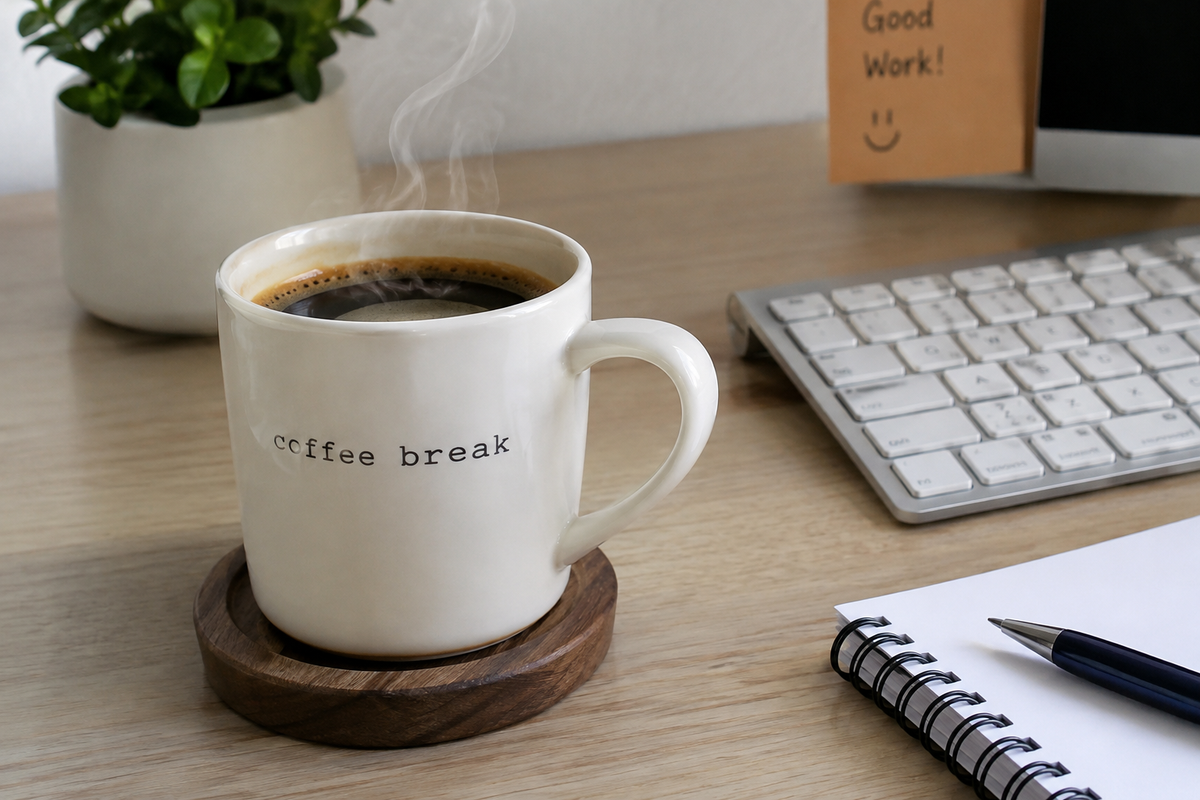
Desk Coffee Break Ceramic Mug: What Buyers Should Compare
A desk coffee break ceramic mug needs the right balance of capacity, heat management, and safety features for daily workstation use. We break down real trade-offs in size, care, and desk conditions...
Read more
Leave a comment
This site is protected by hCaptcha and the hCaptcha Privacy Policy and Terms of Service apply.