

Workday Coffee Pause Mug: Size, Heat, and Desk Fit
Reading time: about 14 minutes
Monday's first gap is rarely a real break. The meeting ends, the coffee is still too hot, and the next invite is already on the screen. By the time it is pleasant to drink, you are typing again, and what is left goes cold beside the keyboard. That is the job of a workday coffee pause mug: one serving for a short desk pause, not a catalog prop and not a commute tumbler. In our store the same search splits into two orders. One buyer wants a cup that marks the pause. The other wants a mug that will not tip onto a laptop, stain overnight, or lose its print in the office dishwasher. Those are not the same purchase.
Search results also mix in travel steel and merch for a software company that happens to use the word Workday. Start with the break you actually get, then read the listing in front of you. A photo is not a capacity, a height, or permission to use the break-room microwave.
Is the cup a pause signal or a desk tool?
A printed line does not tell you how the cup behaves at 9:40 a.m. We split the choice into two jobs before we point anyone at a shape.
- The signal. A quiet print or a plain color that says this cup is yours and this minute is a break. It belongs on a personal desk, and it can work as a restrained coworker gift. It is a poor fit if the joke is sharper than the office, or if the design only looks clever in an unboxing photo.
- The tool. A serving you can finish, a handle that clears the mouse, a base that sits still, and a rim you can drink from before the next call. Useful for a pause. Useless in a backpack, a cup holder, or a bike bag.
If the tool is what failed last week, compare shapes as listings, not as assumptions. Open the landscape tall coffee and tea mug when the question is height under the office brewer. Open the round coffee and tea mug when you want to compare a wider body that might sit more steadily beside a laptop. The names send you to the right page. They are not measurements. Capacity, footprint, handle span, material, and any microwave or dishwasher line have to appear on the current listing. If a fact is missing, treat it as unknown.
Both pages are named as coffee and tea mugs. That does not add a tea infuser, a lid, or a coaster. If you brew loose leaf at your desk, confirm the accessory on the page before you order. Do not infer it from the word tea. An open desk cup is also the wrong tool for a commute unless that same listing describes a seal, and even then read the line twice.
When the shape is settled and you want a look that can sit out during a video call, browse our unique coffee mugs. Choose something you can stand to see at 8 a.m. for months, not only on the afternoon the box arrives.
How much should a workday coffee pause mug hold?
U.S. federal law does not require employers to offer coffee breaks. When a company does offer short breaks, usually about 5 to 20 minutes, those breaks are paid hours worked and count toward overtime. Department of Labor Fact Sheet 22 describes short rest periods, usually 20 minutes or less, as common in industry and says they must be counted as hours worked. A meal period, typically at least 30 minutes, is not work time when you are completely relieved of duty. Some states require rest or meal periods even though the Fair Labor Standards Act does not. This is not legal advice for your workplace. It is a sizing clue: a short paid pause is a bad match for a mug you cannot finish.
Shoppers who hate morning refill trips often jump straight to 16 or 18 ounces. That size can suit someone who drinks through a long stretch at the desk. It is the wrong default if the break-room drip machine has low clearance, or if the coffee will sit through two more calls and go cold.
- Stated capacity. If the page does not list ounces or milliliters, do not guess from the photo. A café size you liked, or a number printed on a different mug, is not a number for this listing.
- Height versus the brewer. Measure the gap under the office spout, then compare it with the height on the product page. A cup that looks right beside a monitor can still fail under the machine that fills it. No height on the page means clearance is unconfirmed.
- Hand, mouse, and which hand you drink with. A wider body can feel steadier and still crowd the space next to a laptop. Handle room matters if you wrap your whole hand around the cup rather than pinch the grip. A large one-sided print can also face the wrong way for a left-handed drinker, so check more than one photo.
We would rather sell the serving you empty during the pause than a showpiece that becomes a cold leftover. A workday coffee pause mug should be finished while the break still counts, not used as a reservoir for coffee you forget. If you want all-morning heat without a refill, you are shopping a different object.
Open rim or insulated steel for a ten-minute pause?
Vacuum stainless steel is a strong commute cup and a clumsy default for ten minutes at a desk. The walls hold heat long after you wanted a drinkable sip. They also do not belong in a microwave. Metal reflects that energy. FDA guidance says to use cookware labeled microwave-safe. Microwaves pass through glass, paper, ceramic, plastic, and similar materials, which is why those containers are the usual choice. The container can still become hot from the drink inside it. Metal pans and aluminum foil generally should not be used, because reflected microwaves can cook unevenly and may damage the oven. Paint on the outside of a steel mug does not change the metal.
An open rim does the opposite job. Heat leaves the surface, so a very hot pour often becomes sippable during a short break. That helps at a desk. It fails in a car, between buildings, or inside a laptop bag. If leaks and carrying are the real problem, buy a lidded travel mug for that job. Do not force a desk cup to fake it. On each CoffeifyMug page, confirm whether the piece is ceramic, glass, or another material. Do not copy that answer from the category, a similar name, or the photograph.
| What you need at the desk | Open cup | Insulated travel mug |
|---|---|---|
| Drinkable in a short pause | Usually cools sooner at the surface | Often stays too hot to sip |
| Reheat in the office microwave | Only if that exact cup is labeled microwave-safe and has no metal trim | No. Steel and vacuum liners stay out |
| Walk to a meeting or commute | Poor. An open rim is not a seal | Better, if the lid actually seals and you will clean it |
| See residue before it smells | The film is visible inside | Gaskets hide coffee until it turns sour |
A lid on a desk mug is a trade. It slows cooling and can catch a small splash from a bumped elbow. It also adds a groove where coffee sits if you never take the seal off. In our experience, the buyers who plan to rinse later are the ones who open a sour lid on Thursday. If you will not pull the gasket out and wash it, an open cup you can see into is the more honest tool.
Stability still matters more than the slogan once the mug sits by a keyboard. A wider foot resists a charging-cable snag better than a tall, narrow base, but no open mug is spill-proof. If a full tip would hit the laptop, move the cup behind the keyboard or set a small tray under it. Cold drinks add another mess. Unless the listing describes an outside wall that stays dry, do not set an iced drink straight on bare wood or a laptop sleeve. If you carry the cup and a laptop through a door, do not hook the handle on one finger. On a ceramic cup, that handle joint is where a chip usually starts.
Which microwave and dishwasher labels survive the break room?
Pretty mugs get retired beside the office sink, not in the product photo. Read the listing, then read the base when the cup arrives. If neither says microwave-safe, do not test it before a morning meeting.
- Do not microwave stainless steel, vacuum liners, or metal rims. Gold or metallic-looking decoration can spark or scorch. Treat that print as a no until the page you bought says otherwise.
- FDA guidance says not to heat food or drink in melamine tableware. Heat only in ceramic or other ware that states it is microwave-safe. You may serve on melamine afterward.
- Water heated alone in a very clean cup can superheat without looking like it is boiling, then erupt when you move the cup or stir in instant coffee. Adding the coffee or sugar before heating greatly reduces that risk. Do not exceed the times in the oven manual. This is a burn hazard.
- The cup can still get hot from the liquid. Use the handle on the walk back to your desk.
Dishwashers end slogan mugs the same way. A shared office machine runs hot and often, and the print fails first: fade, a ghost of the lettering, or a rough patch where the color sat. Heat-sensitive or color-changing art is especially easy to ruin when the listing is vague about heat. If the page does not say dishwasher-safe, hand wash. If it does, the top rack is still the kinder first cycle, away from an exposed heating element. A metallic-looking print remains a question for the listing, not a guess from the thumbnail.
Stains are quieter and more common. Coffee left in a light glaze until after the next call leaves a line at the fill mark. A rinse when you stand up beats a weekend soak. Keep abrasive pads off any print. A baking-soda paste can lift a ring on bare glaze and can also dull a surface print, so skip it on decorated ware and wash by hand.
Shared kitchen cups that nobody owns get used and rarely washed on a schedule anyone would admit to. Keep a personal mug at your desk, not on the communal rack. That lowers the chance a coworker runs a fragile print through a harsh cycle or walks off with the cup because it looked free by the sink. A small label on the base is dull. It works better than a clever joke nobody can read after the third wash.
What should a lead line on a ceramic cup mean?
Lead-free on a marketplace tile is usually a marketing line with no test named. FDA guidance treats cups and mugs as a stricter ceramicware category. The action level is 0.5 micrograms of lead per milliliter of leaching solution, judged on any one of six units tested. The agency also says some ceramic foodware can leach lead from the food-contact surface if the piece was not made properly.
Washing, boiling, or other home processes do not remove lead. Everyday commercial factory pottery is described as much less likely to have a lead problem than handmade, antique, damaged, flea-market, or brightly orange, red, or yellow decorated pieces. A piece labeled not for food use should not hold coffee, however good it looks beside a keyboard.
What we will stand behind is the listing, not a lab number we have not published for that page. Check material, origin, and any food-contact or care statement before you buy. If those lines are missing, ask. Do not invent a certification from a glaze photo. A display-only cup is not a work mug, and a bright market-stall souvenir is a different risk from ordinary factory drinkware.
Will the joke still work for a boss or Secret Santa?
Gift buyers chase the laugh and forget the recipient has to carry that mug to the sink for a year. Before the holidays we see orders for slogans the buyer would not leave on their own desk during a client call. A light coffee-break line is usually fine for a peer who already jokes that way. A jab at management, hangovers, or hating the job can land wrong even if they laughed at the screenshot. For a boss, a client-facing teammate, or a new hire, we steer people toward a calm design they can leave out on camera.
Handedness is the constraint most gift lists skip. A large front print can look correct for one hand and awkward for the other, depending on the wrap. If the listing shows a single photo, look for more angles. If you still cannot tell, choose an all-around pattern instead of a one-direction slogan.
Send a lidded travel mug only when they commute or walk between meetings with the drink. Someone who already keeps steel in the car and drinks at the desk does not need a third tumbler that will not fit the break-room shelf. A desk mug wins that case, with the limits you already checked: no leak claim unless the page states one, no promise of all-day heat, and care labels you actually read.
A mug will not manufacture a better afternoon. A 2022 peer-reviewed meta-analysis in PLOS ONE looked at micro-breaks no longer than 10 minutes across 22 study samples and 2,335 people. It found small effects linked with higher vigor and lower fatigue, and no significant effect on overall performance. Any performance link showed up on less demanding tasks, and longer breaks were associated with a greater performance boost. Buy the cup to make a pause you already have easier to take. Do not buy it as a productivity gadget, and do not treat a ten-minute coffee as a substitute for a real meal break.
Desk checks before the order leaves the cart
- Confirm capacity and height on the current page. If a number is missing, do not invent it from the photo.
- Compare that height with the break-room brewer, and the footprint with the clear space beside your laptop.
- Choose an open rim for a short, drinkable pause. Choose a lid or steel only if spills or travel are the actual job.
- Read microwave and dishwasher wording. No label means no experiment, including on metallic or color-changing print.
- Keep a personal mug at your desk and rinse it before a stain sets at the fill line.
- For gifts, pick a tone a director can see on a video call, and check whether the art favors one hand.
- Ignore casual lead slogans. Use a food-contact cup. Never drink from a piece labeled not for food use.
When those answers match a short pause at the desk, compare the landscape tall and round coffee and tea mugs linked above, then look through the unique coffee mugs if you want a different print on the same idea. A missing care line or size is part of the decision. Wait for it, or choose a page that states it.
Frequently asked questions
What size workday coffee pause mug fits a short desk break?
Match the cup to the break you get, not to the biggest number in a review. A pause of about 5 to 20 minutes favors a serving you can finish while it is still pleasant to drink, in a mug that clears the office brewer. If the product page does not list capacity and height, treat both as unknown before you choose a tall or round shape.
Are insulated mugs better than an open cup when I only have ten minutes?
Usually no. Insulation keeps coffee hotter for longer, which sounds helpful until the pause ends and the drink is still too hot to sip. Steel also should not go in the microwave. An open cup cools faster at the surface, which suits a short desk pause, and it is the wrong tool if you need a sealed lid for a bag or a car.
Can I reheat this office mug in the break-room microwave?
Only when that exact cup is labeled microwave-safe and has no metal rim or metallic decoration. Do not microwave stainless steel or vacuum-insulated mugs. Do not heat plain water alone in a very clean cup. It can superheat and erupt when moved or when instant coffee is added. Put the coffee or sugar in first, stay within the oven times, and use the handle because the cup can still be hot.
How do I keep a personal desk mug from being taken or stained?
Leave it at your desk instead of on the shared rack, where it looks available and where someone may run it through a harsh dishwasher. Rinse it when you leave so coffee does not mark a light glaze at the fill line. Do not assume a funny or color-changing print will survive daily office dishwashing unless the listing says dishwasher-safe.
Is a funny coffee-break mug a safe Secret Santa gift?
A mild pause joke is usually fine for a peer. Lines that insult the job, the boss, or the recipient's habits are a bad bet once the mug sits out all year. For a manager or a new coworker, a quieter cup they will actually drink from is the safer gift. Check print direction if they drink left-handed, and skip a travel tumbler unless they need a lid.
More from our blog
Read more

Round Ceramic Coffee Mug Buying Checklist Before You Order
A round mug can feel right in the palm and still fail a weekday morning on fill, knuckle clearance, or a missing care label. We walk through the checks we use before a round ceramic mug is used for...
Read more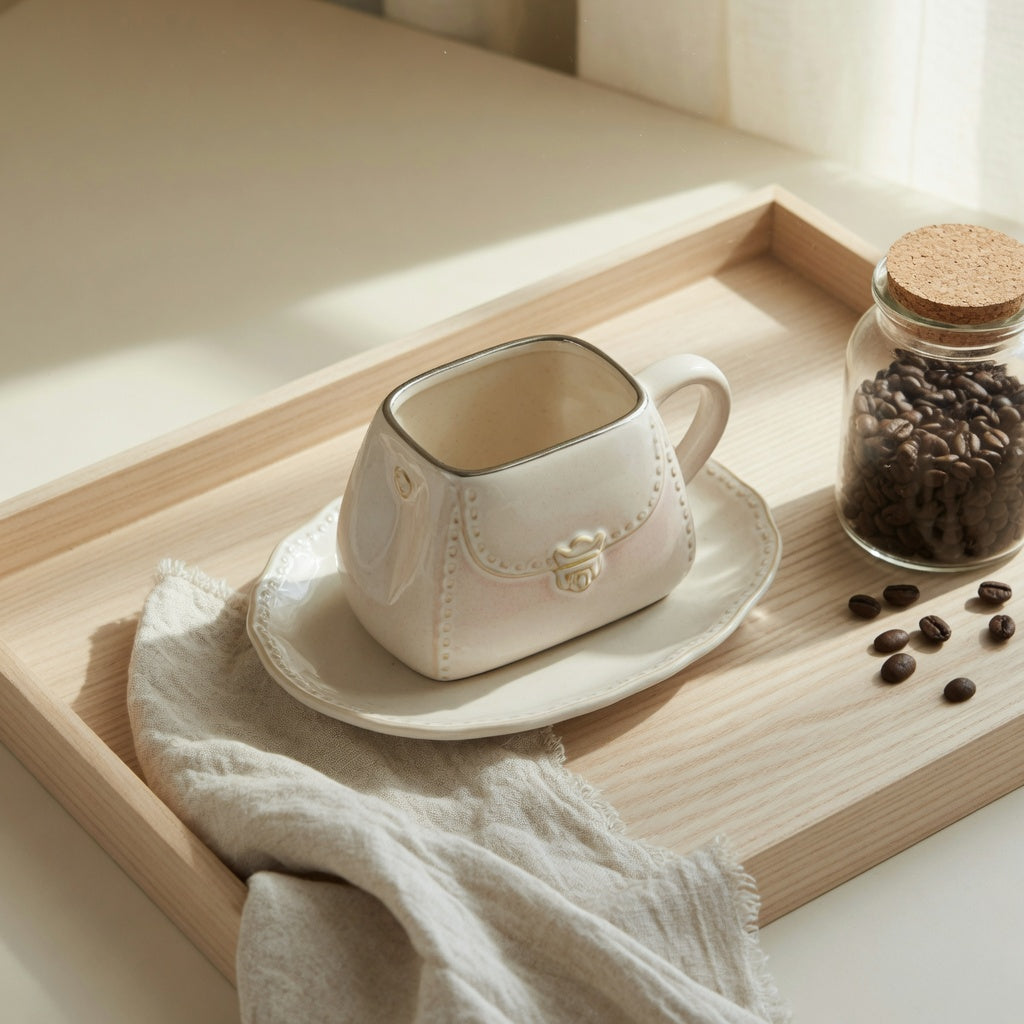
Handbag Coffee Tea Mug for Coffee Lovers Home Decor: Buyer Fit
Purse-shaped cups get chosen for the silhouette, then judged on fill size, metal trim, and whether they are for drinking. We sort a handbag coffee or tea mug the way we would before it lands on a t...
Read more
Leave a comment
This site is protected by hCaptcha and the hCaptcha Privacy Policy and Terms of Service apply.