

Wide Bottom Mug for Desk: What Buyers Should Compare
Reading time: about 13 minutes
The spill we hear about most is not a dramatic shove. It is an elbow catching a tall mug parked an inch from the keyboard, or a standing desk that shudders when someone leans on the front edge. Coffee runs under the spacebar before a napkin is in hand. Shoppers looking for a wide bottom mug for desk use are trying to fix that exact problem: keep a hot drink upright beside a laptop, not find a prettier cup for the kitchen shelf.
In our store the follow-up is almost always the same. People want a cup that is harder to tip, easy to wipe, and honest about what it will not do. A wider foot and weight sitting low in the body make a casual knock less likely. They do not make a spill impossible.
Why a wide bottom mug for desk use still tips on a hard bump
A cup falls when its center of mass is no longer above the patch of desk that supports it. Lower that center of mass and the mug has to lean farther before it topples. A teaching demonstration at the University of Manchester used aluminum blocks of equal height and showed the same idea with no coffee involved: a larger base, a lower center of gravity, or both, increased the tilt angle before the block went over.
That is the case for a broad foot or a bottom-heavy body. It is also the limit. Tip-proof, anti-spill, and no-spill are marketing phrases. The sources we checked do not cite a consumer standard for how hard a mug may be nudged before it is allowed to fall. We also have not seen an independent published test of tip angle or bump force for weighted ceramic desk mugs, non-skid stainless wide-base mugs, and airlock bases on wood-grain laminate, cloth pads, or wobbly standing desks.
A wider support patch and a lower center of mass raise the tilt needed before a cup topples. They do not name a bump the mug is guaranteed to survive.
If the mug does go over, an open rim still dumps the drink. A lid only helps when it is actually closed. In our experience, a shut lid saves as many keyboards as a wide foot does, because the drink stays inside while you reach for the cup.
Weighted ceramic, squat stainless, or a suction base?
Listings that promise a stable desk cup usually fall into three designs. They fail in different rooms, and we would rather say that up front than let a product title do the choosing.
| Design | What it handles | Where it fails |
|---|---|---|
| Broad or weighted ceramic | Casual bumps on a still desk; open rim for coffee or tea | Chips if dropped, heat marks on bare wood, a full spill once it passes balance, tiring weight |
| Squat stainless with a non-skid foot and lid | A low body, plus contained liquid if the lid is shut | Often too wide for a car cup holder; metal is a poor microwave choice; a loose ring can hide film |
| Airlock or suction base | Stays put on a clean, smooth, flat surface | Cloth pads, textured laminate, dusty seals, and many dashboards |
- Broad or weighted ceramic. A flared foot or a heavy base spreads the support and keeps mass low. You pay for that in hand weight, mouse-pad space, chips on a hard floor, and a bare foot that can mark finished wood. A smooth open interior wipes clean. A narrow well is harder to scrub after milk drinks.
- Squat stainless with a non-skid foot and a lid. The low shape resists a casual bump. A closed lid is what protects the keyboard if the cup rolls. Measure any cup holder before you assume it fits. Plan on checking the foot ring; coffee film hides under loose rubber.
- Airlock or suction bases. These seal against a smooth, flat top. A cup that stays on glass can skate on a fabric desk pad. Seat and release the base the way the maker describes so you are not peeling the seal at every sip.
A fourth option sits outside this lifestyle set: assistive cups with a wide base, sometimes two handles, sold for a weak grip or tremor. A heavy desk mug can be tiring if your hands already fatigue. We would not treat a style mug as a stand-in for that kind of cup. Match the cup to the hand, not only to the desk.
Which listing to open when the cup sits beside a keyboard
Shoppers comparing shapes on our site usually start in the unique coffee mugs collection, then open three pages and read the live details. Those pages are the Round coffee tea mug, the Spittoon coffee tea mug, and The Rock coffee tea mug.
We will not invent a base diameter, ounce capacity, glaze formula, empty weight, or dishwasher promise for those pages. A photo, an old description, or a similar mug on another site is not evidence. Use the three links as a short list, then verify the current listing before you buy.
- You want a rounded profile that might not tower beside the keyboard. Open the Round coffee tea mug and check the live base width, height, and capacity against the gap next to your laptop. If those numbers are missing, treat the fit as unknown.
- You want a low, open form you can see into while you type. Read the Spittoon coffee tea mug listing next. Confirm the rim will not crowd the mouse, and confirm the page sells it as drinkware rather than a decorative piece.
- You want a mug that looks planted and steady. Open The Rock coffee tea mug and look for empty weight and handle notes on the listing. A solid-looking photo does not prove a low center of mass, a wide foot, or clearance over a keyboard tray.
On every listing, look for any note about a cork pad, a rubber ring, or a bare foot. If the page does not say microwave-safe or dishwasher-safe, do not assume either one. That silence is a reason to hand-wash and skip the microwave, not a hidden yes.
Base width, filled weight, and the gap next to the laptop
Wide bottom and wide mouth get mixed together in product names. A wide opening changes how you drink and how fast the surface cools. A wide bottom is the support patch on the desk. Listings rarely print base diameter, height, or where the mass sits once the cup is full, so a title cannot tell you whether the foot clears your keyboard.
Capacity cuts both ways. Liquid sitting high in a tall body can raise the center of mass, so a bigger mug is not automatically steadier. A short cup filled to the rim can still be tippier than a shorter pour in a broader foot. More ounces are a comfort choice, not a stability upgrade.
Our team asks customers to measure these at the desk, not only on a product photo:
- Clear width between the keyboard and the laptop, monitor arm, or notebook stack.
- Whether the handle faces you or sticks into the mouse path. A stable foot still fails if you clip the handle every time you reach for the mouse.
- Empty weight, then a realistic guess at filled weight. A planted mug you dread lifting will sit unused by Thursday.
- Open rim versus lid. An open rim is pleasant for coffee and tea on a still desk. It is a poor match if you pace with the cup or the desktop shakes.
- Any plan to use a car cup holder. A wide, squat body is often too bulky. We have not seen a published holder-diameter standard behind claims of a standard desk cup holder, so measure the holder you own.
Spill resistance on a desk is also not the same as leakproof travel use. An open wide-base mug still empties itself if it passes the balance point in a bag, on a passenger seat, or in a holder it never fit.
Finished wood, cloth pads, and desks that move
The same mug behaves differently on three desks that show up in our order notes.
- Finished wood. A hot bare foot is the mark we would rather not test on a desk you care about. A coaster, a cork pad, or a rubber ring is the practical buffer. There is not a strong published comparison of bare ceramic versus cork versus rubber for heat rings and scratches, so we do not crown a winner. If the finish matters, do not learn on it with a fresh pour.
- Smooth laminate or glass. This is the surface a suction or airlock base is built for. Wipe dust and crumbs before you seat it. A dusty seal is a weak seal, and a dashboard that is curved or textured is a different test entirely.
- Cloth pads, wood-grain texture, and soft mats. Grip-style bases lose here. Texture breaks the air seal, and a heavy foot can still skate if the pad itself slides. On a wobbly standing desk, even a stable shape can walk when the top shifts. Stability reduces a bump. It does not cancel motion.
A laptop on a couch arm, or a drink set on a stack of papers, is a placement problem. No foot geometry fixes that. Move the cup to a flat side surface that does not share the keyboard.
Cork feet, microwave limits, and the dishwasher surprise
Care is where a lot of stable-mug purchases go wrong a month later. The foot that keeps the cup quiet can also be the part that does not belong in a microwave or a dishwasher. There is little authoritative guidance on exactly when a glued pad makes a mug unsafe for either appliance, so the listing has to say it outright.
Ask, in this order:
- Is the body marked microwave-safe, and does that statement include the foot?
- Is the pad glued, or does it come off for washing?
- Does the maker say dishwasher-safe for the whole mug, the body only, or neither?
- Will a metal lid, a silicone gasket, or a steel wall rule out the microwave even if the cup looks simple?
If those answers are missing, hand-wash the mug and keep it out of the microwave until the seller says otherwise. That is a limitation, not a hidden feature. Cork and rubber can hold odor, loosen, or deform under heat. A bare ceramic foot is simpler to wash and harsher on wood. In our experience, the glued ring is the part that fails first, long before the cup body looks worn.
A lidded stainless desk mug is often the easier choice when your real risk is a full tip onto electronics, because the lid can hold the drink in. It is a poor choice when you reheat coffee in the mug itself. Ceramic is often the reverse: friendlier for a reheat when the maker says so, unfriendly once it chips or once a glued pad was never meant for the appliance.
Glaze, lead, and pieces that should not hold coffee
Stability does not tell you whether the inside surface is fit for a hot drink. Some ceramic foodware releases lead from surfaces that touch food. That lead can move into food, and continued use can include chronic lead poisoning. The U.S. Food and Drug Administration action level for lead in ceramic cups and mugs is 0.5 micrograms per milliliter of leaching solution, under CPG 545.450.
FDA has also reported traditional pottery labeled lead free that still released extractable lead at levels comparable to, or above, its action levels. The agency says there is no known safe level of lead exposure. Developing fetuses, infants, and children are particularly vulnerable because of smaller body size, metabolism, and rapid growth. Take extra care with handmade crude or irregular pieces, antiques, damaged or very worn ware, flea-market finds, unknown makers, and bright orange, red, or yellow decoration. If a home test shows leachable lead, FDA strongly advises against using that pottery to cook, serve, or store food or drinks.
U.S. rules treat ornamental ceramicware that looks suitable for food as foodware unless it has a hole through the food-contact surface or carries a required permanent warning that it is not for food use. Lead in glazes and decorative decals is the reason. Many handmade and imported wide-bottom desk mugs are sold without lot-level lead or cadmium leach results. You cannot see leachable lead. If a listing cannot say the piece is meant for drinks, leave it on the shelf.
Who should skip a wide foot and buy a different cup
Skip this style if you need a slim tumbler for a commute and a car cup holder. A broad foot that behaves on a desk is often the cup that will not drop into the holder.
Skip it if you want a mug that cannot be knocked over. That product does not exist in ordinary drinkware. A hard hit, a charging cable, or a desk that lurches will still win.
Skip a heavy open ceramic if your main risk is a full tip onto electronics and you will not use a lid. Footprint alone does not keep the drink off the keys once the cup passes balance. A lidded squat cup, kept closed between sips, protects the keyboard better.
Skip a style mug if you need a cup built for limited grip or tremor. Those assistive designs are sold separately, and crossover guidance is thin.
Before you buy, run this list with the live product page open:
- Support: wider foot and lower weight, not a tip-proof promise.
- Design: weighted or flared ceramic, squat lidded stainless, or suction that needs a smooth flat top.
- Numbers to verify: base width, height, capacity, empty weight, microwave note, dishwasher note.
- Surface: wood, cloth pad, laminate, or a desk that moves.
- Road use: measure the cup holder you actually own.
- Drink safety: food-use drinkware from a seller you can identify, not a decorative or unknown glazed piece.
If those checks point to a low desk cup rather than a travel tumbler, go back to the unique coffee mugs collection and compare the Round, Spittoon, and Rock listings against the gap beside your keyboard. Buy the page that answers the measurements, not the title that only sounds stable.
Frequently asked questions
Does a wide bottom mug for desk use actually stop spills?
It makes a casual tip less likely by widening the support patch and, on many designs, keeping weight low. It does not make a spill impossible. A hard enough bump still topples the cup, and an open rim empties once that happens. A closed lid is the part that protects a keyboard after the mug is already moving.
Will a suction or airlock mug grip a cloth desk pad or textured laminate?
Usually no. Those bases need a smooth, flat seal. Cloth, wood-grain texture, crumbs, and many dashboards break it. A glass or smooth laminate top is the fair test; wipe the spot before you press the cup down.
Can I microwave or dishwasher a mug with a cork or rubber foot?
Only if that exact listing says the whole mug, foot included, is safe for the appliance. Glued cork and rubber are a common reason a body that looks microwave-safe is not. If the page is silent, hand-wash it and do not microwave it.
Is a wide, squat desk mug too big for a car cup holder?
Often yes. The same broad body that sits well beside a keyboard is frequently too wide for a car holder, and we have not seen a published diameter behind standard holder claims. Measure your holder instead of trusting the product title.
How can I tell if a glazed pottery mug might leach lead into coffee?
You cannot see leachable lead. Prefer drinkware clearly sold for food use by a seller you can identify, and be wary of antiques, worn pieces, unknown handmade ware, and bright orange, red, or yellow decoration. FDA's action level for lead in ceramic cups and mugs is 0.5 micrograms per milliliter of leaching solution. If a home test finds leachable lead, do not use that piece for drinks.
More from our blog
Read more

Matcha Set With Cups and Pouring Bowl: What to Compare
A matcha set with cups and pouring bowl is a home serving kit, not a ceremony rule. Compare bowl shape, spout control, whisk care, cup volume, and which facts the live listing actually states.
Read more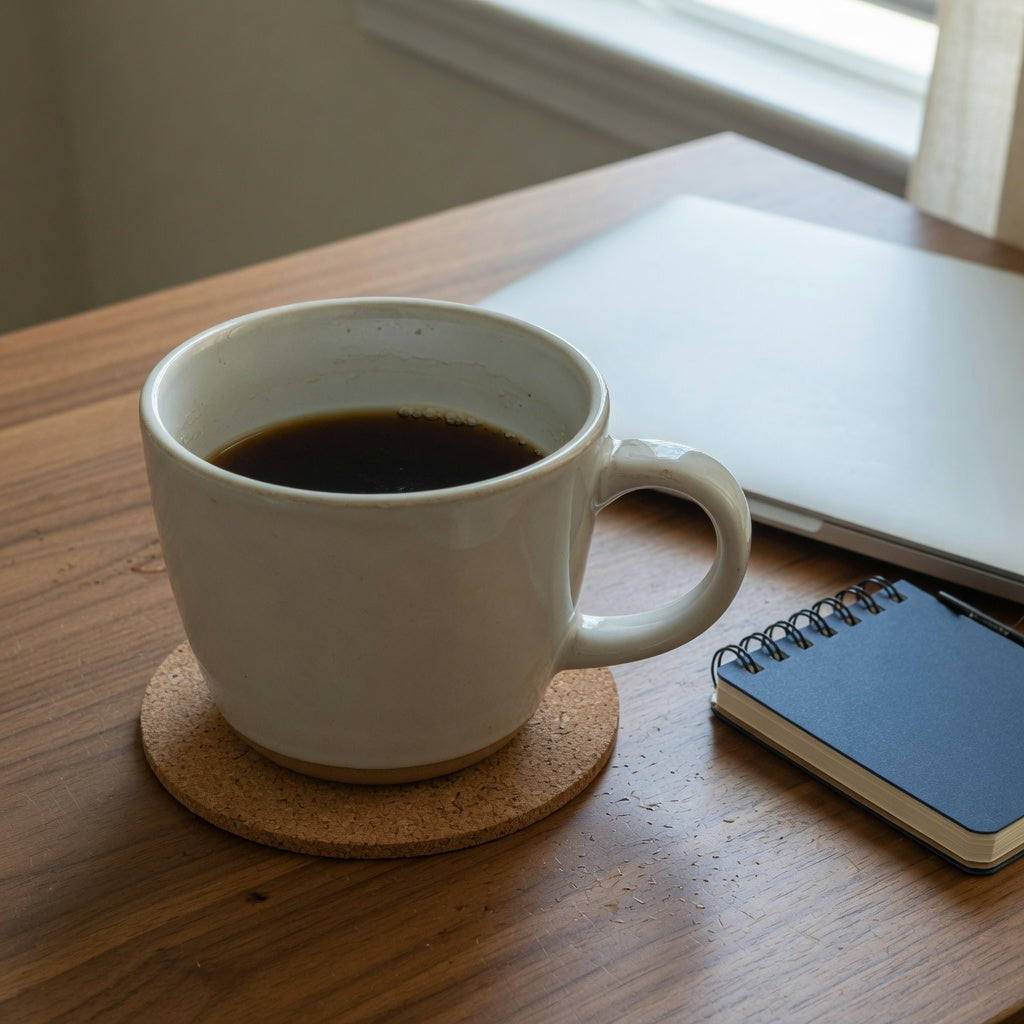
Office Oversized Ceramic Coffee Mug: What Buyers Should Compare
A bigger desk mug only helps when usable fill, full weight, handle room, and brewer clearance work together. We separate a practical office oversized ceramic coffee mug from a jumbo cup that looks ...
Read more
Leave a comment
This site is protected by hCaptcha and the hCaptcha Privacy Policy and Terms of Service apply.