



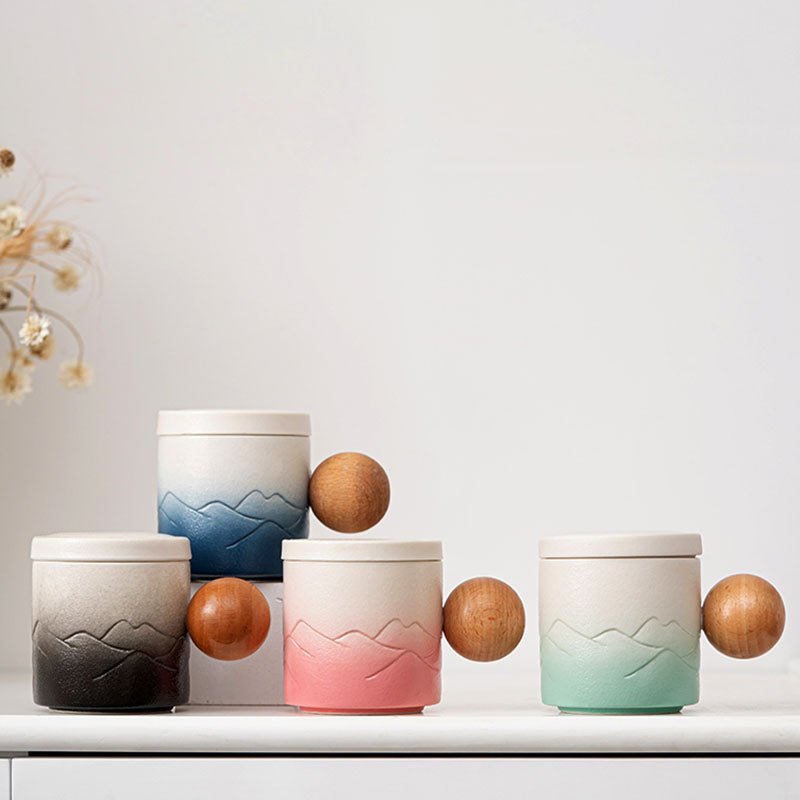
Wide Based Coffee Mugs Storage Fit Guide: Shelf & Cabinet Checks
Reading time: about 10 minutes
Someone buys a broad, steady-looking mug for a home desk, uses it happily for a month, then tries to put it away and the cabinet door will not close. The mug was never the problem. The shelf was. We handle these mugs every week and hear that version of the story far more often than any complaint about the coffee, so this wide based coffee mugs storage fit guide is built around the unglamorous half of the purchase: footprint, standing height, handle projection, and the actual piece of furniture the mug has to live in.
Sort out one thing before the measurements, because product photos blur it. "Wide base" gets used for three different shapes. A wide foot is a stability feature. A wide mouth is a sipping and aroma feature. A tall body with a large listed capacity is often just top-heavy. A mug can carry a broad foot and a narrow rim, or a wide rim sitting on a small foot. Aroma, cooling speed, and brewer fit follow the opening. Tipping and shelf footprint follow the foot.
Why do wide based coffee mugs pass the desk test and fail the cabinet door?
Stability and storage are measured differently. A wider base of support and a lower center of gravity give a mug more margin before it goes over. A cabinet cares about maximum width, standing height, handle projection, and door swing. Nothing about a rock-solid counter feel tells you the mug will clear a shelf lip.
The phrase itself is unregulated. There is no agreed definition or minimum diameter for a wide base mug, so two products sold under the same words can have very different footprints. That is why we publish listed capacities — Ball Handle 250 ml, The Flow 400 ml, The Rock 480 ml — and then send you to the individual product page for the base and handle details of that exact mug. Capacity tells you the serving size. It does not tell you whether the mug fits above the cereal box.
The wide based coffee mugs storage fit guide checklist: five measurements to take first
Start with the space. Then the mug. Starting with capacity is how people end up returning a mug they liked.
- Clear height. Measure from the shelf surface to the underside of whatever sits above it. Then measure the mug with the handle at its highest point, not just to the rim. A handle that rises above the rim is the classic surprise.
- Usable width and depth. Measure the flat shelf area, not the cabinet exterior. Count the handle in the mug's widest point. If you use a coaster, trivet, or tray, measure that footprint instead of the bare shelf.
- Door swing and frame clearance. A hinged door can sweep straight into a protruding handle. Check whether the mug has to sit behind the frame and how far the door travels.
- Lift clearance. Leave room to get fingers around the handle without scraping knuckles. A mug that fits with zero clearance is a mug you fight every morning.
- Appliance and cup-holder clearance, where relevant. Under a drip tray or spout, measure the gap under the outlet plus the mug's height. For a car cup holder, measure the narrowest point of the holder rather than the widest, because tapered holders narrow quickly.
Write three numbers on a sticky note before you shop: maximum width with handle, maximum height, maximum depth. That note beats any product photo, including ours.
Ball Handle 250 ml, The Flow 400 ml, or The Rock 480 ml: which shelf role fits?
Our current three mugs are easiest to compare by listed capacity first, then by the measurements you verify on each listing. We can confirm the capacities below. We cannot confirm your cabinet.
| Mug | Listed capacity | Storage check before buying | Reader situation |
|---|---|---|---|
| Ball Handle 250 ml | 250 ml | Base width, handle projection, and height measured with the handle | Small coffee or tea, a tight shelf, a gift for someone who prefers a compact cup |
| The Flow 400 ml | 400 ml | Height under an upper cabinet, handle clearance, footprint with a coaster | Everyday desk mug or a mid-size serving |
| The Rock 480 ml | 480 ml | Shelf height, door swing, and the widest footprint of the three | One large coffee, a shared kitchen shelf, or a shopper who wants the biggest listed capacity |
If you drink one large coffee and want the serving size to match it, The Rock 480 ml is the straightforward starting point. Check shelf height first: a larger listed capacity often comes with a taller or broader body, and only the product page confirms the shape of that exact mug. If you mostly drink tea or a small coffee, or you are buying for a shallow shelf or a compact gift, Ball Handle 250 ml gives up nothing in usefulness while asking for less room. The Flow 400 ml sits in the middle for a desk or kitchen shelf where you want a moderate serving without the largest footprint in the line.
If capacity is not how you shop, browse our unique coffee mugs collection and run the same five measurements against whatever shape catches your eye. A distinctive silhouette is a fine reason to buy. It should not be the reason the mug ends up parked on the counter instead of in the cabinet.
When the foot rather than the capacity is the deciding factor, our ceramic wide bottom coffee mugs shape and fit guide digs into how base geometry and shelf depth interact.
Does a broad foot actually stop tipping, or does it just change your storage math?
A wider base of support buys margin before the center of gravity crosses the edge, and a lower center of gravity helps too. That is ordinary physics, and it is the honest reason broad-foot mugs earn a place on a desk, a boat console, or a workbench. Base width alone does not make a mug tip-proof. Height, fill level, weight distribution, handle leverage, and whether the foot is flat all matter. A tall mug filled near the brim is easier to knock over than a short one with a broad foot, even when the tall one has the wider base on paper.
In our experience the foot matters as much as the diameter. Set a candidate mug on a hard counter and press the rim gently. A foot that rocks will feel wrong on granite no matter how wide the base looks in a photograph. And on lids: treat any lid on a ceramic mug as splash-resistant unless the maker explicitly calls it leakproof. Very few ceramic mug lids are travel lids, and none of ours are sold as spill-proof.
Two trade-offs worth naming. A wide base does not keep coffee hot; heat retention depends on material, wall thickness, starting temperature, and whether there is a lid, so do not buy a broad mug expecting thermal performance. And weight cuts both ways: a large mug is harder to lift when full, which matters for anyone with limited grip. A wide foot solves the tipping half of that problem and none of the lifting half.
Open shelf, closed cabinet, desk, or cup holder: how the fit changes
| Setting | Main fit risk | Check before buying |
|---|---|---|
| Open shelf | Dust, handle overhang, accidental knocks | Footprint, handle projection, whether the mug sits flat |
| Closed cabinet | Clear height and door swing | Height with the handle, shelf depth, frame clearance |
| Desk | Tipping and coaster diameter | Base width, flat foot, coaster size |
| Car cup holder | Holder shape varies widely | Narrowest point of the holder against the widest part of the mug |
Vehicle cup holders are not one standard size, and a wide handled ceramic mug may not drop into one at all. We do not sell these as cup-holder-compatible travel mugs. If commuting is the main job, choose a travel mug whose maker publishes cup holder fit and keep the ceramic set for desk, kitchen, and shelf duty. That is a limitation of the material and the shape, not a defect — and it is better to hear it from us now than from a cupholder at a red light.
Handles, concave feet, and dishwasher cycles: the care details that decide where a mug lives
Dishwasher and microwave safety is product-specific. Check the individual listing instead of assuming all ceramic behaves the same, because glaze, metallic trim, and lid materials vary. A recessed or concave foot can trap water after a cycle — turn the mug upside down on a rack or towel to drain, then dry it fully before it goes into a closed cabinet where damp sits against the glaze.
Two storage rules we pass along to customers: heavy mugs go on lower shelves, and do not stack a 480 ml mug on a 250 ml mug unless the smaller rim is designed for it. A shelf riser or a mug tree beats balancing handles. If your mugs have generous handles, our ceramic coffee mugs with large handles storage fit guide goes deeper on clearance and shelf spacing.
On ceramic food safety, the FDA guidance is the reference we point customers to. The agency notes that some ceramic foodware can leach lead from food-contact surfaces, and that continued use of lead-leaching ware can cause adverse health effects, including chronic lead poisoning. For cups and mugs, the action level is 0.5 micrograms of lead per milliliter of leaching solution in any one of six units, using methods that include ASTM C738. FDA also states that lead in improperly fired traditional pottery glazes can leach into food or drink, that washing or boiling does not remove it, and that handmade, antique, damaged, or brightly orange-, red-, or yellow-decorated pieces are higher concern while ordinary commercial factory tableware is much less likely to have the problem. Anything labelled not for food use stays out of the coffee. (FDA guidance on lead-glazed pottery.)
Short version before you pick: for a desk and daily use, measure the widest point of The Flow 400 ml against your coaster and go from there; for a tight shelf or a gift, start with Ball Handle 250 ml; for one big morning coffee, open The Rock 480 ml and check shelf height first. Whichever you choose, take the five measurements before checkout rather than after unboxing.
Frequently asked questions
How do I check wide based coffee mugs storage fit before ordering?
Measure clear shelf height, usable width, and depth, then measure the mug at its widest point including the handle. For a cabinet, add door swing and frame clearance. Use the current product page for the exact mug's base and handle measurements, or ask us — a measurement question is far cheaper than a return.
Do wide based mugs hold more coffee than narrow ones?
Not necessarily. Footprint and capacity are separate numbers, and a broad foot can belong to a modest cup. Our Ball Handle is listed at 250 ml, The Flow at 400 ml, and The Rock at 480 ml, so compare those figures for serving size and use the measurements for fit.
Will a wide based mug fit a car cup holder?
Not reliably. Cup holders are not a standard size and a tapered holder narrows quickly, so measure its narrowest point against the mug's widest part. The wide based coffee mugs storage fit guide above reduces that to a single number, but if the mug is commuting daily, a travel mug with published cup holder compatibility is the better tool.
Can I stack wide based mugs on a shelf?
Only if the rims and feet sit stably together and the stack still clears your shelf height. Skip stacking a large mug on a small one, and never stack a mug with a rocking foot. A riser or a mug tree is safer than a tall pile.
Are wide based coffee mugs dishwasher and microwave safe?
Check each product listing — glaze, trim, and lid materials differ, and if the listing does not state microwave safety, do not assume it. After a dishwasher cycle, drain any concave foot upside down and dry the mug fully before storing it.
More from our blog
Ready to pick your mug? Two ways to save on today's order:
Ordering 1–3 mugs? Get an extra 10% off your 1st order with code 10_OFF Apply 10% Off & Shop Wooden-Handle Mugs →
Gifting 4+ mugs? Buy 3, Get the 4th Free applies automatically at checkout (no code needed; offers do not stack) · Free standard shipping (Nov pre-Christmas delivery: 15–20 calendar days US) · Free replacement if chipped in transit.
Popular mug buying guides: Wooden-Handle Tea Infuser Mugs Compared · Christmas & Secret Santa Mugs 2026 · Espresso & Cortado Cups Guide · Cup & Saucer Gift Sets · All 25 Mugs Spec Table · Mug Size Guide · Shipping & Promo FAQ
FIRST ORDER 10% OFF (CODE: 10_OFF) · OR BUY 3, GET THE 4TH FREE


Read more

15 Oz Ceramic Coffee Mugs Storage Fit Guide: Shapes and Shelf Needs
Shelf space, not capacity, is what gets large mugs returned. We compare three current shapes by footprint and handle projection, map them to our 400 ml, 440 ml, and 480 ml mugs, and give you the th...
Read more
Large Round Coffee Mugs Storage Fit Guide: Shape, Handle, Shelf Fit
This large round coffee mugs storage fit guide compares our 400 ml, 440 ml and 480 ml round shapes by listed capacity, handle projection, brewer clearance and the cabinet measurements that actually...
Read more
Leave a comment
This site is protected by hCaptcha and the hCaptcha Privacy Policy and Terms of Service apply.