

Unique Tea Mugs: How to Choose by Style, Size & Care
Reading time: about 8 minutes
Every week at our packing bench, we watch the same small ritual: a box opens, and the first thing a customer does is wrap a hand around the handle and lift. Weight, balance, rim shape — you register all of it in three seconds of handling and none of it in a product photo. That gap between seeing and holding is exactly why picking unique tea mugs deserves more thought than grabbing whatever is clean in the cabinet.
In our store, we handle, pack, and field questions about this category every day. We also hear what goes wrong after checkout: loop handles that pinch a fourth finger, cups that hold less than the buyer expected, tannin stains settling into textured walls nobody warned them about. This guide covers the three structural details that make a mug genuinely unique, matches three styles from our range to real drinking habits, and answers the care questions we get asked most often.
What Makes Unique Tea Mugs Different From a Standard Mug?
Mass-market "unique" usually means a plain cylinder with a printed graphic. Structural uniqueness is different, and it shows up in three places:
- Glaze finish. Many artisan-style ceramics use reactive glazes, which shift in the kiln and cool into slightly different speckles and tone transitions on every piece. That variation is a feature, not a flaw — but it also means your mug will not match the listing photo pixel for pixel. Check finish notes before ordering if exact coloring matters to you.
- Handle geometry. A spherical grip, a wide loop, or a sculpted form changes where your fingers sit and how the weight of a full pour transfers into your hand. This is ergonomics, not decoration.
- Rim and wall texture. A flared rim changes how tea meets the palate; pleats and ridges add traction for carrying a hot cup across the house. Thicker walls carry more thermal mass than thin ones, though how long any mug stays hot depends on the tea, the pour, and the room.
Ball, Retro, or Pleated? Matching the Mug to the Way You Drink
Three styles from our range cover most buying situations we see. Match your habits below, then confirm the details on each listing — capacities, materials, and care vary piece to piece, and we would rather you check than guess.
The retro cup, for warm kitchens and slow mornings
If your kitchen leans vintage — wood counters, a whistling kettle, open shelving — a throwback silhouette belongs in it. The Retro Coffee Tea Cup is our pick for that reader: a classic shape that reads farmhouse cabinet rather than office desk. One trade-off: traditional proportions often run smaller than modern oversized mugs, so if you drink a large herbal infusion in one sitting, verify the listed capacity before checkout.
The ball handle, for pinchers and desk cradlers
A lot of people find small loop handles dig into their fingers — we hear this constantly. As the name suggests, the Ball Handled Coffee Tea Mug swaps the loop for a spherical grip, giving your whole hand something to hold and your thumb a place to rest during long sips. Two honest caveats: the round grip takes a day or two to feel natural if you are used to loops, and the shape needs more cupboard width, so measure your shelf if you stack mugs tightly. If you reheat tea in the microwave, read the care notes on the listing first.
The pleated cup, for carriers and minimalists
Vertical pleats are the entire point of the Pleated Coffee Tea Cup: the ridges give your fingers traction on the walk from kitchen to desk, and the repeated lines look sharp on a home-office shelf. The flip side is cleaning — ridged walls hold drips and dust more than a smooth cylinder, so hand-washing is the gentle default unless the listing states otherwise. If you want the slickest possible silhouette, this is not your mug.
Drinking more than tea? The same structural ideas run through our unique coffee mugs collection, worth a browse if you rotate between black tea, matcha, and espresso through the day.
8 oz, 12 oz, or 16 oz? Sizing a Tea Mug to Your Actual Steep
Capacity is the spec buyers get wrong most often — not because listings hide it, but because almost nobody measures what they pour. Fix that in one minute: fill your current favorite mug with water, tip it into a measuring cup, and use that number as your baseline. Then compare it to the ranges below, and treat each product page as the final word on its own volume.
| Capacity | Best suited to | The trade-off |
|---|---|---|
| 8–10 oz | Matcha, strong black tea, quick bag steeps you finish fast | Light and easy to grip, but refills come quickly and smaller openings can crowd a loose-leaf infuser basket |
| 12–14 oz | Milk teas, Earl Grey, herbal infusions — the everyday range for most tea drinkers | Room for leaves to expand without getting heavy; still comfortable to cradle two-handed |
| 16 oz and up | Long steeping sessions, iced tea, anyone whose mug is the whole break | Noticeably heavier when full, so handle comfort matters more the bigger you go |
Steeping loose leaf straight in the mug? Two details matter more than brand names: the opening must be wider than your infuser basket so it sits level, and the body needs enough depth to keep the leaves submerged. Measure your basket, compare it against the listed opening, and skip any mug that makes you force the fit. Leaning toward the big end of the table? Our guide to choosing a large mug for daily tea covers weight and handle clearance in more depth.
Dishwasher, Microwave, and Tea Stains: Keeping Glazed Ceramic Alive
Ceramic is forgiving, but three situations cause nearly all the damage we see:
- Thermal shock. A mug that rode home in a cold car should not meet boiling water straight away. Temper it with warm tap water first, then pour. Sudden temperature swings create fine cracks that stay invisible until they are not.
- Wrong-machine assumptions. Microwave and dishwasher compatibility is a per-piece answer, not a category answer. Hand-applied finishes, metallic accents, and delicate handle construction each change the answer, so read the care notes on the exact product page — and if the listing does not say, ask before you buy.
- Tannin buildup. Tea stains settle into micro-texture and unglazed bases when a cup sits overnight. The gentle fix: a soft paste of baking soda and warm water, applied with a soft sponge in light circles. Skip steel wool and harsh scouring powders — they dull a glaze permanently.
One habit we follow on our own shelf: retire any mug that chips on the drinking rim. A chip there only spreads, and the lip is where your mouth meets the glaze every morning. If you rotate several handmade pieces, our everyday pottery mug checklist goes deeper on protecting hand-finished surfaces through repeated wash cycles.
Gifting Unique Tea Mugs: Four Checks Before You Wrap
Mugs are among the most giftable things we ship — housewarmings, office swaps, the parent who already owns every tea imaginable. But a mug bought for someone else has to survive their habits, not just your taste:
- Handle fit. The grip should accept two to three fingers comfortably. Anyone with larger hands notices a cramped handle immediately — and they notice it every single morning.
- Dishwasher reality. If your recipient hand-washes nothing, choose a piece whose listing confirms dishwasher compatibility. A beautiful mug that lives permanently in the sink is a failed gift.
- Style-to-space match. Retro glazes settle naturally into warm, wood-heavy kitchens; pleated and geometric forms suit minimal desks and modern shelving. Match the mug to the counter it will live on.
- Stable base. A wide, flat foot sits safely beside keyboards and laptops — a bigger deal for desk drinkers than most gift buyers expect.
Working through a shortlist? Our mug rotation buying checklist helps you balance artistic form against daily convenience before you commit.
Before You Add to Cart: A 30-Second Match Checklist
Run any mug — ours or anyone else's — through these four questions:
- Does the listed capacity match what you actually pour? Measure your current mug to be sure.
- Does the opening fit your infuser basket, if you steep loose leaf?
- Does the listing confirm microwave and dishwasher care for this exact piece?
- Does the handle fit your grip — and your cabinet shelf?
When a piece passes all four, it has earned its shelf space. Start with the three styles above, or browse the full tea mugs collection to compare silhouettes side by side.
Frequently asked questions
What makes unique tea mugs different from regular mugs?
Structural design, not just decoration. Unique tea mugs use sculptural handles, textured or pleated walls, and varied silhouettes that change how a mug grips, pours, and holds heat. A standard mug optimizes for stacking and uniform printing; a unique one optimizes for the drinking experience itself.
How do I remove tea stains from a glazed ceramic mug?
Make a soft paste of baking soda and warm water, apply it with a soft sponge, and rub gently in circles. The mild abrasion lifts tannin stains without scratching the glaze. Avoid steel wool — it leaves dull patches on finished ceramics that no cleaning undoes.
Can uniquely shaped mugs go in the microwave and dishwasher?
It depends on the individual piece, so check the care notes on its product page rather than assuming. Hand-applied finishes and metallic accents often call for hand-washing only. If a listing does not state compatibility, ask the seller before ordering — it is a fair question for any drinkware store to answer.
What size tea mug works best for loose-leaf tea with an infuser?
For most daily steeping, the 12–14 oz range gives leaves room to expand without making the mug heavy when full. The opening also needs to be wider than your infuser basket so it sits level. Measure your basket and your usual pour, then match both against the numbers on the listing.
Are artisan-style glazes safe for hot tea?
Buy from listings that state food-safe glaze explicitly, and ask when they do not — any seller of drinkware should answer that plainly. Pieces with metallic luster or finishes marketed as decorative deserve extra scrutiny before daily hot-liquid use. When in doubt, contact the store first.
Read more

Very Large Coffee Mug Size Guide: Ounces, Fit, and Handle Comfort
Written by the team that packs oversize ceramics daily: real ounce brackets, brim versus usable fill, handle-fit rules, heat behavior by shape, and the measurements to take before you order a very ...
Read more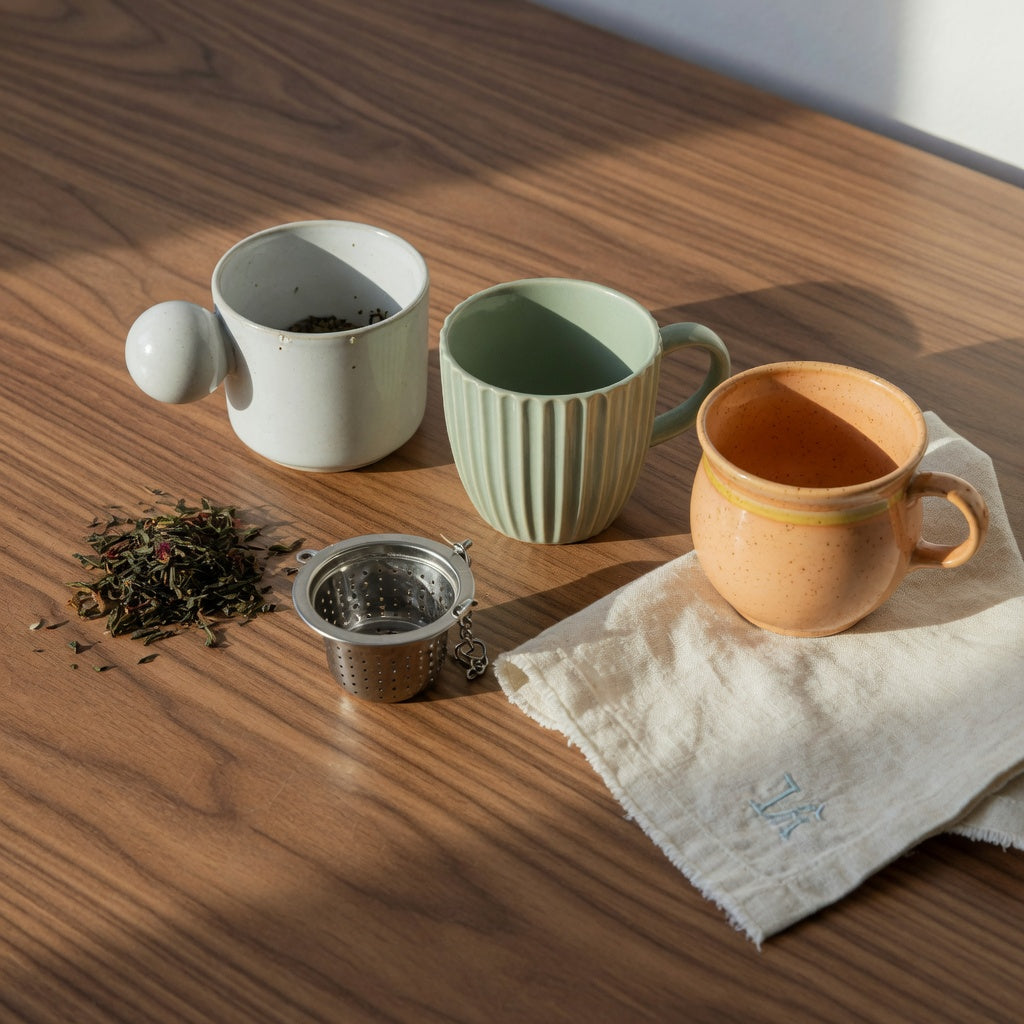
Cool Tea Mugs: 3 Distinct Designs Compared for Steeping and Desks
We handle these designs daily. Here's how a ball-handled mug, a pleated cup, and a retro style compare on grip, steeping, cleanup, and desk use — with honest trade-offs and the specs to verify on e...
Read more
Leave a comment
This site is protected by hCaptcha and the hCaptcha Privacy Policy and Terms of Service apply.