



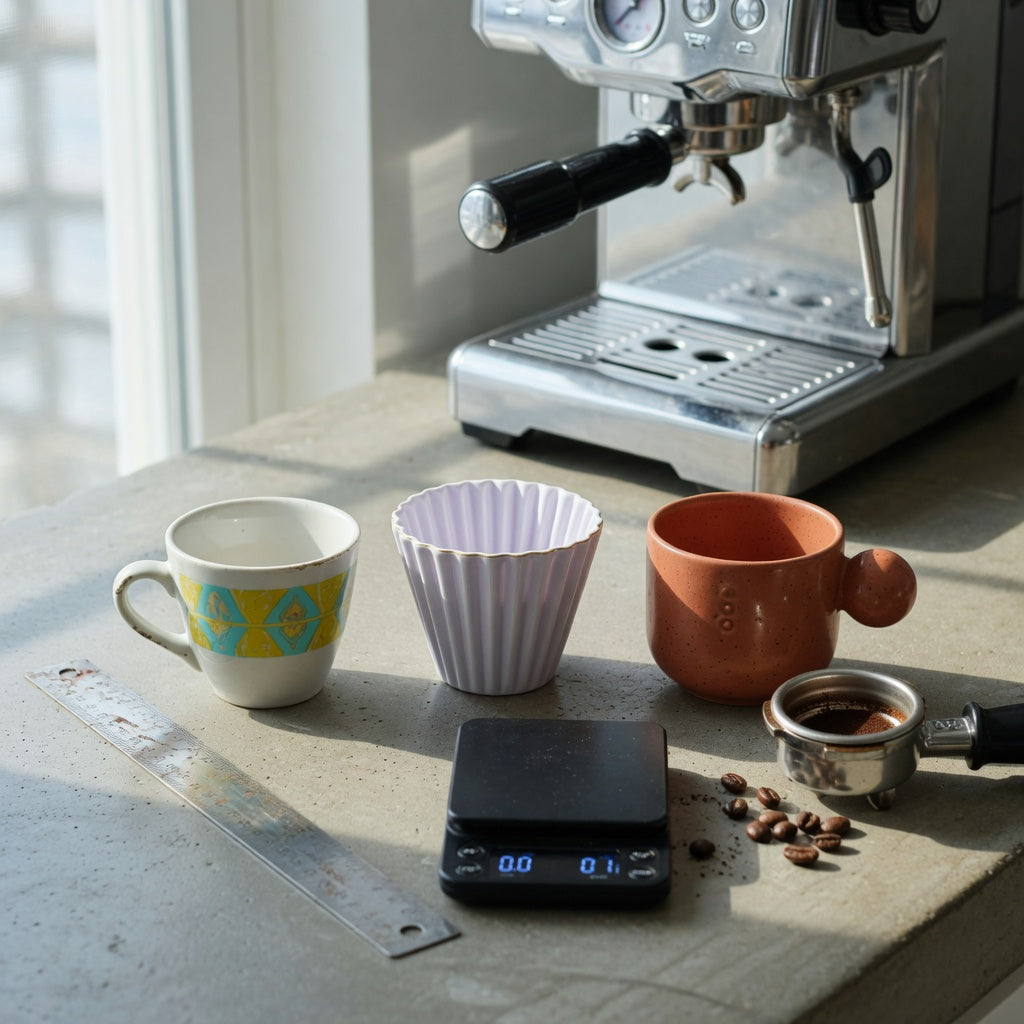
Unique Espresso Cups Replacement Purchase Practical Purchase Checklist
Reading time: about 10 minutes
A replacement espresso cup rarely fails because it is ugly. It fails because it sits 8 mm too tall under the group head, because a dark reactive glaze makes a decent shot look muddy, or because the handle is too small to lift once the ceramic is hot. We pack and ship these cups, and the returns we see are almost never about flavour. They are about fit, capacity, and a detail the listing did not answer.
That is why we use a short diagnostic before recommending anything. This unique espresso cups replacement purchase practical purchase checklist starts with the cup you are replacing, then compares only the current alternatives that fit the same job. The aim is not to collect another pretty cup. It is to make the next one right the first time.
Which failure in the cup you are replacing should you solve first?
Name the annoyance before you shop. In our experience, most disappointing espresso cups fail in one of six predictable ways, and identifying the worst one removes most of the market in a single pass.
- Capacity mismatch. A 90 ml cup filled to the brim by a double shot leaves nowhere to put your lip. A 300 ml mug makes a 30 ml shot look like a stain at the bottom.
- It will not clear the machine. Height under the group head, base diameter across the drip tray grate, and a handle that fouls the steam wand are the fit failures we hear about most.
- The interior hides the crema. Dark, metallic or heavily patterned insides look striking on a shelf and useless when you judge a shot by its surface.
- The wall thickness feels wrong. Very thin ceramic burns fingers and sheds heat fast; very thick walls need preheating or they pull heat out of the coffee.
- The rim or handle is uncomfortable. Square rims, novelty shapes and two-finger loops photograph well and drink badly.
- Care was never checked. Gold rims and hand-painted decoration often cannot take a dishwasher or microwave, and nobody asked before buying.
Write that one sentence down, such as the old cup was too tall, and use it as the filter for everything below.
Why can a 170 ml cup and a 60 ml demitasse both be called espresso cups?
The most common reading error we see is treating cup capacity as drink volume. A certified Italian espresso is about 25 ml; the older specialty definition runs 25–35 ml. The cup around it is deliberately bigger. Published cup-size guidance often lands in the 50–100 ml band, with roughly 60 ml a typical demitasse, because the vessel has to hold crema and headspace as well as liquid.
That gap is where replacement purchases go wrong. A double shot is roughly 50–60 ml, so a 60 ml cup is a brim-full cup while a 170 ml cup is a comfortable one. Same coffee, different experience. One conversion worth keeping: 3 oz is about 89 ml, so a cup sold as a 3 oz espresso cup is already generous for a double.
| Cup | Listed capacity | What that suits | Where it stops |
|---|---|---|---|
| Retro ceramic cup | 170 ml | A double shot with real headroom, or a double plus a small splash of steamed milk | Not a latte cup — a 6 oz milk drink will crowd it |
| Pleated ceramic cup | 200 ml | Double shot, cortado, or a small cappuccino | Confirm its height against your group head before ordering |
| Ball Handle ceramic mug | 250 ml | Cortado through small flat white; doubles as a tea cup | Overkill for singles, and the handle needs side clearance |
Does the inside colour or rim shape change what you taste?
Not the flavour — the perception. A white or clear interior gives a clean read on crema colour, which is the fastest everyday signal of how a shot pulled. Dark glazes and metallic lustres flatter the cup and hide the coffee. If you already own a plain white demitasse for dialling in, a patterned cup is a pleasure; if it is your only cup, you are giving up information every morning.
Rim geometry matters more than most buyers expect. A thin, slightly flared rim sends coffee to the front of the palate and feels hotter; a thick rounded rim feels cooler and softer but can feel clumsy on a small cup. Handmade pieces vary here — a millimetre or two of rim difference between two cups from the same maker is normal, and it is the detail you notice after a week, not on day one.
Handles are a routine question in our inbox. A generous loop lets you lift a hot cup with two fingers and a thumb; a small loop forces a pinch. Handleless cups are lovely to drink from but want a preheat and a moment to cool, which is why cafés often park cups on the machine top.
Will the replacement clear your group head and sit flat on the drip tray?
Measure before you fall in love with a glaze. Three numbers decide whether a cup works with your machine:
- Clearance under the group head with the portafilter locked in — and with your scale on the drip tray if you weigh shots.
- Outer base diameter against the drip tray grate, or the cup rocks on the edges.
- Overall width including the handle, so it does not foul the steam wand or the machine body.
This is also the spec most product pages leave out. If a listing shows capacity but not height, treat height as unknown and ask before ordering. We would far rather answer a sizing email than process a return, and the unique coffee mugs collection is the quickest way to compare shapes side by side.
Is a handmade glaze safe for hot coffee, and what should you ask?
The FDA notes that lead in ceramic glazes or decorations can leach into food and drink if a piece is not properly fired, that washing or boiling will not remove lead from pottery, and that some traditional pottery labelled lead free has still shown extractable lead at or above FDA action levels. The action level for ceramicware cups and mugs is 0.5 µg/ml of leaching solution under CPG 545.450.
Federal rules also draw a hard line between drinkware and ornament. Under 21 CFR 109.16, decorative ceramicware that could reasonably be used for food must carry a conspicuous Not for Food Use label or a hole through the food-contact surface. If a cup has neither and the maker cannot tell you what it is, that is your answer.
The FDA flags the higher-risk categories plainly: handmade pieces with a crude or irregular look, antiques, damaged or worn ware, items from flea markets or unknown makers, and ware brightly decorated in orange, red or yellow. That does not make every handmade cup unsafe — it makes a test result worth asking for. A lead-free sticker is a label, not a laboratory result. For any ceramic cup, including ours, treat food-contact safety as a question for the current listing or maker rather than an assumption from a photo.
What care detail will decide whether the cup survives daily use?
Decoration decides care, not just the base material. Gold and platinum rims, metallic lustres, decals applied over the glaze and hand-painted accents are the finishes most often compromised by detergent and heat; plain glazed ceramic is often more forgiving. Double-wall glass adds its own rules — it scratches, it may not stack, and water trapped in the base is hard to dry out.
- Is it rated dishwasher safe, and does that rating cover the decorated version you are buying?
- Is it microwave safe, and does the answer change if there is a metallic rim?
- Does the foot ring trap water on your drying rack?
- Will it stack, or does each cup need its own shelf space?
If the listing is silent on care, assume hand wash and no microwave until the seller confirms otherwise. That is a conservative habit, not a judgement about any particular cup.
How do you match our three ceramic shapes to a real morning routine?
Once diagnosis, capacity and fit are settled, the choice usually narrows to how much milk you drink and how much shelf room you have. All three CoffeifyMug shapes are compact ceramic vessels, so the practical differences are listed capacity and the routine each one supports.
- Straight shots, one or two a day. The Retro ceramic cup at 170 ml leaves genuine headroom around a double, so you can carry it without watching the surface. It is the wrong pick if you routinely finish with a 6 oz latte.
- Double shots with a splash, or a small cappuccino. The Pleated ceramic cup at 200 ml is the most flexible of the three in a household where one person drinks shots and the other drinks milk drinks. Confirm its height first — 200 ml of ceramic is a taller body than a 60 ml demitasse.
- Cortado first, or a cup that doubles for tea. The Ball Handle ceramic mug at 250 ml is the roomiest and the easiest to hold with a full hand. It is also the one most likely to need side clearance on a compact machine.
None of them replaces a 350 ml mug for a long drink; size up rather than overfilling. For a broader look at silhouette and handle trade-offs, the unique coffee mugs collection keeps the current shapes in one place.
How should you run this unique espresso cups replacement purchase practical purchase checklist?
Run these eight lines before you add to cart. Each one has stopped a purchase we would otherwise have shipped and refunded.
- The old cup's single worst failure is written down, and the new cup fixes it.
- Capacity is chosen for the drink you make most often, not the shot you make occasionally.
- Height under the group head is confirmed, including your scale.
- Base diameter and handle width are checked against the drip tray and steam wand.
- Interior colour lets you see crema if you dial in by eye.
- Rim and handle comfort is judged for daily use, not display.
- Glaze safety is verified with a specific answer rather than a sticker.
- Dishwasher, microwave and stacking answers are known before the first wash.
Start with the unique coffee mugs collection, match capacity to your routine, then send us your machine model if clearance is still unclear. Two minutes with a ruler beats a return label.
Frequently asked questions
What should be first on a unique espresso cups replacement purchase practical purchase checklist?
Start with the failure of the cup you are replacing. If it was too tall, fix height first; if it hid the crema, fix the interior colour first. Capacity, fit, safety and care checks follow in that order.
Is a 170 ml cup too big for a double espresso?
No. A double shot is roughly 50–60 ml, so 170 ml holds it with comfortable headroom and room for crema. It is only too big if you want the shot to visually fill the cup, which is a preference rather than a function issue.
Do I need a white interior to see the crema?
You need contrast. White and clear interiors are the easiest to read; dark glazes and metallic lustres obscure the surface. If you already own a plain cup for dialling in, a patterned one makes a fine second cup.
How can I check whether a handmade cup is safe for hot coffee?
Ask the maker for lead leaching test results rather than relying on a lead-free label, and avoid drinkware marked Not for Food Use or with no maker information at all. The FDA action level for cups and mugs is 0.5 µg/ml, and washing or boiling does not remove lead from a glaze.
Will the Pleated or Ball Handle cup fit under my machine?
Check the current listing for height, base diameter and handle clearance, then compare those figures with the space under your group head with the portafilter locked in. If a measurement is missing, ask us before ordering rather than guessing from the capacity.
More from our blog
Ready to pick your mug? Two ways to save on today's order:
Ordering 1–3 mugs? Get an extra 10% off your 1st order with code 10_OFF Apply 10% Off & Shop Wooden-Handle Mugs →
Gifting 4+ mugs? Buy 3, Get the 4th Free applies automatically at checkout (no code needed; offers do not stack) · Free standard shipping (Nov pre-Christmas delivery: 15–20 calendar days US) · Free replacement if chipped in transit.
Popular mug buying guides: Wooden-Handle Tea Infuser Mugs Compared · Christmas & Secret Santa Mugs 2026 · Espresso & Cortado Cups Guide · Cup & Saucer Gift Sets · All 25 Mugs Spec Table · Mug Size Guide · Shipping & Promo FAQ
FIRST ORDER 10% OFF (CODE: 10_OFF) · OR BUY 3, GET THE 4TH FREE


Read more

Ceramic Mug Shapes Gift Choice Product Shortlist Guide: 200/250/400 ml
A scenario-based shortlist that matches three ceramic silhouettes and their listed capacities to what your recipient actually drinks, how they grip a handle, and where the mug will live on the shelf.
Read more
Ceramic Mug Shapes Replacement Purchase Practical Purchase Checklist
A replacement mug is a fit problem before it is a style choice. This ceramic mug shapes replacement purchase practical purchase checklist works from the failure of the old mug, then narrows the fie...
Read more
Leave a comment
This site is protected by hCaptcha and the hCaptcha Privacy Policy and Terms of Service apply.