

Unique Ceramic Tea Cups: Compare Shapes, Sizes, and Handles
Reading time: about 10 minutes
A mug can clear a shelf by body diameter and still jam the cabinet once its handle is counted. It can look generous in a product photo, yet leave no splash room for a normal tea pour beside a keyboard. That is why shoppers comparing unique ceramic tea cups need more than an unusual silhouette: they need verified material, listed capacity, full dimensions, grip details, and care guidance.
At CoffeifyMug, we approach these questions from the kitchen counter, office desk, packing table, and gift box. Shape wins attention at unboxing; fit decides what gets used after several washes. Product details can change, and similarly named cups are not interchangeable, so we treat each linked product page as the source for its own specifications. We will not borrow a capacity, material, handle construction, or appliance claim from another item.
Which facts make unique ceramic tea cups practical, not just different?
A distinctive name is a useful visual filter, but it does not answer daily-use questions. Before comparing products, write down five fields for every cup you are considering:
- Exact material: A product title, photograph, or collection placement is not proof that an item is ceramic. Confirm the material on the product page. If it says ceramic without naming stoneware, porcelain, or earthenware, do not assign it a more specific ceramic body.
- Listed capacity: Record the exact milliliter or US fluid-ounce figure for the selected option. If the page does not define whether that number is a brim capacity or a comfortable fill, treat it as a comparison reference rather than usable drinking volume.
- Full dimensions: Height and body diameter are only part of the footprint. Look for opening diameter and overall width, including any handle or sculptural projection.
- Holding method: Check the clear space inside a handle, the shape of any solid grip, and where it joins the cup. A styled photograph can show the concept without showing knuckle clearance.
- Use and care guidance: Food-contact suitability and dishwasher or microwave compatibility must come from the product page. Do not infer them from the word ceramic or from a glossy finish.
Use the broader unique coffee mug selection as an overview, then open likely candidates in separate tabs. Comparing the same five fields keeps a styled image from carrying more weight than a missing specification.
How should listed capacity match your real pour and shelf?
In our experience, size mistakes happen because shoppers compare an advertised number with an imagined serving. Measure the serving you already enjoy instead. It takes a few minutes and gives you a useful target for every listing.
- Fill your current favorite cup to the level you actually carry from the kettle. Pour that liquid into a marked measuring jug and record the result in milliliters or fluid ounces.
- Include your normal additions. Milk, lemon, or ice takes space, while a basket infuser needs enough opening clearance to go in and come out without pushing liquid toward the rim.
- Measure the physical space around the cup. Record cabinet height, shelf depth, coaster diameter, and the maximum width available beside your keyboard or kettle.
- If a listing offers selectable options, recheck the capacity and dimensions after choosing one. Do not assume one option shares another option's measurements.
A listed capacity is not automatically a comfortable fill line. If the page does not explain how its figure was measured, leave practical headroom rather than assuming every listed ounce can be carried safely to a desk. For unique ceramic tea cups, this simple check is more reliable than judging scale from a styled photograph.
Handbag, ball-handled, or pleated: which page fits your situation?
The three product names establish different design directions, not verified specifications. Start with the page whose concept matches the buyer, then require that page to answer your material, size, grip, and care questions.
For a concept-led gift: begin with the Handbag page
If the recipient likes accessory-inspired objects and the unboxing moment matters, check the Handbag Coffee Tea Mug page first. The name supplies the design cue; it does not confirm material, capacity, dimensions, or whether a visible feature functions as a handle. Verify total width, holding method, selected-option capacity, and care instructions. Choose a more conventional cup if stackability, a standard loop grip, or compact cabinet storage is non-negotiable and the page does not confirm those needs.
For a grip-led office choice: inspect the Ball-Handled page
If hand fit is the deciding variable, inspect the Ball-Handled Coffee Tea Mug details. Its name makes the handle concept the first comparison point, but you still need exact handle geometry, internal clearance, attachment details, and overall width from the listing. On a desk, compare the full footprint with your coaster and the space beside your keyboard. If the buyer needs a familiar two- or three-finger loop or has limited hand mobility, do not guess from a front-facing image; ask if the grip is not clearly documented.
For a texture-led tea tray: review the Pleated page
If visible surface detail is the priority, review the Pleated Coffee Tea Cup listing. The name points to a pleated design direction, but it does not tell you where the relief appears, how deep it is, whether the interior and rim are smooth, or which care method applies. Confirm those points along with material, capacity, and dimensions. A smoother style is a better fit for someone who wants the quickest wipe-down or relies on tight dishwasher-rack spacing unless the current page confirms otherwise.
How do handle projection and surface relief affect daily use?
Two cups with similar body diameters can occupy very different amounts of space once their handles and decorative features are included. That difference shows up in several ordinary places:
- Inside a cabinet: Compare total width and depth, not just the bowl. Do not assume an unusual form will stack with the cups you already own.
- Beside a laptop: Check dominant-hand orientation, knuckle clearance, coaster size, and the distance between the cup and keyboard. If dimensions are published, draw the footprint on paper and place it on the desk before ordering.
- During brewing: Opening diameter matters if you use a basket infuser, tea strainer, or wide tea bag. Capacity alone cannot tell you whether that accessory will fit.
- At the sink or dishwasher: Handles, relief, and narrow joins can create contact points or recesses. Confirm the care method and rack clearance before relying on automatic washing.
The useful hand-fit question is not simply whether a cup is small or large. Ask whether your fingers can clear the cup body at a normal fill and whether the grip remains controlled during the walk from kettle to desk. If handle clearance is missing, the product name is not a substitute for a measurement.
Which ceramic and care details should you inspect before first use?
Ceramic is a broad category rather than a complete specification. Once a cup arrives, a short inspection can catch common drinkware issues before the first full pour.
- Match the item to the order: Confirm that the material, selected option, and included pieces match the product page and order details.
- Inspect the rim and joins: Use bright side light to look for rim chips and hairline cracks, especially where a handle or sculptural feature meets the cup body.
- Examine the glaze: Look for unexpected crazing, pinholes, sharp specks, or rough patches. These observations do not establish the cause, so document anything questionable and contact the seller before use.
- Check the foot ring: If the base has an unglazed or rough area, dry it fully and use a coaster on surfaces that mark easily.
- Follow the stated care line: Only use a dishwasher or microwave when the current listing explicitly permits it. One apparently successful cycle is not a replacement for the seller's care guidance.
If a confirmed design has exterior recesses, use a soft brush or cloth to clean those areas, rinse away residue, and let them dry before cabinet storage. Avoid abrasive scouring pads on glazed surfaces. As conservative ceramic care, avoid moving a cup directly between extreme temperatures unless its specific instructions say that use is suitable.
Who is better served by a simpler mug or travel cup?
A distinctive form is not the right answer for every routine. Consider another style if any of these needs outranks appearance:
- You need a stackable set for a short or crowded cabinet.
- You drink in a car and require a lid or a verified cup-holder fit.
- You serve large iced drinks but cannot confirm the listed capacity and usable headroom.
- You use a basket infuser and the opening diameter is not provided.
- You rely on dishwasher or microwave use and the page does not state compatibility.
- You need a conventional, well-documented handle because of grip strength, joint comfort, or hand mobility.
The best unique ceramic tea cups are not automatically the most sculptural. They are the ones whose verified specifications support the buyer's routine. If novelty creates a workaround every day, a straight-sided, clearly specified mug is the better purchase.
A side-by-side worksheet for the three product pages
No unverified values are copied into this table. Enter the details from each live page so you can compare like with like.
| Listing direction | Good first stop for | Facts to confirm | Reason to choose another style |
|---|---|---|---|
| Handbag Coffee Tea Mug | A concept-led gift or visually distinctive desk cup | Exact material, selected capacity, total width and height, holding method, care guidance | You require guaranteed stacking, a compact footprint, or a conventional loop grip |
| Ball-Handled Coffee Tea Mug | A buyer making handle design and hand fit the main decision | Exact handle form, internal clearance, attachment, overall width, material, capacity, care | You require a standard grip and the listing does not document one clearly |
| Pleated Coffee Tea Cup | A texture-led tea tray or gift presentation | Texture location, rim and interior finish, dimensions, material, capacity, cleaning guidance | A smooth exterior and the fastest possible cleanup are higher priorities |
Record capacities in the same unit and compare the selected options, not just the default page view. A blank specification is not a yes. Ask for clarification or pass on the cup if the missing detail affects a must-have.
Frequently asked questions
What size unique ceramic tea cups work best for everyday tea?
There is no universal best capacity. Measure the comfortable fill of the cup you already use, then compare that result with the selected product's listed capacity while leaving headroom. If you use a basket infuser, verify the opening diameter as well as the volume.
Are the Handbag, Ball-Handled, and Pleated listings confirmed as ceramic?
Do not treat a product name, collection placement, or this comparison as proof of material. Read the exact material field on each current product page and for the selected option. If the material is absent or unclear, ask before ordering.
Can a sculptural tea cup go in the dishwasher or microwave?
Only if its own product page explicitly states that compatibility. Ceramic appearance alone does not confirm appliance use, and guidance from another mug cannot be transferred to it. If the page is silent, choose a care routine or a different cup that does not depend on that assumption.
Which product page should I open first for a gift?
Start with the Handbag page for a concept-led accessory theme, the Ball-Handled page when grip design is central, or the Pleated page when surface texture drives the choice. Those names are starting filters, not complete descriptions. Confirm material, capacity, dimensions, holding method, and care before purchasing.
Do pleated or sculptural details make a tea cup harder to clean?
Relief can create extra recesses, but the location and depth must be checked on the specific listing. Look closely at the interior, rim, handle joins, and care directions. If fast cleanup is essential, a smoother form may suit the buyer better.
Your next step: write down five answers—material, selected capacity, full width, grip dimensions, and care compatibility—then open the current collection for a final side-by-side check. Choose a cup only after its page answers every must-have; if one answer is missing, ask before ordering or select a simpler form.
More from our blog
Read more

Tea Mug Gift Ideas: Compare 3 Current Listings by Fit
Compare three CoffeifyMug listings using the recipient’s normal pour, current visible style, exact listed material, capacity, grip, and care habits. This guide flags what must be verified instead o...
Read more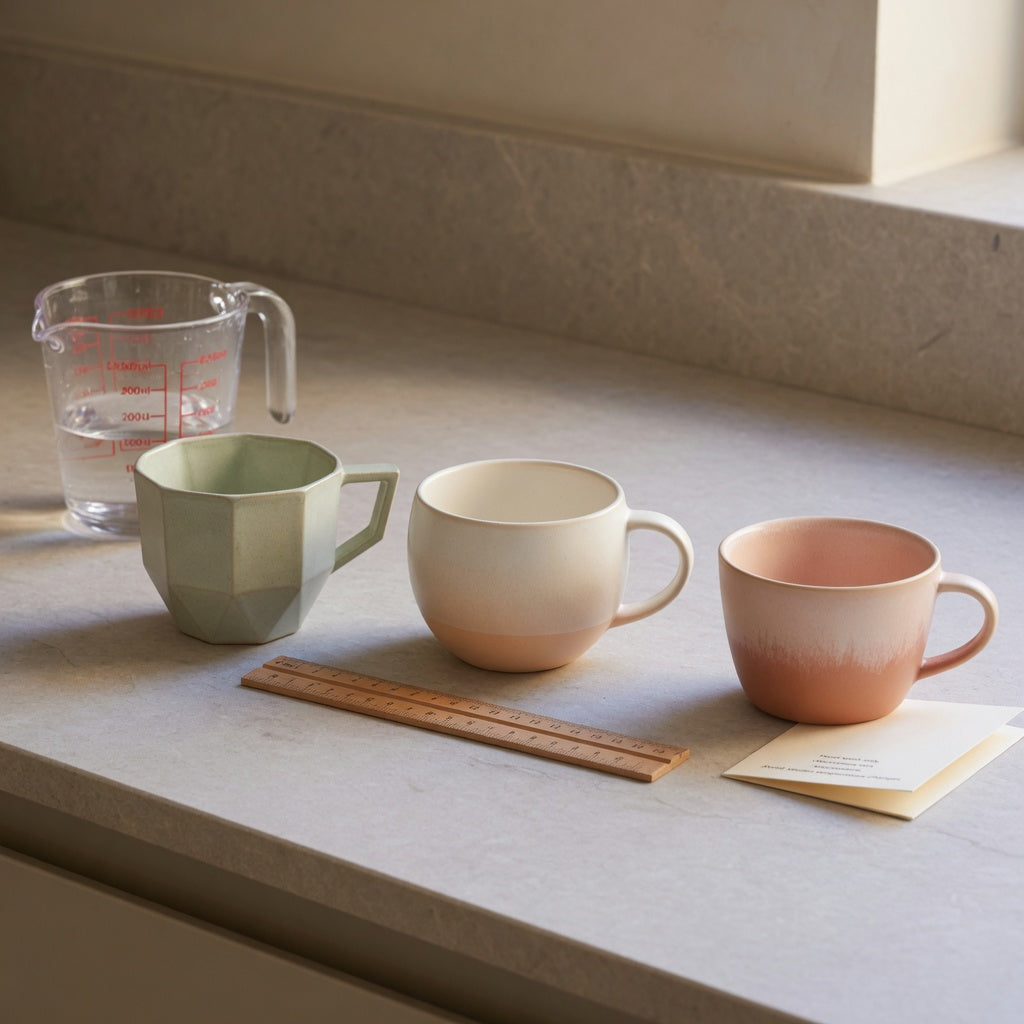
Geometric Tea Cup: Compare Shape, Material, Capacity, and Handle
Compare the Rhombus, Planet, and Gradient product pages without guessing from their names. This guide shows how to verify shape, material, capacity, handle, care, and daily fit before choosing.
Read more
Leave a comment
This site is protected by hCaptcha and the hCaptcha Privacy Policy and Terms of Service apply.