

Two Tone Ceramic Coffee Mugs: Everyday Mug Rotation Purchase Checklist
Reading time: about 9 minutes
A mug can look right in a product photo and still disappear into the back of the cabinet after a week. It may be too tall for the shelf opening, too wide for the drying rack, or simply redundant beside three mugs that already serve the same drink. Our two tone ceramic coffee mugs everyday mug rotation practical purchase checklist starts with those ordinary constraints, because a useful rotation is built around repeated use rather than a target set size.
We sell and handle this category in our store, and the most useful shopper questions are concrete: Where will the mug live? How much do you normally pour? Will the handle compete with another mug on the shelf? The linked product names establish clear design directions - Gradient, Green Waves, and White Golden Waves Tall - but a name alone does not confirm ounce capacity, exact dimensions, stacking ability, dishwasher care, or microwave compatibility. Those details should be checked on the current product page before buying.
Which mugs actually earn a place in a seven-day rotation?
Start with a simple cabinet audit. Move your clean mugs to one side of the shelf, then place each used and washed mug on the other side for seven days. This shows how many distinct mugs you rely on without asking you to guess or follow an arbitrary household number.
- Record which mug serves coffee, tea, an iced drink, or a desk refill.
- Notice whether you rinse and reuse one favorite or wait for a dishwasher cycle.
- Mark any moment when every suitable mug is dirty. That is a genuine rotation gap.
- Identify unused mugs and the reason they stay behind: awkward grip, poor shelf fit, wrong capacity, or duplicated style.
| Observed routine | What it suggests | Practical buying response |
|---|---|---|
| One favorite is rinsed and reused | The current rotation may already be large enough | Add only if a new mug solves a specific fit or drink need |
| Several people reach for mugs at the same time | Simultaneous use matters more than total daily drinks | Count the busiest serving period before choosing quantity |
| A mug stays permanently at a desk | Kitchen and office roles are separate | Compare desk footprint, coaster fit, and carrying comfort |
| Clean mugs run out before wash day | The wash schedule creates the gap | Add enough coverage for that interval, not an oversized set |
The strongest purchase trigger is a missing role. A different color alone may not be enough if the new piece has the same capacity, profile, and use case as mugs you already ignore.
Will the mug fit your cabinet, drying rack, and desk?
Measure the usable opening, not just the empty space at the back of the cabinet. Shelf frames can reduce vertical clearance, hinges can take away depth, and handles often determine whether two mugs can sit side by side. Record height, base diameter, widest body point, and total width including the handle whenever those measurements are available.
- Closed cabinet: Check height at the front edge and depth with the door fully closed.
- Open shelf: Allow enough room to lift the mug without striking the shelf above.
- Drying rack: Compare the base and handle position with peg spacing and neighboring dishes.
- Office desk: Measure the coaster and the clear area between your keyboard, notebook, and monitor stand.
Do not assume that differently shaped ceramic mugs will nest or stack. Unless a product page explicitly demonstrates stackability, plan for each mug to occupy its own footprint. The word tall also deserves a direct cabinet check; it describes profile, not guaranteed capacity or compatibility with your shelf.
Which CoffeifyMug design matches the missing rotation slot?
Use the role identified in your seven-day audit to narrow the choices. Each recommendation below connects a real rotation gap to the product detail established by its listing name.
- Your current mugs are visually busy and you want a softer transition: Inspect The Gradient Coffee Tea Mug. Its gradient direction can provide contrast without adding another hard-edged motif. Confirm live dimensions, capacity, and care information before assigning it a daily slot.
- You want an easy-to-identify green mug with a graphic pattern: Compare the Green Waves Coffee Tea Mug. The named color and wave design make sense when visual distinction is the actual gap in your rotation.
- You need a taller silhouette rather than another standard-looking profile: Review the White Golden Waves Tall Coffee Tea Mug. Treat tall as a reason to check shelf clearance and listed capacity, not as proof that it holds more than another mug.
- You have not identified the right color or profile yet: Compare the broader unique coffee mug collection. Filter mentally by the missing job instead of adding several designs that compete for the same slot.
This selection logic keeps product-specific claims narrow. A design name can tell you the stated color direction, pattern, or tall profile; ergonomics and appliance care still require explicit information from the current listing.
Two tone ceramic coffee mugs everyday mug rotation practical purchase checklist
Use this two tone ceramic coffee mugs everyday mug rotation practical purchase checklist as a gate before adding a mug to the cart. Every checked item should connect to your real shelf, drink, hand, or washing routine.
- Name the missing job. Examples include first coffee, afternoon tea, an iced drink, a dedicated office mug, or an extra mug for overlapping morning use.
- Measure your normal serving. Use a kitchen measuring cup to record the liquid you actually pour, including room for milk, foam, or ice. Compare that amount with any capacity stated on the product page.
- Record usable storage dimensions. Measure shelf-opening height, closed-door depth, and the width available when neighboring handles are turned outward.
- Check handle evidence. Look for listed dimensions and side-view photography. A front image cannot confirm finger clearance, knuckle space, or balance in a full mug.
- Compare the base with its destination. Check your coaster, desk space, cup tray, and drying rack rather than judging footprint from a tightly cropped image.
- Verify care wording. Look for explicit dishwasher and microwave instructions on the live page or included care label. Do not infer either from the word ceramic.
- Decide whether visual contrast has a purpose. A gradient, green wave pattern, or tall white-and-golden design should make a mug easier to assign and recognize, not merely duplicate another piece.
- Confirm stacking expectations. If stacking is essential, buy only after the listing demonstrates or states that capability.
- Choose one solution. Add the design that fills the documented gap before considering another color or pattern.
- Plan an arrival inspection. Check the rim, handle joints, interior surface, and foot before washing or gifting the mug.
What do ceramic, capacity, and care details really tell you?
The material label is only the first layer of the decision. Ceramic does not tell you the finished weight, wall thickness, rim profile, handle opening, or balance point. Those variables affect daily comfort, especially if you carry a full mug between a kitchen and office several times a day.
Capacity also needs context. A stated maximum may represent a fill close to the rim, while your usable serving leaves headspace for walking, milk, foam, or ice. A tall profile does not automatically mean a larger practical pour; compare the listed volume if capacity is a deciding factor.
A two-tone appearance may come from colored glaze, applied decoration, or another finishing method. Those methods can have different care requirements, so the visual alone is not enough. The word golden in White Golden Waves describes the named design direction; it is neither proof of metallic content nor proof of microwave compatibility.
Our rule is simple: if a detail affects cabinet fit, appliance use, washing, or grip, treat it as unknown until the current product page or included care label states it.
What should you inspect during a mug unboxing?
Inspect ceramic under clear side lighting before the first drink. This is particularly useful for a gift, because a quick check before wrapping is easier than discovering a problem during the recipient's unboxing.
- Look along the rim and inner drinking surface for chips, sharp raised points, or visible glaze gaps.
- Check both handle joins for a visible hairline crack or rough edge.
- Place the dry mug on a flat counter and note any pronounced rocking at the foot ring.
- Compare the color placement, pattern, and profile with the current listing photography.
- Wash the mug according to the stated care directions before first use.
Keep the packaging and order details until the mug has passed this inspection. Do not use a microwave or dishwasher as a compatibility test when the relevant instruction has not been confirmed.
When is a two-tone ceramic mug the wrong daily tool?
Two-tone ceramics are not the best answer for every rotation. The color contrast may be appealing, but the vessel still has to suit the environment.
- If you need a sealed lid for commuting, choose a travel mug with an explicitly stated closure system.
- If drops are likely outdoors or around young children, an unbreakable material may suit the setting better than ceramic.
- If every centimeter of cabinet space matters, choose a design that is explicitly sold as stackable.
- If low carrying weight is the priority, compare products with a published weight rather than assuming all ceramic mugs feel alike.
- If microwave or dishwasher use is non-negotiable and the instructions are unclear, select a mug with explicit appliance guidance.
- If you want every piece to match exactly, a coordinated uniform set may fit better than a rotation of gradient and wave designs.
In our experience, two-tone designs work best when their visual difference helps assign a mug to a person, drink, room, or time of day. They are less useful when appearance is the only difference and the practical role is already covered.
Frequently asked questions
How many two-tone ceramic mugs should I keep in daily rotation?
There is no reliable universal number. Track seven days of actual use, count simultaneous drinkers, and note when clean mugs run out before your normal wash cycle. Buy only enough to cover that observed gap.
Does a tall ceramic mug automatically hold more coffee?
No. Tall describes profile, while capacity depends on the complete interior dimensions. Check the listed ounces or milliliters and compare them with the amount you normally pour, including headspace.
Can I assume a two-tone ceramic mug is dishwasher and microwave safe?
No. Ceramic material and a glazed appearance do not establish appliance compatibility, and decorative finishes may have their own instructions. Use only the care guidance stated on the current product page or included label.
What should I check before buying a two-tone mug for daily use?
Use our two tone ceramic coffee mugs everyday mug rotation practical purchase checklist: define the missing role, measure your normal serving and storage space, evaluate available handle information, and confirm care instructions. Also decide whether you need a standard or tall profile and whether stacking is essential.
Where can I compare CoffeifyMug designs for an everyday rotation?
Start by writing down one missing rotation role, then compare only the designs that can solve it in our collection of unique coffee mugs. Before checkout, match the live listing's dimensions, capacity, and care details against your shelf measurements and washing routine.
More from our blog
Read more
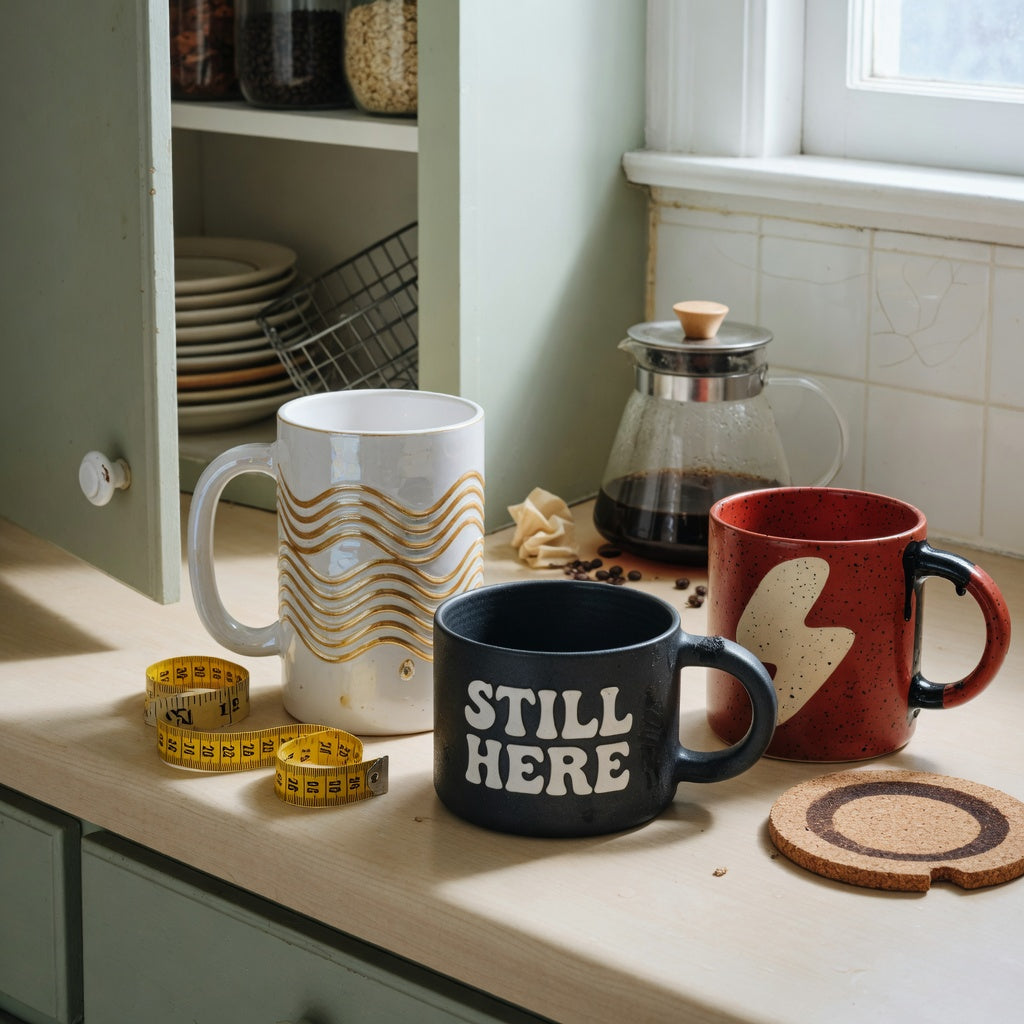
Oversized Ceramic Coffee Mugs: A Practical Everyday Rotation Checklist
Measure pour volume, filled weight, handle clearance, cabinet space, and care requirements before adding an oversized ceramic mug to daily use. We also compare three CoffeifyMug designs without gue...
Read more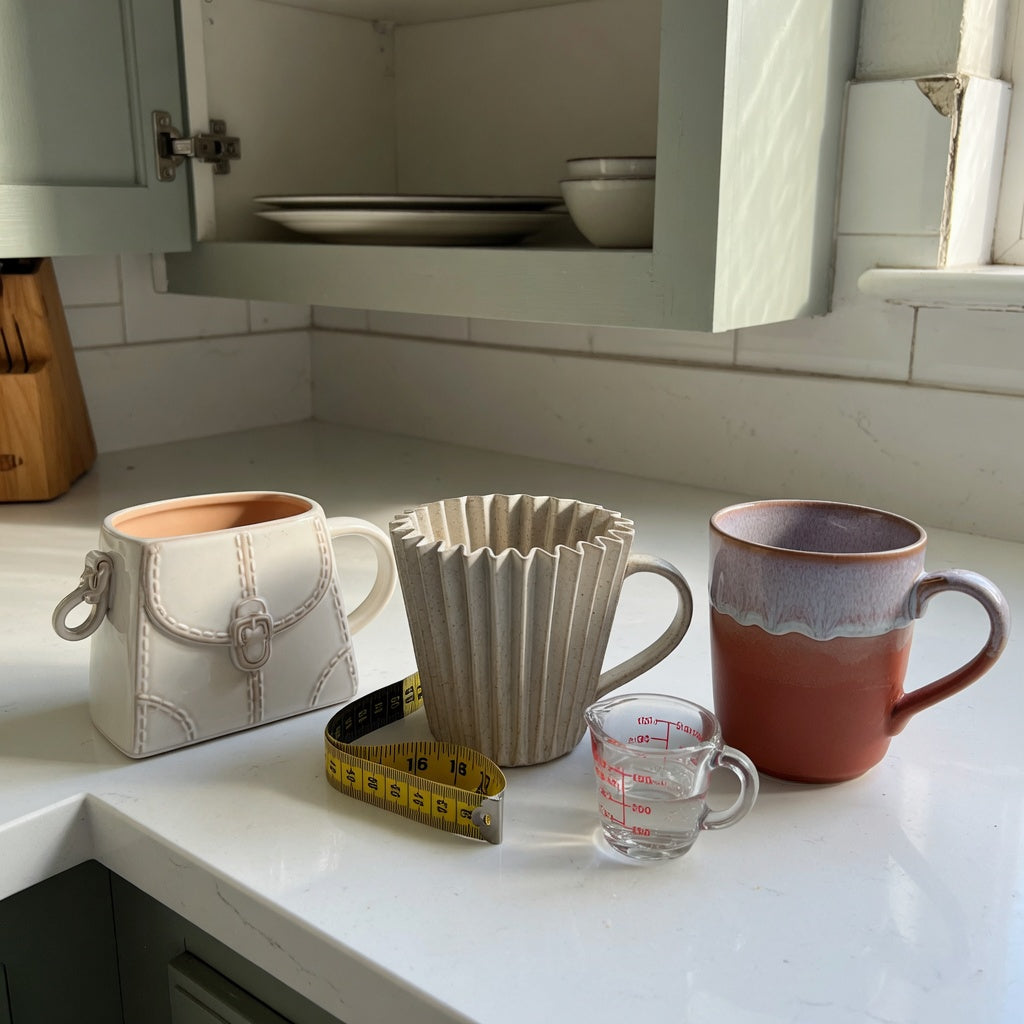
Cute Ceramic Coffee Mugs: Practical Everyday Rotation Purchase Checklist
Build an everyday mug rotation around cabinet space, wash frequency, pour size, grip, and care requirements. Compare Handbag, Pleated, and Gradient styles by the role each could fill.
Read more
Leave a comment
This site is protected by hCaptcha and the hCaptcha Privacy Policy and Terms of Service apply.