
Thick Ceramic Coffee Mugs Replacement Purchase Product Shortlist Guide
Reading time: about 10 minutes
A rim chip catches your lip at breakfast. A fine crack has appeared beside the handle. Or the mug is still intact but keeps getting pushed to the back of the cabinet because it is too heavy, too narrow, or awkward to grip. That old mug provides the most useful information for a replacement purchase. Our thick ceramic coffee mugs replacement purchase product shortlist guide starts with the defect or daily frustration you already know, then limits the alternatives to shapes that address it.
In our store, we handle ceramic mugs at the same points shoppers use every day: the drinking rim, the handle opening and attachment points, and the foot that meets a desk or kitchen counter. Those contact zones reveal more than a decorative finish does. We also keep the claim boundary clear. Thick ceramic can feel substantial and may change how quickly a drink loses heat, but thickness alone does not make a mug chip-proof, dishwasher-safe, or comfortable for every hand.
Use the thick ceramic coffee mugs replacement purchase product shortlist guide as a failure filter
Separate a true failure from a poor fit before opening product pages. A crack through the ceramic body, a loose handle, or a sharp rim chip is a structural or safety reason to retire a mug from hot-drink use. Glaze wear, staining, and fine surface lines may be cosmetic, although any line that crosses the body, catches a fingernail, or changes after the mug is filled deserves closer inspection.
- Rim or body damage: Inspect the next mug's rim profile, exposed edges, and the way it will be stored around other dishes. No ceramic option is immune to impact.
- Cracking at a handle join: Compare both attachment points and consider how many fingers fit inside the handle. A shape that forces a fingertip grip can create unwanted leverage.
- Poor desk stability: Compare the base footprint with the widest part of the body. Do not assume visual weight proves resistance to tipping.
- Drink cooled too quickly: More ceramic mass can slow temperature change compared with an otherwise similar thin mug, but fill level, opening width, and room temperature also matter.
- The mug was rarely used: Treat excessive weight, an uncomfortable rim, limited capacity, or awkward cabinet fit as genuine failure points. Replacing an unused mug with a similar shape repeats the mistake.
This failure filter keeps the shortlist commercial and practical. Each candidate should correct a known problem or preserve a quality you genuinely liked. Color can break a tie later.
Capacity, handle clearance, and cabinet fit: copy these from the old mug
Product capacity is only one measurement. A listed volume may describe a fill near the rim, while your normal serving leaves room for milk, a tea bag, or carrying the mug across a room. Before comparing replacements, fill the old mug to your usual level and pour that water into a measuring jug. Record the usable amount rather than relying on memory.
- Measure the old mug's height and widest outside dimension, including its handle, to the nearest 1/4 inch or 5 millimeters.
- Measure the shelf opening, mug-tree clearance, or drawer depth where the replacement will live.
- Measure the handle opening and note whether you use two, three, or four fingers when lifting a full mug.
- Weigh the empty mug on a kitchen scale if weight caused wrist fatigue or made the mug unpleasant to carry.
- Check the base diameter and foot ring. A chipped or rough foot can mark a counter even when the rest of the mug looks sound.
Use those numbers against the current details and photographs on each linked product page. We do not substitute visual estimates for published dimensions, and we do not assume similarly sized exteriors hold the same amount. Thick walls can reduce interior capacity when two mugs share the same outside dimensions.
Why thick ceramic can solve one problem and create another
General category guidance: A thicker ceramic body usually has more mass than a comparable thin-walled body. That can produce the solid hand feel many replacement shoppers want and can moderate temperature changes. It also adds weight. Ceramic is not vacuum insulation, so the exterior can still warm up and the drink will still cool.
The trade-offs matter on a crowded office desk and during repeated trips from a coffee machine. A substantial mug may feel settled while resting but tiring when full. Thick walls and sculptural profiles can also consume more cabinet space, leave less room for the drink, or prevent tidy stacking. For commuting, cup holders, or carrying a drink in a bag, a lidded travel vessel is usually a better category than any open ceramic mug.
Product-page-based shortlist: The three choices below are separated by the forms shown on their current listings. We use those visible differences to establish a starting point, not to claim that one is unbreakable or universally more comfortable.
| Reader situation | Start with | Reason to skip |
|---|---|---|
| The old mug felt visually slight, top-heavy, or too conventional | The Rock | You need a lightweight or easily stackable cylinder |
| Grip and drinking-edge geometry caused daily frustration | The Flow | You prefer a simple, symmetrical profile |
| The lost mug's broad silhouette and character mattered most | Spittoon | Cabinet width and predictable stacking are priorities |
The Rock: shortlist it for a grounded, substantial form
Reader situation: The mug being replaced felt visually insubstantial, was easy to crowd on the desk, or lacked the sculptural presence you enjoyed. The low-set, solid-looking form presented on The Rock Coffee Tea Mug product page makes it the first relevant comparison.
Why it may fit: The Rock is the candidate for shoppers who want a thick ceramic mug to look and feel substantial in a stationary kitchen or desk routine. Compare its current page details with your recorded capacity, outside width, and empty weight before deciding.
Why to skip it: Visual solidity is not proof of impact resistance. Pass if your main complaint was weight, if you carry a full mug between rooms frequently, or if a conventional profile is necessary for a tight mug tree or stack. A lighter, simpler form would suit those constraints better.
The Flow: shortlist it when grip and rim geometry drive the decision
Reader situation: Your old mug's handle pinched your fingers, forced an insecure grip, or positioned the rim awkwardly as you drank. Start with The Flow Coffee Tea Mug, whose visible form puts the relationship among body, handle, and drinking edge at the center of the comparison.
Why it may fit: It gives shoppers a distinct alternative to a rigid, straight-sided mug. Study the listing from the side and top, then compare the handle opening with the finger count you recorded. Comfort is hand-specific, so the page shape and dimensions matter more than a general promise that a handle is ergonomic.
Why to skip it: Choose another style if easy stacking, strict symmetry, or the fewest shaped surfaces is more important than expressive geometry. It is also the wrong correction if the only problem with the old mug was insufficient usable capacity and the current listing does not meet your measured serving size.
Spittoon: shortlist it when a wide, distinctive silhouette matters
Reader situation: The broken mug was a favorite because it looked unmistakable on a shelf or made a memorable gift. The broad, unconventional silhouette shown for the Spittoon Coffee Tea Mug addresses that kind of replacement more directly than a standard cylinder.
Why it may fit: Spittoon belongs on the shortlist when visual character is part of the function. That can matter at a gift unboxing, on an open kitchen shelf, or on a desk where the mug stays in view all day.
Why to skip it: A wide or flared profile demands a careful cabinet measurement and may not nest with existing mugs. Skip it if you need compact storage, a familiar everyday silhouette, or a shape that disappears neatly into a matched set. Distinctive does not automatically mean practical for a small cupboard.
Dishwasher, microwave, and thermal-shock checks before you buy
Care compatibility must come from the current product page or the care label supplied with the mug. Ceramic material alone does not establish dishwasher or microwave suitability because glazes, decorative finishes, and construction details can change the instructions. If a listing does not state compatibility, ask before ordering rather than treating silence as approval.
For routine ceramic care, avoid moving a very cold mug directly to boiling liquid or putting a very hot mug onto a cold, wet surface. Sudden temperature differences can stress ceramic and glaze. In a dishwasher, if the care instructions permit one, position the mug so its rim and handle cannot knock against plates, bowls, or metal utensils during the cycle. For hand washing, use mild detergent and a nonabrasive sponge unless the product instructions specify otherwise.
We also inspect a new mug before its first fill. Run a fingertip carefully around the rim, look at both handle joins in good light, and set the empty mug on a flat counter to check the foot. During gift unboxing, do this before discarding the protective packaging. These checks do not predict lifetime durability, but they can reveal a sharp edge, visible crack, or unstable foot before the mug enters daily service.
A two-candidate decision at the kitchen counter
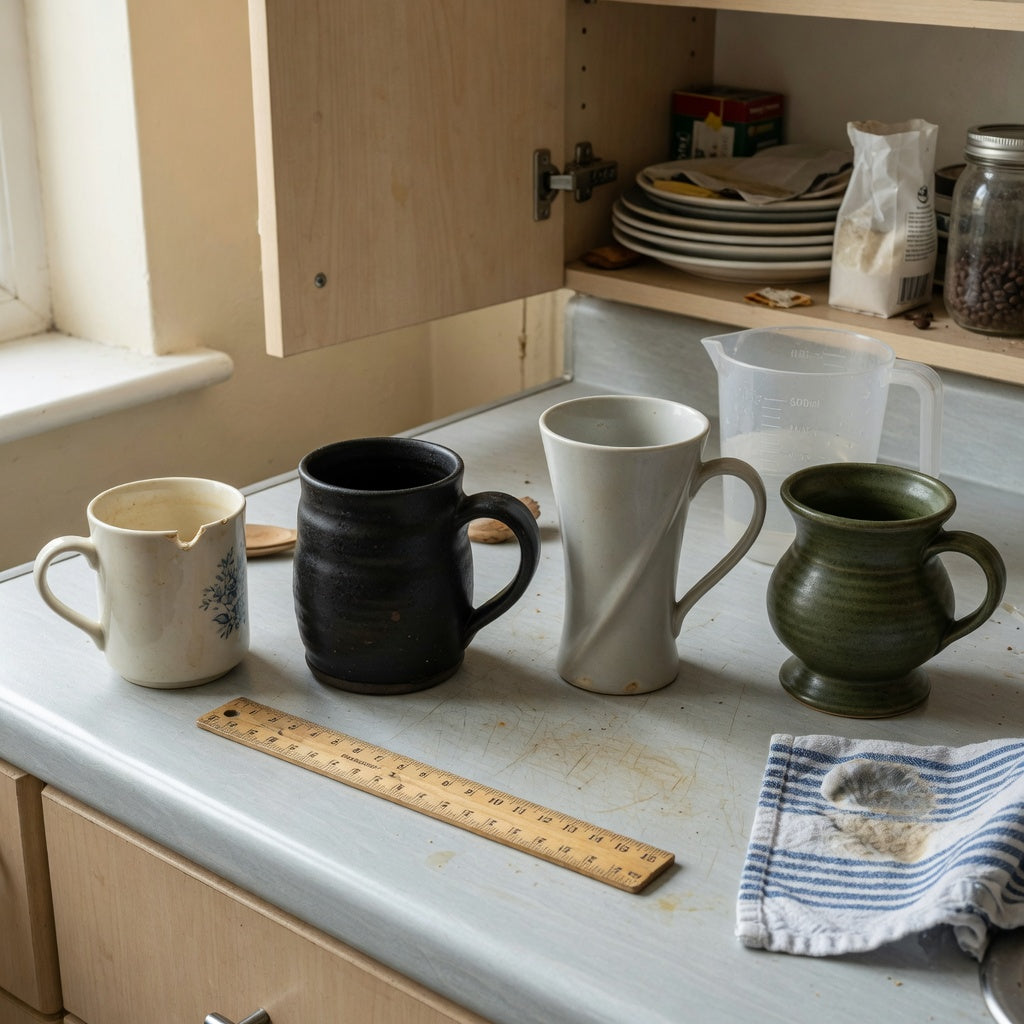
A useful thick ceramic coffee mugs replacement purchase product shortlist guide should finish with two candidates at most. Put the retired mug, a ruler, and your normal spoon or tea infuser on the counter, then answer these questions:
- Which old-mug problem must the replacement correct?
- Which feature must remain: usable capacity, handle clearance, low profile, or distinctive shape?
- Will the mug spend more time being carried or resting on a desk?
- Does its full outside width fit the assigned shelf without touching neighboring dishes?
- Do the current product-page care instructions match how your household actually washes and reheats drinks?
If none of the three featured forms clears those checks, do not force the match. Compare other unique coffee mugs in our current collection and keep the same measurements beside you. The right next step may be a more conventional profile, a lighter ceramic mug, or a travel vessel from a different category.
Frequently asked questions
What belongs in a thick ceramic coffee mugs replacement purchase product shortlist guide?
Include the old mug's usable capacity, empty weight, total width including the handle, handle opening, base footprint, storage limit, and actual care routine. Then record the defect or frustration being corrected. A product stays on the list only if its current page details address those constraints.
Does thicker ceramic mean a coffee mug is harder to break?
No. Thickness affects mass and hand feel, but it does not make ceramic unbreakable or prove resistance to chips, drops, or thermal shock. Shape, wall consistency, glaze, handling, and impact conditions also affect how a mug performs.
How do I compare mug capacity without guessing from photographs?
Measure the amount you normally pour into the old mug with a kitchen measuring jug. Compare that usable serving with the capacity stated on the current product page, remembering that a published figure may represent a near-rim fill. Exterior size alone is not a reliable capacity estimate.
Can I assume a thick ceramic mug is dishwasher and microwave safe?
No. Follow the product page and supplied care instructions for the specific mug because ceramic bodies, glazes, and decorative finishes differ. If either use is not explicitly addressed, confirm it with our store before exposing the mug to that appliance.
Which option makes the most practical replacement gift?
Match the recipient's previous favorite rather than choosing the most unusual shape. The Rock suits a preference for a grounded, substantial form; The Flow is the relevant comparison for grip and rim geometry; Spittoon fits someone who values a broad, distinctive silhouette. If you do not know their storage space or lifting preference, confirm those details before ordering.
Next step: Measure the retired mug, cross out every option that repeats its main problem, and open only the one or two current product pages that remain. That short comparison is more reliable than replacing a familiar mug by appearance alone.
More from our blog
Read more
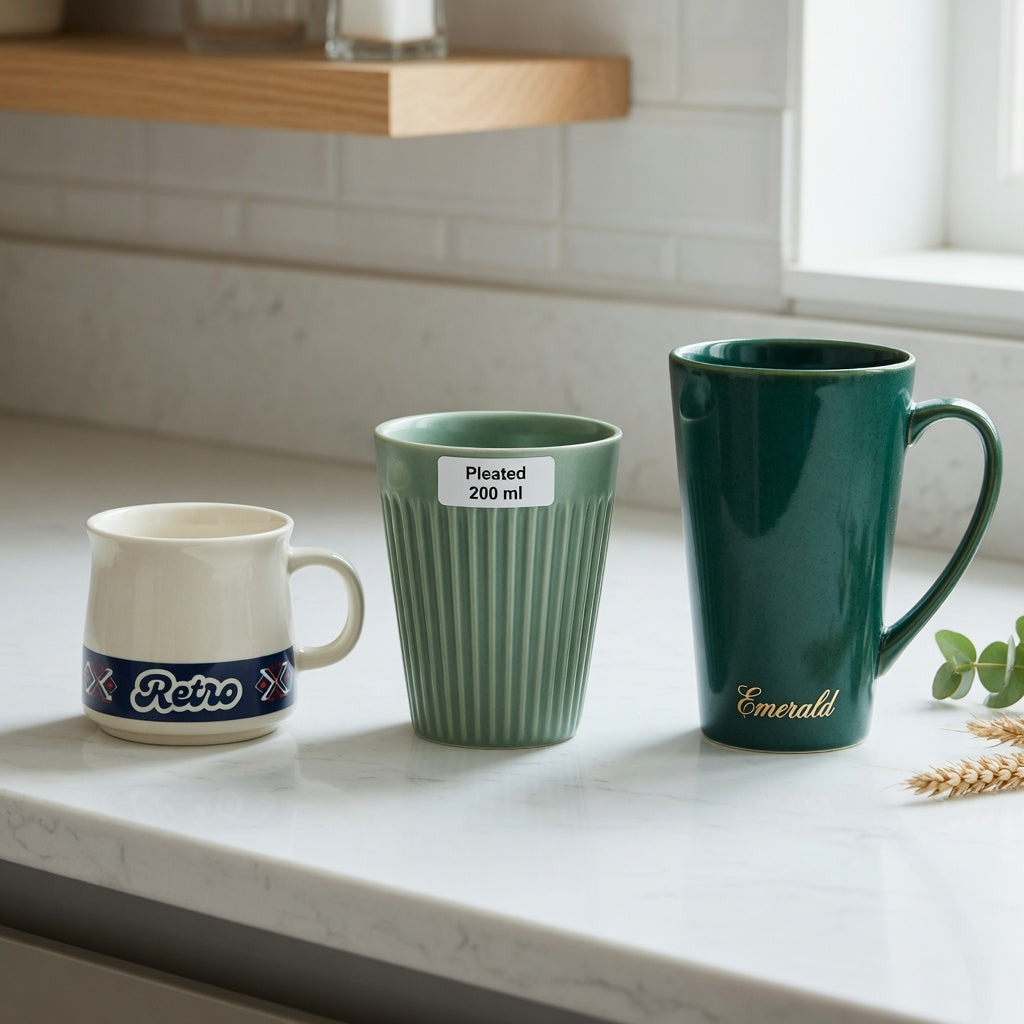
Eggnog Mug Gift Choice Practical Purchase Checklist: 3 Sizes Compared
Compare the 170 ml Retro, 200 ml Pleated, and 270 ml Emerald using the recipient's actual serving routine and preferred shape. The checklist also identifies the material, care, dimension, and packa...
Read more
Vintage Pottery Coffee Mugs Gift Choice Practical Purchase Checklist
Use recipient routines, hand comfort, live dimensions, and care information to compare three CoffeifyMug designs without assuming unlisted specifications. This checklist separates confirmed product...
Read more
Leave a comment
This site is protected by hCaptcha and the hCaptcha Privacy Policy and Terms of Service apply.