
Small Ceramic Coffee Cup First Time Buyer Product Shortlist Guide
Reading time: about 9 minutes
A cup can look compact beside a teaspoon in a product photo and still be too tall for the space beneath your coffee maker, too narrow for your usual milk drink, or uncomfortable to hold with damp hands. Our small ceramic coffee cup first time buyer product shortlist guide is built around that gap between appearance and daily fit. In our store, we use an evidence-first process: confirm what the listing states, mark missing details as unknown, and shortlist by the drink and location the cup will actually serve.
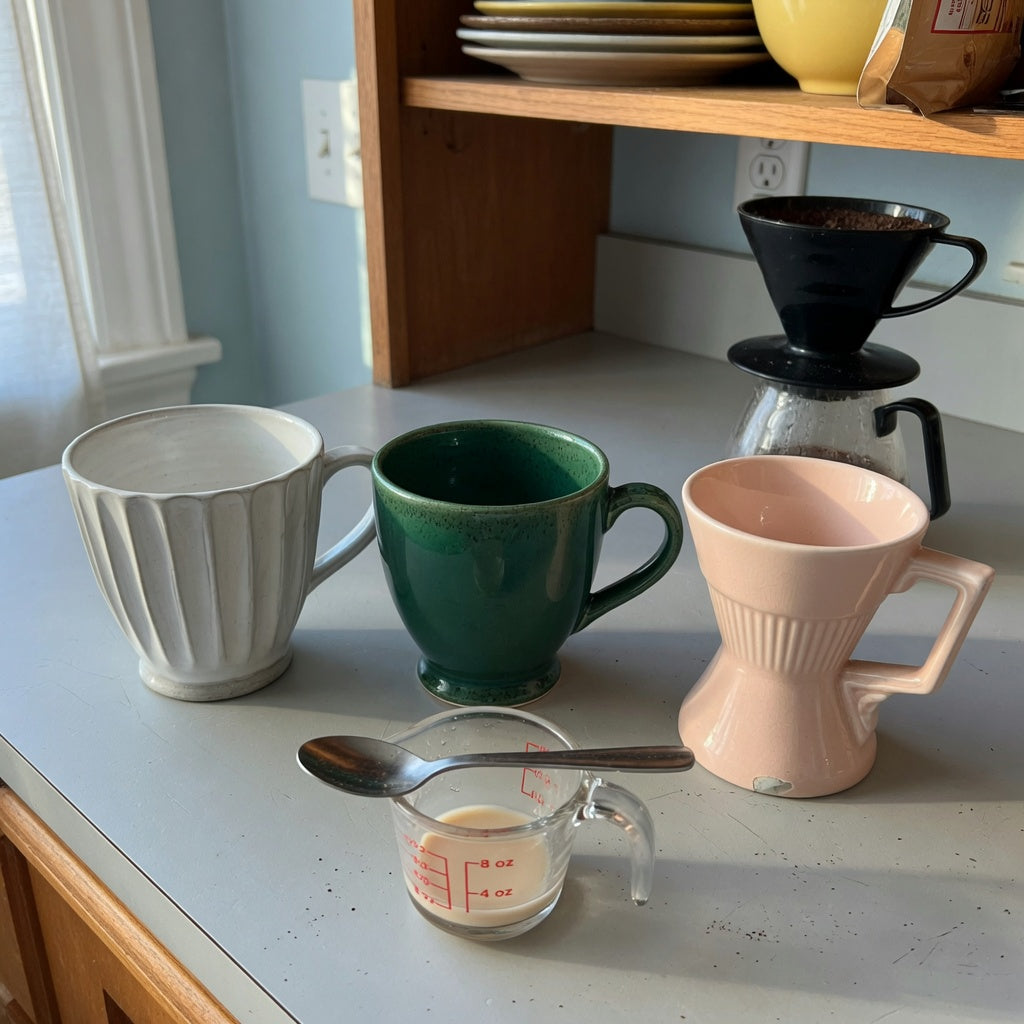
The three options below have clear design directions: pleated, emerald, and retro. We can discuss those visible distinctions without assigning unstated specifications to them. We do not assume an exact capacity, microwave status, dishwasher claim, wall thickness, presentation box, or stackability unless the current product page confirms it. Product information can change, so the live listing remains the final reference before checkout.
Capacity, rim, handle, and base: the details that decide daily fit
Start by measuring your finished drink, not the amount of coffee grounds or espresso used to make it. Pour your normal coffee, milk, or tea serving into a measuring jug and note the volume in mL or fl oz. A listing that only calls a cup small has not given you enough information to judge capacity. Leave room below the rim rather than matching your drink to the cup's absolute brim capacity.
| Listing detail | Why a first-time buyer needs it | How to handle missing information |
|---|---|---|
| Capacity in mL or fl oz | Shows whether the finished drink fits with carrying room below the rim. | Treat capacity as unknown and compare only after asking for the measurement. |
| Overall height and widest diameter | Determines clearance beneath a coffee maker, inside a cupboard, and beside a keyboard. | Do not estimate from props or camera scale alone. |
| Rim and handle views | Help you assess rim profile, handle opening, and likely one-finger or two-finger use. | Use photos as a visual guide, but keep exact clearance marked as unknown. |
| Base or foot-ring view | Shows the contact area and whether the form appears suitable for your shelf or saucer. | Do not infer stackability or levelness from one angled image. |
| Material and care wording | Confirms the stated ceramic construction and any dishwasher or microwave instructions. | No written care claim means the care method still needs confirmation. |
When our team handles ceramic cups, the rim, handle joints, and foot ring receive immediate attention. Those are the areas where a chip, hairline crack, rough spot, or uneven base can affect daily use. We also look for unexpected glaze pinholes, bare patches, or crazing; a deliberate crackle finish is different, but it should be presented as part of the design. After delivery, inspect the cup on a dry, level counter before washing or using it, and follow the store's current return instructions if anything appears damaged.
Small ceramic coffee cup first time buyer product shortlist guide: three use cases
This is a scenario shortlist, not a ranking. Each option earns a place because it answers a different design preference. The next step for every candidate is the same: open its page, compare the stated details with your measured pour and available space, and skip it if a critical specification remains unresolved.
- Compact drink station and preference for surface texture: start with the Pleated Coffee Tea Cup.
- Shared desk or open shelf that needs a distinct color: consider the Emerald Coffee Tea Mug.
- Style-led gift or vintage kitchen setting: compare the Retro Coffee Tea Cup.
Pleated Coffee Tea Cup: a tactile option for a compact drink station
The defining page-visible feature of the Pleated Coffee Tea Cup is its pleated outer form. That makes it the logical first candidate for someone who prefers visible contour instead of a completely smooth cup wall. It also gives a compact coffee corner more texture without relying on a strong color statement.
Choose it for: short counter-side coffee or tea routines where surface detail matters and you like holding a contoured form. Skip it for: a perfectly smooth matching set, confirmed nesting, or any routine where the page does not provide the capacity and dimensions you require. Pleated surfaces can also need more deliberate wiping around their contours than a plain wall, so buyers who value the fastest possible cleanup may prefer a simpler profile.
Emerald Coffee Tea Mug: a color-led choice for desks and open shelves
The Emerald Coffee Tea Mug has the clearest color-led identity in this shortlist. It suits a home office, shared workspace, or open shelf where a distinct green cup is easier to identify than another neutral piece. Color can be a practical selection variable as well as a style preference, especially when several people keep cups in the same area.
Choose it for: a workspace that benefits from a recognizable color or a kitchen where emerald complements the existing palette. Skip it for: an exact color match that you cannot verify from the page, since screens and room lighting can change how a finish appears. It is also the wrong choice if your usual drink exceeds the listed capacity or if you need a care claim the page does not explicitly provide.
Retro Coffee Tea Cup: a style-first option for gifting and display
The Retro Coffee Tea Cup is the most direct match for a buyer who already knows that vintage-influenced styling belongs in the kitchen. It can also make sense as a gift when the recipient's preference for retro tableware is known. That is a more reliable reason to choose it than buying solely because it photographs well.
Choose it for: open shelving, a vintage-leaning coffee setup, or a recipient who collects retro forms. Skip it for: a sharply modern kitchen, space-efficient stacking, or gift presentation that is not described on the page. The product name supports a retro design direction; it does not, by itself, confirm special gift packaging, saucer inclusion, or stackability.
Dishwasher cycles, microwave use, and stacking: claims to verify
The word ceramic is not a universal care instruction. Glazes, decorations, and construction details vary, so check the written instructions for the exact cup rather than applying a rule from another item you own. If microwave or dishwasher suitability is absent, treat it as unknown. Do not infer microwave safety from a plain-looking product photo, particularly if any metallic-looking decoration is present.
- For dishwasher use: look for an explicit claim, then load the cup so its rim and handle cannot knock against plates or other cups during the cycle.
- For microwave use: rely on the current product instructions. A ceramic body alone does not confirm that every finish or decoration is microwave suitable.
- For temperature changes: avoid abrupt shifts from very cold to very hot unless the product instructions specifically permit them.
- For stacking: require a stackability statement or clear dimensional evidence. A decorative rim or projecting handle can make an otherwise small cup inefficient to stack.
At unboxing, check the rim with a fingertip, inspect both handle joints in good light, and place the empty cup on a level surface to detect rocking. Compare the actual height and diameter with the intended shelf, brewer, or desk position before use. These simple checks reveal more about fit than an attractive close-up photograph.
Who should skip a small ceramic cup altogether?
A small open ceramic cup is not the best tool for every drink. Buyers who make large milk drinks or iced coffee need enough capacity for milk, foam, or ice displacement. A larger mug will usually be more practical. For long meetings, commuting, or outdoor use, an insulated vessel with a secure lid may suit the job better than an open ceramic cup.
Small ceramic is also a weak match for buyers who need shatter-resistant daily carry or tightly nested storage. Its strengths are focused servings, a familiar ceramic drinking surface, and a cup that can contribute visible shape or color to a kitchen. Pick it because those qualities match your routine, not because small automatically means more convenient.
A one-cup checkout checklist for a first purchase
This small ceramic coffee cup first time buyer product shortlist guide works best when you reduce the decision to one real routine. Do not buy several different forms just to discover which one fits. Test the strongest candidate first, then use that experience to judge later purchases.
- Measure your normal finished drink in mL or fl oz, including milk or tea additions.
- Measure the available height beneath the brewer and the shelf space where the cup will live.
- Choose the main design variable: pleated texture, emerald color, or retro styling.
- Confirm capacity, dimensions, stated material, care instructions, and included pieces on the live page.
- Mark any missing fact as unknown instead of turning it into an assumption.
- Order the single option that clears every essential check, then inspect the rim, handle joints, glaze, and base after delivery.
If none of the three candidates clears your checklist, move to our unique coffee mugs collection and repeat the same process with a different capacity or form. Expanding the search is more sensible than forcing a visually appealing small cup into a large-drink, travel, or stacking role.
Frequently asked questions
How should I use a small ceramic coffee cup first time buyer product shortlist guide?
Start with one daily situation, such as a short morning coffee at the kitchen counter or tea at a home-office desk. Measure the drink and available space, select the design that fits the setting, and confirm every essential specification on the live product page. Skip any option when a missing detail could affect capacity, care, or physical fit.
What capacity should my first small ceramic coffee cup have?
There is no single correct capacity because buyers use the term small for different drinks. Measure your usual finished serving in a jug and select a listed capacity that leaves carrying room below the rim. Do not use the cup's product photo as a substitute for an mL or fl oz measurement.
Are the Pleated, Emerald, and Retro cups dishwasher and microwave safe?
Use the care instructions shown on each current product page; this article does not assign dishwasher or microwave claims that are not explicitly stated. If the page is silent, treat the care method as unknown and confirm it before ordering. Material alone is not enough to establish care suitability.
Which small ceramic cup is the strongest gift candidate?
The Retro Coffee Tea Cup is the clearest style-led candidate for someone who likes vintage forms, while the Emerald Coffee Tea Mug suits a recipient known to prefer green. The Pleated Coffee Tea Cup fits someone who enjoys textured tableware. Confirm dimensions, included pieces, and packaging because none of those details should be assumed from the design name.
Is a small ceramic coffee cup suitable for iced coffee?
It can work for a short iced espresso only if the listed capacity leaves enough room for the drink and ice. Ice displaces liquid quickly in a small vessel, so regular iced coffee or milk-heavy drinks generally call for a larger cup. Measure the complete drink before choosing.
Measure your finished pour and the available brewer or shelf height now, then open the page for the one candidate that matches your setting. Proceed only after its capacity, physical fit, included pieces, and care instructions are clear; otherwise, return to the collection and compare a more suitable format.
More from our blog
Read more
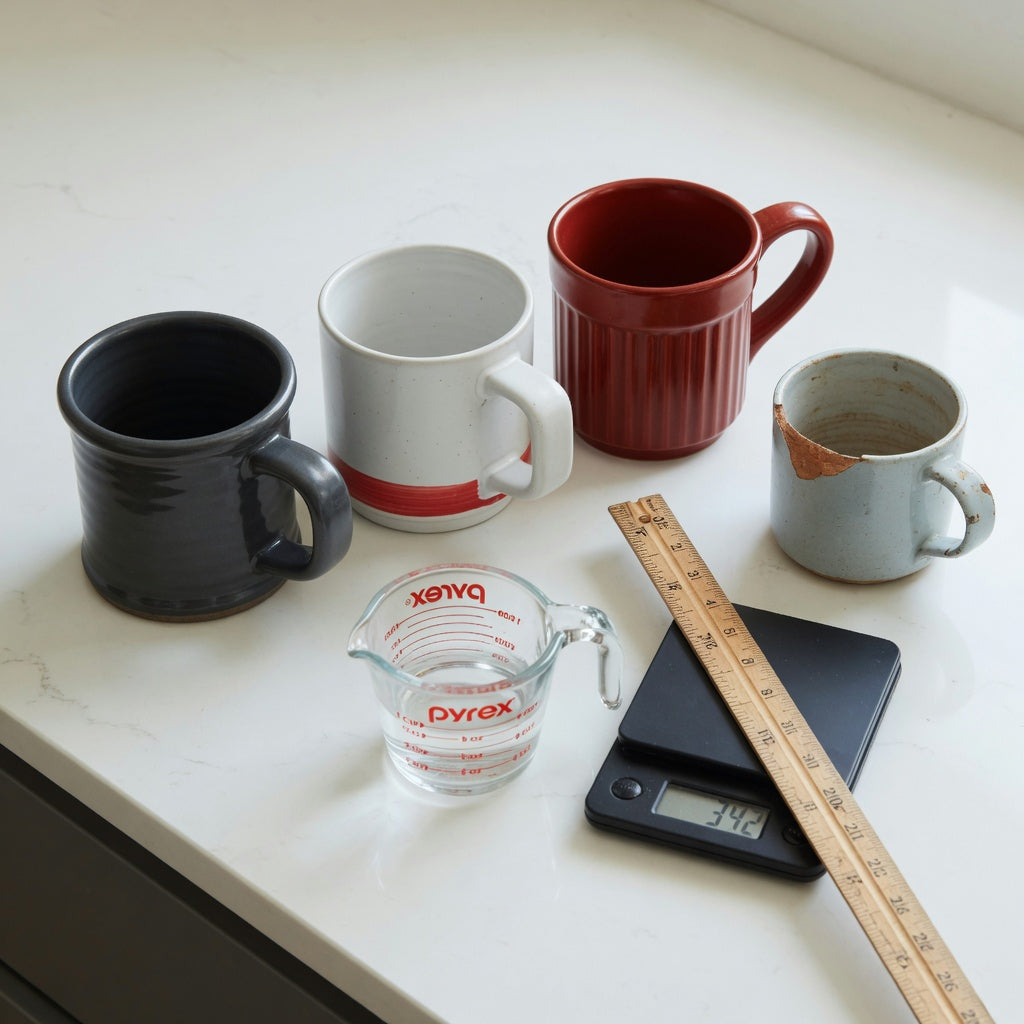
Thick Ceramic Coffee Mugs: A Practical Replacement Purchase Checklist
Start with the exact reason the old mug failed. This checklist helps you compare usable capacity, handle clearance, storage fit, care instructions, and three current CoffeifyMug designs without gue...
Read more
Macchiato Cup Replacement Purchase Practical Purchase Checklist
Replace a chipped, cramped, or awkward macchiato cup by measuring the drink you actually pour. Compare CoffeifyMug's 170 ml Retro, 200 ml Pleated, and 250 ml Ball Handle options, then verify form, ...
Read more
Leave a comment
This site is protected by hCaptcha and the hCaptcha Privacy Policy and Terms of Service apply.