



Shelf to Table Ceramic Mug Styling: What Buyers Should Compare
Reading time: about 13 minutes
A customer will style a whole coffee corner, send us the photo, and then ask which mug they can actually take down at 7 a.m. That question is the practical test behind shelf to table ceramic mug styling. The cup has to look considered on an open shelf and still work for a real hand, a hot drink, and the trip back to the same gap.
We see the same misses in our store. A tight row looks finished in a picture and feels cluttered beside the coffee maker. Handles collide. The tall piece everyone likes sits too high to fill comfortably. A metallic rim that caught the light becomes the mug someone microwaves, only because it was sitting with the everyday cups.
What should you compare before a shelf mug becomes your everyday cup?
Use comes before palette. A silhouette that balances a shelf is a bad buy if the piece was never meant to hold coffee or tea.
In our experience, the useful sort is by job, not by how the glaze looks under a cabinet light:
- A daily driver you will lift every morning, so handle, foot, and care marks have to match how you heat drinks and how you wash.
- An occasional height or color piece that is still suitable for food contact, but is not your only cup.
- A display accent - metallic, sentimental, chipped, or unlabeled - that stays in the vignette and out of the drink rotation.
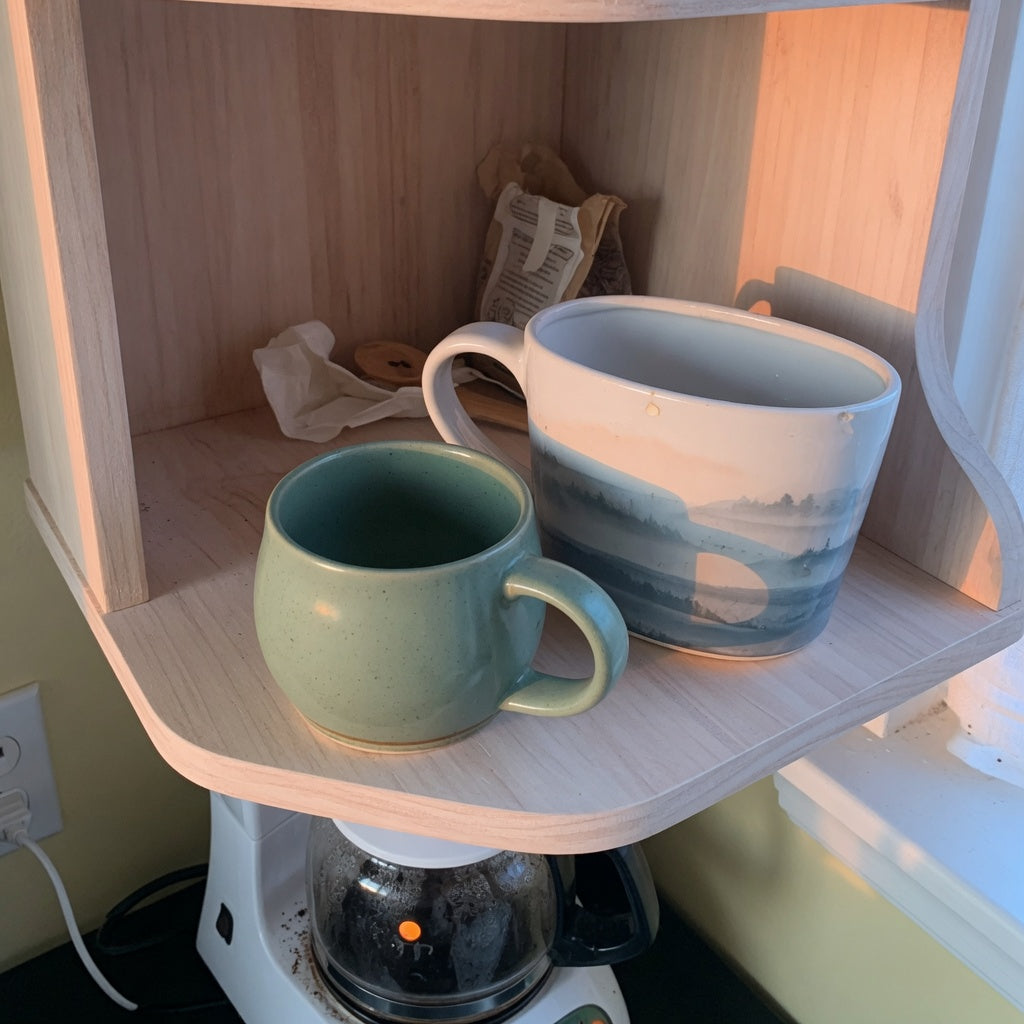
Open our round coffee and tea mug when you want a rounder silhouette toward the front of a grouping, where a hand can find it without moving the pieces behind it. Confirm height, capacity, material, handle clearance, and any appliance marks on the current listing before you reserve that front spot. The word round is a shape cue in the name, not a measurement we can treat as fact, and it is not a microwave or dishwasher promise.
Our landscape tall coffee and tea mug is the listing we point to when a cluster needs a higher visual point than a row of similar rims. Check height, handle clearance, capacity, and care language on that page before you plan the shelf. A taller profile can anchor a coffee station. It is a poor daily driver if the only open shelf sits above a comfortable pour, or if you will carry a full cup one-handed from the kitchen to a desk.
Building a small set rather than one hero cup? Start in the unique coffee mugs collection and assign each piece a job - grab-daily, occasional, or display - before you match color. A related glaze looks intentional. A related care label is what keeps the set in service after the first week of real washing.
The rounder front piece is the wrong emphasis when your only open space is a narrow vertical niche and you already own low bowls. We would rather you buy one mug you will actually drink from than a pair that stays up because the grip annoys you. Gift unboxings make this worse: the prettier cup gets the shelf, and the comfortable one gets the cabinet. If the gift is meant for weekday coffee, listed care and a handle you can live with beat the photo.
Where should shelf to table ceramic mug styling put the mug you grab every morning?
Styling that ignores the grab is how open shelves become dust ledges. On a coffee station, the weekday mug belongs where a hand lands without a step stool and without sweeping three other rims.
What we actually set up when the shelf has to function:
- Put the weekday mug at the front, or on a hook under the shelf, with the handle turned toward the hand that reaches for it.
- Leave breathing room so both the handle and the side profile show. If handles overlap in a photo, they will knock in the kitchen.
- Mix heights instead of lining up identical rims. One higher profile beside a rounder one reads as a cluster, not a storage bin.
- Keep stacks off the daily path. Lip-to-lip stacks chip the rim you feel every time you drink.
- Use the shelf surface for pieces you want seen, and hooks underneath for the one or two cups that should never be buried.
We usually stop a vignette at three or five mugs. A packed row looks like the cabinet ran out of room. Grouping by color works when the glazes sit in one family. Grouping by how often you drink from them works better when the collection is mixed and you are tired of moving display pieces to reach a plain cup. A taller landscape profile beside quieter rounds can work, as long as the daily mug is still the easiest one to lift.
Floating shelves and hook rails have a load the style photo will not show. Check the rated load and how the shelf is anchored before you add a row of ceramic. We do not like mugs hanging over a chair, a bench, or anywhere someone sits with a hot drink. A bumped shelf and a falling mug are a bad pair. Open shelving is also the wrong home if you hate wiping ceramics. Grounds and a light oil film settle on whatever faces the coffee maker. A closed cabinet can hold the workhorses, and the shelf can keep one or two pieces you actually enjoy maintaining.
Which food-contact cues matter before the pretty mug holds coffee?
Open-shelf photos skip the label. Shoppers then ask whether a handmade, vintage, or imported mug is fine because it looks clean. Clean is not the test.
U.S. Food and Drug Administration guidance treats lead and cadmium as metals that can leave some ceramic foodware and enter food. For cups and mugs, the lead guideline is 0.5 micrograms per milliliter of leaching solution, and any one of six units tested can miss it. In that guidance, a cup or mug is small hollowware commonly used for coffee or tea above room temperature. It normally, though not always, holds about 240 milliliters (8 fluid ounces) and is made with a handle. The cadmium guideline is 0.5 micrograms per milliliter for small hollowware under 1.1 liters, and 0.25 micrograms per milliliter for large hollowware of 1.1 liters or more, again judged on any one of six units.
Those figures are lab leach limits. You cannot read them off a glaze color, and we do not attach them to a CoffeifyMug listing unless that listing says so. FDA has reported ceramic foodware that released significant lead from surfaces that can touch food, that food can extract the metal, and that continued use can cause harm including chronic lead poisoning. Cadmium has been found in significant extractable amounts on imported and domestic ceramic ware, can move into acidic foods, and with continued use could cause chronic cadmium poisoning. In children, lead poisoning has been linked to learning disabilities, developmental delays, and lower IQ scores. Washing, boiling, or any other home process does not remove lead from pottery.
Proper firing can bind lead into a glaze. If a piece was not made or fired properly, lead can move into a drink. A kiln once used for lead glazes can also contaminate later ware that is labeled lead free. FDA reported traditional pottery from several manufacturers in Mexico that was labeled lead free and still released lead comparable to lead-glazed pottery, in some cases above action levels. A sticker on an heirloom is not the last word.
Pause before daily coffee if the piece is handmade ware with a crude or irregular look, an antique, a flea-market or street-vendor find, something from an unknown maker, or traditional pottery brightly decorated in orange, red, or yellow. Chips, excessive wear, and a permanent warning such as Not for Food Use - May Poison Food belong in that same pause. FDA describes pottery made in commercial factories for everyday use as much less likely to have lead problems than those higher-concern groups. Do not cook, serve, or store food or drinks in a warned piece, or in ware you have reason to think may leach lead.
A styled photo still does not replace the listing. If the current page is silent on food contact, leave that silence as a question to verify. Do not answer it from the color.
| Role on the shelf | Compare this | Not the right job |
|---|---|---|
| Daily driver | Food-use intent, handle, stable foot, listed microwave and dishwasher marks | Unlabeled vintage, flea-market pottery, or any piece marked not for food use |
| Occasional height or color piece | Clearance above the rim, how often you will lift it, a surface you can wipe | Your only cup if the shelf is too high for a full, hot mug |
| Display accent | Color, metallic sheen, sentimental cracks you do not want in service | Microwaving, storing drinks, or letting guests assume it is tableware |
Why do metallic and luster mugs change the microwave decision?
Gold, silver, and other metallic coatings look sharp on a coffee shelf. They are also the finish we will not wave through as probably fine.
Microwave use is a labeled, material-specific decision, not a trait of every ceramic. Dishwasher use is a separate question. A mug can be marked for a wash cycle and still be a poor microwave candidate because of metal in the glaze, a luster band, or a coating that heats badly.
One public case is specific enough to remember. Under CPSC recall 24-171, Nestle USA recalled about 440,500 ceramic mugs with a metallic coating sold in 2023 Starbucks-branded holiday gift sets. The hazard notice says that if those mugs are microwaved or filled with extremely hot liquid, they can overheat or break, with burn and laceration hazards. CPSC reported 12 overheating or breaking incidents and 10 injuries. That recall covers one product run, not every gold line ever painted. It is still why a metallic mug in a styled kitchen gets a different rule from a plain daily driver: it can sit on the shelf as an accent, and it does not go in the microwave. We also would not choose it for extremely hot liquid unless the maker of that exact piece says the use is acceptable.
No microwave mark means no assumption. The caution is sharper for handmade work, older glazes, and anything with metal trim. Shape suggestions on our round and tall listings are not appliance approvals. Read each page before reheating becomes a habit.
Does stoneware or porcelain matter more than the care label?
Shoppers ask which clay body is better for a mug that lives in view and still comes to the table. The category name is a feel and a look. It is not a safety certificate, and it is not something we will assign to a linked mug unless the current listing states it.
Pieces sold as stoneware often feel heavier, with a softer rim and a glaze that pools or breaks across the lip. That weight can look grounded on an open shelf and still tire your hand on the walk to a desk. Pieces sold as porcelain often feel lighter and look brighter, with a crisper rim against dark tile or wood. A thin rim also chips sooner if cups sit lip to lip. Neither word tells you the piece is microwave safe, dishwasher safe, or covered by a leach result.
Compare the individual mug instead:
- Empty weight in your own hand, not just how solid it looks in a photo.
- Rim thickness, and whether it will tap the mug beside it every time you set it down.
- Foot width, so a taller profile does not feel tippy on a small saucer. Confirm the real foot on the listing rather than guessing from a camera angle.
- Glaze surface. A smooth fired face is easier to wipe when open shelves collect coffee oil and dust. A very textured lip can look rich and still trap film along the drinking edge.
- Care marks, plus condition: cracks, crazing, and chips at the rim.
Crazing is where shelf taste and drink service split. A fine crackle can be the look someone wants in a vignette. It is also a network of glaze cracks. FDA flags damaged or excessively worn ceramic for extra lead attention, and a crackle pattern on an unknown or vintage piece is reason enough to stop guessing. If you cannot confirm how that mug was made, keep the crackle as display. Do not keep drinking from it because it photographs well.
A commercial mug marked dishwasher safe can go in the machine if you still stop pieces from knocking. Heat, detergent, and mugs tapping each other are how the glaze you styled the shelf around goes dull, and how rims fleck. An unlabeled handmade mug is not universally dishwasher safe because some other stoneware is. Hand-wash the color you cannot stand to lose, and skip abrasive pads on any surface you bought for the open shelf. If a cup lives in view, rinse the coffee film before it dries. A cabinet hides that ring. An open shelf does not.
How do you keep a mixed shelf from treating every mug as tableware?
The vignette can include a piece you will never drink from. The mistake is placing it so a guest treats it as fair game. That separation is the part of shelf to table ceramic mug styling most photo guides skip.
Daily drivers stay in the reach zone, handles out, with enough gap to lift one without a chain reaction. Metallic, heirloom, or crazed favorites sit slightly apart - higher, or at the end - so they finish the color story without landing in the microwave path or the grab-any-mug path. A not-for-food-use warning does not belong in the same casual pile as the breakfast cups unless you are willing to say, out loud, that the piece is decor.
Before checkout, run this short compare:
- Role: daily, occasional, or display only.
- Listing: material words, capacity, microwave mark, dishwasher mark. Blank fields stay blank until you can verify them on the current page.
- Shelf: reach height, handle direction, breathing room, and no lip-to-lip stack for the drinkers.
- Risk: no not-for-food-use warning on a drink mug, no mystery antique for daily coffee, and no metallic coating in the microwave.
- Care: machine-wash only when the piece is labeled for it, and still keep it from knocking. Hand-wash the glaze you want to keep seeing.
If a rounder front piece and a taller landscape profile match the shelf you have, open those two listings and confirm the facts there. If you need more color than one pair, use the unique mug collection and give every new cup a role before you give it a spot.
Frequently asked questions
What does shelf to table ceramic mug styling mean for a mug I will actually drink from?
It means the mug is part of the open-shelf picture and still suitable for a real coffee or tea habit. Compare handle reach, how stable it feels when you set it down, and the food-use and appliance language on the listing. A piece that only works as decor should stay on the shelf, not rotate into the morning pour.
How much space should I leave between ceramic mugs on an open shelf?
Leave enough that each handle and side profile read separately, and that you can lift the daily mug without clipping its neighbor. If the handles overlap, the row is too tight for pieces that move every day. Exact inches depend on your shelf depth and the mug's real width, which you should check on the listing rather than copy from a styled photo.
Are gold-rim or metallic ceramic mugs safe to microwave?
Do not assume so. Metallic coatings have overheated and broken in real use: CPSC recall 24-171 covered about 440,500 metallic-coated mugs from Starbucks-branded 2023 gift sets, with 12 overheating or breaking incidents and 10 injuries, including a risk when filled with extremely hot liquid. Keep gold, silver, and other metal trim out of the microwave unless that exact mug's maker says otherwise.
Is a chipped or crazed mug still fine for coffee if it looks good on the shelf?
A chip or a crazed glaze is a reason to pause drink use, not just a styling quirk. Damaged or heavily worn ceramic is among the ware FDA says deserves extra attention for lead, and washing does not remove lead. If you like the look and cannot verify how the piece was made, retire that favorite to display and drink from a mug you can check.
Should I buy stoneware or porcelain for a shelf that also sets the table?
Choose the weight, rim, and glaze character you want to see and hold, then verify the individual listing. Stoneware-like heft and porcelain-like lightness are styling and comfort differences, not proof of microwave safety, dishwasher safety, or a leach result. If the page does not state the clay body or those care points, treat them as unknown.
More from our blog
Ready to pick your mug? Two ways to save on today's order:
Ordering 1–3 mugs? Get an extra 10% off your 1st order with code 10_OFF Apply 10% Off & Shop Wooden-Handle Mugs →
Gifting 4+ mugs? Buy 3, Get the 4th Free applies automatically at checkout (no code needed; offers do not stack) · Free standard shipping (Nov pre-Christmas delivery: 15–20 calendar days US) · Free replacement if chipped in transit.
Popular mug buying guides: Ceramic Mugs with Lids Compared · Wooden-Handle Tea Infuser Mugs Compared · Christmas & Secret Santa Mugs 2026 · Espresso & Cortado Cups Guide · Cup & Saucer Gift Sets · All 25 Mugs Spec Table · Mug Size Guide · Shipping & Promo FAQ
FIRST ORDER 10% OFF (CODE: 10_OFF) · OR BUY 3, GET THE 4TH FREE


Read more
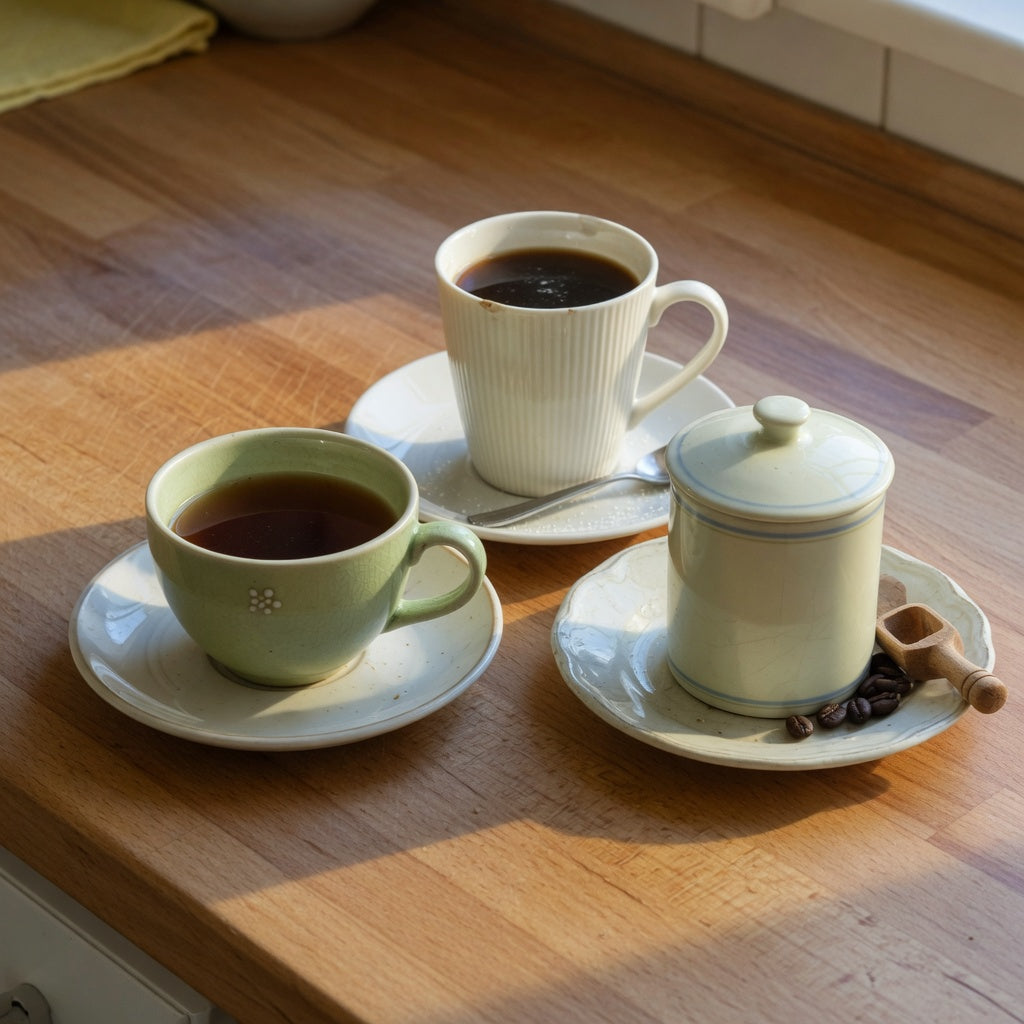
Retro coffee cup vs tea cup differences to check
A low, open teacup and a taller coffee cup or short cylindrical coffee can were often different shapes, not one rule. We compare silhouette, clay, handles, and saucers so you can match the cup to h...
Read more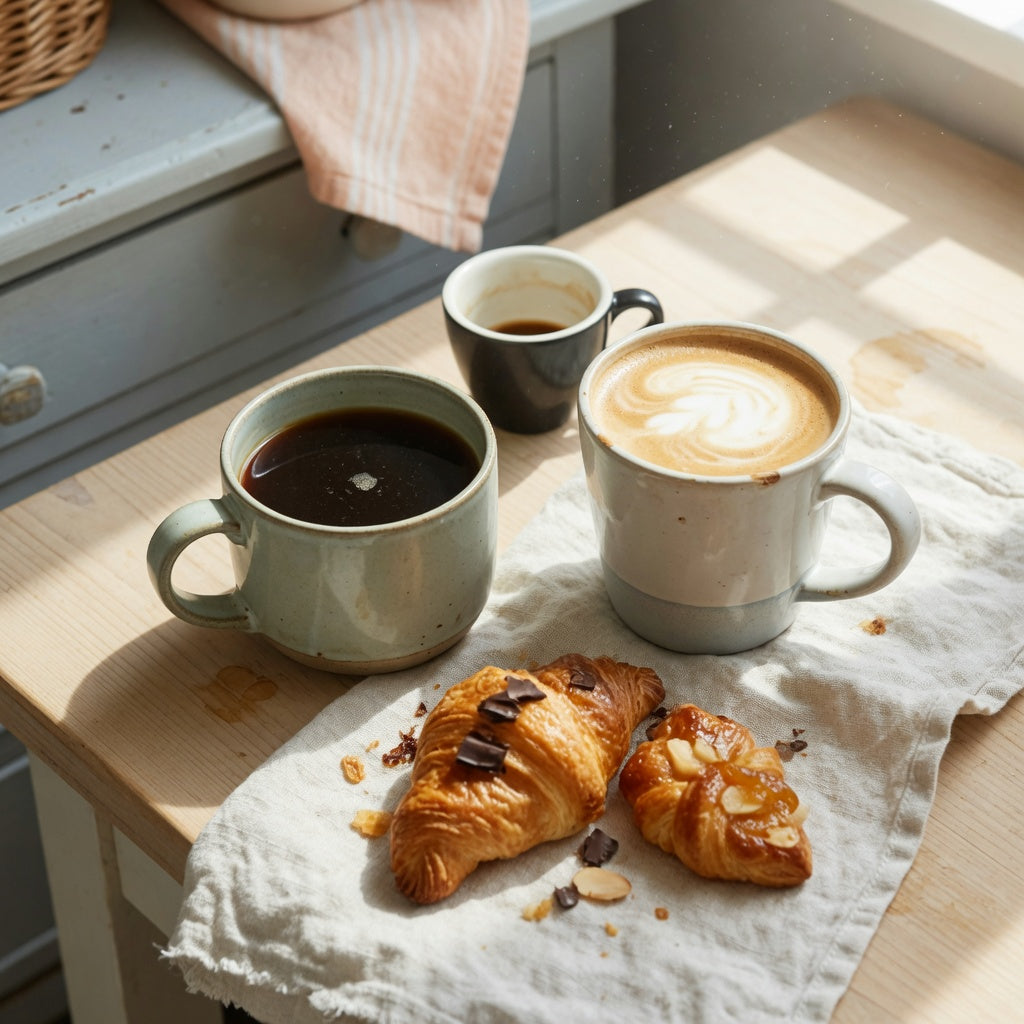
Best coffee mugs for brunch gift pair: what to compare
A brunch gift pair fails when only one person uses the mug again. Compare capacity, handle comfort, dishwasher and microwave labels, and glaze safety before you buy two cups for a shared table.
Read more
Leave a comment
This site is protected by hCaptcha and the hCaptcha Privacy Policy and Terms of Service apply.