
Rhombus Mug Gift: What Buyers Should Compare Before Buying
Reading time: about 9 minutes
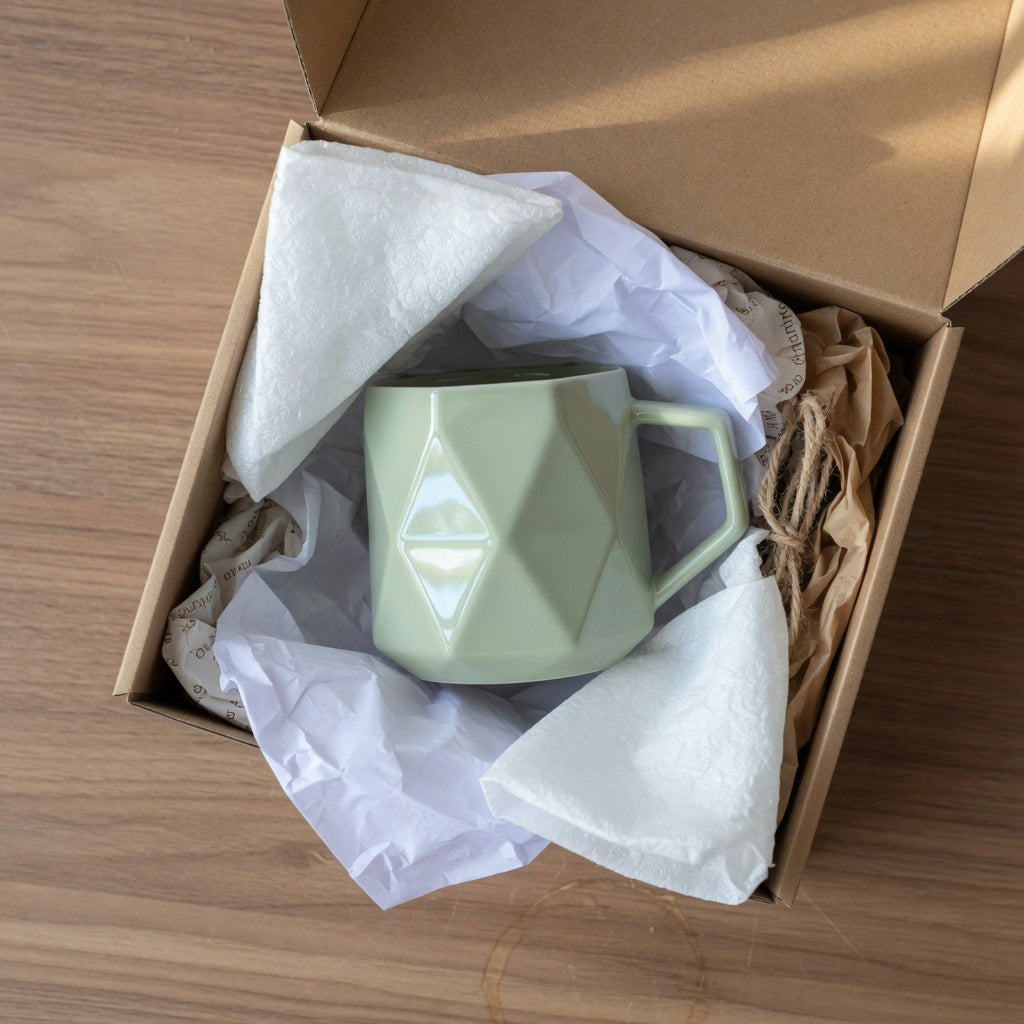
Gift buyers regularly email our store a screenshot of an angular, diamond-cut mug with the same confused question: which listing is this, and is it the right one? The confusion makes sense. A rhombus — the geometry-class name for a four-sided shape with equal sides, better known to most people as a diamond — shows up in mug design three separate ways, and each version makes a different gift. Pick the wrong one and you have bought a shelf ornament for a desk-mug person, or a sculptural piece for someone who microwaves everything at 6 a.m. This is the comparison our team walks rhombus mug gift shoppers through before checkout.
Rhombus, diamond, faceted, geometric: which mug are you actually buying?
Search results under this name mix three products that share nothing but shape vocabulary:
- Faceted-body mugs. The whole vessel is sculpted into angular planes, like folded paper or a cut gemstone. Sculptural and photogenic, and the most fragile of the three.
- Rhombus- or diamond-pattern prints. A conventional round body decorated with repeating diamond shapes. Drinks exactly like any standard mug; the geometry is surface-deep.
- Geometry-novelty prints. Formulas, puns, and math jokes aimed at teachers, students, and graduates. The rhombus is the theme, not the form.
The distinction matters because grip, chip risk, and personalization all shift with the style. Our own Rhombus Coffee Tea Mug is the ceramic version — the catalog lists it as a ceramic mug, and the current listing is the only place to confirm silhouette, finish, and capacity — so check there instead of trusting a screenshot saved weeks ago. To compare all three interpretations side by side, angular silhouettes and printed patterns alike sit in our unique coffee mugs collection.
How does an angular body change grip, sipping, and heat?
Faceted mugs carry real handling trade-offs, and almost no listing spells them out:
- Rim shape. A faceted rim meets your lip at subtle angles rather than one smooth curve. Most drinkers adjust within a few sips; a few never warm to it.
- Corner valleys. Interior corners pool the last of a drink and give drips somewhere to collect on the outside wall — a detail you notice the first time you set the mug down on a paper document.
- Handle clearance. On an angular body the handle has to clear the widest plane. Clearance that suits a medium hand can pinch larger ones — the same fit question we break down in our ball-handled mug comparison, worth reading before gifting someone with big hands.
- Heat and chips at the points. Thin corners shed warmth faster than a thick round wall, and they are the first place a knock leaves a chip.
"It looked incredible in the photos, but she says it's awkward to drink from." — the line we hear most often about faceted mugs, and the reason this guide exists.
Our honest recommendation: if your recipient wraps both hands around a mug and hates surprises, a faceted body is the risky choice. A diamond-pattern print on a classic round body delivers the look with none of the handling quirks. If the recipient cares more about how the mug photographs than how it drinks, reverse that advice.
Ceramic, glass, or steel: which material suits the recipient's routine?
Material decides heat retention, care requirements, and how the mug survives daily life:
| Material | Where it wins | Watch out for |
|---|---|---|
| Glazed ceramic | Retains heat well, feels substantial in the hand, suits faceted, printed, and novelty styles alike | Chips at points and edges; care depends on the glaze and any printed or metallic decor |
| Faceted glass | Showcases the geometry; light in the hand | Thin walls cool hot drinks faster and offer no insulation |
| Double-walled steel | Best heat retention; survives commutes and desk life | No microwave use; you cannot see how much coffee is left |
Glazed ceramic is where most gift purchases land, and the glaze — not the clay — is the surface that touches the drink. Regulators such as the FDA publish limits for leachable lead and cadmium in ceramic tableware, so buy from sellers who state their glazes are food-safe and properly fired, and think twice about unbranded imports that list no material details at all. One rule saves a lot of disappointed gift openings: metallic or gold-toned trim generally means no microwave, ever. If your recipient lives on reheated coffee, read the care section of the listing before buying — or choose a plain-glazed piece and skip the trim entirely.
Who is a rhombus mug gift actually for?
Matching style to recipient prevents most gift misses. In our store, these are the matches that come back as thank-you notes rather than return requests:
- Math and geometry teachers. Pattern and novelty prints read as an inside joke they will actually use. Desk-friendly capacity in the 11–15 oz range, common across most mug lines, suits long grading sessions.
- Architecture and engineering students and grads. The faceted body is the gift — it reads as design and earns shelf space in a first apartment or studio.
- Design-minded friends. Faceted or patterned, paired with good beans or loose tea. When the gift also has to earn its place in a new kitchen, our housewarming mug checklist covers the pairing questions.
- Wedding and new-home gifts. Buy two. Angular mugs look intentional as a pair on an open shelf; a single one can look like an accident.
Capacity is where gift buyers guess wrong most often. Espresso drinkers want roughly 6–8 oz; heavy coffee drinkers want 12 oz or more; tea and filter-coffee drinkers sit happily in the 10–12 oz middle. Confirm the stated capacity on the listing rather than eyeballing photos, and if sizing is your main worry, our companion post on rhombus mug size, grip, and care walks through it in detail.
Can you personalize a faceted mug? Less than you would hope
Personalization is where angular bodies quietly fail. A faceted surface breaks the printable area into small angled panels, so a wraparound name or date either distorts across the ridges or shrinks to a tiny mark on one facet. Busy diamond-pattern prints leave little blank space for anything custom. If personalization is central to the gift — an anniversary date, a teacher's name — a flat-bodied mug with the pattern confined to one side takes standard printing far better. Treat the faceted style as a form-first gift and the printed styles as the canvas for words.
What breaks in shipping, and how do we pack angular ceramics?
Angular ceramics fail at their points. A rounded mug spreads impact across a curve; a faceted body concentrates it on a single vertex. That is why the corners get their own protection:
- Fill the mug's interior with crumpled tissue so opposite walls cannot flex toward each other.
- Wrap the whole mug once, then add a second padded layer folded thickest over the corners.
- Place it in a snug inner box, then double-box with at least two inches of fill on all sides.
- Never let a corner touch cardboard directly — cardboard is the enemy of glaze points.
- If anything arrives chipped, photograph it in the packaging before unpacking; carriers want that evidence.
We pack angular ceramics with corner padding as standard, whether the mug ships to you or straight to the recipient. If you plan to re-gift or mail it on yourself, treat the corners as the fragile part and it will survive the trip. One habit worth stealing at home: when a faceted mug does go in the dishwasher, face its corners inward, away from rack tines and neighboring handles — or hand-wash it. Dishwasher racks chip corners the same way shipping boxes do.
Faceted vs. printed vs. novelty: the quick comparison
| Style | Drinks like | Chip risk | Personalizes | Best for |
|---|---|---|---|---|
| Faceted body | Different — angled rim, pooling corners | Highest, at the points | Poorly | Design lovers, decor-first gifts |
| Diamond-pattern print on round body | Exactly like a standard mug | Normal | Well, if blank panels exist | Most recipients |
| Geometry-novelty print | Standard | Normal | Sometimes — prints run busy | Teachers, grads, students |
Five checks before you buy a rhombus mug gift
- Confirm which of the three styles the listing actually shows — the silhouette, not just the name.
- Match the stated capacity to how the recipient actually drinks.
- Read the care details: microwave, dishwasher, and any metallic trim.
- Check handle-to-body clearance against the recipient's grip.
- Plan corner protection for any leg of the journey you are handling yourself.
When the sculptural ceramic route is the direction, start with the Rhombus Coffee Tea Mug listing and confirm finish and capacity on the page, then browse the unique coffee mugs collection to compare angular, patterned, and novelty silhouettes in one place. The right gift is often the same idea from a different angle — it just has to match the person holding it.
Frequently asked questions
Is a rhombus mug gift a good pick for a math teacher?
Yes — teachers are among the most reliable recipients for this style. Pattern or novelty prints read as an inside joke geometry and math teachers appreciate, and a desk-friendly capacity suits long grading sessions. Keep it durable: classroom mugs take knocks, so sturdy glazed ceramic beats anything precious.
Can rhombus mugs go in the microwave and dishwasher?
It depends on the specific mug's materials and decor, so check the care details on the listing rather than assuming. Two general rules hold across the category: metallic or gold-toned trim means no microwave, and intricate prints tend to fade faster in dishwashers than plain glazes. The Rhombus Coffee Tea Mug listing carries our current care guidance.
Do faceted mugs feel awkward to drink from?
They can, for some drinkers. Angled rims meet the lip differently than a smooth curve, interior corners pool the last of a drink, and handles on angular bodies need extra clearance for larger hands. If the recipient is particular about how a mug feels, a rhombus print on a round body is the safer gift.
What size should I buy if I am not sure how they drink?
Default to the middle: roughly 10–12 oz covers most tea and filter-coffee drinkers, while espresso drinkers want 6–8 oz and heavy coffee drinkers want 12 oz or more. The listing states the exact capacity of the mug you are buying, so confirm it at checkout instead of estimating from photos.
How do I ship a rhombus mug without it arriving chipped?
Protect the vertices, because that is where angular ceramics break. Stuff the interior with tissue, double-wrap with padding thickest over the corners, double-box with at least two inches of fill on all sides, and never let a corner rest against bare cardboard. Photograph any damage in the packaging before unpacking so the carrier can process a claim.
Read more
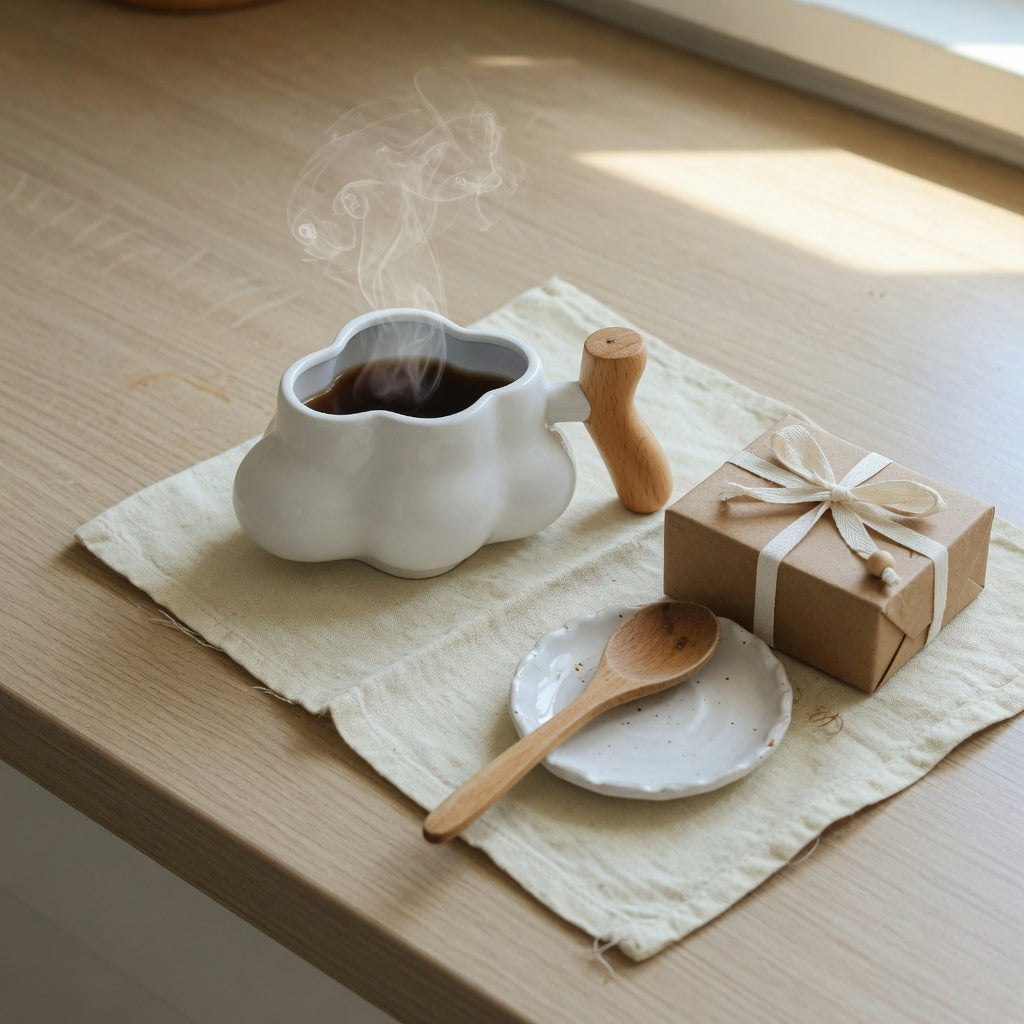
Wooden Handle Cloud Mug Gift Ideas: What Buyers Should Compare
A wooden handle cloud mug is a gift people remember — but the wood changes how you buy. Our team covers capacity checks, heat behavior, hand-wash care, handmade variation, and packaging, plus the r...
Read more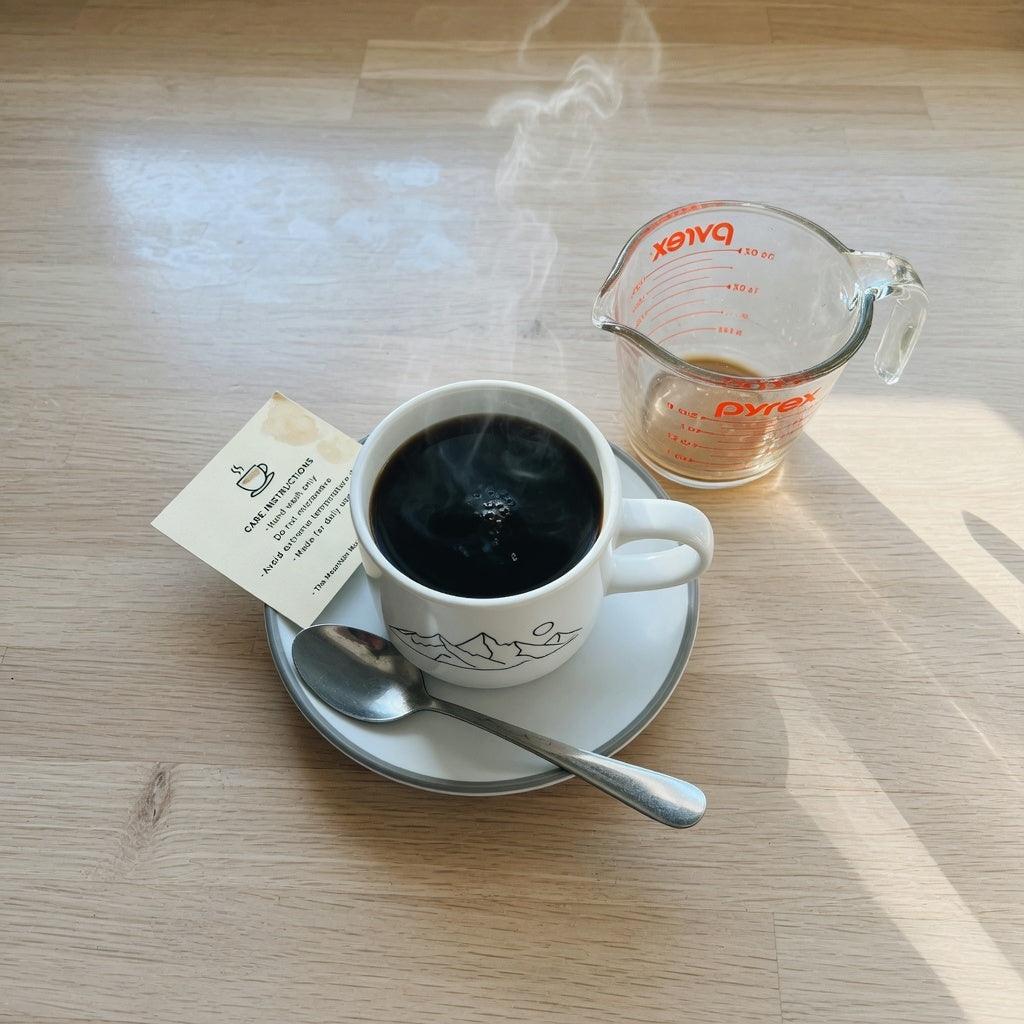
Great Mountain Coffee Mug Checklist: 10 Things to Compare First
The Great Mountain coffee mug checklist we walk customers through at our counter: match ounces to your real pour, verify glaze, microwave, and dishwasher claims on the listing, test the handle, and...
Read more
Leave a comment
This site is protected by hCaptcha and the hCaptcha Privacy Policy and Terms of Service apply.