
Rhombus Ceramic Tea Cup: What Buyers Should Compare First
Reading time: about 8 minutes
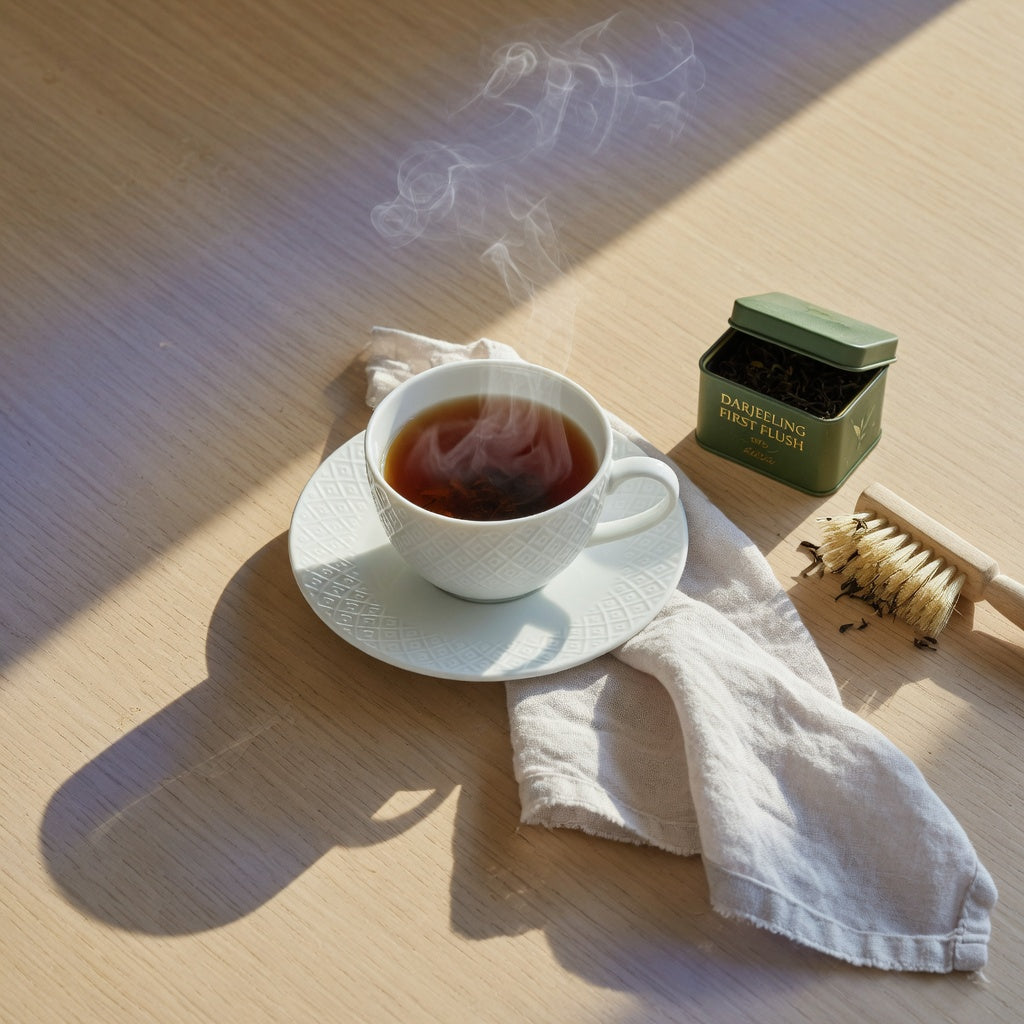
Run a thumb down the side of a rhombus ceramic tea cup and you feel the pattern before your eyes catch it. That raised diamond relief is the whole reason people pick the style up — and it is exactly the detail most product pages describe least.
We unpack and shelve geometric drinkware every week at CoffeifyMug, and rhombus-patterned pieces are among the first cups customers turn over in their hands. The same questions follow us from the counter to the inbox: how much does it actually hold, will the grooves stain, is the glaze food-safe, and will it survive the dishwasher. This guide is our answer, comparison by comparison, trade-offs included.
Three different cups hide behind the name rhombus
Search for a diamond-pattern cup and three distinct products share the label:
- Design-led porcelain relief cups. The reference point is Lyngby Porcelæn's Rhombe line, built on a Danish archive pattern from 1961 and reinterpreted as three-dimensional relief. Typically white porcelain, often sold with a matching saucer, in sizes listed around 8.1 oz (24 cl) and 13.2 oz (39 cl).
- Geometric ceramic and bone-china mugs. Mostly 12 oz territory, with the rhombus embossed or printed. Listings lean on words like lightweight and chip-resistant — worth testing against real buyer reviews rather than taking at face value.
- Gongfu tasting bowls. Around 100 ml (roughly 3.4 oz), sometimes in an ice-cracked glaze, made for short repeated steeps in Chinese tea service rather than a Western mug of tea.
Which of the three you are actually looking at changes everything downstream — capacity, care, even whether a handle exists. Read the oz or cl figure in a title before anything else. The rhombus-patterned pieces we carry, our own rhombus coffee tea mug among them, sit together in the unique coffee mugs collection, and the sections below cover how to tell them apart.
How much tea a rhombus cup should hold, matched to your refill habits
| Cup style | Typical listed capacity | Fits best |
|---|---|---|
| Porcelain relief cup with saucer | 8.1 oz (24 cl) | Table service, shorter brews, guests |
| Large cup-and-saucer set | 13.2 oz (39 cl) | Big-mug drinkers who still want a saucer |
| Embossed rhombus mug | Around 12 oz | One cup for desk tea or coffee |
| Gongfu rhombus bowl | 100 ml (3.4 oz) | Multiple short steeps, tasting flights |
Two details trip buyers up. Listed capacity is usually measured to the brim, so usable capacity runs a few sips lower once you account for milk and the walk from kettle to desk. And sellers round differently: a 13 oz claim and a 39 cl claim describe the same cup, so compare like with like.
If your habit is a 350 ml mug that lasts half the workday, an 8 oz relief cup will feel small — that is honesty, not a flaw. It is a different ritual. For that larger format we would point you to our 350 ml ceramic tea mug comparison instead.
Does the diamond relief improve your grip or just collect tannins?
Both, and we would rather say so up front. The texture earns its keep with cold hands in winter and for anyone who has watched a fully glazed mug slide off a wet dish rack — fingers get somewhere to sit.
The bill arrives with black tea. Tannins settle into the recesses, and a neglected cup shows a faint amber diamond map within a few weeks. Three habits prevent it:
- Rinse within an hour of finishing your tea. Dried tannin is what actually bonds.
- Keep a soft-bristle brush at the sink and give the relief a quick pass, not just the rim.
- When staining sets in anyway, a baking-soda paste left for ten minutes lifts most of it without scouring the glaze.
Dishwashers need one extra look: relief edges are the first place chips appear when cups rattle in a crowded rack, so a spaced-out spot on the top rack matters more than it does for smooth mugs. Care rules also vary by body and glaze — some porcelain relief listings cap wash temperatures around 130°F (54°C) — so read the icons on the exact listing rather than assuming the category behaves one way. And if your routine is pour, forget, wash tomorrow, a smooth-glazed cup will suit you better than grooved relief. We run the same checks in our pleated ceramic tea cup comparison.
Porcelain, bone china, or stoneware — matching the body to your sink and your sipping speed
- Porcelain. Hard, dense, nonporous. Relief reads crisply, the lip feels thin, and the body shrugs off knocks until it fails — at which point it fails cleanly.
- Bone china. The lightest option, translucent at the rim, pleasant for long slow sips. Some listings warn against microwave use, so confirm piece by piece.
- Stoneware. Heaviest and most forgiving in a busy dishwasher, with chunkier relief. Heat lingers, which slow drinkers love and impatient ones resent.
Wall thickness changes the sip more than buyers expect. Thin porcelain transfers heat quickly, so tea is drinkable sooner but cools faster; thick stoneware does the opposite. Match the body to how long you actually take over a cup, not to how you wish you drank.
Glaze safety: the check that matters more than the pattern
Ceramic is only as food-safe as its glaze. The FDA's leach standard for ceramic cups and mugs sets the action level for lead at 0.5 micrograms per milliliter of leaching solution, and the agency has written directly to retailers and distributors about lead in certain imported cookware. Hot tea raises the stakes for a simple reason: it sits in the cup for twenty minutes, not two seconds.
In practice:
- Buy pieces sold explicitly as drinkware, never items labeled decorative or ornamental.
- Treat unlabeled vintage or handmade cups as display pieces unless the seller documents a food-safe glaze.
- Read any California Prop 65 note in a listing instead of scrolling past it.
Porcelain from established makers is produced against these standards; anonymous marketplace listings vary widely. That gap is why we would rather ship a cup with a traceable listing and named care instructions than one with a stock photo and no maker behind it.
Cup alone, saucer set, or gift box?
A rhombus cup with a matching saucer is practically a different product. The saucer turns it into table service — somewhere for the spoon and the biscuit, no ring left on the side table. Without one, it is a desk mug: perfectly good, just a different gift and a different shelf.
A note from our packing table for gift buyers: relief texture stiffens a cup wall, so patterned cups handle transit better than their thinness suggests, but delicate bone-china sets still deserve double-boxing. Ask the saucer question before checkout, too — it is one of the most common messages in our inbox, and the answer varies listing to listing. Buying for someone else entirely? Our best ceramic mug for a tea and coffee gift guide works through the same fit questions from the receiving end.
Which rhombus ceramic tea cup fits your routine
Map the mornings first, then choose:
- Desk drinker, one refill per task. A roughly 12 oz embossed mug covers tea or coffee without a second trip to the kettle.
- Weekend host. A porcelain relief cup with saucer in the 8 to 13 oz range; the saucer does half the hosting.
- Gongfu or oolong brewer. A 100 ml rhombus bowl. Anything larger wrecks the multiple-steep rhythm.
- Shelf stylist. Prioritize crisp relief and a clean glaze over raw capacity.
Our own rhombus coffee tea mug is the piece we hand most often to buyers in the first camp. Before ordering, confirm three details on its current listing, because they vary most across this category: exact capacity, whether the pattern is raised or printed, and the care icons. Relief-patterned mugs span roughly 8 to 13 oz across the category, and specs genuinely differ between listings — we would rather you check than take our word for it.
Frequently asked questions
Are rhombus ceramic tea cups dishwasher and microwave safe?
Many porcelain relief cups are listed as dishwasher-safe, and some listings cap wash temperatures around 130°F (54°C). Microwave answers vary more, especially for bone china and any piece with metallic decoration. Check the care icons on the exact listing rather than assuming the whole category behaves one way.
What size rhombus ceramic tea cup is right for everyday tea?
For a Western mug of tea, 8 to 13 oz covers it. Around 8 oz suits short brews and table service; 12 to 13 oz fits a fuller mug with room for milk. Keep the 100 ml bowls for gongfu-style repeated steeps.
Will the diamond texture stain over time?
The grooves hold tannins, so black tea leaves a faint pattern within weeks if the cup is only rinsed. A prompt rinse after each use plus an occasional baking-soda paste keeps relief clean. Skip scouring pads, which can dull the glaze.
Is a rhombus ceramic tea cup safe for hot drinks?
Safety depends on the glaze, not the shape. The FDA's action level for lead leaching from ceramic cups and mugs is 0.5 micrograms per milliliter of leaching solution, so buy cups explicitly labeled as drinkware and keep anything sold as decorative-only off the tea tray.
Rhombus tea cup or rhombus coffee mug — which should I buy?
The pattern is shared; capacity and companions are the real differences. Tea cups trend smaller and often pair with a saucer, while mugs run larger and stand alone. Choose by how much you pour and whether a saucer suits your table.
The 60-second listing check we run before recommending any cup
Hold any listing — ours included — against these six lines:
- Capacity in oz or cl, and whether it is measured to the brim
- Body material: porcelain, bone china or stoneware
- Care icons: dishwasher, microwave, any temperature cap
- Explicit drinkware labeling, not decorative-only
- Included pieces: saucer, spoon, gift box
- Relief depth, because what looks tactile in photos will meet your sponge every evening
Six honest answers and you can order with confidence. Start with our rhombus coffee tea mug, or line a few textures up side by side in the unique coffee mugs collection and see which diamond your thumb likes best.
Read more

Coffee Tea Mug for Coffee Lovers Gift: What to Compare Before You Buy
A practical comparison for the coffee tea mug for coffee lovers gift decision: capacity by brew, material trade-offs, handle and glaze checks, plus the safety limits worth knowing — written by the ...
Read more
Golden Waves Coffee Mug: 6 Things to Compare Before Buying
Two different products sell as the golden waves coffee mug: printed ceramic art mugs and hand-blown sunset glass. This store-floor guide compares true ounce capacity, gold-trim microwave safety, di...
Read more
Leave a comment
This site is protected by hCaptcha and the hCaptcha Privacy Policy and Terms of Service apply.