

Pleated Ceramic Tea Cup: Compare Size, Glaze, Grip and Care
Reading time: about 10 minutes
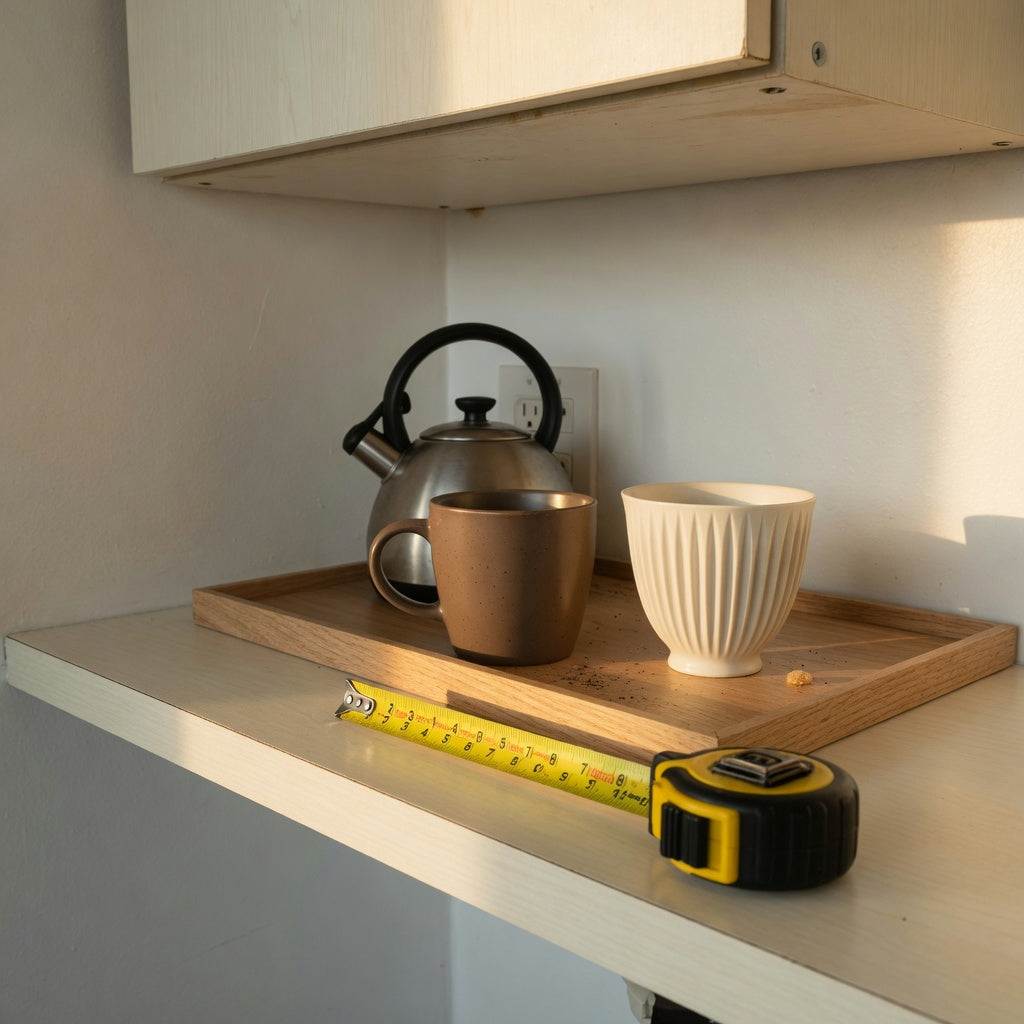
Set a folded cup beside a kettle on a narrow guest-room tray and the buying mistakes show up fast. The handle may crowd the teapot, the stated capacity may leave no comfortable headspace, and a drip of black tea can dry in a groove near the rim. A pleated ceramic tea cup should be judged as drinkware first and decor second. In our store, we compare usable volume, body type, interior glaze, rim finish, foot ring, fold depth, and care directions before the styling wins us over.
The pleats can create a pleasant finger rest and make a simple tea service feel intentional. They can also reduce stackability and add work at the sink. The useful comparison is not pleated versus plain in the abstract; it is pleated versus the cup that fits your actual pour, storage, and washing routine.
Porcelain ribs or hand-pinched stoneware: which construction suits you?
Ceramic is an umbrella category, not a complete material specification. Pleated cups commonly appear as crisp, repeated ribs in porcelain or softer, irregular folds in stoneware. Either body can work for tea, but the material name alone does not prove that a specific cup is food-safe, dishwasher-safe, microwave-safe, or oven-safe.
| Body or finish | Common visual and handling traits | Trade-off to inspect |
|---|---|---|
| Porcelain with regular ribs | Finer-looking walls and sharply repeated pleats | Thin rims and projecting ridges need space in storage |
| Stoneware with pinched folds | A weightier hand and more variation between folds | Check overall weight and glaze buildup in deep valleys |
| Unspecified ceramic | The style may be clear while the body and firing are not | Do not infer care or food use from appearance alone |
These are tendencies, not guarantees. Vitrification describes how dense a ceramic body becomes during firing, but shoppers rarely receive detailed firing data. We rely on the current food-contact and care statements, then inspect the cup itself. A glossy exterior does not compensate for a rough rim, bare interior patch, or unstable base.
Does the pleated ceramic tea cup hold your real serving size?
Capacity is where attractive tea cups often disappoint. Ask whether the listed figure is brim capacity or a comfortable fill with room to carry the cup. If a listing says 5 ounces, measure 5 fluid ounces into a cup you already use. Then decide how much headspace you need for milk, lemon, an infuser, or the walk from the kitchen to your desk.
- Short tea service: A compact cup can suit repeated pours, provided it is comfortable to hold when full.
- Milk tea or morning coffee: Leave enough headspace to prevent drips from running into the folds.
- Basket infuser: Check the interior diameter and depth, not just the listed ounces or milliliters.
- Guest-room tray: Measure the full footprint, including the handle and saucer, beside the kettle and condiments.
If your routine centers on a deliberate tea or coffee serving, review the current capacity, dimensions, photos, and care notes for our pleated coffee and tea cup. We do not assume those details from the shape; the live listing should decide the fit. If you are buying for someone else, our gift mug collection lets you compare shapes after considering the recipient's pour size and cleanup habits.
Do the pleats improve grip without making the rim awkward?
Pleats are often described as grippy, but texture is not an ergonomic guarantee. A shallow, glossy rib can still feel slick when wet, while a deep hand-pinched fold may press into the fingertips. We check where the ridges land during a normal hold, not just how dramatic they look in a product photo.
- Rim: Folds that continue to the lip can produce an uneven sipping edge. Look for a smooth, continuous drinking surface.
- Handle clearance: If there is a handle, check finger space and whether your knuckles will rest against the hot cup wall.
- Wall temperature: A handleless cup may become uncomfortable with very hot tea. A saucer or handled design can be more practical.
- Fold spacing: Texture that is too tight for fingertips may add cleaning work without improving your hold.
We have not found independent ergonomic evidence proving that pleats are easier for every hand. Someone who prefers one-handed desk drinking, has limited grip strength, or dislikes holding warm ceramic directly may be happier with a conventional handled mug.
What do the glaze, rim, and foot ring reveal about food use?
The exterior pattern gets the photos, but the food-contact surface deserves closer inspection. We favor a continuous, easy-to-clean interior glaze and a rim with no chips, rough seams, or exposed decoration. An unglazed foot ring can be normal; it should sit evenly and feel smooth enough not to scratch a wooden or lacquered tray.
- Pinholes: These are tiny pits in the glaze. Pits inside the bowl are harder to clean than minor exterior marks.
- Crazing: This is a network of fine glaze cracks. It may be an intentional crackle effect, but new or unexpected lines deserve guidance from the seller.
- Crawling or bare spots: The glaze has pulled away and exposed the body. Bare interior areas need a clear food-use explanation.
- Glaze pooling: Extra color in the fold valleys may be decorative, but it should not create sharp drips or a rough drinking edge.
The FDA guidance on lead in pottery and ceramics lists 0.5 micrograms per milliliter (µg/mL) of leaching solution as the action level for ceramic cups and mugs, based on any one of six units tested using the specified ASTM/AOAC methods. A lead-free statement on a product page is a claim, not the same as a product-specific laboratory report. If documentation matters to you, ask what was tested and whether the evidence applies to the exact item.
We have not found comparative laboratory data showing that exterior pleats alone change ceramic leaching. Glaze formulation, firing, and the condition of the food-contact surface are more useful buying variables than texture by itself.
Can your dishwasher and sink handle deep folds?
Dishwasher-safe, microwave-safe, and oven-safe are three separate claims. Check each one on the current product page. Metallic decoration requires explicit microwave guidance, and an ordinary tea cup should not be treated as bakeware unless the manufacturer specifically permits oven use.
- Rinse tea and coffee drips before they dry in grooves near the rim.
- Use mild dish soap with a soft, narrow nylon brush or folded cloth, moving in the direction of the pleats.
- If the folds continue inside the bowl, inspect the valleys after washing. Interior corrugation needs more attention than exterior texture.
- Give the cup space in the dishwasher. Do not wedge its rim against another mug or rest a tine against a thin ridge.
- Avoid abrasive pads and abrupt temperature changes unless the maker's directions permit them. Dry the foot before putting the cup away.
Exterior folds normally collect drips and dust rather than the drink itself. The practical issue is access for washing, not a proven hygiene penalty from texture. Even so, a pleated cup is not the lowest-maintenance option for a crowded office sink, tightly packed dishwasher, or household that leaves unfinished tea overnight.
Guest-room tray, office desk, or gift box: which shape fits?
We make better recommendations after the setting is clear. On a guest tray, we measure the complete footprint so the cup does not collide with the kettle. At a desk, refill size, one-handed handling, cabinet space, and the communal dishwasher matter more than presentation.
| Reader situation | Better starting point | Why it fits | Verify before buying |
|---|---|---|---|
| Quiet guest-room or afternoon tea tray | Pleated cup | Distinct texture makes a small service feel considered | Comfortable fill, complete footprint, rim, and care |
| Daily office coffee and a crowded cabinet | Round coffee and tea mug | A round profile may be simpler to place, store, and wipe than deep folds | Current capacity, handle clearance, dimensions, and care |
| Gift for someone who enjoys expressive tableware | Pleated style | The tactile surface feels more distinctive during unboxing and serving | Recipient's preferred size and willingness to clean grooves |
| Gift for an unknown daily routine | Compare several silhouettes | A practical shape may get more use than the most decorative one | Food-use statement, care, storage, and usual drink |
A pleated piece is especially compelling for someone who enjoys setting a tray, serving measured pours, and noticing tactile details. It is not our first recommendation for a commuter who needs a fitted lid, a camper, a young child, or anyone expecting drop resistance. Folds may help with finger placement, but they do not make ceramic impact-proof.
What should you inspect during the first unboxing and pour?
Our team uses a flat counter and side light rather than judging a new cup from arm's length. Intentional asymmetry can be part of a hand-finished design; instability, sharpness, flaking glaze, and hairline cracks are not decorative features.
- Inspect the rim under side light for chips, cracks, rough seams, or sharp glaze drips.
- Set the empty cup on two flat surfaces. Press gently at opposite sides to check for excessive rocking.
- Look inside for flaking, deep pinholes, or unexplained bare patches. Do not use a damaged cup for drinks.
- Wash it according to the listing, then add your normal pour within the stated use directions.
- Check the sipping edge, grip, handle clearance, drips, and comfortable capacity before discarding the packaging.
Inspect the foot after drying as well. A rough base can mark wood, and trapped moisture around the foot can leave a ring on some surfaces. A saucer or coaster helps, but a stable, properly finished base is the better starting point.
Frequently asked questions
Is a pleated ceramic tea cup harder to clean than a smooth mug?
It can be, especially if the folds are deep, reach close to the rim, or continue inside the cup. Prompt rinsing, mild soap, and a soft narrow brush usually handle normal drips; follow the maker's directions for stains and avoid unapproved abrasives.
Are pleated ceramic cups dishwasher and microwave safe?
Some are and some are not. Check separate dishwasher and microwave statements for the exact cup because the body, glaze, decoration, and construction all affect care. Do not infer compatibility from the words porcelain or stoneware alone.
Is porcelain better than stoneware for a pleated tea cup?
Neither is automatically better. Porcelain often suits crisp, regular pleats, while stoneware often suits weightier, hand-pinched forms. Compare the exact cup's rim, weight, glaze, capacity, and care rather than choosing by material name alone.
What capacity works for a guest-room tea tray?
Start with the amount you expect a guest to pour, then leave enough headspace for carrying. Measure the tray with the kettle, spoon, sweetener, handle, and saucer in place, and check the cup's outer dimensions as carefully as its listed capacity.
How can I tell if a pleated cup has a food-safe glaze?
Look for a clear statement that the cup is intended for food or drink, then inspect the interior and rim for intact glaze. If the seller only describes the piece as decorative or cannot answer about food-contact use, choose another cup rather than relying on appearance alone.
Use this 60-second comparison before adding to cart
- The body and intended food use are clearly identified.
- The comfortable pour fits your drink with headspace left over.
- The rim looks smooth, the foot looks stable, and the interior is easy to inspect.
- Dishwasher, microwave, and oven directions match your routine.
- The fold depth suits both your grip and your cleaning tools.
- The complete footprint fits its destination: guest tray, desk, shelf, or gift box.
If all six checks favor texture and a more deliberate serving ritual, the pleated ceramic tea cup is likely the better fit. If quick cleanup and straightforward storage win, choose the simpler profile. For a recipient whose routine is still unclear, compare both directions in our coffee mugs for gifts collection and select the shape they will wash and use, not simply the one that photographs best.
More from our blog
Read more
Best Ceramic Mug for Apartment Counter: 7 Fit Checks
A compact mug can still fail if its handle flares, base rocks, or care instructions do not match your routine. Compare seven practical fit, safety, and storage checks before buying for a small apar...
Read more
Emerald Green Ceramic Mug: Compare Glaze, Size and Care
An emerald mug can look jewel-bright online yet nearly black under warm kitchen lights. Compare glaze variation, usable capacity, handle comfort, ceramic body, safety wording, and care before choos...
Read more
Leave a comment
This site is protected by hCaptcha and the hCaptcha Privacy Policy and Terms of Service apply.