



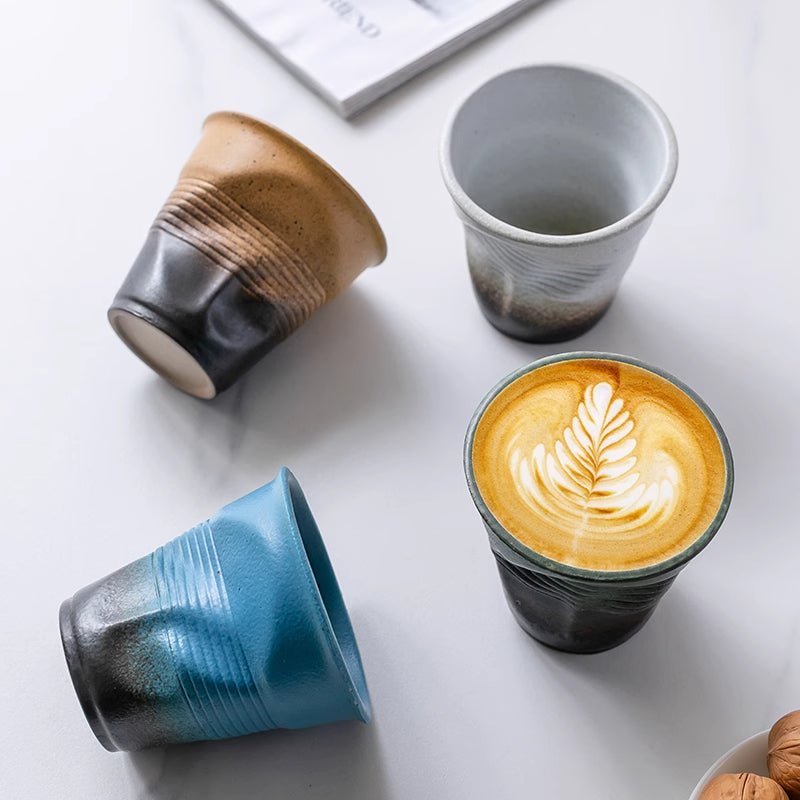
Pottery Tea Cups Replacement Purchase: Practical Checklist
Reading time: about 11 minutes
What actually failed on the cup you are replacing?
The chip is almost always on the rim, right where your lip lands. One morning the cup is fine; by evening there is a rough spot that catches, or a web of fine lines across the bottom glaze that were not there in spring. That is the moment a pottery tea cup becomes a replacement purchase, and a pottery tea cups replacement purchase practical purchase checklist starts with that damage rather than with a photo of a pretty cup.
You already know things a first-time buyer does not. How much tea you actually pour. Whether the cup travels to a desk or gets drunk standing at the counter. Whether it survives your dishwasher, and which shelf it has to fit back into. In our store, the two details we end up confirming most often are listed capacity and how the handle sits in the hand. Pattern is almost never the deciding question, even though it is the one shoppers open with.
So treat this as a repair job. Name the failure, then buy the cup that fixes it:
- Rim chip or rough lip. Usually stacking damage or a knock against the tap. What matters on the replacement is glaze coverage over the lip, and whether the rim is glazed at all.
- Crackle glaze versus a real crack. Intentional crackle is a decorative finish inside an otherwise intact glaze. A line you can feel with a fingernail, or one that runs through the wall, is damage. If the old cup crazed within a few months, buying from the same line again without asking about the glaze repeats the problem.
- Bare clay where your mouth goes. Common on rustic pieces, rare on factory ware. If an unglazed patch always bothered you, that is a reason to switch, not to repeat.
- A handle that ran hot or cramped your fingers. If you have ever carried the cup wrapped in a tea towel, the handle was the problem, not your grip.
- Wrong capacity. A small cup that felt charming in the shop can feel like a chore at 7 a.m. if you drink two mugs before leaving the house.
- Metallic trim. A gold or platinum line rules out the microwave permanently, however good the cup looks on the shelf.
| What you saw on the old cup | What to confirm on the replacement |
|---|---|
| Rim chip or rough lip | Glaze coverage over the lip, and whether the rim is glazed or left bare |
| Fine crackle or visible crazing | Whether the crackle is intentional, and how the maker describes the fired glaze |
| Handle too hot or too tight | Handle opening and wall thickness, not just overall height |
| Constant refilling | Listed capacity in millilitres, compared with what you actually pour |
| Microwave or dishwasher trouble | Written care status from the seller, plus whether any decoration is metallic |
| Faded, unmarked decorative piece | Food-use labeling and origin, especially on antique or market finds |
What belongs on a pottery tea cups replacement purchase practical purchase checklist?
Run these eight steps in order before you add anything to a cart. It takes about three minutes and it is the difference between one replacement and three.
- Write the failure in one sentence. Chip, crack, heat, size, or care. Everything below flows from that line.
- Confirm the surfaces that touch tea and your lips are glazed and intact. If listing photos do not show the inside of the cup, ask for one.
- Compare listed capacity with your real pour. If you habitually fill close to the brim, allow roughly 30 percent headroom so the tea does not slosh when you walk.
- Look at the foot ring and the handle opening. A wobbly foot or an opening narrower than two fingers is a daily annoyance, not a small one.
- Read the label language. Decorative ceramicware that looks suitable for food is treated as foodware unless it is permanently marked as not for food use, so a vague listing is a red flag rather than a neutral one.
- Get dishwasher and microwave status in writing for that exact cup. Not the photo caption. Not a review from someone who bought a different piece.
- Decide daily use or display. Antique, heavily worn, or brightly decorated orange, red, or yellow pieces are the ones regulators flag as higher concern; they make better shelf pieces than everyday cups.
- Buy one before you buy four. A single cup tells you how the handle feels and how hot the rim gets with a full pour.
Browsing our collection of unique coffee mugs and tea cups with capacity in front of you turns step three into a lookup instead of a guess.
How do you judge the glaze on a cup you cannot hold yet?
This is where most replacement purchases go wrong, because the buyer assumes glazed means safe and the listing says food safe with nothing behind it. Federal guidance is more specific than either position.
Lead can be present in the glazes or decorations on some traditional pottery, and a piece that is not manufactured and fired properly can leach lead into food and drink; fired at the correct temperature for the correct time, essentially all of that lead is bound into the glaze. That is why the same visual style can be fine from one maker and a genuine problem from another. It is also why washing, boiling, or scrubbing never removes lead from a piece once it is there.
The numbers are worth knowing because they set the bar a seller is working to. Under FDA CPG Sec. 545.450, cups and mugs carry a lead guideline of 0.5 micrograms per millilitre of leaching solution in any one of six units, tested using ASTM C738 or the specified analytical methods. Cadmium is regulated separately under CPG Sec. 545.400, at 0.5 micrograms per millilitre for small hollowware under 1.1 litre. Ceramicware containing lead can legally be sold in the United States if it is properly made, so the presence of a rule is not the same as a guarantee about any individual cup.
The FDA's higher-concern list is worth memorizing, because it describes exactly the cups that travel well as gifts and souvenirs: glazed ware with a crude appearance or irregular shape, antiques, damaged or excessively worn pieces, flea-market and street-vendor finds with no identifiable maker, and bright orange, red, or yellow decoration. Everyday commercial factory pottery is described as much less likely to have lead problems. A CDC report on a New York City family linked elevated blood lead levels to traditional glazed ceramic ware used for cooking, storing meals, and making coffee, with levels falling after the family stopped using it.
If a cup is sold as decorative but looks like something you would drink from, treat it as drinkware until the seller shows otherwise. Permanent not-for-food-use marking is what separates the two categories.
Two practical notes follow. The term "Lead Free" carries rules: ceramicware showing extractable lead under the CPG test method should not be labeled that way, and using the term on such ware may be considered false or misleading. Second, our ceramic cups are described by body material, listed capacity, and form — we do not publish finished-piece leach test reports. If a test result is a dealbreaker for you, ask before ordering and we will tell you exactly what we do and do not have on file.
170 ml, 200 ml, or 250 ml: which capacity replaces the one you lost?
Capacity is the fastest way to repeat or avoid your last mistake. Here is how the three sizes we carry map to real replacement situations.
| Cup | Listed capacity | Replacement situation it suits | Where it falls short |
|---|---|---|---|
| Retro Coffee & Tea Cup | 170 ml | Small, frequent pours: green tea, oolong, or a short after-dinner cup | Constant refilling if you drink large mugs, and little headroom for a full pour |
| Pleated Coffee & Tea Cup | 200 ml | Mid-size daily tea where you want a defined shape in the hand | Still short of a standard coffee mug if that is what you are replacing |
| Ball Handle Coffee & Tea Mug | 250 ml | Replacing a standard handled cup; the closest match to everyday size | More liquid means more heat mass, so a full pour stays hot longer and carries more weight in the hand |
For scale: the FDA defines ceramic cups and mugs as small hollowware for hot beverages that normally, though not exclusively, holds about 240 ml and is manufactured with a handle. If your old cup sat in that range, the 250 ml ball handle is the honest like-for-like swap. The 170 ml is a deliberate downsize, not a replacement — a good choice if your last cup was too big, a bad one if you were already refilling it twice an hour.
Will the handle and rim stay comfortable with a hot pour?
Photos flatter cups. They do not show whether your knuckle clears the wall when you lift a full cup, or whether the rim is thin enough to drink from without tipping your head back.
- Handle opening. You want room for at least two fingers without pressing skin against the body of the cup. A ball-style handle reads generous in photos, but confirm the actual opening in the listing or ask us directly.
- Wall thickness. Thick walls hold heat longer and pass it to your hand more slowly. Thin walls feel elegant and get hot fast — a real consideration for handleless cups.
- Rim profile. A rolled or rounded rim is easier to drink from than a thin, sharp edge, especially on a cup with no handle.
- Fill line. A 250 ml cup filled to the brim behaves very differently from the same cup filled to 200 ml.
Here is the trade-off we will not paper over: smaller cups are more comfortable to hold and easier to drink from, but they suit a style of drinking that involves sitting down. If you carry a cup between rooms all morning, choose the larger size and accept the extra weight.
Dishwasher, microwave, and thermal shock: what to settle before the first wash?
Care guidance for pottery is maker-specific. There is no single public standard we can point to that settles it for every cup, so treat it as a question with an answer attached to the specific listing.
- Ask the seller directly about dishwasher and microwave use for that exact cup, and keep the reply somewhere you will find it.
- Assume anything metallic stays out of the microwave. Gold, platinum, and lustre decoration are not microwave-safe regardless of what the body is made of.
- Avoid thermal shock. Do not pour boiling water into a cup pulled from a cold cupboard, and do not set a hot cup down on a cold stone counter.
- Hand wash the first one. A single hand wash tells you whether the glaze feels slick and intact and whether the foot ring traps water.
- Retire damaged pieces. A cup with a felt crack, a chipped lip, or a warning label belongs on a shelf, not in daily rotation.
If your household runs everything through the dishwasher and you do not want to think about it, say so before ordering. It is a legitimate filter, and we would rather lose a sale than send a cup into a cycle it will not survive.
Frequently asked questions
What should I check first on a pottery tea cups replacement purchase practical purchase checklist?
Start with the failure that retired the old cup, then confirm two things on the replacement: that the surfaces touching tea and your lips are glazed and intact, and that the listed capacity in millilitres matches what you actually pour. Everything else — handle, foot, decoration, care — is secondary to those two.
Can I drink tea from a decorative pottery cup that has no food-use label?
Only once the seller confirms it was made for food use. Decorative ceramicware that looks suitable for food is regulated as foodware unless it is permanently marked as not for food use, for example with a warning or a hole bored through the food-contact surface. An unmarked market find is a display piece until proven otherwise.
Is a crazed glaze on a pottery tea cup still safe to drink from?
It depends on whether the lines are an intentional crackle finish inside an intact glaze or a break that reaches the body of the cup. If you can feel a line with a fingernail, or the surface looks dull or stained in the cracks, retire the cup from hot drinks and use it for something else.
Will a 170 ml cup be enough for a normal cup of tea?
For small, frequent pours, yes. For a mug-sized serving, no. The FDA describes typical ceramic cups and mugs as holding about 240 ml, so a 170 ml cup is noticeably smaller and you will refill it more often — which is fine for gongfu-style tea and frustrating for a first-thing-in-the-morning brew.
Are pottery tea cups dishwasher safe?
Some are and some are not, and the answer usually sits with the maker rather than the material. Detergent and repeated hot cycles are harder on crackle glazes and bare clay than on a fully glazed surface. Confirm it cup by cup, and hand wash anything you are unsure about.
Start with the failure, not the photo. If the old cup chipped at the lip, look for full glaze coverage over the rim. If it went cold too fast, the 250 ml ball handle mug is the closest like-for-like swap. If it was simply too big for how you drink tea, the 170 ml retro cup is the deliberate downsize, and the 200 ml pleated cup sits between them. Work through the full unique coffee mugs collection with this checklist open, and settle the two unknowns — appliance care and lip glaze — in writing before you check out.
Ready to pick your mug? Two ways to save on today's order:
Ordering 1–3 mugs? Get an extra 10% off your 1st order with code 10_OFF Apply 10% Off & Shop Wooden-Handle Mugs →
Gifting 4+ mugs? Buy 3, Get the 4th Free applies automatically at checkout (no code needed; offers do not stack) · Free standard shipping (Nov pre-Christmas delivery: 15–20 calendar days US) · Free replacement if chipped in transit.
Popular mug buying guides: Ceramic Tea Cups & Infuser Mugs · Ceramic Mugs with Lids Compared · Wooden-Handle Tea Infuser Mugs Compared · Christmas & Secret Santa Mugs 2026 · Espresso & Cortado Cups Guide · Cup & Saucer Gift Sets · All 25 Mugs Spec Table · Mug Size Guide · Shipping & Promo FAQ
FIRST ORDER 10% OFF (CODE: 10_OFF) · OR BUY 3, GET THE 4TH FREE


Read more
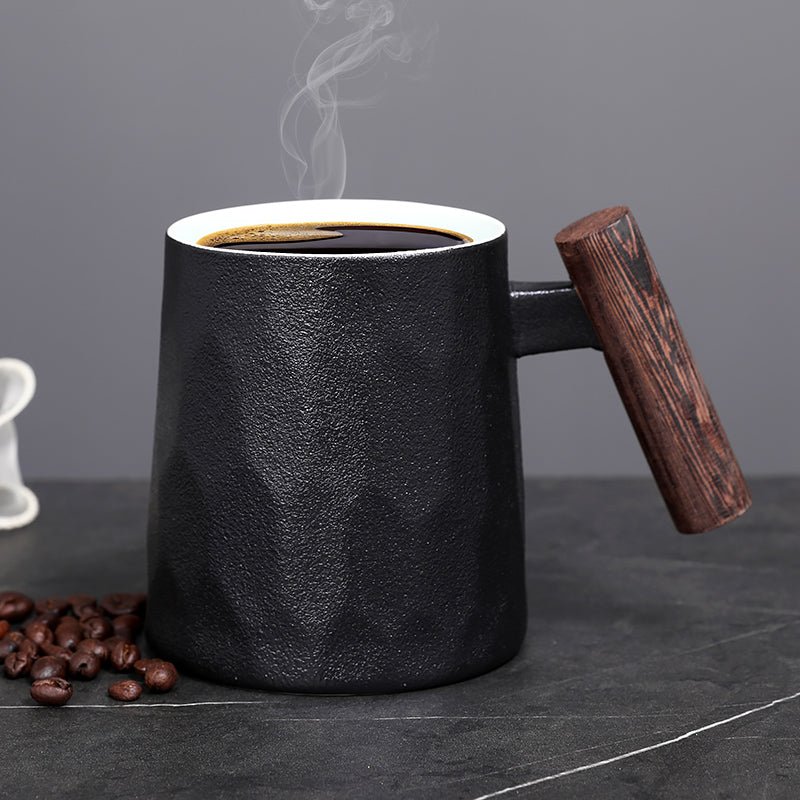
Coffee Mugs With Big Handles: A Replacement Purchase Checklist
A replacement-focused walkthrough for coffee mugs with big handles: how to judge finger clearance without a measuring tape, weigh loop size against filled weight, and pick between our 250 ml, 400 m...
Read more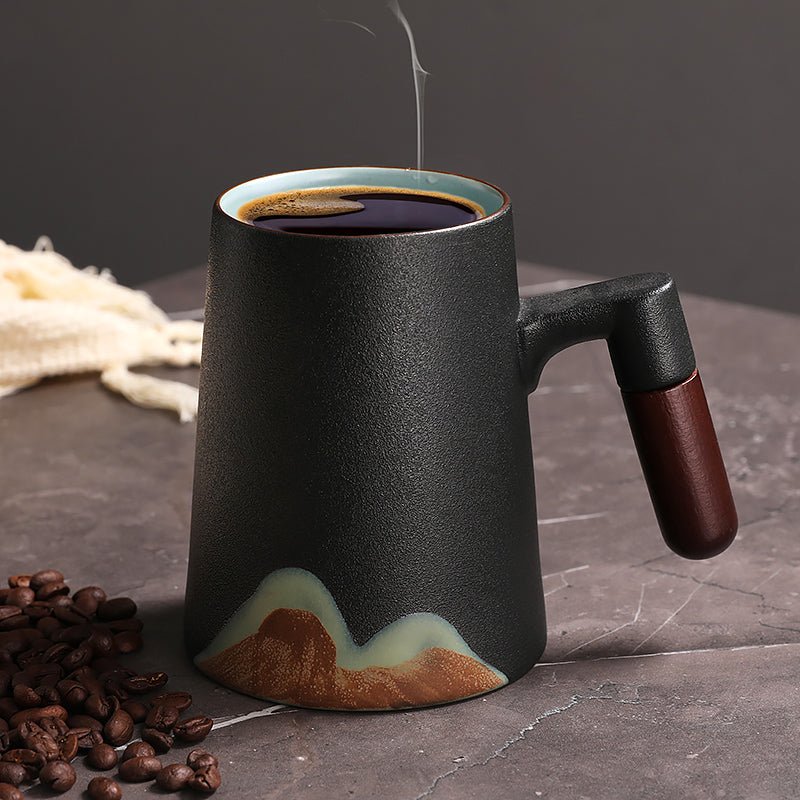
Latte Mugs Tall Replacement Purchase Practical Purchase Checklist
A replacement checklist built around the mug you already own: measure height, rim, base, and handle opening, convert milliliters to ounces, confirm machine clearance, and verify care and food-conta...
Read more
Leave a comment
This site is protected by hCaptcha and the hCaptcha Privacy Policy and Terms of Service apply.