
Pottery Tea Cups Comparison: 170 ml, 200 ml, or 250 ml?
Reading time: about 11 minutes
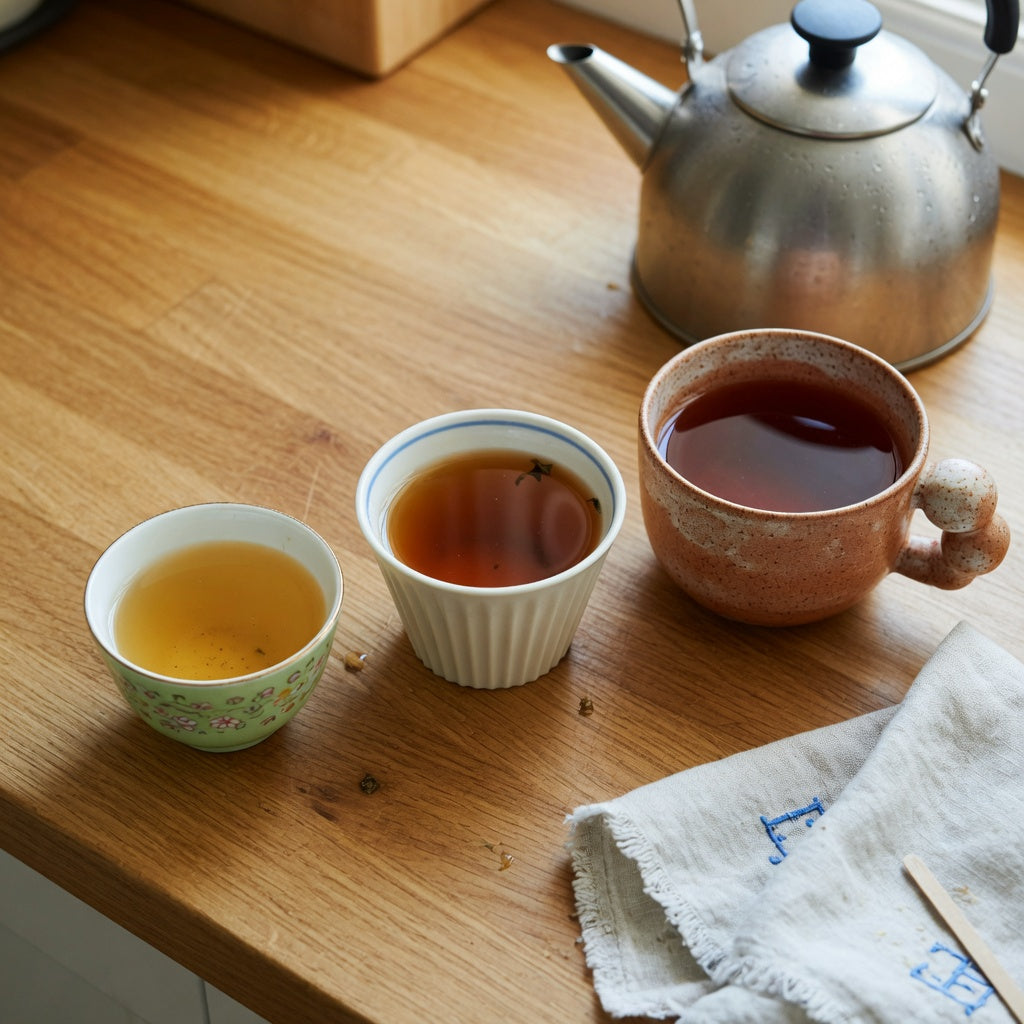
A 170 ml cup, a 200 ml pleated cup, and a 250 ml mug with a ball handle sit on our packing table most weeks. Lined up side by side under the same light, most shoppers reach for whichever one photographs best. Then they get it home, pour a short green tea steep into it, and discover the cup is either finished in four swallows or still half full and lukewarm an hour later. This pottery tea cups comparison is built around that second moment — the one that happens after the box is open.
One ground rule before we start. Our listings state three things and we will not stretch them: capacity, ceramic body, and the visible form of each cup. Glaze chemistry, firing cone, and appliance testing belong to whoever made the specific piece in your hands — which is why the back half of this article is a question list rather than a promise.
Pottery tea cups comparison: 170 ml, 200 ml, and 250 ml side by side
All three cups in the current lineup are ceramic. The differences that show up in daily use are how much liquid each one holds and whether your fingers have somewhere sensible to rest.
| Cup | Stated capacity | Visible form | Routine it fits | Honest trade-off |
|---|---|---|---|---|
| Retro coffee tea cup | 170 ml | Retro silhouette, no handle in the current photos | Short repeated steeps, tasting pours, small servings | Empty in a few swallows if you like to nurse a cup all morning |
| Pleated coffee tea cup | 200 ml | Pleated exterior wall | One standard tea serving at a desk | On a very hot pour, the wall is all that stands between tea and fingertips |
| Ball handled coffee tea mug | 250 ml | Ball-shaped handle | Long morning tea, tea through a phone call | More liquid than a delicate oolong steep usually wants |
We sell all three, so read that table as a size chart, not a ranking. It says capacity decides the routine before style gets a vote. If you want to see the shapes together on one page, the unique coffee mugs collection lays them out in the same grid.
Which cup fits a short, repeated-steep session?
The 170 ml retro cup is for anyone who pours small and pours often. It is just under six fluid ounces, so it behaves less like a mug and more like a tasting vessel: leaf in, short steep, drink it while it is hot, repeat. We see this pattern most with green tea, light oolongs, and with people who moved from espresso to tea and still want a small hot hit rather than a long drink.
What it is not good for: a two-hour working session. A 170 ml pour disappears in a few swallows, and if you refill every twenty minutes the cup ends up living in the sink. Size up instead of fighting it. If you are unsure where your habit really sits, pour tomorrow morning's tea into a measuring jug before you drink it — the number is usually a surprise.
When is the 200 ml pleated cup the better middle ground?
The pleated coffee tea cup sits between the other two at 200 ml and takes a normal single serving without leaving half the cup empty. The pleated exterior does practical work too: the ridges give your fingers something to brace against on a shape you hold by the wall, which matters more than whether the pattern matches your kitchen. It reads as more decorative than the retro cup without tipping into fussy.
Two trade-offs worth knowing. The ridges also give dust and dried tea film a place to settle, so ten seconds with a soft brush along the grooves once a week is a better habit than trusting a dishwasher cycle to reach into them. And this is a cup you hold rather than a handled mug, so if you pour water just off the boil and drink immediately, your fingertips will notice. For tea you drink at a normal pace, it is the easiest of the three to live with.
Is 250 ml too much tea, or the right amount for a desk?
The ball handled coffee tea mug is the practical pick, and we say that knowing it is the least precious-looking of the three. At 250 ml it lands close to the size the FDA uses as its working example of a cup or mug — small ceramic hollowware that normally holds about 240 ml and is manufactured with a handle — so it behaves the way most people already expect a hot drink vessel to behave. The ball handle gives your fingers a separate spot to sit instead of the wall.
The trade-off is real: 250 ml is a lot of liquid for a leaf you only steep for a minute or two. It also drifts toward mug territory, and anyone shopping pottery purely for the look may find it the plainest of the three on a shelf. For a desk, a long call, or a first cup you drink slowly while answering email, that extra volume is the entire point.
How do you hold a handleless pottery tea cup without burning your fingers?
Two habits make a no-handle cup much easier. Fill it to about two-thirds rather than the brim, which leaves a strip of cooler wall near the top to hold. Then grip near the rim instead of wrapping a hand around the belly, where the tea sits directly against the wall. In our experience the people who find these cups too hot are almost always holding them like a mug.
Rim comfort is the other half of this, and it is the one thing you genuinely cannot judge from a listing. A thick rounded rim meets your lip differently than a thin one, and that difference matters more on a daily cup than any glaze detail. If you are sensitive to it, order one cup rather than a set of four. And if you are unsure whether a given listing has a handle, the photo settles it faster than any description — the ball-handled mug is the one where the handle is part of the name.
What should you confirm about the glaze before the first cup?
This is the part of a pottery tea cups comparison that no product photo can settle. FDA guidance on lead-glazed traditional pottery is blunt on two points: lead can be present in glazes and decorations, and if a piece is not manufactured and fired properly, that lead can leach into food and drink. Fired at the right temperature for the right time, essentially all of it is bound into the glaze. The distance between those outcomes is a kiln schedule — invisible from the outside.
The FDA also names the ceramicware it treats with more caution: handmade pieces with a crude appearance or irregular shape, antiques, damaged or heavily worn pieces, items from flea markets, street vendors, or an unidentifiable maker, and bright orange, red, or yellow decoration. Everyday commercial factory pottery is described as far less likely to have a lead problem. No amount of washing or boiling removes lead from a piece that contains it. The stakes are not hypothetical — CDC reported a New York City family whose elevated blood lead levels were associated with traditional glazed ceramic ware used for cooking, storing meals, and making coffee; their levels declined after they stopped using it.
There are written limits behind the labels as well. Under FDA CPG Sec. 545.450, cups and mugs carry a lead guideline of 0.5 micrograms per ml of leaching solution in any one of six units; the cadmium guideline for small hollowware sits at the same 0.5 micrograms per ml under CPG Sec. 545.400. Ceramicware that fails the test should not be labeled Lead Free, and a piece that looks suitable for food is treated as foodware unless it is permanently marked otherwise.
Our own listings state capacity, ceramic body, and form. They do not publish firing cone or leach-test results, and we are not going to invent them. So before a cup becomes your daily drinker, get answers to these:
- Which clay is it, and what cone was the finished piece fired to?
- Is the interior glaze — and any decoration near the lip — rated food-safe?
- Was the finished piece leach-tested, and does the report describe this cup or a different batch?
- Are there bare clay patches, pinholes, or an unglazed foot ring, and exactly where?
- Is the crackle in the glaze intentional, and does the maker consider it fine for daily use?
- Is there gold, platinum, or metallic overglaze anywhere on the rim?
- Dishwasher and microwave status, in writing.
Two inspection habits we use on every cup that crosses our table: run a fingernail around the inside of the rim to feel for chips or a rough patch, and look down the inside wall under a bright light for pinholes where the glaze pulled back. A chip on the drinking rim, or a crack you can feel, means the cup leaves hot-drink duty — that is hygiene more than regulation.
Do these cups belong in the dishwasher or the microwave?
Appliance guidance for ceramics is maker-specific, and pretending otherwise would be the least useful thing in this article. What one listing states for one shape does not transfer to another shape, glaze, or batch — including within our own three. Check the current product page or ask before the first wash.
Two rules that hold regardless:
- Keep anything with metallic or overglaze rim decoration out of the microwave, full stop.
- Avoid sudden temperature swings — a cold rinse going into a hot pour, or a hot cup set on a cold stone counter. Thermal shock is the usual cause of a cup that fails at the worst possible moment.
Hand washing in warm water with a soft sponge, and leaving the abrasive scrub pad in the drawer, keeps a glaze looking newer for longer whatever the listing permits.
Which cup works when you are buying for someone else?
For an unknown routine, buy the 250 ml ball handled mug. It is the size most people already picture when they hear tea cup, the handle removes the hot-finger risk, and it asks the recipient to change nothing about how they drink. The 170 ml retro cup is the better gift for someone who already owns a tea setup and enjoys small careful steeps; give it to a once-a-day tea drinker and it tends to end up at the back of a cupboard.
The 200 ml pleated cup is the one we see kept out on a counter rather than stored, which is its own kind of vote. Buying blind for a mixed household, it is the safest middle.
Frequently asked questions
Are these pottery tea cups safe to drink from?
Our listings confirm capacity, ceramic body, and form; they do not publish firing temperatures or leach-test results, and we will not claim those for a cup we have not seen tested. Ask the maker whether the interior glaze is food-safe, what cone the piece was fired to, and whether the finished cup was tested. FDA guidance notes that properly fired glaze binds essentially all lead into the glaze, and that washing or boiling cannot remove lead from a piece that contains it.
Is 170 ml enough for a normal cup of tea?
It is just under six fluid ounces — smaller than the roughly 240 ml the FDA uses as its typical cup-and-mug example, and far smaller than a standard mug. That makes it excellent for repeated short steeps and too small for anyone expecting one long drink. Judge it against how you actually drink, not against the mug already in your cupboard.
Can these pottery tea cups go in the dishwasher?
Only if the current listing or the maker says so for that exact cup, because appliance guidance varies with glaze and decoration and does not carry over between shapes or batches. Warm water, a soft sponge, and air drying are always safe. Keep any cup with metallic rim decoration out of the microwave entirely.
How do I tell intentional crackle from a real crack?
Run a fingernail across it. Crackle sits inside the glaze and feels smooth; a structural crack catches. Cracks that go through the body, chips on the drinking rim, or a glaze that feels rough and pitted are reasons to retire the cup from hot drinks, whatever the maker intended.
What is the fastest way to use this pottery tea cups comparison?
Treat it as a size test rather than a style test. Pour the amount of tea you actually drink into a measuring jug tomorrow morning, then match that number to 170, 200, or 250 ml. Order a single cup before committing to a set — the unique coffee mugs collection shows all three together, and one cup in your hand answers more than any photo.
Start with the jug, then check the collection for the capacity that matched. One cup first is the cheapest way to learn how a shape sits in your hand before you buy four of them.
More from our blog
Read more
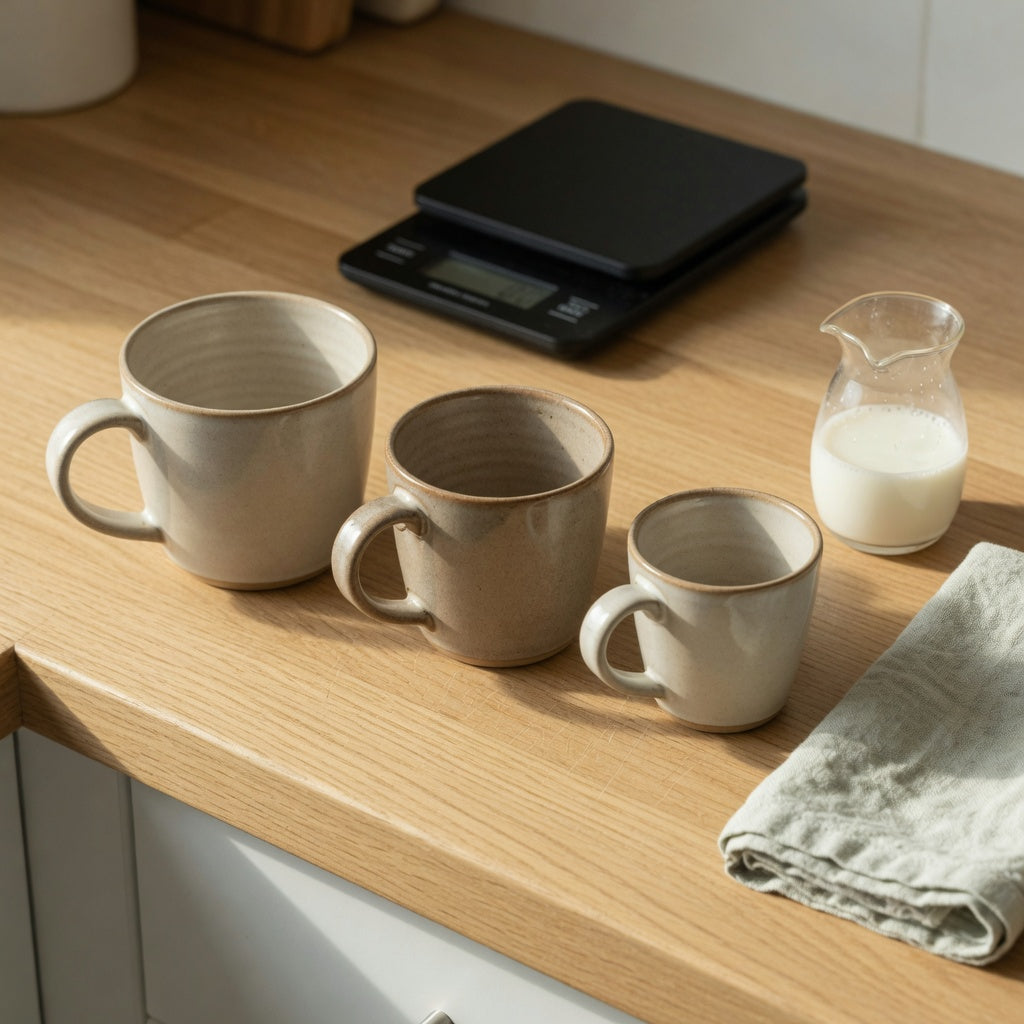
15 Oz Ceramic Coffee Mugs Comparison: Which Option Fits Your Routine?
A 15 oz label hides more than it tells you. We compare our 400 ml, 440 ml, and 480 ml ceramic mugs on usable fill, handle clearance, and glaze care so you can match capacity to the way you actually...
Read more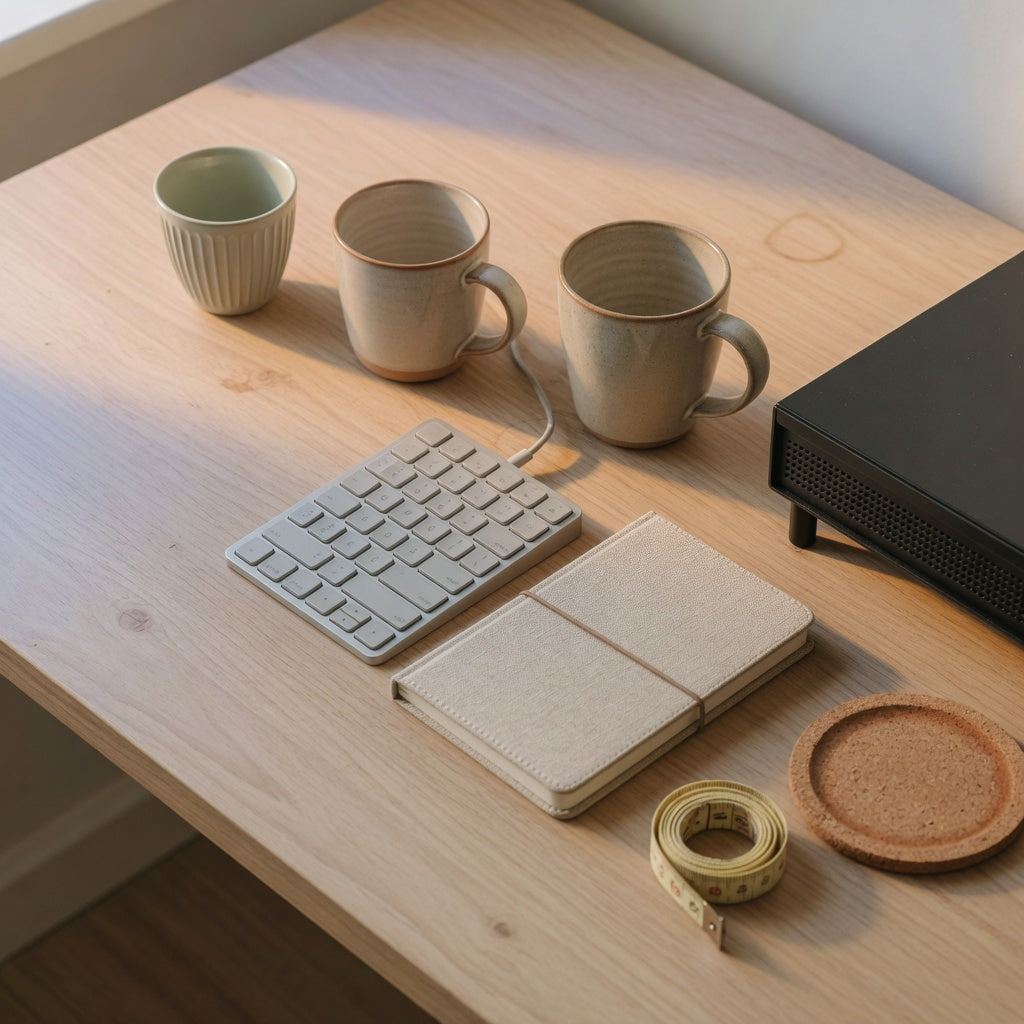
Coffee Mug Gifts Ideas for Desk Use: Capacity, Handle, Footprint
A desk-fit guide to coffee mug gifts: how 200 ml, 400 ml, and 440 ml capacities change refill frequency, why handle clearance and riser height decide whether a mug stays on the desk, and when a cer...
Read more
Leave a comment
This site is protected by hCaptcha and the hCaptcha Privacy Policy and Terms of Service apply.