
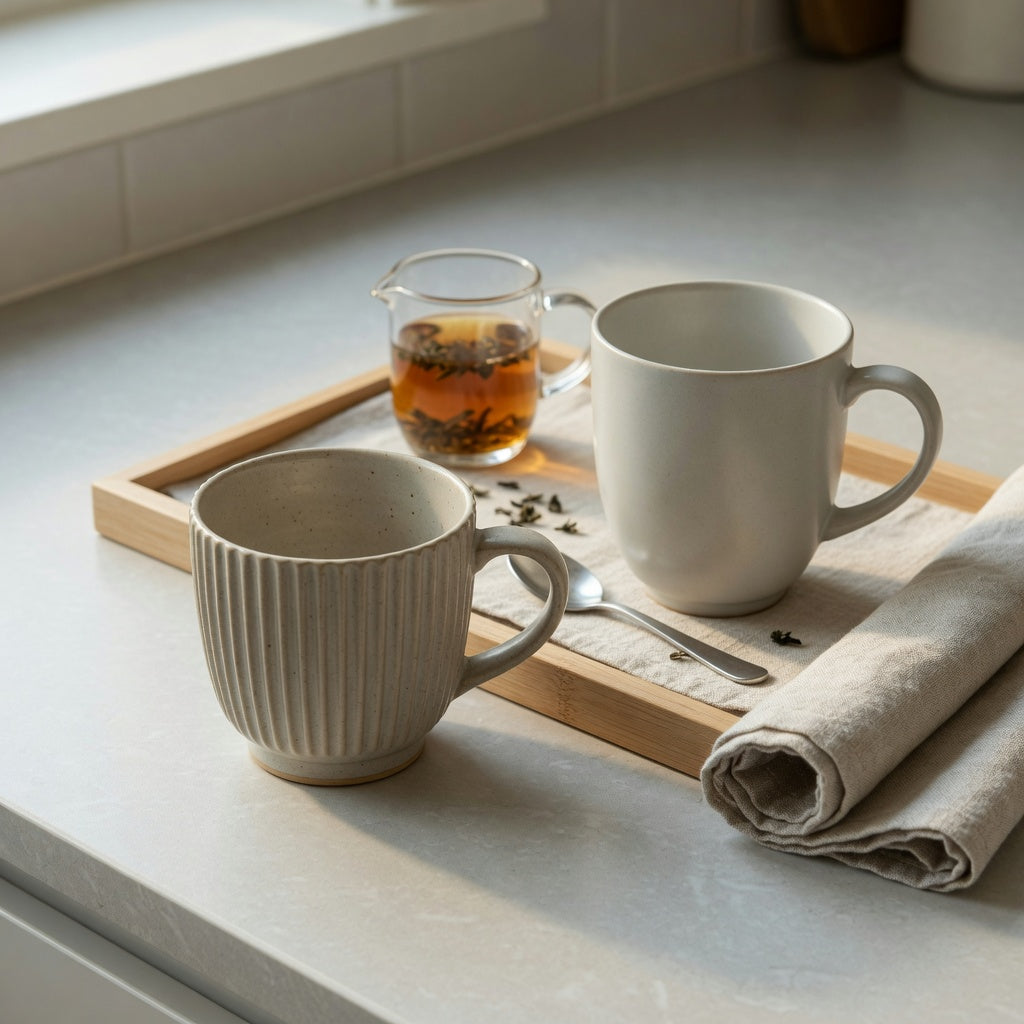
Pleated Ceramic Coffee Mug: Compare Size, Care, and Use
Reading time: about 14 minutes
A shopper sets a small pleated ceramic coffee mug beside the 12 oz mug already parked at the office desk. The ruffled cup looks generous in a product photo, yet its usable serving can be closer to tea than to the refill that carries someone through a meeting. That size surprise is the first comparison we make at CoffeifyMug, before discussing glaze or style.
In our store, we handle this kind of ceramic drinkware on packing tables, kitchen counters, and guest trays. The folds affect more than appearance: they change the widest footprint, how a thumb finds the wall, where a coffee drip dries, and how the piece fits in a cupboard. The best purchase starts with the job you need the cup to do, then checks the current listing for the details that vary from one piece to another.
Does a pleated ceramic coffee mug fit your usual pour?
Capacity is the quickest way to separate a useful purchase from a decorative one. Many cups in this category are listed around 200 ml, or roughly 7 oz, but that is a category pattern rather than a specification for every model. A stated volume may be measured to the brim, and a wide folded body can look larger than the amount you will comfortably drink. Use the live product page for the exact capacity and dimensions of the piece you are considering.
Match the cup to the drink you actually make:
- Tea and short black coffee: A compact serving often feels intentional rather than undersized. You finish it while it is hot, and the cup does not look half empty on a tray.
- Espresso-based drinks: Espresso with a small amount of milk or hot water can suit this format. Leave room for foam and check the listed opening before assuming it will work for a larger latte.
- Drip coffee and pour-over: A small pleated cup may require a refill sooner than you expect. If one pour normally carries you through a work session, a larger round mug will be less frustrating.
- Iced coffee: Ice takes up part of the vessel, so a compact cup suits a small concentrated drink better than a large café-style iced pour.
- Guest trays: The smaller format leaves room for a kettle, spoon, tea packets, and a small milk vessel without overcrowding the surface.
If your routine is a small hot serving, open the current pleated coffee tea cup listing and confirm the displayed size before ordering. We use the live listing as the authority for product-specific facts; category averages should only narrow the search.
If you are deciding between a compact cup and a different footprint, compare the listed options in our unique coffee mugs collection. Check volume and width first, then decide which pleat pattern or silhouette you want to see every morning.
Our guide to choosing a 200 ml pleated coffee tea cup covers the small-format decision in more detail. Read it with a measuring cup nearby if you are unsure how your normal serving compares.
Which rim, handle, and foot details matter on a kitchen counter?
The word pleated describes the appearance, not a standardized construction method. Depending on the maker, the folds may be hand-pinched, pressed, molded, or shaped with a combination of techniques. That difference can affect the irregularity of the rim, the thickness of the wall, and the way the base sits on a flat surface.
A front-facing product photo rarely answers every comfort question. Look for side and top views, then check these details:
- Rim: The drinking edge should look even enough to meet your lip comfortably. A sharp pinch, chipped glaze, or rough unglazed spot is a functional problem, not an attractive irregularity.
- Handle: Check the opening for your fingers and the space between the handle and the folded body. A handle that looks generous from the front can feel cramped once the cup is full.
- Foot ring: Set the cup on a hard, level surface if you can inspect it in person. A rough or uneven foot can scratch a wood tray, leave a ring, or make the cup rock when someone sets down a spoon.
- Widest point: Measure the pleated wall and handle, not just the base. A flared fold can take more tray and cupboard space than the opening suggests.
- Interior: The outside may be deeply textured while the inside is relatively smooth, but that is not universal. Interior texture affects both cleaning and how much usable liquid the cup holds.
At an office desk, handle clearance matters because fingers often approach from one angle while a keyboard or notebook occupies the other side. On a kitchen shelf, the widest pleat can touch the mug beside it even if the base is narrow. On a guest tray, a slightly uneven foot becomes noticeable every time the cup is lifted and replaced.
Handmade variation is not automatically a defect. A different fold or a small glaze variation can be part of the intended irregular finish. A sharp rim, loose handle joint, unstable foot, flaking glaze, or crack crossing the drinking surface is different because it affects use.
Which routine suits a small pleated cup: tea, guests, gifts, or office coffee?
The same shape can be a thoughtful guest-room detail and a frustrating primary desk mug. Decide the setting before you decide the color or finish.
- Tea or a short coffee at home: This is the clearest fit for a compact textured cup. Review the current CoffeifyMug product listing, confirm its measurements and care instructions, and use it for the serving size you already enjoy.
- Guest room or breakfast tray: The unusual silhouette adds visual interest while leaving space for the rest of the service. Our guest-room coffee tray guide helps you think through tray space, cleaning, and the expectations of guests who normally drink from larger mugs.
- Gift unboxing: Pleats make the piece feel more individual than a plain cylindrical mug. If you are buying two for a matching set, remember that hand-finished or irregular pieces can show visible differences; check the seller's current notes if close matching matters.
- Office coffee: If you refill a large mug several times during a meeting, this style is unlikely to replace your everyday cup. Compare other shapes and listed capacities in the unique mug collection instead of buying a small decorative piece for a large-volume routine.
- Commuting: A ceramic cup with an uneven rim and no stated lid seal is not a travel mug. It is better suited to a stable counter, desk, or tray than to a car cup holder.
There is also a presentation trade-off. A pleated cup draws attention to the drink and the setting, which is useful for a breakfast photograph, a housewarming gift, or a quiet tea shelf. A smooth round mug disappears into the routine more easily, which is exactly what some office kitchens need.
Do the exterior grooves take more work than a smooth mug?
The answer depends on where the texture sits. A smooth interior usually washes like other glazed ceramic, while deep exterior pleats can hold coffee oils, tea residue, soap film, and droplets. If the drinking surface is textured too, treat it as a separate cleaning issue and inspect the product photos closely.
In our own kitchen and during routine handling of ceramic drinkware, the most reliable habit is a prompt rinse. Milk residue becomes harder to remove after it dries, and tea stains show more clearly in light-colored folds. A soft dedicated brush is more useful than aggressive scrubbing.
- Rinse the empty cup with warm water soon after use, especially after milk coffee or strongly brewed tea.
- Wash the interior with a soft sponge and mild dish soap. Do not assume that a rough-looking exterior needs a rough abrasive pad.
- Use a narrow bottle brush or soft toothbrush on the deepest outer folds. Work along the groove rather than forcing the bristles sideways into a sharp pinch.
- Rinse thoroughly and check the rim, folds, and underside for remaining soap film or coffee-colored residue.
- Air-dry the cup upright, then make sure the foot ring and deep pleats are dry before storing it beside other ceramics.
Dishwasher and microwave directions belong to the individual listing. The clay body, glaze finish, handle attachment, and irregular wall can all vary. If a product page explicitly permits dishwasher use, follow its rack and temperature instructions. If the page is silent, hand-washing is the conservative choice. The same rule applies to microwave use: another ceramic mug surviving a cycle does not establish that this one should go in the microwave.
Storage creates another small difference. Do not automatically nest pleated cups just because the bases fit. Ridges can press against one another and chip, and irregular rims may carry stress when a second cup is placed inside. Stand them separately or use padding in a gift box.
What should you verify about ceramic glaze and heat safety?
Ceramic is a broad material family, not a safety guarantee. A listing may identify a piece as stoneware, porcelain, earthenware, or simply ceramic, and the glaze can be glossy, matte, speckled, or intentionally varied. Appearance alone cannot establish food-contact suitability.
The U.S. Food and Drug Administration explains that handmade pottery with an irregular or crude appearance can present lead-leaching concerns if it was not properly manufactured and fired. Its guidance on lead-glazed traditional pottery describes the issue, while its information on lead in foodware covers monitoring, testing, action levels, and import alerts for non-compliant ceramic foodware.
That guidance does not mean every ruffled or pleated cup is unsafe. It means a rustic appearance is not proof of safety or danger, and a visual inspection cannot replace maker information or leach testing. For a handmade or imported piece, look for clear food-contact guidance from the maker and ask questions if the current listing leaves the material or glaze information unclear.
Hot acidic drinks deserve extra caution when the glaze is unverified. A published case report involving a glazed ceramic mug describes elevated blood lead associated with use involving a hot acidic beverage. That report is a reason to verify a questionable piece, not evidence that all ceramic mugs create the same risk.
Before using an irregular ceramic cup, inspect the drinking surface under good light:
- Look for chips, bare clay, flaking glaze, or a sharp edge around the rim and interior.
- Treat deep cracks or spreading crazing as a reason to pause and ask the maker or seller for guidance.
- Do not pour boiling water into a cup that is cold from a porch, refrigerator, or unheated room. Avoid moving a very hot cup directly into cold water as well; sudden temperature changes can crack ceramic.
- Use the microwave only if the current product information says it is suitable, and follow any stated heating limits.
- If a cup arrives with a hairline crack, do not test it with hot coffee. Photograph the issue and contact the seller before use.
Should you choose a pleated cup or a smooth round mug?
Neither shape wins every routine. The useful comparison is the job each cup performs without becoming annoying by the second week.
| Buyer need | Pleated ceramic cup | Smooth round mug |
|---|---|---|
| Serving decision | Often compact, with many category listings near 200 ml; verify each model | Available in a broad range of listed capacities, including larger desk sizes |
| Grip | Textured ridges can add tactile purchase, but the silhouette may feel uneven | Predictable cylindrical wall and familiar hand placement |
| Cleaning | A relatively smooth interior may be simple; exterior folds need rinsing or brushing | Fewer exterior recesses usually make wiping straightforward |
| Tray fit | Distinctive and compact, but the widest pleat can use more space than expected | Easier to measure and line up with other service pieces |
| Gift appeal | Irregular or hand-finished character makes the piece feel individual | Consistent, familiar, and practical for a broad range of recipients |
| Storage | May not nest safely; inspect the rim and foot before stacking | Often easier to organize, depending on the handle and body shape |
| Best use | Tea, short coffee, modest milk drinks, guest service, or gifting | Drip coffee, longer milk drinks, office refills, and high-volume routines |
| Travel | Not a substitute for a sealed travel mug | Only suitable for travel if it was designed with the necessary lid and stability features |
If you are replacing your only coffee mug and measure your morning by how far one pour gets you, the smooth round option is usually the less risky choice. If you already own a practical everyday mug and want a distinctive cup for tea, guests, or a slower weekend breakfast, the pleated style adds something the plain cylinder does not.
How we inspect a pleated cup before gifting or placing it on a tray
When we handle this category in our store, we look at the cup as an object people will touch repeatedly, not only as a styled photograph. The same checks are useful after a gift unboxing or before setting a cup beside a kettle.
- Rotate the rim under good light. Check for a sharp pinch, chipped edge, rough glaze, or an uneven section that would meet the lip.
- Set the empty cup on a flat counter. Watch for rocking, then inspect the foot ring for roughness that could mark a wood or lacquered tray.
- Trace the deepest exterior fold with a clean fingertip. A harmless glaze variation is different from a sharp ridge, loose flake, or crack.
- Look at the handle joins. A visible handmade transition may be normal, but looseness, a sharp seam, or a crack at the attachment deserves seller support.
- Check the storage plan. Keep irregular cups separate unless the listing specifically shows that they are designed to nest, and cushion them individually in a gift box.
A room-temperature water check over a sink can reveal visible seepage from an existing crack, but it cannot prove food-contact safety or thermal durability. We would never use hot coffee as a test for a questionable piece. Functional damage should be resolved before the cup enters a daily rotation.
This distinction helps with gifting. A different fold, slight variation in glaze coverage, or a modest difference in silhouette can be part of the handmade character. A crack, sharp rim, unstable base, or flaking surface is not a style choice to overlook.
What should you check before ordering this size and style?
Use this checklist beside the product page. It keeps the decision tied to your routine instead of the most flattering photo.
- Measure your normal drink. Pour the amount you usually drink into a kitchen measuring jug. Compare that number with the listed capacity, and leave room for milk, foam, or a comfortable sip.
- Choose the setting. Decide if the cup is for daily tea, short coffee, a guest tray, a gift, an office desk, or occasional styling. A small serving works better for some of these jobs than others.
- Check the complete footprint. Measure the widest pleat and handle, not only the circular base. Confirm that it will clear the kettle, saucer, keyboard, or neighboring mugs.
- Read the care instructions. Look specifically for dishwasher, microwave, hand-wash, and temperature guidance. Do not fill gaps in the listing with assumptions based on another mug.
- Inspect the drinking surfaces. Review photos of the rim, interior, underside, and handle joins. Ask about food-contact guidance if the material or glaze information is unclear.
- Plan for the folds. If prompt rinsing and an occasional soft brush already sound inconvenient, a smooth ceramic mug will suit you better.
- Consider matching. If you want a pair for a formal tray, ask how much handmade variation to expect and decide if individual differences are acceptable.
If the answers point to a small textured serving, review the current pleated coffee tea cup and match its listed specifications to your measuring cup and tray. If the answers point to a larger pour, easier storage, or a different silhouette, compare the unique coffee mugs collection before placing the order.
Frequently asked questions
Is a pleated ceramic coffee mug too small for daily coffee?
It can be too small if your normal drink is a full drip or travel-size pour. Many cups in this category are around 200 ml, which suits tea and short coffee better than a large office serving. Compare the live listing with a measuring cup before ordering; if your usual volume is larger, keep a round mug for that routine.
Does a pleated ceramic cup take more effort to clean than a smooth mug?
The exterior usually does. Rinse promptly, wash the interior with a soft sponge, and use a soft brush on the deepest folds when residue remains. The extra care is most noticeable after milk coffee or tea has dried overnight.
Can I use a pleated ceramic mug for tea every day?
Tea is one of the better daily uses for a compact pleated cup if the listed care and food-contact guidance fit your routine. Rinse tea residue promptly, dry the grooves, and hand-wash unless the current listing clearly permits dishwasher use. Choose a smooth round mug if you want the simplest possible cleanup.
Are decorative ceramic coffee mugs dishwasher safe?
Only when the maker's current listing says they are dishwasher safe. Handmade, matte, or irregularly glazed pieces can have care limits that are not visible from the shape. If the listing is silent, hand-wash and follow any temperature or placement directions supplied by the seller.
Is a 200 ml pleated cup a good size for a guest-room coffee tray?
It can be a good tray size for one tea or modest coffee serving, especially when the tray also holds a kettle, spoon, and packets. It may feel too small for guests who expect a large mug. Measure the tray and provide a larger backup cup if your guests usually drink bigger servings.
Before placing the order, write down your usual fill, measure the tray or desk space, and confirm the live listing's capacity and care language. If those checks point to a small textured serving, review the current pleated coffee tea cup; if they point to a different footprint or larger routine, compare the available unique coffee mugs instead.
More from our blog
Read more
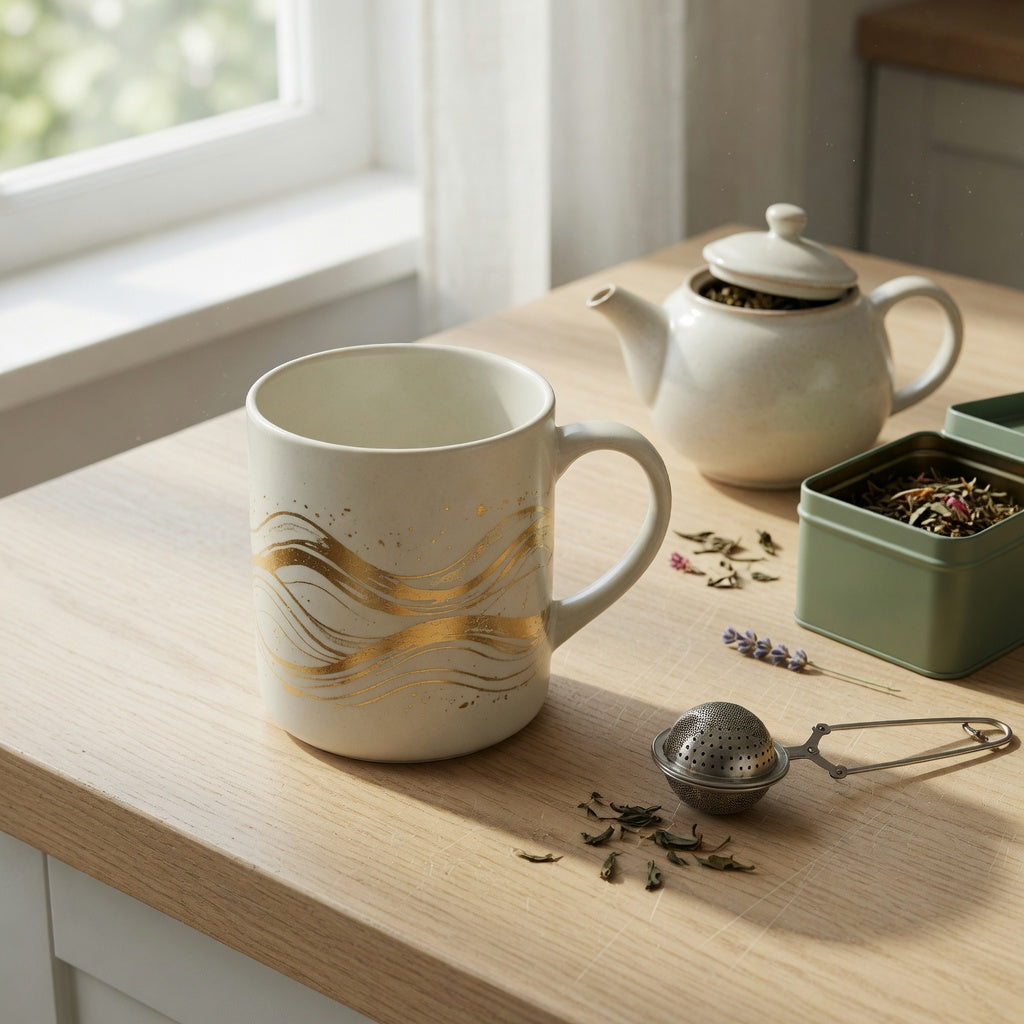
Golden Waves Ceramic Tea Mug Gift: Compare Size, Care, and Fit
A decorative mug becomes a useful gift only when its size, handle, finish, and care routine match the recipient. Compare the Golden Waves Kio for tea and coffee use, then see when a simpler or larg...
Read more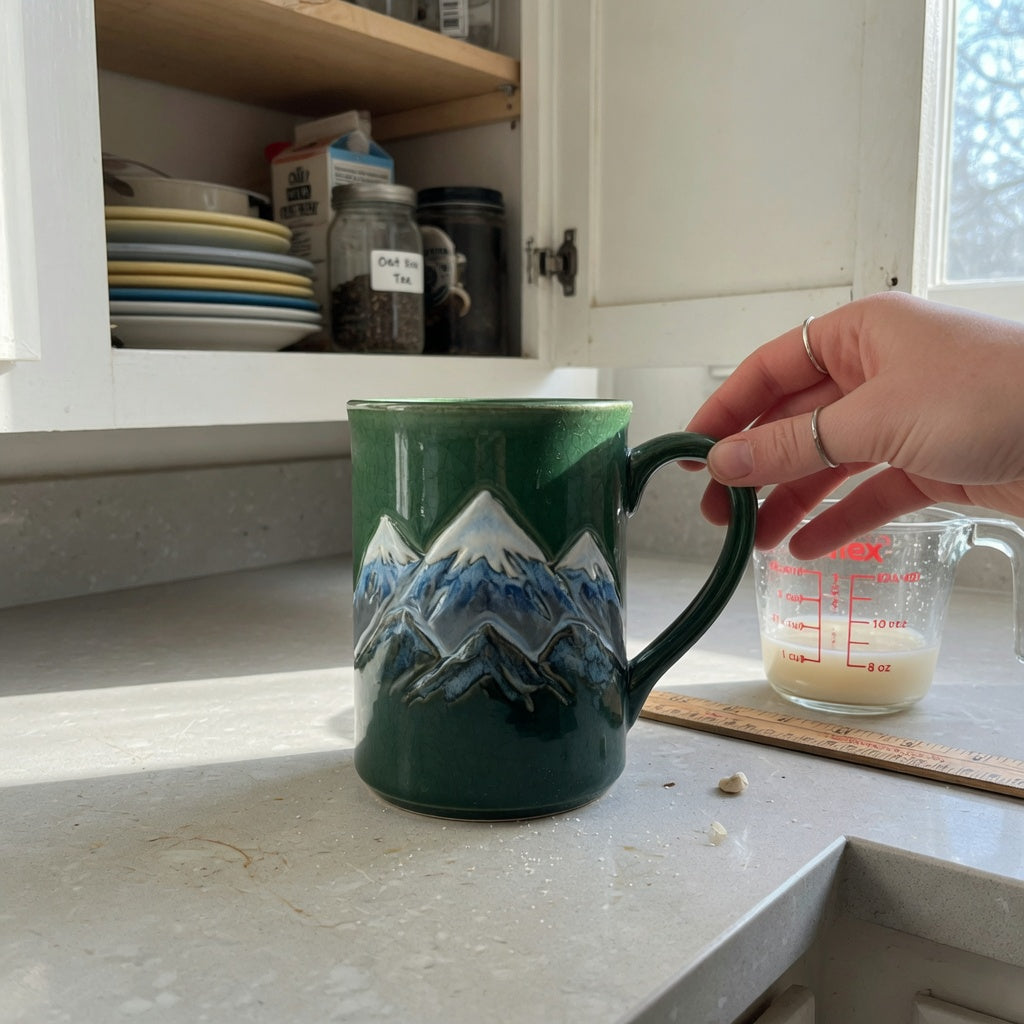
How to Choose Tall Ceramic Coffee Tea Mug: Size, Shape, Fit
Measure your real pour, hand clearance, and storage before buying. This store-side guide compares tall versus wide shapes, ceramic materials, glaze information, care, and full-mug balance.
Read more
Leave a comment
This site is protected by hCaptcha and the hCaptcha Privacy Policy and Terms of Service apply.