

Piccolo Cup Compact Kitchen Practical Purchase Checklist: 170-270 ml
Reading time: about 10 minutes
A cup can look small in a product photo and still be awkward in a compact kitchen. The body clears the shelf, but the handle meets the hinge, the cupboard door touches the rim, or the cup occupies the only useful spot beside the coffee machine. That is the problem this piccolo cup compact kitchen practical purchase checklist is built to solve.
At CoffeifyMug, we separate three questions that shoppers often combine: how much liquid the cup holds, how much exterior space it occupies, and how it must be cared for. The verified catalog facts here cover capacity: Retro 170 ml, Ball Handle 250 ml, and Emerald 270 ml. Exterior dimensions, material, appliance compatibility, and stackability must still be confirmed from the current product information or with our store. We are not presenting any of these items as a certified piccolo cup, and we do not assign them a fixed coffee-to-milk ratio, barista test result, or cafe provenance.
Piccolo cup compact kitchen practical purchase checklist: which measurements decide fit?
Start with the space where the cup will spend most of its time, not with the capacity number. Use a tape measure and record the actual usable space after accounting for doors, hinges, shelf lips, and nearby items.
- Clear shelf height: Measure from the shelf surface to the underside of the shelf above. Include any front lip that reduces the opening.
- Usable cabinet depth: Measure from the back panel to the inner face of the closed door. Note any hinge hardware that enters that space.
- Opening width: Check the narrowest point between a face frame, hinge, or neighboring cup. The interior may be wider than the route into it.
- Counter and drying-rack space: Record the area available beside the brewer, sink, or rack without blocking controls, taps, or the normal work path.
Next, compare those figures with the cup's external height, maximum body diameter, base diameter, and overall width including the handle. Capacity cannot substitute for these measurements. A 170 ml cup may hold less than a 250 ml cup while still having a decorative shape that uses more shelf width. If the current product page does not provide the exterior measurement you need, ask us before ordering rather than estimating from a photograph.
A compact cup is one that fits your storage and serving routine. A lower milliliter figure alone does not prove a smaller footprint.
What changes between the 170 ml, 250 ml, and 270 ml options?
The capacity figures create a useful first filter. They tell you which option is closer to your normal drink volume, but they do not establish exterior size, usable fill level, or a particular coffee recipe.
| Reader situation | Verified option and capacity | Why it may fit | Next check |
|---|---|---|---|
| You usually drink a short serving and accept refilling when you want more. | Retro Coffee Tea Cup, 170 ml | It has the lowest verified capacity of the three: 80 ml below the Ball Handle and 100 ml below the Emerald. | Confirm the exterior height, diameter, base, and handle span against your cabinet measurements. |
| You want a middle capacity and the ball-handle design is part of the appeal. | Ball Handled Coffee Tea Mug, 250 ml | It sits between the other two capacities, 80 ml above the Retro and only 20 ml below the Emerald. | Measure the overall width at the handle's outermost point before deciding it fits a narrow shelf. |
| You want the most beverage capacity among these three without moving to a larger category immediately. | Emerald Coffee Tea Mug, 270 ml | It has the largest verified capacity in this comparison. | Do not assume its exterior is only slightly larger than the 250 ml option. Confirm the actual footprint and height. |
Leave enough headspace to carry the drink without spilling; the amount you leave depends on your routine. We do not prescribe a milk-to-coffee ratio for any of these cups. If your measured finished drink is larger than 270 ml, or you regularly add substantial ice, these three may feel restrictive. A larger style from the unique coffee mugs collection would be a more honest next step than accepting repeated refills.
Will the handle clear the hinge, door, and neighboring cups?
The Ball Handle name tells us that its handle is a defining design feature, but the name does not tell us its exact projection. For any handled cup, overall width should be measured from the outside edge of the body to the handle's outermost point. Also check the route your hand takes when lifting the cup; an item can fit inside a cabinet yet remain frustrating to remove.
- Allow room to lift the cup without scraping the shelf above.
- Check whether the handle has to rotate past a hinge or face frame.
- Leave enough space to grasp the handle without knocking the neighboring cup.
- On an office desk, keep a projecting handle away from laptop cables and the desk edge.
Do not infer stackability from a styled photograph. In our handling of drinkware, we only treat a cup as a stacking candidate when the upper base seats securely and its weight does not rest against a thin rim or handle. If the product information does not confirm stacking, plan for single-layer storage. Forced or unstable stacking creates common damage points at the rim and handle attachments.
Where will the cup wait between drinks?
A compact-kitchen purchase has to work through the whole daily cycle: brewing, drinking, washing, drying, and storage. We ask shoppers to trace that route before choosing a capacity.
- Closed cabinet: Door clearance and hinge intrusion matter more than the capacity label. Use confirmed exterior measurements.
- Narrow counter: Check the base footprint and the space needed to lift the cup beneath an upper cabinet. Do not let it block brewer controls or the sink-side preparation area.
- Office desk: Prioritize a stable placement point and comfortable handle access. A lower capacity may mean more walks for refills, which can outweigh the space saving.
- Drying rack: Confirm that the base and rim can sit securely without pressing against another item. A cup that fits the cabinet can still monopolize a small rack.
- Gift purchase: Ask about the recipient's usual serving volume and storage first. A visually distinctive handle may be appreciated, but it can be the wrong choice for a tightly packed cupboard.
If the recipient or household has several different routines, the 250 ml option provides a middle capacity, but it is not automatically the best physical fit. The 20 ml difference between 250 ml and 270 ml is small enough that confirmed shape and handle measurements should decide between them.
What should you confirm about material, microwave use, and cleaning?
The verified facts supplied for this comparison establish the three capacities. They do not establish material, dishwasher safety, microwave safety, finish durability, or freezer compatibility. We do not fill those gaps with assumptions because care requirements can decide whether a cup works in a small, high-use kitchen.
- Read the current product care information and confirm the material before use.
- Do not assume microwave compatibility from appearance. If metallic decoration is present, only microwave the cup when the product instructions explicitly permit it.
- If dishwasher use is approved, position the cup so its rim and handle cannot knock against neighboring dishes during the cycle.
- For hand-washing, use a nonabrasive sponge around decorative finishes and handle joints unless the supplied instructions say otherwise.
- Avoid abrupt temperature changes unless the product guidance confirms that the cup is designed for them.
If you require guaranteed dishwasher or microwave compatibility and cannot confirm it on the product page or with our store, choose a different item with explicit care information. These cups are not a sensible purchase for a household that needs an appliance-safe claim we cannot verify.
What should you inspect during unboxing?
Before the first drink, we check the areas of handled drinkware that take the most stress. These are general inspection points, not a claim that any named CoffeifyMug product commonly has these defects.
- View the rim under side lighting for chips, sharp spots, or hairline cracks.
- Inspect both handle attachment points rather than checking only the visible outer curve.
- Place the empty cup on a level counter and look for unexpected rocking at the base.
- Check the drinking surface for rough areas that should not contact the lips.
- Test the empty cup in its intended cabinet, counter, and drying position without forcing it past hardware.
For a gift, complete this inspection before wrapping. A polished unboxing matters, but so does making sure the cup can be lifted, placed, and stored without immediately colliding with the recipient's existing drinkware.
Run this cabinet-to-checkout checklist
Use this piccolo cup compact kitchen practical purchase checklist after measuring the real drink and the real storage space. Work through every step instead of treating the first acceptable capacity as proof of fit.
- Measure your usual finished drink in milliliters with a marked jug.
- Choose the closest capacity starting point: Retro 170 ml, Ball Handle 250 ml, or Emerald 270 ml.
- Obtain the candidate's exterior height, maximum diameter, base diameter, and overall handle width.
- Confirm material and all cleaning, dishwasher, and microwave instructions that matter to your routine.
- Make a paper or cardboard footprint from the confirmed exterior measurements and place it in the cabinet, on the counter, and beside the drying rack.
- Check the cabinet opening, closed door, hinges, shelf lip, hand access, and lifting path.
- Plan for one-layer storage unless stackability is explicitly supported and physically stable.
- If any critical measurement or care fact remains unknown, ask our store or compare a different shape in the collection.
The lowest capacity is not always the best compact-kitchen purchase. The right choice is the one that holds enough for your actual drink, clears the cabinet hardware, remains easy to grasp, and matches the care routine you are willing to follow.
Frequently asked questions
What does the piccolo cup compact kitchen practical purchase checklist ask me to measure?
Measure usable shelf height, cabinet depth to the closed door, the narrowest part of the cabinet opening, and the available counter or drying-rack area. Compare those figures with the cup's external height, maximum diameter, base diameter, and overall width including its handle. Capacity alone cannot confirm fit.
Is the Retro 170 ml option a certified piccolo cup?
No. The verified catalog fact is its 170 ml capacity. CoffeifyMug does not present it as a certified piccolo cup or claim that it follows a fixed espresso-and-milk recipe.
Is the Ball Handle 250 ml or Emerald 270 ml better for a tiny cabinet?
The capacity data cannot settle that question because the difference is only 20 ml and does not establish exterior dimensions. Compare confirmed height, footprint, overall handle width, and cabinet access before choosing. Select the Emerald if the extra listed capacity matters and it passes those checks; select the Ball Handle if you prefer its middle capacity and handle design and it fits.
Can I assume these cups are dishwasher-safe or microwave-safe?
No. Those claims are not part of the verified facts used for this article. Check the current product information or contact our store before using a dishwasher or microwave, especially if the cup has decoration or a finish that may require different care.
Which capacity should I choose for iced coffee or a long drink?
Measure the finished drink after adding ice, water, or milk rather than estimating from the coffee portion alone. The 170 ml option may require a smaller recipe, while 250 ml and 270 ml provide more listed capacity without guaranteeing a particular serving style. If your normal finished drink exceeds 270 ml, move to a larger mug category.
Write down your drink volume and cabinet measurements, then open the product page for the closest capacity and confirm every exterior and care detail. If none passes the full checklist, compare alternative profiles in CoffeifyMug's unique coffee mugs collection rather than forcing the wrong cup into the space.
More from our blog
Read more
Dandelion Coffee Mug Compact Kitchen Practical Purchase Checklist
Measure cabinet clearance, shelf depth, handle room, and cleaning fit before choosing the 400 ml Gradient or Flow or the 480 ml Rock. This checklist separates verified capacities from details you s...
Read more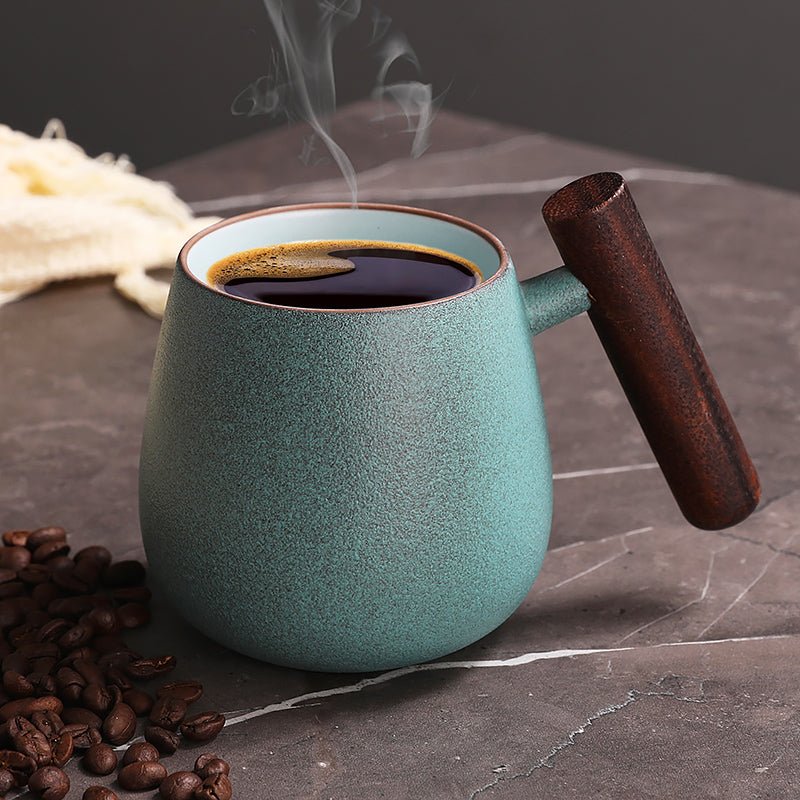
Matcha Latte Mug Compact Kitchen Practical Purchase Checklist: 3 Options
Measure first, then compare the Ball Handle 250 ml, Round 390 ml, and Spittoon 400 ml. This checklist separates verified product facts from the dimensions and care details you still need to confirm.
Read more
Leave a comment
This site is protected by hCaptcha and the hCaptcha Privacy Policy and Terms of Service apply.