



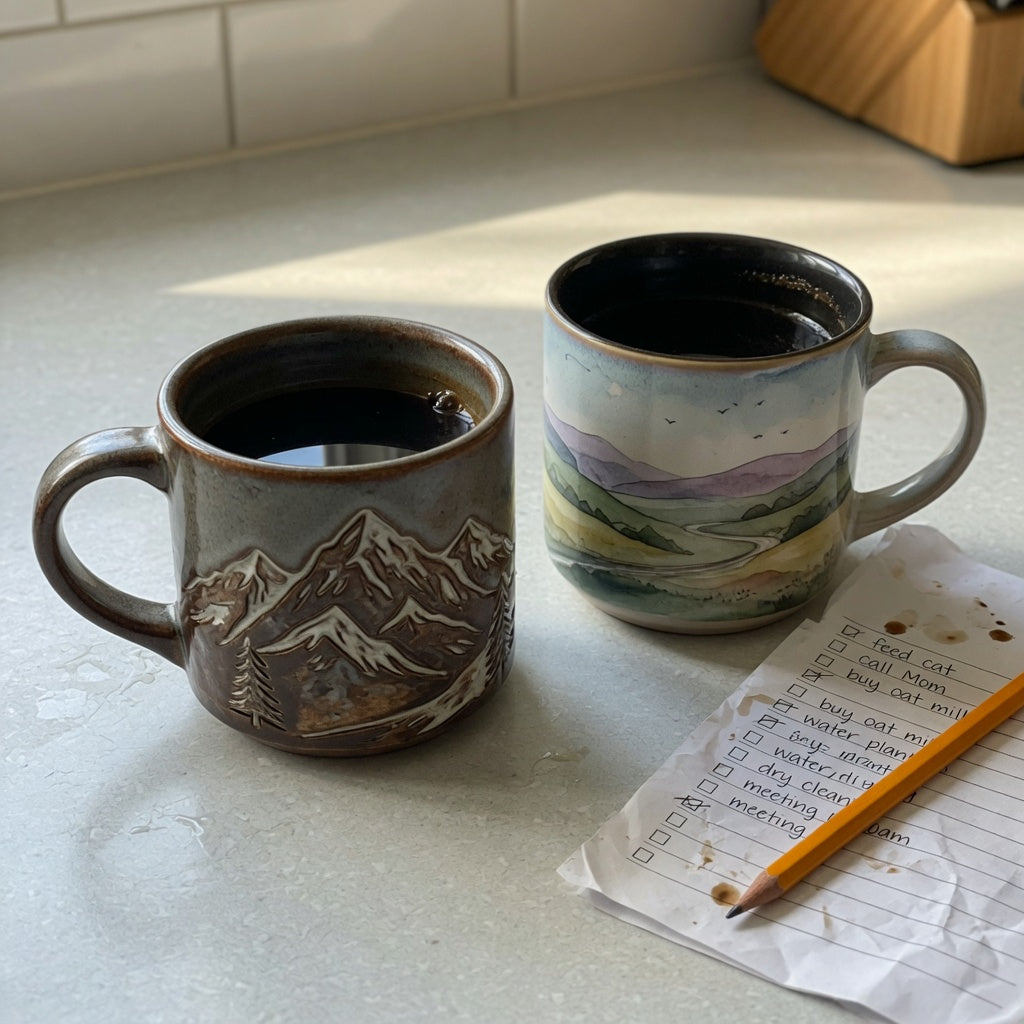
Mountain Ceramic Coffee Mug Comparison: Buyer Checks
Reading time: about 13 minutes
A printed ridgeline can look sharp on the first morning and dull a few weeks later, after detergent and heat have worked on a surface image. A carved mountain can stay put and still annoy you if the handle opening is tight once the mug is full. Shoppers start with the picture. A useful mountain ceramic coffee mug comparison starts underneath it: how the scene was made, what the clay body is, what that listing says about washing and heat, and whether the rim is a decent place to drink hot coffee every morning.
In our store the same split shows up with gift orders and with people replacing a chipped everyday cup. In our experience, the photo is what gets the click, and the care line is what decides whether the mug is still in the weekday rotation a month later. Someone wants a piece that looks like a cabin weekend and also wants it beside a drip machine without a special washing ritual. The thumbnail does not settle that. The checks below do.
A mountain ceramic coffee mug comparison starts with the landscape method
The mountain is a design. The mug is a ceramic object. Mixing those up is how a crisp photo becomes a peeling surface, or how a handsome cup feels clumsy on the walk from the machine to a desk.
Before color, we sort the category into three making methods:
- Printed, screen-printed, or overglaze decal scenes. The landscape sits on or near the surface. Detail can be crisp, and the same image can repeat. Durability depends on whether that image was fired under or into a glaze, or applied more like a sticker.
- Carved, textured, or relief landscapes. The mountain is in the clay: incised lines, a raised ridge, a hand-built contour. A film cannot peel off. Thin carved edges can still chip, and deep outside texture is harder to wipe when coffee splashes it.
- Reactive or kiln-change glazes. The peak may be a glaze effect rather than a drawn mountain. Color can pool, break, or shift from firing to firing. That variation is the point, unless the listing promised matched pairs.
A dense, high-fired body does not prove the picture will last. The clay can be tough while a surface print is fragile. If the listing never says whether the artwork is underglaze, in-glaze, carved, or a cold application, treat permanence as not established.
If a mountain scene for coffee or tea is what you want from us, open the Great Mountain Coffee Tea Mug and read the current listing for how the landscape, material, and care are described. Do not borrow those details from a similar photo on another site. If the scale, finish, or care line is wrong for how you actually drink, compare wording across our unique coffee mugs instead of guessing from the thumbnail.
Stated capacity, handle clearance, and the rim your lip meets
Write down stated capacity in ounces or milliliters from the listing you are buying, not from a lookalike. FDA guidance describes cups and mugs as small ceramic hollowware commonly used for coffee or tea above room temperature. They normally, though not only, hold about 8 fluid ounces (240 milliliters), and they usually have a handle. That figure is a classification, not a target pour for a home carafe. The only volume that matters is the one stated for that exact piece.
Shoppers often ask whether a stated 12, 14, or 16 ounce size will match their brewer. We cannot answer that from a photo. Match the number on the listing to the pour you already make. If the maker does not state a volume, leave it blank. A bigger silhouette is not a measurement.
Empty weight is the second number, when a maker lists it. A thick wall that feels sturdy on the shelf can feel tiring halfway through a long sit at the keyboard. Listings rarely give wall thickness. A heavy foot and a chunky rim are the clues you can see: more ceramic between your hand and the coffee. Some drinkers want that. Others find it bulky in a cabinet. We do not have a shared heat test that fills mountain mugs to the same line and times an open rim, so treat a keeps-coffee-hot line as a feel unless the listing gives you something concrete.
Handle and rim checks we use on the counter:
- Can two fingers pass through the opening without scraping, including when the mug is full and your grip shifts?
- Does the handle join the body in a thick, smooth attachment, or in a thin neck that cracks easily when mugs knock in the sink?
- Are you fine with a ceramic loop that warms with the drink? A side handle in another material is a different object. If you are choosing between a classic loop and a wood grip, read our wooden-handle mountain mug comparison and still verify each current listing. A related article is not a spec for this mug.
- Is the lip glazed where your mouth rests? A sandy, unglazed rim is unpleasant with hot coffee and harder to keep clean.
Interior glaze matters more than a matte exterior for stains. Coffee oils cling to worn, crazed, or rough drinking surfaces. A glossy food-contact glaze usually wipes cleaner. A matte outside can still be the right look if the inside is smooth and fully glazed. Foot rings cause a quieter complaint after a week on a desk: an unglazed foot holds a film of water and can mark bare wood if you set the mug down wet. Dry the foot, or use a coaster. If you need two mugs to nest in a short cabinet, check height and whether the handle sticks out. Do not assume they stack because the photos look alike.
Stoneware, porcelain, or earthenware under the scene
People ask whether a mountain coffee mug should be stoneware or porcelain. The clay family changes weight, porosity, and rim feel more than it changes the picture.
Stoneware is the everyday, heavier body we handle most often in this category. Fired hot enough to vitrify, a sound glazed stoneware wall does not drink water the way a low-fired planter does. It feels dense. It still breaks on a tile floor. Vitrification means the clay has tightened so it absorbs little water. It is not a lead test, and it is not a promise that the decoration will survive detergent.
Porcelain is also a high-fired, vitrified clay, often lighter in color and sometimes thinner at the lip. A thin porcelain rim can feel right with tea. It can feel delicate if you are used to diner mugs, and a thin wall is not automatically kinder when the coffee is very hot. Thickness and glaze still decide how heat meets your hand. A dense body can still wear a weak surface print.
Earthenware is the family to question for daily hot drinks unless the maker is explicit about a fully glazed, food-use piece fired for that job. Lower-fired clay stays more porous. Water that soaks in through a pinhole, a crack, or a bare spot makes stains worse and makes microwave heating less predictable, because absorbed water heats along with the drink.
The word ceramic, used alone, covers all three families. On any mountain mug we sell, read the material line on that listing. A similar product name is not a spec sheet. If the Great Mountain page does not name stoneware, porcelain, or earthenware, that detail stays unconfirmed.
Dishwasher claims, microwave labels, and artwork that peels
Dishwasher safe and microwave safe are different sentences. A listing that says one does not imply the other. If neither is stated for that exact mug, we treat both as not established, including on pieces in our own catalog. A review of a different colorway does not fill the blank.
The dishwasher is a chemical and knocking test. Alkaline detergent, hot water, and mugs hitting a rack attack surface decoration first. Underglaze or in-glaze color, and carved clay, have less to peel than an on-glaze decal, a screen print, or a sticker. We will not invent a cycle count. There is no shared public test that says a mountain print survives a set number of washes. If the design has to look new after daily machine washing, buy only where dishwasher use is claimed for the decorated surface. The body can still chip if it bangs metal.
The microwave fails differently. A porous body that has soaked up water can heat unevenly. Gold, metallic, or luster decoration is a reason to stay out of the microwave unless the maker says that exact decoration is microwave safe. A glossy interior is not metal. A gold rim is. When those details are unclear, hand-wash the mug and reheat the coffee in a vessel you already trust.
Hand-washing is the conservative path for carved texture, for a kiln-change surface you want to keep as fired, and for any mug whose care line is silent. Use a soft sponge. Skip the abrasive pad on the image. Dry the foot before it goes back on bare wood.
Lead, cadmium, and the limit of a lead-free slogan
A mountain scene does not tell you whether the glaze belongs under hot coffee. The surfaces that matter are the ones the drink and your mouth touch: the interior, and the rim. Artwork on the outside is a smaller part of that question. Bright on-glaze color on the lip is a reason to look for documentation, because that band meets your mouth on every sip.
FDA compliance guidance on lead in ceramicware sets a cups-and-mugs guideline of 0.5 micrograms of lead per milliliter of leaching solution. The level is applied to any one of six units, and the methods referenced include ASTM C738. The guidance also says some ceramic foodware can release significant amounts of lead from surfaces that may touch food, that food can extract that metal, and that continued food use of ware releasing lead carries a risk of chronic lead poisoning. Lead compounds such as lead oxide have historically been used in glazes to help control melting. If firing is inadequate or poorly controlled, lead can remain incompletely bound in the glaze and move into food.
Cadmium is a separate guideline. For small hollowware, defined as capacity under 1.1 liters, which covers ordinary coffee mugs, the figure is 0.5 micrograms of cadmium per milliliter of leaching solution for any one of six units. FDA has said extractable cadmium from ceramicware could cause chronic cadmium poisoning if that ware stays in continued food use.
A lead-free line is not a lab result. FDA guidance says ceramicware that still shows extractable lead under the agency test method should not be labeled lead free, and that the term can be false or misleading when extractable lead is present. A slogan without a named test, a sample size, or a clear food-contact statement does not close the question. We will not call a specific mountain mug safe or unsafe from a photograph, including pieces we sell. This is regulatory context for a buying decision, not a medical read on a cup already in your cupboard.
Stop using a mug for drinks when the food-contact surface is cracked, flaking, powdery, or heavily crazed. Those are paths for stains and for more contact between the drink and the ceramic. We then treat the piece as retired drinkware, not as a mug that needs a harsher scrub.
Home desk, gift box, or trail: where ceramic loses
Ceramic mountain mugs belong on a kitchen counter, an office desk, or a cabinet shelf. They are a poor camping cup and a poor commuting cup. Enamel, or an insulated travel mug, survives a drop and a car door. A glazed landscape does not. If the real habit is trail coffee, do not buy breakable ceramic because the photo looks outdoorsy.
Gifting is where these mugs make sense, once you set the expectation before the box is opened. Handmade and kiln-change pieces will not match. Glaze can pool on one foot, a carved ridge can sit slightly off center, and stated capacity can differ enough that two mugs from the same series do not pour level. That variation is normal. It is a problem only when the recipient wanted factory twins.
What this kind of mug is not good for:
- A camp kit, a suitcase, or a tote where it can strike a bottle
- The microwave, if you see metal, gold, or luster, or if microwave use is unstated
- A matched set, when the method is reactive glaze or small-batch carving
- A dishwasher, when the only evidence is that some other mountain mug survived
Run this mountain ceramic coffee mug comparison on the listings still in the cart. Use maker-stated specs only. Leave a cell blank rather than borrowing a number from a similar title.
| Check | What to record | Why it changes the buy |
|---|---|---|
| Landscape method | Print or decal, carved relief, or kiln-change glaze | Peel risk versus one-of-a-kind variation |
| Clay family | Stoneware, porcelain, earthenware, or only the word ceramic | Weight, porosity, and rim feel |
| Capacity | Ounces or milliliters on that listing | Matches a real pour, not a photo |
| Handle and rim | Opening, attachment, glazed lip or not | Daily comfort and a clean drinking edge |
| Interior | Gloss food-contact glaze versus matte or bare clay | How coffee and tea stains sit |
| Appliance lines | Dishwasher, microwave, both, or silent | One label does not cover the other |
| Food-contact note | A test reference or food-use statement, not a bare slogan | Hot drinks meet the interior and the lip |
| Job | Home or desk, gift, or trail | Ceramic loses to enamel and travel cups on the move |
If the Great Mountain Coffee Tea Mug listing fills the rows you actually care about, that is the piece to order. If a row you need is blank, look through the unique coffee mugs and compare the care language there. A blank is not a yes.
Frequently asked questions
What should a mountain ceramic coffee mug comparison include before I buy?
Compare how the landscape was made, the clay family, the stated capacity, the handle opening, the rim and interior glaze, and whether dishwasher and microwave use are claimed for that exact piece. Add a food-contact question instead of trusting a photo or a one-line lead-free slogan. If the current listing does not state a spec, leave it blank.
Are mountain ceramic mugs dishwasher and microwave safe?
Only when the listing for that mug says so, and the two claims are separate. Detergent and knocking threaten surface prints. Microwave trouble shows up more with a water-absorbing body or with gold, metal, or luster. If the care line is missing, hand-wash the mug and do not assume the microwave is fine.
Will a printed mountain design fade or peel?
It can, especially when the image is an on-glaze decal, a screen print, or a sticker rather than underglaze, in-glaze color, or carved clay. There is no shared wash-cycle count for mountain artwork as a category. If the maker does not say the decoration is dishwasher safe, treat peeling as an open risk.
Does a lead-free label mean a ceramic mug is fine for daily hot coffee?
Not by itself. FDA guidance says ware that still releases lead under its test method should not be called lead free, because that wording can be misleading. The cups-and-mugs lead guideline is 0.5 micrograms per milliliter of leaching solution, applied to any one of six units. Ask what the interior and rim are, and do not treat an unverified slogan as a lab result.
Is a ceramic mountain mug better kept at home than packed for camping?
Yes. It fits a kitchen, a desk, or a gift box. It is the wrong tool in a backpack or a commute, where one drop ends it. Use enamel or an insulated travel cup on the move, and keep the ceramic piece where it can be washed and stored without being knocked around.
More from our blog
Ready to pick your mug? Two ways to save on today's order:
Ordering 1–3 mugs? Get an extra 10% off your 1st order with code 10_OFF Apply 10% Off & Shop Wooden-Handle Mugs →
Gifting 4+ mugs? Buy 3, Get the 4th Free applies automatically at checkout (no code needed; offers do not stack) · Free standard shipping (Nov pre-Christmas delivery: 15–20 calendar days US) · Free replacement if chipped in transit.
Popular mug buying guides: Wooden-Handle Tea Infuser Mugs Compared · Christmas & Secret Santa Mugs 2026 · Espresso & Cortado Cups Guide · Cup & Saucer Gift Sets · All 25 Mugs Spec Table · Mug Size Guide · Shipping & Promo FAQ
FIRST ORDER 10% OFF (CODE: 10_OFF) · OR BUY 3, GET THE 4TH FREE


Read more
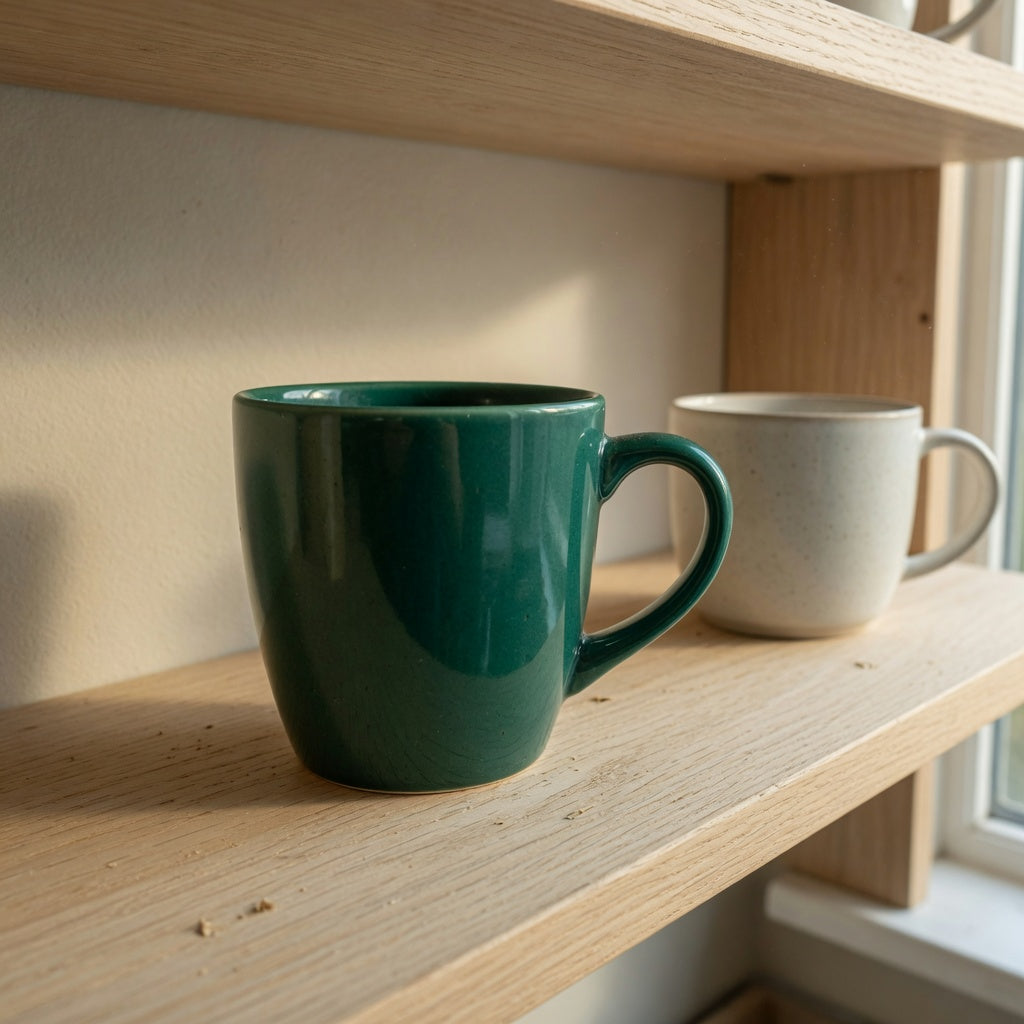
Emerald Green Ceramic Mug Open Shelf: Checks Before You Buy
An emerald mug on an open shelf is a color decision and a storage decision at once. We cover glaze shifts, footprint, dust, and which live listing facts to check before you buy.
Read more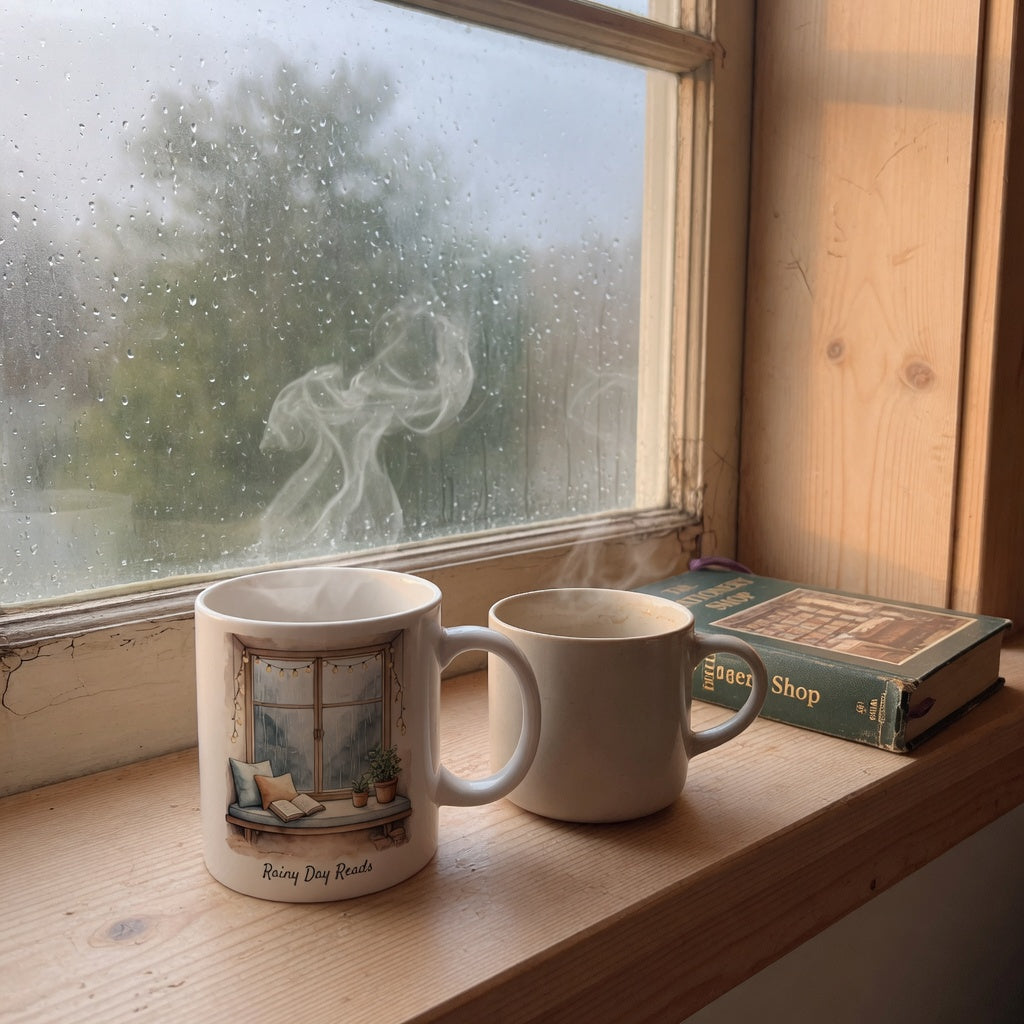
Window Seat Coffee Mug: What Buyers Should Compare
Shoppers searching for a window seat coffee mug usually land on three different products: cozy art ceramics, aviation slogan cups, and insulated travel tumblers. We compare size, print care, microw...
Read more
Leave a comment
This site is protected by hCaptcha and the hCaptcha Privacy Policy and Terms of Service apply.