
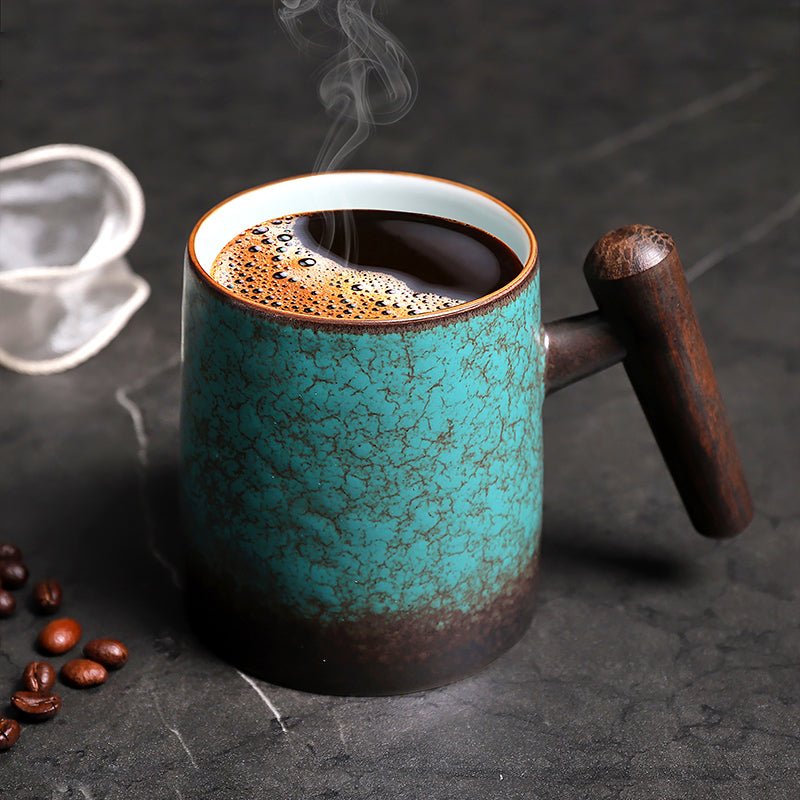
Lungo Coffee Cup Morning Routine Practical Purchase Checklist
Reading time: about 9 minutes
At 7:10 a.m., the wrong cup usually reveals itself through a small irritation: your normal pour sits too close to the rim, you have to return to the kitchen for a refill, or a small drink disappears into far more empty space than you wanted. Our lungo coffee cup morning routine practical purchase checklist starts with the parts of that problem you can measure before buying: morning timing, final drink volume, and refill tolerance.
In our store, we find that shoppers often know the style they like before they know how many milliliters they actually use. For this shortlist, the verified catalog facts are deliberately narrow: the Retro Coffee & Tea Cup is listed at 170 ml, the Pleated Coffee & Tea Cup at 200 ml, and the Emerald Coffee & Tea Mug at 270 ml. If those capacity points do not suit your routine, continue through our unique coffee mugs collection instead of forcing a mismatch. We compare listed capacity and potential headroom only; we do not infer material, outer dimensions, heat behavior, care compatibility, or equipment fit from a name or photograph.
The lungo coffee cup morning routine practical purchase checklist starts with timing
A cup used for a few minutes at the kitchen counter solves a different scheduling problem from one carried to an office desk. Timing does not prove how long any cup will retain heat. It tells you how much you intend to prepare at once and how disruptive a refill would be.
- Mark your real drinking window. Note the first sip and the point when you leave home, enter a meeting, or move away from the desk.
- Measure the finished fill. After your current cup has cooled, recreate its normal fill line with cool water and pour that water into a graduated measuring jug. Include the space normally taken by water, milk, or other additions.
- Set your refill tolerance. Choose zero, one, or flexible. A planned second pour is different from an annoying, unexpected trip back to the kitchen.
- Account for movement. A cup carried through a doorway or up stairs generally needs a fill line you consider comfortable below the rim. That preference is personal, not a fixed industry number.
Which listed capacity gives your usual pour enough headroom?
Use your measured final volume rather than a universal definition of a lungo. The useful calculation is simple: listed capacity minus measured final volume equals nominal capacity margin.
| Option | Verified listed capacity | Relative capacity | Morning fit to test |
|---|---|---|---|
| Retro Coffee & Tea Cup | 170 ml | 30 ml below Pleated and 100 ml below Emerald | Your measured drink sits comfortably below 170 ml and you want the tightest capacity match of these three. |
| Pleated Coffee & Tea Cup | 200 ml | 30 ml above Retro and 70 ml below Emerald | Retro leaves too little margin, while 270 ml would leave more unused listed capacity than you prefer. |
| Emerald Coffee & Tea Mug | 270 ml | 70 ml above Pleated and 100 ml above Retro | You need the highest listed capacity of the three for your measured volume and chosen buffer. |
For example, a measured 150 ml final drink produces nominal margins of 20 ml in the Retro, 50 ml in the Pleated, and 120 ml in the Emerald. That example does not define the correct volume for a lungo; it only demonstrates the arithmetic. Listed capacity also does not establish your comfortable carry line, so treat a margin close to zero cautiously and review the current product information before checkout.
How many refills can your weekday routine tolerate?
Refill tolerance often settles a close decision. If your kitchen is down the hall from your desk, a second pour costs more time than it does during a slow morning beside the counter.
- Zero-refill routine: Choose only an option where the total amount you want to prepare, plus your preferred capacity margin, stays within the listed figure.
- One planned refill: A lower-capacity cup can still be the practical choice. The refill is part of the routine rather than a sizing failure.
- Variable weekday and weekend use: Buy for the morning you repeat most often. An occasional larger serving does not automatically justify more unused capacity every weekday.
A larger cup filled with the same amount does not reduce refills; it merely creates a larger nominal margin. Capacity also tells us nothing dependable about weight, hand comfort, or heat retention. Those variables require separate product details.
What must you verify beyond capacity before placing the order?
We would rather label a detail unknown than turn a product image into a specification. Before ordering, check the live listing or ask our store about any feature that can make or break your routine.
- Body material and finish: Confirm the exact material wording. A photograph alone is not enough to label a cup ceramic, stoneware, porcelain, or suitable for a particular care method.
- External dimensions: Look for overall height, outer rim diameter, and base diameter. Milliliter capacity cannot predict shelf clearance, cup-holder fit, or clearance beneath coffee equipment.
- Handle and rim geometry: If the design has a handle, check its opening and attachment points in the available photos and specifications. Rim profile and handle clearance affect use, but neither should be guessed from capacity.
- Care instructions: Look for explicit dishwasher and microwave guidance. If your evening routine depends on repeated dishwasher cycles and compatibility is not stated, treat it as unconfirmed.
- Included pieces and current policies: Do not assume that a saucer, lid, spoon, or other accessory is included unless the listing says so. Check current return conditions before using or gifting the cup.
The unboxing check our team uses is straightforward. Wipe the base and set the empty cup on a flat, dry counter to check for persistent rocking. Visually inspect the rim for chips and, if a handle is present, examine both attachment points for visible hairline cracks; then recreate your intended fill line with cool water before putting the cup into daily rotation.
Which morning situation points to 170 ml, 200 ml, or 270 ml?
A measured drink finished before leaving: Retro 170 ml
Situation: Your final prepared amount sits comfortably below 170 ml, and you usually finish it in one sitting. Why it fits: Retro has the smallest listed capacity in this comparison, so it can provide the closest capacity match for a lower measured pour. Trade-off: It is not a good choice if your normal fill approaches 170 ml and you want generous headroom. Next step: Review the current details for the 170 ml Retro cup.
A middle capacity with 30 ml more room: Pleated 200 ml
Situation: Your measured amount and chosen buffer no longer fit comfortably within the 170 ml calculation, but 270 ml would create more unused listed capacity than you want. Why it fits: Pleated adds 30 ml over Retro while remaining 70 ml below Emerald. Trade-off: That extra 30 ml may still be too little if additions regularly change your final volume. Next step: Check the live listing for the 200 ml Pleated cup.
A higher-volume, zero-refill plan: Emerald 270 ml
Situation: Your measured drink plus preferred margin exceeds the 200 ml calculation, or you want the widest listed-capacity margin in this shortlist. Why it fits: Emerald provides 70 ml more listed capacity than Pleated and 100 ml more than Retro. Trade-off: A smaller pour will leave more unused room, and the larger capacity does not guarantee heat retention or equipment fit. Next step: Compare your measurement with the 270 ml Emerald mug.
A routine that does not match any of the three
Situation: Your final volume falls outside the shortlist, or physical dimensions and care requirements matter more than capacity. Why the collection fits: It lets you continue comparing instead of choosing the nearest number and hoping. Next step: Browse the full unique coffee mug selection and verify the live specifications of any new candidate.
When should you leave this three-cup shortlist?
This compact shortlist is not a good basis for the purchase if a non-capacity requirement remains unanswered. Move to another option or pause the order if:
- Your measured final drink plus desired margin reaches or exceeds 270 ml.
- Your serving is much smaller and you want less unused capacity; use our ceramic espresso cup morning-routine checklist to frame that decision separately.
- Base width and counter stance matter more than milliliters; compare those priorities with the wide-bottom coffee mug morning checklist.
- You are buying for someone else and do not know the recipient's normal volume or refill habits; start with our coffee mug gift morning-routine checklist.
- You need guaranteed equipment clearance, a specific body material, or confirmed dishwasher compatibility and cannot verify it on the live listing.
Can you make the decision in two minutes before checkout?
Run this lungo coffee cup morning routine practical purchase checklist once with real measurements:
- Recreate your usual finished fill line with cool water and record the milliliters.
- Write down your usual drinking window and acceptable number of refills.
- Subtract your measured volume from 170 ml, 200 ml, and 270 ml.
- Remove any option with a negative margin or a margin that feels too narrow for how you carry the cup.
- Choose between the closest capacity match and extra room; do not select the largest number automatically.
- Verify material, height, rim and base diameters, handle details, included pieces, and care guidance on the current listing.
- If no option passes every required check, return to the collection instead of compromising on a daily-use requirement.
Frequently asked questions
What size lungo coffee cup works best for a morning routine?
There is no universal volume we can stand behind for every shopper. Measure your final prepared drink, compare it with 170 ml, 200 ml, and 270 ml, and choose the option that leaves a comfortable margin for your stationary or carried use.
How much more headroom does 200 ml provide than 170 ml?
For the same measured pour, the 200 ml Pleated cup provides 30 ml more nominal listed-capacity margin than the 170 ml Retro cup. Actual comfortable headroom still depends on the cup's interior profile and your preferred fill line.
Will the 270 ml Emerald mug remove the need for a refill?
Only if the total amount you want to prepare, plus your preferred margin, fits within its 270 ml listed capacity. Choosing a larger cup without preparing more drink does not change how much coffee you have.
Are these cups guaranteed to fit my coffee equipment or dishwasher?
No fit or care guarantee should be inferred from listed capacity. Check current external dimensions and product-specific dishwasher or microwave guidance; if a required detail is missing, treat it as unconfirmed.
What should I check before buying a lungo cup for every morning?
Use the lungo coffee cup morning routine practical purchase checklist in this order: timing, measured final volume, refill tolerance, capacity margin, and then the remaining product specifications. This keeps the decision anchored in verified capacity facts rather than assumptions about material, fit, or performance.
Your next step: Recreate tomorrow morning's normal fill with a measuring jug, record the result, and compare it with the unique coffee mugs collection. Open the 170 ml, 200 ml, or 270 ml option that leaves your preferred margin, then verify every non-capacity requirement before ordering.
Read more
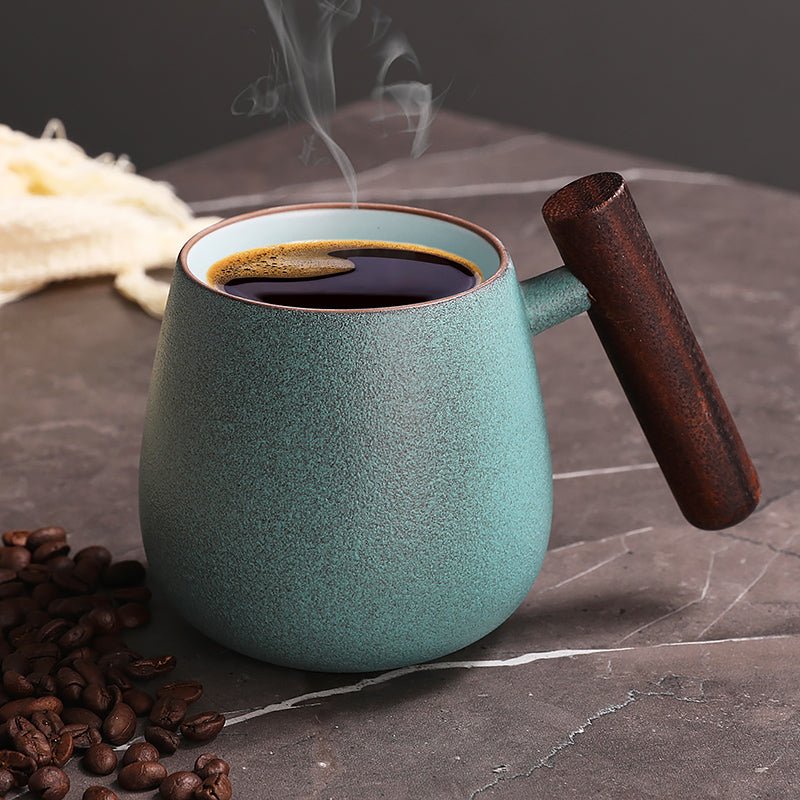
Green Ceramic Coffee Mugs Morning Routine Practical Purchase Checklist
Match a green ceramic mug to your real morning: available time, normal pour, refill tolerance, grip, counter space, and care needs. This checklist maps those details to CoffeifyMug options without ...
Read more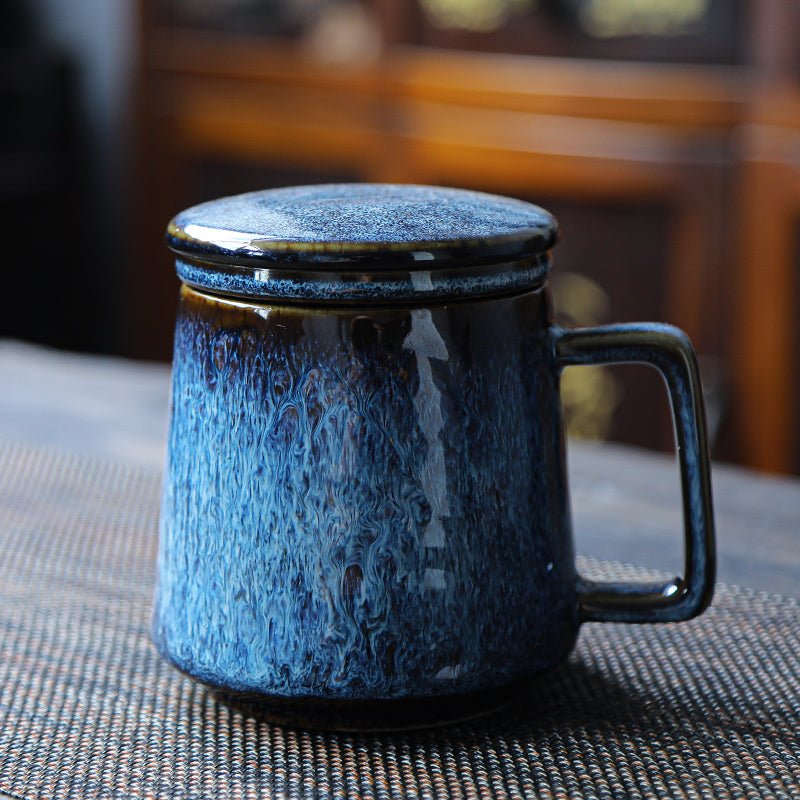
Large Unique Coffee Mugs Morning Routine Practical Purchase Checklist
Measure your real morning pour, decide how many refills you tolerate, and check brewer clearance, loaded weight, grip, and care. This checklist shows how to shortlist CoffeifyMug designs without gu...
Read more
Leave a comment
This site is protected by hCaptcha and the hCaptcha Privacy Policy and Terms of Service apply.