
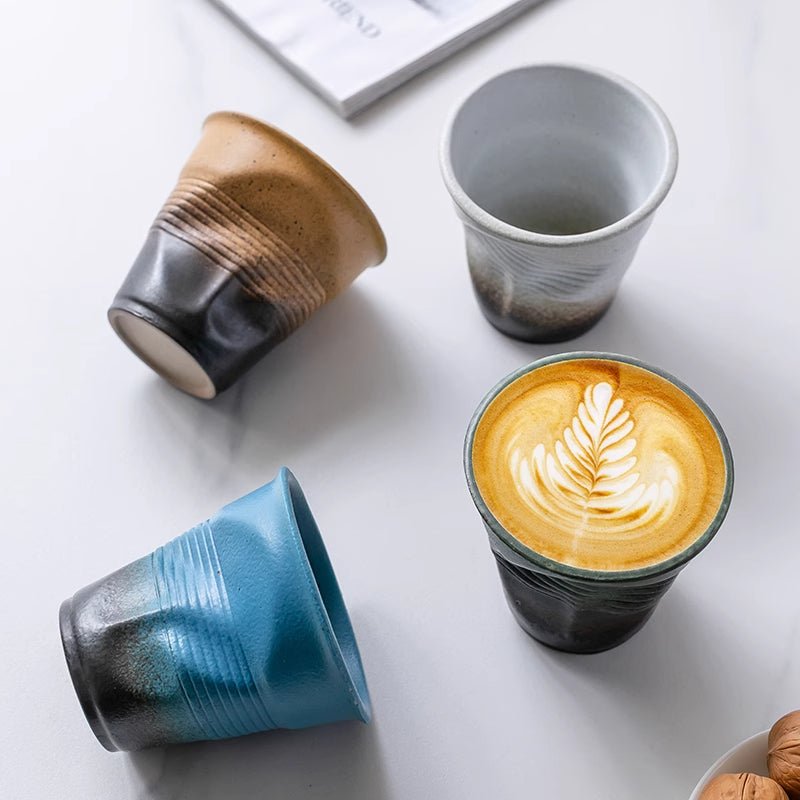
Lungo Coffee Cup Compact Kitchen Practical Purchase Checklist: 3 Cups
Reading time: about 9 minutes
A cup can hold your drink and still fail a small kitchen. The cabinet door may catch its widest point, the shelf opening may be lower than the space behind it, or the cup may sit neatly on the counter but leave no room for your hand to lift it. This lungo coffee cup compact kitchen practical purchase checklist separates those storage problems from the one verified product measurement we can compare: capacity.
In our store, we handle these decisions by refusing to treat milliliters as exterior dimensions. The verified catalog facts are the Retro at 170 ml, Pleated at 200 ml, and Emerald at 270 ml. Height, maximum width, base footprint, material, care compatibility, and equipment clearance are not established by those capacity figures, so each requires a separate check.
Lungo coffee cup compact kitchen practical purchase checklist: seven checks
Use this sequence before opening product pages. It prevents a capacity comparison from turning into an unsupported cabinet-fit assumption.
- Measure your usual filled drink. Include anything you normally add, then check the total with a marked kitchen measure instead of relying on a universal lungo volume.
- Decide how much carrying headroom feels comfortable. Consider the trip from counter to table or office desk, especially if you turn corners or use stairs.
- Measure the cabinet opening. Record the front opening height and width, not just the room available farther inside the shelf.
- Check usable depth. Measure from the back of the shelf to the closed door and note any space lost to a hinge.
- Test the lifting path. A cup may fit while standing but still be awkward to lift beneath the shelf above it.
- Confirm the missing specifications. Do not assume material, dishwasher use, microwave use, stackability, or exterior size from a product name or photograph.
- Read the current return terms. If permitted, dry-fit the cup in its intended storage location before washing or using it.
What do 170 ml, 200 ml, and 270 ml actually tell you?
Listed capacity answers how much internal volume is available. It does not establish the cup's height, width, handle projection, base diameter, or ability to fit beneath a particular dispenser. Here is the full capacity-based comparison we can support.
| Option | Listed capacity | Reason to shortlist it | What not to infer |
|---|---|---|---|
| Retro Coffee Tea Cup | 170 ml | Lowest listed capacity; consider it if your measured fill still leaves the carrying margin you prefer. | It is not automatically the shortest, narrowest, or easiest to stack. |
| Pleated Coffee Tea Cup | 200 ml | Provides 30 ml more listed capacity than Retro and 70 ml less than Emerald. | Its middle capacity does not prove middle exterior dimensions. |
| Emerald Coffee Tea Mug | 270 ml | Largest listed capacity, providing 100 ml more capacity than Retro for the same comparison. | It does not establish equipment fit, insulation, a lid, or cabinet clearance. |
These figures are useful for screening headroom, but the verified facts do not include a recommended fill line or a stated distance from the liquid to the rim. Browse the unique coffee mugs collection to compare the current listings and images, then let explicit specifications rather than visual scale settle the storage question.
How much headroom does your usual pour need?
Headroom has two meanings that shoppers often mix together. Volumetric margin is the unused capacity left after pouring. Physical headroom is the visible distance between the liquid and rim. We can compare the first for an identical measured drink, but internal shape is needed to predict the second.
- Prepare the drink exactly as you normally serve it, including additions.
- Measure the total liquid amount with a marked kitchen measure.
- Subtract that amount from 170 ml, 200 ml, and 270 ml to compare the screening margin.
- Use your current cup to judge whether that type of margin feels steady along your normal carrying route.
A result close to the listed capacity deserves caution. A cup filled near its limit is harder to carry without spills, and we do not recommend treating the capacity number as an everyday fill target.
Will the cup clear your cabinet opening and lifting path?
In compact kitchens, the smallest point in the route matters more than the largest empty area on the shelf. Our team checks the opening, the closed-door depth, and the hand movement needed to remove the cup. Capacity ranking cannot answer any of those questions.
- Front shelf opening: Measure around any lip, frame, or lowered edge that reduces access to the space behind it.
- Closed-door depth: Check that the door can close without pressing against the cup's widest point, including a handle if the design has one.
- Vertical lift: Leave enough room to raise the cup before pulling it forward. Tilting a full cup to escape a shelf is not a practical daily routine.
- Counter clearance: Check the space beneath upper cabinets and the room needed for your fingers. A cup can fit on the counter but still be awkward to pick up.
- Equipment clearance: Measure from the supporting surface to the lowest fixed obstruction. None of the three capacities provides an equipment-fit guarantee.
Your existing cup makes a useful template. Measure its maximum height, width, and footprint, then note what needs to be smaller or could be larger. Compare those requirements with the current product page if exterior dimensions are listed; if they are not, ask our store before ordering rather than guessing from capacity.
Which listed capacity matches your routine?
Retro 170 ml: your measured fill already leaves enough margin
Shortlist the Retro 170 ml cup if your normal measured serving fits while preserving the headroom you want for carrying. It fits this situation because it has the lowest listed capacity of the three, not because we can promise the smallest exterior footprint. It is not a good match if your usual fill approaches 170 ml before you allow for a practical buffer.
Pleated 200 ml: 170 ml feels tight, but 270 ml is unnecessary
The Pleated 200 ml cup is the middle listed option. Its 30 ml step above Retro may provide the extra capacity margin your measured drink needs without moving directly to 270 ml. Treat it as a liquid-capacity middle ground only; it is not automatically the best cabinet-fit compromise.
Emerald 270 ml: you want the largest capacity margin
Choose the Emerald 270 ml mug when your serving amount varies or the lower capacities leave less headroom than you prefer. For an identical pour, it provides the greatest unused volume among these three listed options. It is not evidence of travel-mug features, insulation, stacking, or dispenser clearance, and the added capacity may be unnecessary if 170 ml or 200 ml already works for your routine.
If exterior profile, material, care method, or visual style matters more than capacity, start with our collection of unique coffee mugs and verify those details on the individual listing. A different style is the better choice if one of your non-capacity requirements cannot be confirmed.
Which unknown specifications should stop the purchase?
Pause before ordering if your kitchen depends on a feature that is not expressly stated on the current product page. The verified comparison for this article does not establish the following:
- Exact exterior fit: overall height, maximum width, handle projection, and base footprint.
- Storage behavior: stackability, nesting, or compatibility with a hanging rack.
- Material and weight: both can affect handling, care, and drying-rack practicality.
- Care compatibility: dishwasher and microwave suitability should never be inferred from the word cup.
- Special-purpose features: a lid, insulation, travel use, or guaranteed clearance beneath equipment.
None of these cups should be bought on capacity alone if a precise cabinet fit is non-negotiable. In our experience, confirming one extra specification is less frustrating than storing a cup on the counter because it cannot pass through the intended shelf opening.
What should you inspect at unboxing?
Once a cup arrives, we recommend checking condition and dry fit before it becomes part of the daily washing cycle. Read the applicable return terms first, then use this sequence:
- Inspect the rim, body, and base under bright light for chips or hairline cracks.
- Wipe the base and place the empty cup on a flat, dry counter to check for persistent rocking.
- If the design includes a handle, inspect both attachment points without twisting or loading them.
- Place the empty cup in its intended cabinet, close the door gently, and remove it using your normal hand movement.
- After deciding to keep it, follow the current care instructions and test your usual measured fill before carrying a hot drink.
Do not continue using a cup that arrives chipped or cracked. If dishwasher use is confirmed on the listing, load it where the rim cannot knock against nearby items during the cycle.
Frequently asked questions
How do I use the lungo coffee cup compact kitchen practical purchase checklist?
Measure your usual filled drink, choose a comfortable carrying margin, and record the cabinet opening, closed-door depth, and lifting clearance. Compare 170 ml, 200 ml, and 270 ml by capacity only. Verify exterior dimensions, material, care instructions, and any required equipment clearance separately.
Is a 170 ml cup large enough for a lungo?
It can be, but there is no universal lungo volume that covers every preparation or serving habit. Measure the complete drink you normally pour and check how much capacity remains below 170 ml. If the result leaves too little practical margin, compare the Pleated 200 ml or Emerald 270 ml instead.
Does a lower-capacity cup take up less cabinet space?
Not necessarily. Capacity measures internal volume, while cabinet fit depends on exterior height, width, footprint, and any handle projection. The Retro 170 ml cannot be called physically smaller than the other options without verified exterior dimensions.
Which cup provides the most headroom?
For the same measured amount of liquid, the Emerald 270 ml provides the greatest capacity margin, followed by the Pleated 200 ml and Retro 170 ml. We cannot convert that difference into a specific distance below the rim because the verified facts do not include internal shape or a recommended fill line.
Are these cups dishwasher-safe or microwave-safe?
The verified comparison facts used here do not establish material or dishwasher and microwave compatibility. Check the current individual product page before purchase and follow its care instructions. If the required care method is not stated, contact our store rather than assuming.
Your next step: write down your measured fill, preferred carrying margin, and maximum cabinet envelope. Then compare the three options in our mug collection, choosing by capacity only after the listing confirms the storage and care details your kitchen requires.
More from our blog
Read more
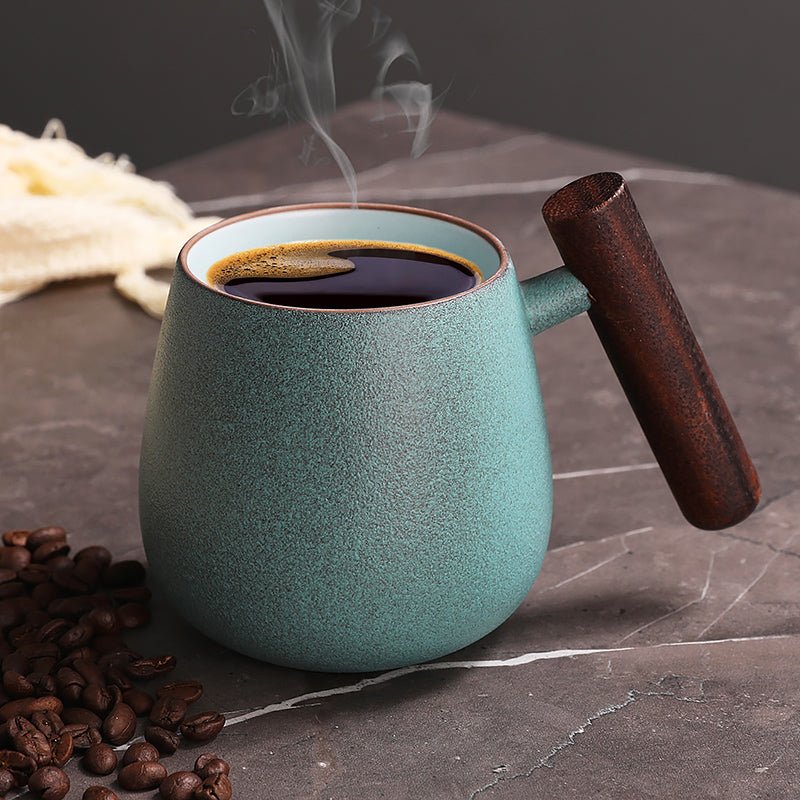
Black Tea Mug Compact Kitchen Practical Purchase Checklist: 7 Checks
Compare the 390 ml Round with the 400 ml Gradient and The Flow using shelf clearance, handle profile, serving volume, and care questions. This checklist separates verified catalog facts from detail...
Read more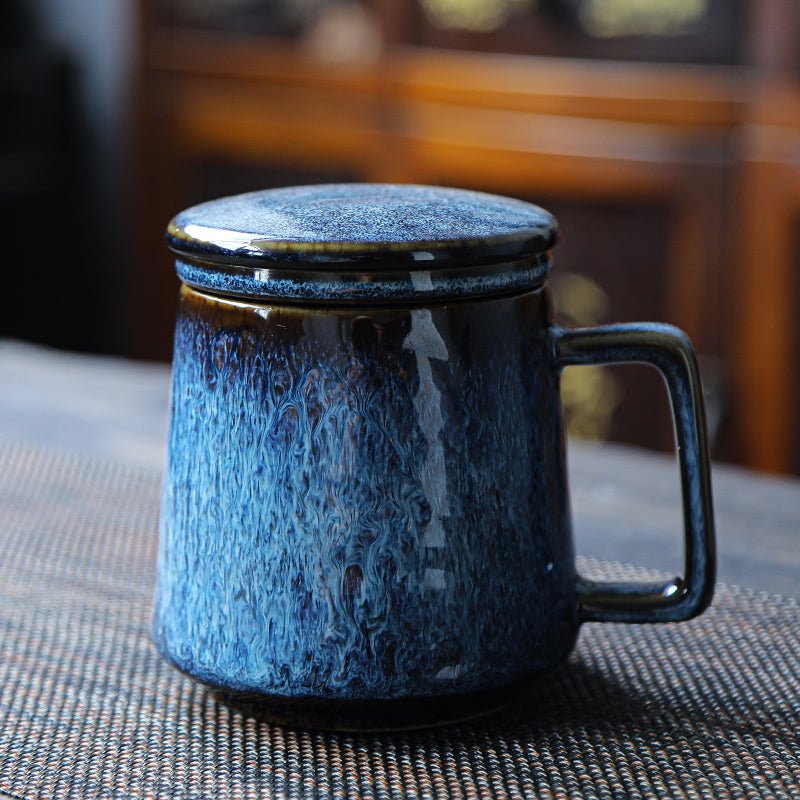
Cafe Au Lait Mug Compact Kitchen Practical Purchase Checklist: 3 Sizes
Compare The Flow 400 ml, Morning and Night 440 ml, and The Rock 480 ml using cabinet clearance, handle reach, serving volume, and listing-specific care checks. This guide separates verified facts f...
Read more
Leave a comment
This site is protected by hCaptcha and the hCaptcha Privacy Policy and Terms of Service apply.