
Loose Leaf Tea Mug Shared Household Practical Purchase Checklist
Reading time: about 9 minutes
One person leaves half a mug on the kitchen counter while another refills a smaller cup before breakfast is over. Add a crowded cupboard and one shared basket infuser, and choosing by appearance alone stops working. That ordinary mismatch is why we use a loose leaf tea mug shared household practical purchase checklist instead of telling every household to buy the largest option. At CoffeifyMug, we keep the comparison within facts our catalog supports: listed capacity, the Ball Handle mug's listed diameter, and the openings visible in product images.
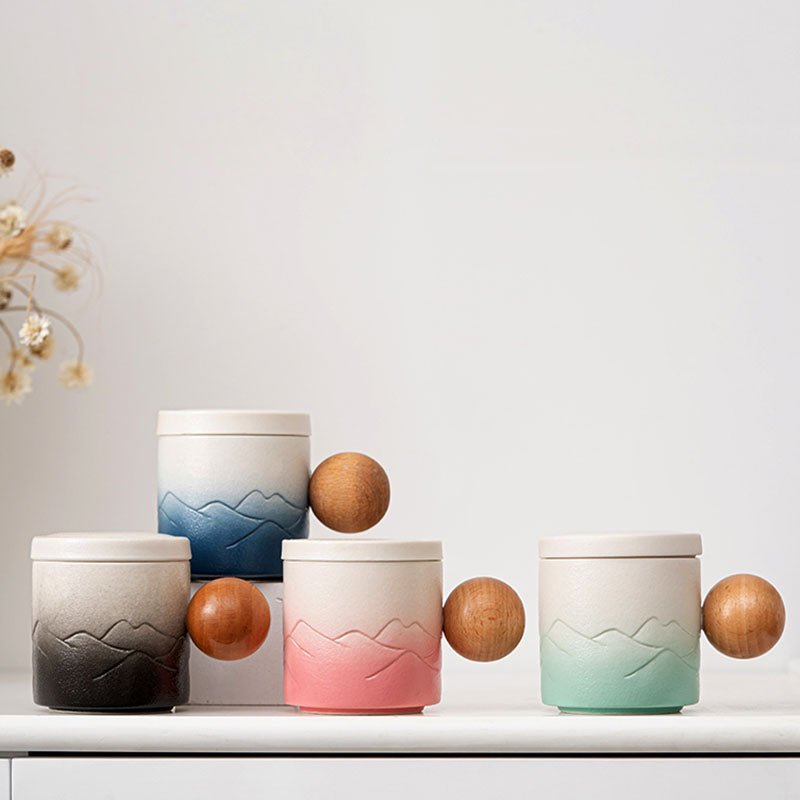
Start by viewing the shapes together in our unique coffee mugs collection, but treat that page as a visual comparison rather than a bundle offer. The linked products are separate pieces of drinkware. They do not include a brewing filter, basket, infuser, or any other unlisted tea accessory.
How much tea does each household member actually pour?
A shared household does not necessarily need one shared mug choice. Housemates, partners, or family members may use the same kettle and tea leaves while preferring different serving sizes. Capacity should therefore match each person's normal pour, not the total amount brewed in the pot.
- Short serving with frequent refills: Start the comparison at 250 ml. This suits someone who would rather return to the pot than carry a larger serving to the table.
- Long breakfast or desk serving: Compare 390 ml and 400 ml. Both provide substantially more listed capacity than 250 ml, although neither has a verified heat-retention claim.
- Two different routines: Choose each mug separately. A smaller pourer does not need to compromise on a 400 ml mug just because another person wants more capacity.
- Direct in-mug steeping: Check the brewing accessory before the mug. These products are drinkware only, so loose leaves need a separate, suitably sized infuser or must be brewed in another vessel.
For a useful home test, pour a normal serving into a measuring jug before transferring it to the mug you already use. Record the amount for each person. This takes capacity out of the realm of guesswork and also reveals who routinely leaves unused tea behind.
250 ml, 390 ml, and 400 ml: what changes in a shared kitchen?
The three verified capacities create two distinct decisions. There is a meaningful 140 ml step from the 250 ml Ball Handle mug to the 390 ml Round mug. The difference between the Round and 400 ml Spittoon mug is only 10 ml, so visible opening and personal preference are more useful tie-breakers at that end of the range.
| Product | Verified catalog details | Household situation it supports | What remains unknown |
|---|---|---|---|
| Ball Handle coffee and tea mug | 250 ml capacity and listed 11.2 cm diameter | A smaller individual serving when refilling is acceptable | Measured inner opening, base footprint, handle extension, material, and care compatibility |
| Round coffee and tea mug | 390 ml capacity; opening can be judged visually | A larger serving without moving to the highest listed capacity | Measured opening, full exterior dimensions, material, and care compatibility |
| Spittoon coffee and tea mug | 400 ml capacity; opening can be judged visually | The largest listed individual pour among these three options | Measured opening, full exterior dimensions, material, and care compatibility |
Listed capacity is not the same as a recommended fill line. A brim-full mug leaves little room for carrying, stirring, or the volume displaced by an infuser. Because no filter is included, do not interpret any of these capacities as proof that a particular brewing basket will fit or leave enough steeping room.
How to use the loose leaf tea mug shared household practical purchase checklist
We use the following order because it catches the practical conflicts that tend to appear at the counter, cupboard, office desk, and sink after a purchase.
- Measure each person's usual serving. Use water and a kitchen measuring jug. Compare the actual pour with 250 ml, 390 ml, and 400 ml rather than relying on terms such as small or large.
- Decide how acceptable a refill is. Someone who stays near the teapot may be comfortable with 250 ml. A person carrying tea to another room may prefer the additional listed capacity of the Round or Spittoon mug.
- Check the available storage space. For the Ball Handle mug, an 11.2 cm paper circle can provide a rough diameter check on a shelf. It is not a complete footprint template because the listing does not establish the base size or how far the handle extends.
- Match the opening to existing accessories. A basket infuser needs an appropriate basket width, rim support, and depth. Product photos show the openings, but they do not provide the measurements needed to guarantee fit.
- Agree on the care requirement. Dishwasher safety, microwave safety, material, and thermal performance are not verified in the supplied catalog facts. If any of those points is essential to the household routine, confirm it before ordering rather than inferring it from an image.
- Choose by person, not by household total. This comparison does not mean the products are sold as a set. Select the separate listing that matches each drinker's serving pattern.
In our experience, the missing-accessory check is especially important for gifts. A recipient opening one of these products receives drinkware, not a complete loose-leaf brewing kit. If an infuser is part of the gift plan, it must be selected separately and checked for fit.
Which CoffeifyMug option matches each household routine?
- One regular tea drinker who prefers smaller, repeated pours: The 250 ml Ball Handle mug is the relevant starting point because it has the lowest listed capacity. Its 11.2 cm listed diameter also gives you one concrete dimension to check against cupboard space, but that number should not be treated as the inner opening or base measurement.
- A drinker whose measured serving is above 250 ml: The 390 ml Round mug provides 140 ml more listed capacity than the Ball Handle option. It is the practical capacity step when 250 ml would create unwanted refills.
- A drinker who wants the highest listed capacity here: The 400 ml Spittoon mug is the matching product. Since it adds only 10 ml over the Round mug, inspect the visible opening and overall profile rather than choosing solely because 400 is the largest number.
- A household with mixed serving habits: Compare the three separate listings in the CoffeifyMug drinkware collection. A 250 ml choice for one person and a larger choice for another may be more practical than forcing a matching capacity.
None of these recommendations is based on insulation, handle comfort, weight, or material because those details are not verified in the supplied catalog facts. If grip or product weight determines usability for someone in the household, obtain those details before placing the order.
What can a visible opening tell you about an infuser?
A product image can show whether an opening appears relatively open or restricted, but perspective prevents a reliable measurement. Basket-infuser fit depends on the mug's inner rim width, the infuser basket's body width and depth, and the flange that rests on the rim. Those measurements are different from an exterior diameter.
This distinction matters most with the Ball Handle mug. Its listed 11.2 cm diameter does not establish an 11.2 cm inner opening, and it does not guarantee that a basket infuser will sit securely. Measure the widest part and support flange of the infuser already used in your kitchen, then confirm the corresponding mug dimensions before relying on direct in-mug steeping.
A tea ball or separate teapot may avoid some rim-fit concerns, but neither is included with these products. If the household wants a filter engineered specifically for the cup, a mug explicitly sold with a matching infuser would be a more suitable style.
What belongs in the unboxing and care routine?
Shared kitchens expose a mug to repeated sink rotations and different assumptions about care. We cannot claim that these products are dishwasher-safe or microwave-safe, so do not assign them to either routine without checking the current product information or receiving confirmation.
- Inspect the drinking rim: Look and feel carefully for a chip or rough point before first use.
- Check the handle junction: Look for a visible hairline crack or looseness without deliberately stressing the handle.
- Test the base: Set the empty mug on a clean, dry, level counter and check for obvious rocking.
- Use cautious care until details are confirmed: Hand-wash with mild dish soap and a soft sponge, then dry the mug. Follow any product-specific care instructions supplied with the item.
- Clean brewing gear separately: Remove leaves from the separate infuser and rinse it according to its own care instructions. The mug does not have an integrated filter to disassemble.
These are routine drinkware checks, not a claim that these models commonly arrive with defects. If a rim is chipped, a handle is cracked, or the base is unstable, stop using the mug and contact the store rather than placing it into the household rotation.
When is a different mug style the better purchase?
- You want one-piece brewing convenience: Choose a tea mug explicitly supplied with a fitted filter or basket. These CoffeifyMug listings do not include one.
- You need a commute mug: Choose drinkware with verified insulation and a secure lid. No lid, leak resistance, or thermal rating is established for these products.
- You require confirmed dishwasher or microwave use: Wait for that information or select a product whose care compatibility is explicitly stated.
- You need a communal serving vessel: A teapot or carafe is more appropriate than treating one 390 ml or 400 ml mug as a household serving pot.
- You need a matching multipack: Do not assume this comparison represents a set. Each linked item is presented as a separate drinkware product.
Material-specific preferences also require confirmation. The verified facts provided for this comparison do not identify a material, so appearance alone should not be used to claim ceramic, glass, metal, or any material-dependent performance.
Frequently asked questions
Can I brew loose leaf tea directly in these CoffeifyMug mugs?
The mugs do not include a filter, basket, or infuser. You can serve separately brewed loose-leaf tea in them, or use your own in-mug infuser after confirming that its width, flange, and depth fit the selected mug.
What should a loose leaf tea mug shared household practical purchase checklist include?
Record each person's usual serving volume, refill preference, cupboard allowance, existing infuser dimensions, and required care method. Then compare those needs with the verified 250 ml, 390 ml, and 400 ml capacities without assuming unlisted accessories or features are included.
Is a 250 ml tea mug enough for two people?
A 250 ml listing describes the capacity of one mug, not two servings or a two-mug set. It may suit one person who prefers a smaller pour, but two household members should calculate their own servings and select separate drinkware accordingly.
Will my basket infuser fit the Round or Spittoon mug?
Fit cannot be guaranteed from the available facts because measured opening widths and depths are not provided. Compare the visible openings for a preliminary check, then confirm dimensions before buying if your existing basket must fit.
Are these mugs dishwasher-safe or microwave-safe?
Those care claims are not verified in the catalog facts used for this article. Do not assume compatibility from the product photos; confirm the current care information first and use cautious hand-washing in the meantime.
Before ordering, write down five answers for each drinker: usual milliliters, refill tolerance, storage limit, infuser dimensions, and required care method. Then compare the separate options in the unique coffee mugs collection. Choose 250 ml, 390 ml, or 400 ml only after the verified capacity and the remaining unknowns both fit the household routine.
More from our blog
Read more
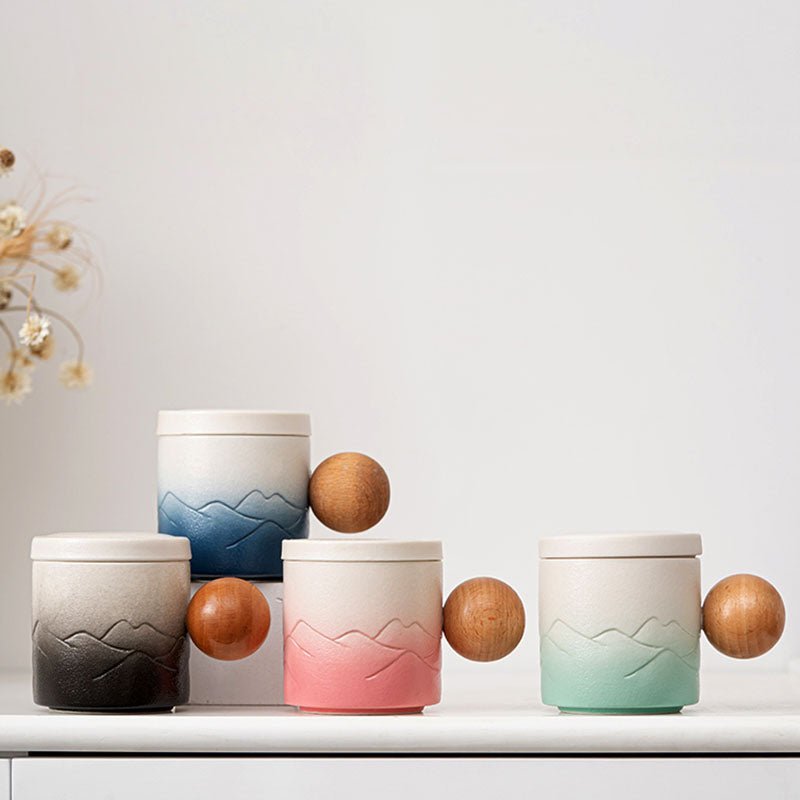
Flat White Cup Shared Household Practical Purchase Checklist by Size
Compare verified 200 ml, 250 ml, and 270 ml options for two drinkers with different serving preferences. This checklist covers headroom, grip, cupboard fit, care questions, and cases where another ...
Read more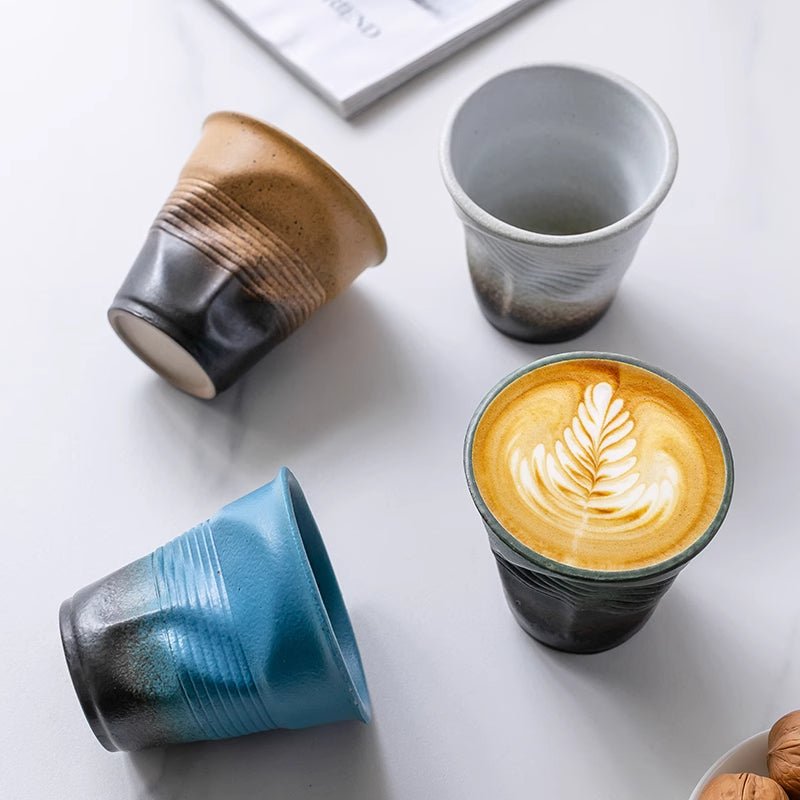
Cappuccino Coffee Mug Shared Household Practical Purchase Checklist
Compare the Retro 170 ml, Pleated 200 ml, and Emerald 270 ml by measured serving habits, cupboard constraints, care questions, and shared-kitchen routines.
Read more
Leave a comment
This site is protected by hCaptcha and the hCaptcha Privacy Policy and Terms of Service apply.