



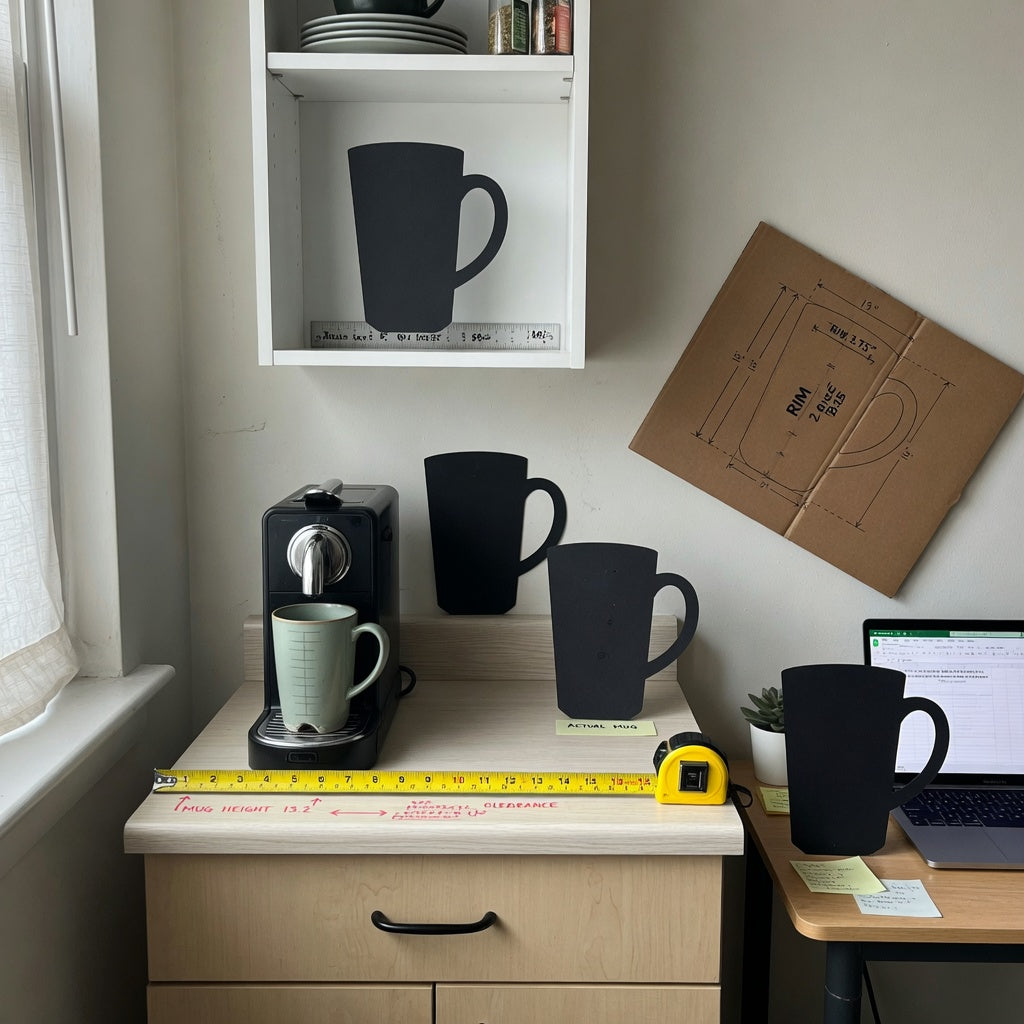
Latte Mugs Tall for Small Coffee Setup: Compare Fit and Capacity
Reading time: about 11 minutes
A mug can fit the drink and still fail the kitchen. We have seen shoppers measure a narrow counter, choose a large-capacity mug from a product photo, and discover that the rim reaches the espresso spout or the handle catches on the cabinet beside it. The search phrase latte mugs tall for small coffee setup points to that exact problem: you are balancing drink capacity against the few inches your kitchen actually gives you.
Start with clearance and footprint, not the color of the glaze. Capacity matters, but it does not tell you the mug’s height, base diameter, rim width, or handle projection. Those measurements decide whether the mug earns a place beside the machine or spends most of its life at the back of a cupboard.
Why does tall latte mug describe several different shapes?
Retail listings use tall latte mug for more than one vessel. Separating the shapes first prevents a common buying mistake: comparing a tall everyday mug with a short, wide café cup as if they were built for the same pour.
- Tall everyday mug: Usually a vertically oriented mug with straight or gently tapered walls. It gives you a familiar handle and a smaller shelf footprint than a wide bowl shape, but it needs more vertical clearance.
- Wide café latte cup: Shorter and broader, often with a generous rim. This shape gives a milk pitcher more room to approach the surface, which is useful for latte art, but the wider base takes more counter and cabinet space.
- Conical gift or photo mug: A vessel that narrows toward the base and opens toward the rim. It can look compact at the bottom while still taking significant room at the top, so the base measurement alone does not describe its footprint.
There is no single regulated latte-mug size. The FDA ceramic guidance describes a typical cup or mug as holding about 240 ml, or 8 US fluid ounces, for its regulatory classification. That is not a rule that every latte should be 8 ounces. It is simply a useful reminder that a retail mug’s listed capacity may be much larger than the familiar cup reference.
How should you compare latte mugs tall for small coffee setup space?
A tall mug can reduce the area occupied on a narrow shelf, but it exchanges horizontal space for vertical space. In a small kitchen, both dimensions matter. A mug with a small base may fit beside the grinder yet fail under the automatic coffee spout. A mug with a broad rim may be comfortable to sip from but collide with the cabinet door above it.
Measure the actual location where you will use the mug. Our team checks these points before recommending a tall silhouette:
- Machine clearance: Measure from the drip tray to the lowest part of the group head or coffee spout. Take the measurement with the portafilter locked in if your machine uses one.
- Cabinet clearance: Measure from the counter or shelf surface to the underside of the cabinet or shelf above. Leave room to lift the mug without scraping the rim.
- Base diameter: This determines how the mug sits on a narrow shelf, warming tray, desk mat, or car cup holder. A wide mouth does not automatically mean a wide base, and the reverse is also true.
- Rim diameter: A narrow rim can make a full drink feel awkward to sip, while a wider rim provides a better surface for pouring milk but may use more shelf space.
- Handle projection: Record how far the handle extends from the body and whether your fingers have enough room. This matters beside a wall, monitor, or another mug.
- Filled weight: If the mug will sit next to a keyboard or on a small desk, test the weight of the mug plus the liquid, not just the empty vessel. A narrow base and a high fill can feel less stable during ordinary reaching and typing.
Capacity cannot answer any of those questions. If a listing shows only milliliters or ounces, ask the seller for height, base diameter, rim diameter, and handle clearance before ordering. A simple cardboard outline cut to the listed or requested dimensions can also reveal a shelf problem before you unpack a mug.
What does 400, 440, or 480 ml mean in a real latte?
Listed capacity is usually a brim-full measurement. Your comfortable serving level will be lower because espresso, steamed milk, and foam need room below the rim. Filling a tall mug to the edge may create a spill risk when you carry it from the machine to your desk, even if the total volume matches your recipe.
For comparing listings, NIST’s approximate conversion uses 29.57 ml per US fluid ounce. That makes the capacities below useful reference points:
| Listed capacity | Approximate US fluid ounces | Practical question |
|---|---|---|
| 400 ml | 13.5 fl oz | Do you want a moderate serving with visible headroom? |
| 440 ml | 14.9 fl oz | Do you want more room for milk, foam, tea, or a longer drink? |
| 480 ml | 16.2 fl oz | Do you regularly make larger or iced drinks, and can the setup handle the filled weight? |
These are comparisons, not promises about the usable fill line. The internal shape, wall thickness, rim profile, and the amount of foam you make all affect how much liquid feels comfortable. If you usually prepare a smaller latte, choosing a 480 ml vessel may leave a large empty area above the drink and make the cup feel oversized. If you use a large milk-based drink or iced coffee, the added capacity may be useful, provided the mug’s dimensions work in your space.
Which CoffeifyMug capacity fits your daily routine?
The verified product facts available to us are the listed capacities. We will not infer height, material, care instructions, handle construction, or appliance compatibility from a product name or photograph. Use the current product page to confirm those details, then match the capacity to your routine.
| Product | Listed capacity | Best starting point for | Confirm before buying |
|---|---|---|---|
| The Flow | 400 ml | Shoppers who want the lowest listed capacity in this comparison for regular coffee, tea, or a moderate latte. | Exact height, base diameter, rim diameter, silhouette, and current care directions. |
| Morning and Night | 440 ml | People who want a middle capacity for a milk drink in the morning and a longer coffee or tea later. | Whether the current vessel profile suits the cabinet, machine, and handle clearance at your station. |
| The Rock | 480 ml | Drinkers who routinely choose a larger latte, iced coffee, long coffee, or generous tea serving. | Machine clearance, filled weight, base footprint, and the amount of headroom you prefer. |
The Flow at 400 ml is the sensible first comparison if your main concern is avoiding more capacity than you use. That does not prove it is the shortest mug or the smallest footprint; capacity and external dimensions are different specifications. Choose it when the listed volume matches your drink, then verify the physical measurements on the current listing.
Morning and Night at 440 ml is the middle option for a household that switches between milk-based coffee and tea. The extra listed volume over 400 ml may give you more flexibility, but do not treat those 40 ml as a guarantee of extra vertical clearance or a particular silhouette.
The Rock at 480 ml makes more sense for a larger serving or iced drink than for someone who prefers a compact flat white. A fuller mug also means more liquid to carry, so check the base and handle position if it will live beside a laptop or on a narrow work surface.
For a side-by-side starting point, browse the unique coffee mugs collection. Compare the current vessel silhouettes visually, but use the product descriptions or a message to our team for dimensions and care details that photographs cannot establish.
Is a tall mug a good choice for latte art, tea, and iced coffee?
Shape changes how easy a drink is to build and serve. A wide, shallow latte cup generally gives the pitcher a closer path to the milk surface and a broader canvas for a rosetta or tulip. A tall, narrow vessel can still take latte art, but the higher walls may make it harder to bring the spout close enough for a controlled finish.
- Choose tall when: shelf footprint, vertical presentation, tea, long coffee, or a larger iced drink matters more than having the easiest latte-art surface.
- Choose wide when: pouring detailed art is the main purpose and you have enough room for a broader base and rim.
- Compare a tapered body carefully: a narrow base may save shelf area while the wider rim still needs cabinet and neighboring-mug clearance.
In our experience handling drinkware for compact counters, the most common mismatch is a buyer choosing a tall mug for its capacity and then expecting the same pouring behavior as a café bowl. If latte art is your priority, a wide latte cup may suit you better than any tall coffee mug. If you want one vessel for coffee, tea, and iced drinks, a tall profile may be the more practical compromise.
What material and care details should you verify before the first wash?
Do not fill in missing product information from similar mugs. If the current listing does not identify the material, food-contact suitability, microwave status, dishwasher status, or decoration method, ask before purchase. A product photograph cannot confirm any of those points.
- Microwave use: The USDA guidance on microwave ovens says glass and ceramic containers should be labeled for microwave use, and china with metallic paint or trim should not be microwaved. Follow the specific listing rather than assuming that every mug in the same category is safe.
- Dishwasher use: Treat this as a product-specific claim. Decoration, printed surfaces, handles, and finishes can respond differently to repeated heat, detergent, and impact from other dishes. If the listing is silent, ask before putting the mug through a dishwasher cycle.
- Food-contact use: FDA advises extra caution with handmade or crude pottery, antiques, damaged or worn pieces, unknown makers, and brightly colored orange, red, or yellow decoration. Items marked not for food use should not hold coffee, milk, or tea.
- Damage inspection: On arrival, check the rim for chips, the interior for cracks or glaze crazing, and the handle junction for hairline damage. Do not keep using a mug that arrives damaged until the seller has addressed it.
Our practical first-use routine is simple: inspect the rim and handle, wash according to the current care directions, and check the mug again after the first wash. If a metallic trim, printed finish, or specialty glaze is visible, do not make assumptions about microwave or dishwasher use.
Frequently asked questions
Are latte mugs tall for small coffee setup too high for an espresso machine?
They can be, because machine clearance depends on mug height and the distance from the drip tray to the group head or spout, not on capacity alone. Measure that gap with the portafilter fitted if your machine uses one, then compare it with the mug’s exact listed height. Ask the seller if the height is missing.
Is 400 ml enough for a latte in a tall mug?
400 ml is approximately 13.5 US fluid ounces at the brim, so it can suit a moderate latte or another everyday drink. Leave room below the rim for milk and foam rather than planning to use every milliliter. Your recipe and preferred headroom matter more than a universal mug size.
Is a 480 ml mug too large for a latte?
Not necessarily. The 480 ml listed capacity, approximately 16.2 US fluid ounces, can suit a larger latte or iced drink, but it may feel oversized for a smaller milk drink. Check the physical dimensions and filled weight before choosing it for a compact desk or machine station.
Can I pour latte art into a tall coffee mug?
Yes, but a tall or narrow opening can make the pour less forgiving than a short, wide latte cup. Bring the pitcher close to the milk surface and expect a smaller working area. If detailed latte art is the main reason for buying, a wide café-style cup may be a better fit.
How do I confirm microwave and dishwasher safety?
Read the care statement for the exact product and variant, and ask the seller if it is not listed. Do not assume that a similar mug, a different decoration, or a product photo establishes safe use. Avoid microwaving pieces with metallic trim unless the manufacturer explicitly gives instructions that support it.
Five measurements to write down before you order
- Measure drip tray to spout or group-head clearance.
- Measure shelf or cabinet clearance from the surface to the obstruction above.
- Set a maximum base diameter for your counter, desk, tray, or cup holder.
- Choose a realistic drink volume and leave visible headroom for milk and foam.
- Confirm rim diameter, handle projection, material, food-contact use, and care instructions on the current listing.
If a product page answers those questions, you can compare with confidence instead of guessing from a styled photograph. Start with The Flow at 400 ml, Morning and Night at 440 ml, or The Rock at 480 ml according to your drink routine, then verify the dimensions that your small setup cannot forgive. The CoffeifyMug collection is the next place to compare the available silhouettes before you add one to your cart.
More from our blog
Ready to pick your mug? Two ways to save on today's order:
Ordering 1–3 mugs? Get an extra 10% off your 1st order with code 10_OFF Apply 10% Off & Shop Wooden-Handle Mugs →
Gifting 4+ mugs? Buy 3, Get the 4th Free applies automatically at checkout (no code needed; offers do not stack) · Free standard shipping (Nov pre-Christmas delivery: 15–20 calendar days US) · Free replacement if chipped in transit.
Popular mug buying guides: Ceramic Tea Cups & Infuser Mugs · Ceramic Mugs with Lids Compared · Wooden-Handle Tea Infuser Mugs Compared · Christmas & Secret Santa Mugs 2026 · Espresso & Cortado Cups Guide · Cup & Saucer Gift Sets · All 25 Mugs Spec Table · Mug Size Guide · Shipping & Promo FAQ
FIRST ORDER 10% OFF (CODE: 10_OFF) · OR BUY 3, GET THE 4TH FREE


Read more
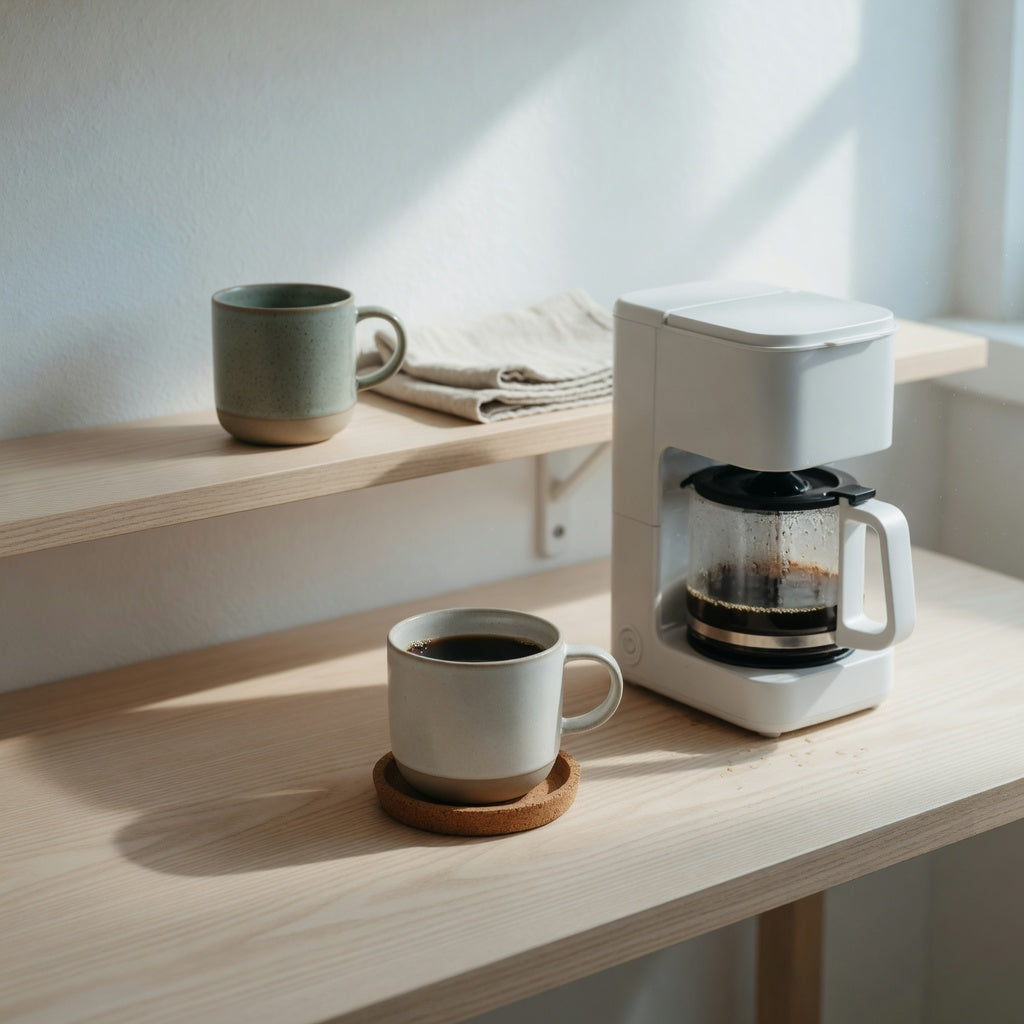
Wide Based Coffee Mugs for Small Coffee Setup: What to Compare
A broad foot is only one variable. We compare listed capacity, counter footprint, brewer clearance, and handle room across three CoffeifyMug options so a tight coffee station stays workable.
Read more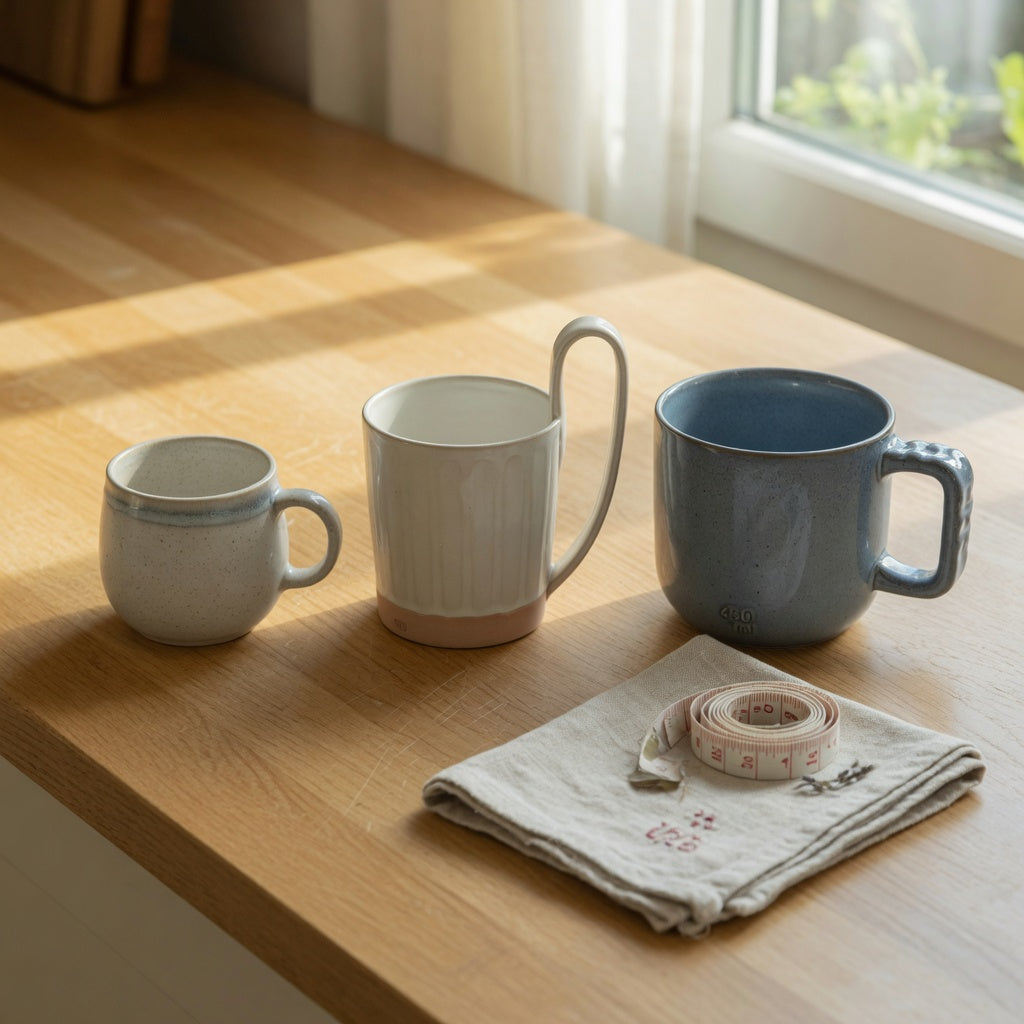
Coffee Mugs With Big Handles Shape and Handle Guide | CoffeifyMug
Listing photos flatter a loop that may still pinch your knuckles. We compare our three handle silhouettes by finger clearance, grip span and listed capacity so you can match the mug to your hand be...
Read more
Leave a comment
This site is protected by hCaptcha and the hCaptcha Privacy Policy and Terms of Service apply.