



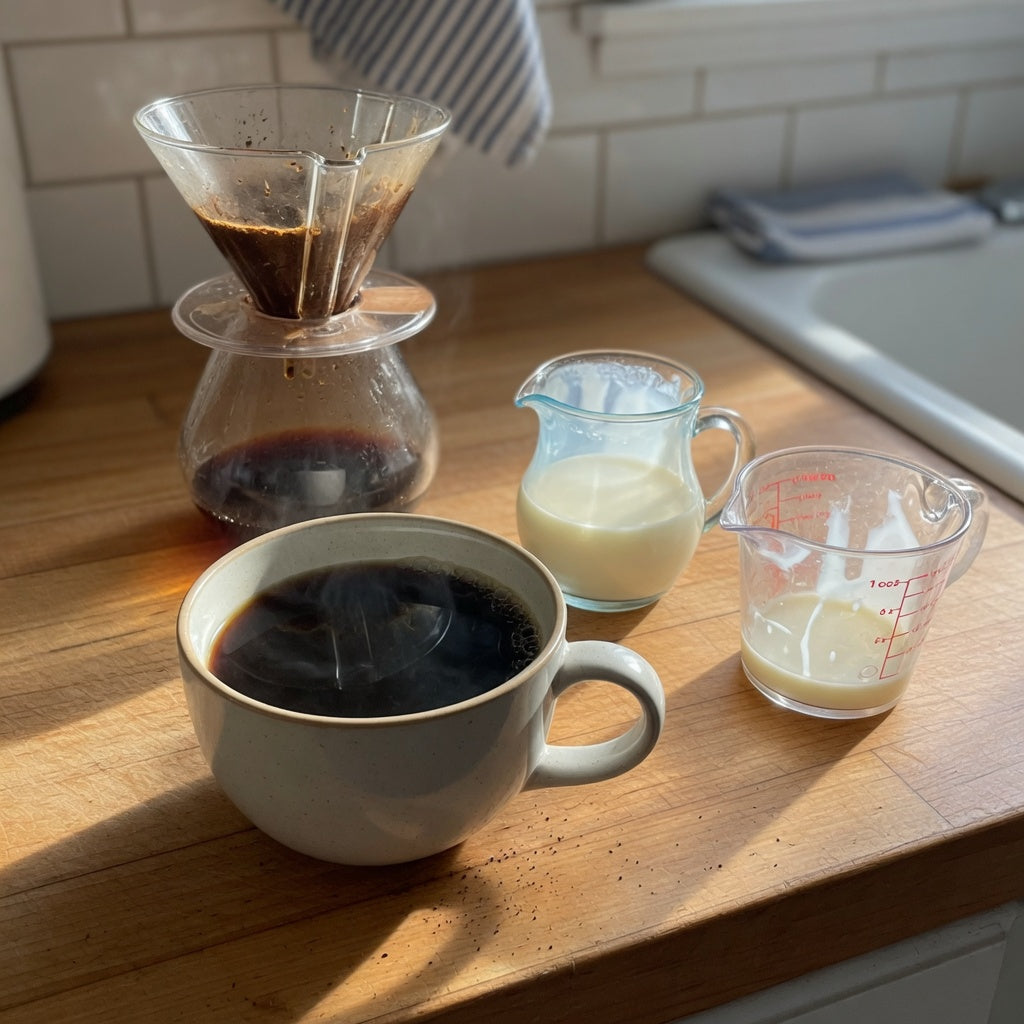
Large Mug for Morning Coffee: Ounces, Grip, and Fit
Reading time: about 13 minutes
The mug that looked generous in the product photo is often the one that sloshes when cream goes in, or the one whose handle clips the single-serve housing. We hear that story more often than a request for one exact ounce number. A large mug for morning coffee earns the spot by the kettle only when the pour you actually drink fits the brew, the hand, and the machine already on the counter.
People say large when they want a cup that outlasts a short pour. Sometimes that is room for milk. Sometimes it is staying seated through one email instead of standing up for a refill. There is no retail standard behind the word. In our store we treat it as a fit question, not a badge on the carton.
If the coffee stays at a table or a desk that does not move, start with the Morning & Night large ceramic coffee mug and read capacity, height, and care on that page before you assume it clears your brewer. The catalog title calls it a large ceramic coffee mug. That title does not state brim ounces, handle opening, or whether a lid is included. Still comparing shapes? The unique coffee mugs collection is the faster side-by-side.
How many ounces is a large mug for morning coffee?
Federal language does not close the debate. FDA compliance policy on lead in ceramic foodware describes cups and mugs as small hollowware used for coffee or tea, commonly about 8 fl oz (240 mL), and usually made with a handle. That is a picture of a typical regulated cup. It is not a definition of a long morning mug, and it is not a reason to skip a bigger size if that is what you drink.
Survey tools have measured larger models. CDC dietary measuring guides used with NHANES included mugs at 8 oz, 10 oz, and 14 oz to the rim, with fill lines below the lip so the recorded serving stayed inside the cup. On the 14 oz model, the highest marked level was 12 oz. Rim capacity and the drink were different numbers.
When a customer describes a mug at our counter, we sort the words into bands. These are shopping ranges we use in conversation. They are not a law and not a certification.
| How shoppers talk | Brim range we use in the shop | Usually a fit for |
|---|---|---|
| Everyday mug | About 8-12 oz | A short black coffee or a second small brew |
| Large morning mug | About 14-16 oz | Black coffee plus a splash, or one longer seated pour |
| Oversized | About 18-20 oz and up | Milk-heavy drinks, iced coffee at the table, fewer refills |
A listing can still call 12 oz large. Another can print 20 oz and simply say mug. Read the number, then ask what it measures. If that line feels slippery, our guide to ounces in a mug of coffee separates the printed figure from the pour people actually finish.
What does brim capacity leave you for cream and the walk to the table?
Listed ounces are often brim-full, with the liquid level at the lip. Almost nobody carries hot coffee that way. Leave at least a finger of empty wall so you can stir and walk from brewer to chair. A bag set on the chair back is enough to send a full rim over the edge.
Cream, milk, and foam take space the coffee used to own. A brim near 16 oz can suit black coffee and turn tight after a generous splash. If the drink is closer to half dairy, you bought mixing room, not a bigger dose of coffee. Ice needs still more empty height. An open ceramic wall will not keep a tilted cup from leaking in a car.
Customers who buy the biggest bowl and then drink it half full often say the coffee feels lukewarm before the mug is empty. A wide surface in a half-filled ceramic cup sheds heat while you read. A smaller mug filled to a comfortable line can stay pleasant longer, even though the carton number is lower. That is a weekday observation from our side of the counter, not a lab temperature test. If you are already looking past 16 oz, compare height and shelf fit in the oversized ceramic capacity guide before the mug owns the top shelf.
Black drip, a splash of milk, or a latte: which pour needs the room?
Match the vessel to the drink you make on a Tuesday, not to the largest number in the filter.
- Black drip or pour-over. Extra capacity helps when you want one long cup instead of a refill. It does not make the coffee better. A modest pot in an oversized mug mostly looks empty, and the extra surface cools what is left.
- A splash of cream or a short pour of milk. This is where many 10-12 oz cups run out of manners. You want the usual coffee plus dairy without the liquid climbing the rim.
- A milk-heavy latte at home. The mug has to hold the milk and the coffee. Volume matters more than a thick decorative wall. A short espresso and nothing else does not need this much clay.
- Iced coffee that stays on the table. You need room for ice and a base that does not tip when the cubes shift. You still do not have a travel cup.
An open ceramic mug is a poor fit for a few sips of espresso. It is the wrong tool once the cup has to ride in a holder. Size is a match with the recipe and the room.
Will the handle, the full weight, and the brewer gap work at 7 a.m.?
Ounces say nothing about whether the mug is pleasant before you are fully awake. We learn more from watching someone lift a full sample than from the capacity line.
- Finger room. Some handles accept two or three fingers. Others let the whole hand through. A small loop pinches a larger hand. A huge loop can force a weak pinch once the mug is heavy. Comfort while it is empty is not comfort when it is full.
- Full weight. Water at a 16 fl oz fill weighs a little over a pound before you add the clay. Thick walls and a wide bowl add more, and the mass sits out past the handle, so the mug wants to rotate in your grip. Small hands and a sore wrist usually do better with a modest large size than with an oversized bowl.
- Height under the spout. Many single-serve machines leave a fixed gap. A tall mug that photographs well may not fit unless the drip tray comes out, and the handle can still strike the housing. Measure that gap with a ruler before you commit to a silhouette.
- Rack, shelf, and foot. A wide bowl can block a dishwasher top rack or refuse to stand under a cabinet shelf. Check the base. A rough, unglazed foot ring can scratch a wood table, and then the mug lives on the counter forever. That is fine only if the counter was the plan.
One habit from the dish rack: do not shock a cold, thick-walled mug. Boiling water straight from the kettle into a mug that just left a chilly cabinet, followed by a cold rinse, is a common way to crack ceramic. Splash a little hot water in and swirl it first, or let the mug warm toward room temperature.
A thumbnail is not a measurement. On the Morning & Night page, confirm any height or dimensions that are actually listed. If the handle opening is absent, that gap stays open. Do not fill it with a guess from the photo.
Is an open ceramic mug the wrong tool for a commute?
This split prevents most of the mismatches we hear about after a mug arrives.
An open ceramic breakfast mug belongs on a counter, a desk that does not move, or a kitchen table. You can see the color of the drink and sip without fighting a lid. If the current listing says dishwasher safe, cleanup is ordinary. It is a weak commute cup. No lid means a sharp stop becomes a stain. A wide rim is a poor bet for a car cup holder cut for narrower tumblers. Ceramic will not hold heat the way a vacuum-insulated bottle does, especially if you filled it early and drank slowly.
Pick a lidded insulated mug when the coffee has to survive a drive, a walk to the train, or a holder. Pick ceramic when the pour happens at home or at a stable desk and you care how the mug looks between sips. If the Morning & Night listing does not mention a lid, treat the piece as an open cup until the page says otherwise. A large ounce number does not turn it into travel gear.
It is also a clumsy gift for someone whose morning is entirely in the car, however neat it looks in tissue paper. For someone who sits with coffee at the kitchen table, the same style can be the right object once ounces and brewer gap check out. If the silhouette is wrong for that hand, go back through the unique coffee mugs and set aside anything that fails the spout gap or the grip.
Does a larger morning mug raise caffeine, or only the coffee inside it?
Caffeine follows the coffee in the cup, not the number beside the photo. A roomy mug that is half milk is not the same exposure as the same mug filled with black brew.
For most adults, the FDA has cited 400 milligrams of caffeine a day as an amount not generally associated with negative effects. The agency describes that amount as about two to three 12-fluid-ounce cups of coffee, and notes that sensitivity and how fast caffeine leaves the body vary widely. A Harvard Health summary of a 2020 review describes the same 400 mg level as about four to five 8-ounce cups of most regular coffees, as a way to keep much of coffee's reported benefit while lowering the chance of side effects such as anxiety, nervousness, and insomnia.
Neither picture is a promise about your mug. Strength depends on the brew, the dose of coffee, and how much of the mug is actually coffee. Milk does not add caffeine. Decaf is not a zero. The FDA says decaffeinated coffee typically has 2 to 15 milligrams in an 8-fluid-ounce cup, so a larger decaf pour still contains some.
Many home brewers mark a cup that is smaller than the mug on the table. Do not assume one button press fills a large mug. Measure a cycle in a liquid measuring cup, or read that model's manual, and you will know whether the morning pour is one pull or two.
If you are pregnant, trying to become pregnant, or breastfeeding, or if a condition or medication makes you unsure, FDA guidance is to talk with a health care provider about whether to limit caffeine. The same conversation matters if a big morning mug leaves you jittery, sour in the stomach, or awake long after midnight. A smaller cup for a week is a practical experiment. It is not a treatment.
What should you check before a microwave or a harsh dishwasher cycle?
Reheating coffee that went cold is a normal kitchen move. The words microwave safe have not always matched the print on the mug.
The U.S. Consumer Product Safety Commission has recalled ceramic mugs labeled microwave safe when metallic print could spark and create a fire hazard. Gold, silver, or other metallic bands on the rim or handle stay out of the microwave even if a nearby badge says otherwise. Do not try it once to see.
Read the dishwasher and microwave lines on the current listing for any mug you order from us, the Morning & Night piece included. Silence is not a yes. If care instructions are missing, hand-wash it and keep it out of the microwave until you know. Metallic overglaze can also dull across years of harsh dishwasher cycles. Follow the care line, not a hope.
Lead is separate from capacity. FDA guidance for cups and mugs uses 0.5 micrograms of lead per milliliter of leaching solution as the level at which the agency objects if any one of six tested units goes over it. That figure comes from a lab test of how much lead leaves the surface. You cannot see it by judging glaze color at the table. Buy ceramic meant for hot drinks from a seller who stands behind food-contact use. A piece sold only as shelf decor is a different object. Do not drink from it.
Frequently asked questions
How many ounces is a large mug for morning coffee?
There is no official ounce cutoff. In our shop, buyers usually mean a brim around 14-16 oz when they say large, and about 18-20 oz or more when they mean oversized. FDA ceramic guidance describes a typical cup or mug as about 8 fl oz, which is a regulatory reference, not the size most people want for a long morning pour. Read the listing number and leave headspace below the rim.
Is a 16 oz mug enough once I add cream or milk?
Often, if 16 oz is brim capacity and you only add a splash. It gets tight if the drink is closer to half milk or if you want a thick foam cap. Count dairy as part of the volume, not as something that sits on top of a mug already full of coffee. If you want both a full coffee pour and a lot of milk, look past a 16 oz brim or brew a slightly smaller coffee.
Does the capacity on a listing mean I can fill it to the brim?
Treat listed capacity as brim-full unless the page says otherwise. A practical hot pour sits lower so you can stir and walk without spilling. Survey mugs in CDC measuring guides were marked below the rim for that reason: a 14 oz rim was not the same thing as a 14 oz drink. If the listing never says whether the number is brim or a recommended fill, confirm that before you rely on it.
Does a bigger morning mug always mean more caffeine?
No. Caffeine scales with the coffee in the mug, not with the ounce rating. Milk, foam, and ice take space without adding coffee caffeine. For most adults the FDA has cited 400 mg a day as an amount not generally associated with negative effects, described as about two to three 12 fl oz cups, and people differ widely in sensitivity. Decaf still has some caffeine, typically 2 to 15 mg in an 8 fl oz cup according to the FDA.
Will a tall large ceramic mug fit under a single-serve brewer?
Sometimes, and the photo will not tell you. Measure the gap from the drip tray, or from the counter if you remove the tray, up to the spout. Compare that number with the mug height on the current listing. If height is not listed, do not guess. A handle can also hit the machine even when the rim clears the spout.
A counter check before this mug joins the weekday set
A large mug for morning coffee that never clears the spout will not become a habit, however good the glaze looks in daylight. Keep the product page open and run this list. It takes less time than living with a mug you have to baby.
- Brim capacity in ounces or milliliters, plus honest room for milk, foam, or ice.
- The drink you actually make: black, a splash, a latte, or iced coffee that stays at the table.
- Handle comfort when the mug is full, not while it is still in the tissue.
- Height against the gap under your brewer, then the dishwasher rack and the cabinet shelf.
- Likely full weight. Clay plus something near a pound of liquid is a real lift.
- Microwave and dishwasher wording, and any metallic decoration.
- Lid or no lid. No lid means the mug stays put.
- Your brewer's own cup mark. Measure one cycle instead of assuming it equals one large mug.
If the Morning & Night page still looks right for a seated pour after that pass, the listing is the next click. Confirm every spec there. The page, not this article, is the source for current capacity and care. If you wanted a smaller daily cup or a different handle, use the rest of the mug collection and drop anything that fails the spout gap or the grip.
More from our blog
Ready to pick your mug? Two ways to save on today's order:
Ordering 1–3 mugs? Get an extra 10% off your 1st order with code 10_OFF Apply 10% Off & Shop Wooden-Handle Mugs →
Gifting 4+ mugs? Buy 3, Get the 4th Free applies automatically at checkout (no code needed; offers do not stack) · Free standard shipping (Nov pre-Christmas delivery: 15–20 calendar days US) · Free replacement if chipped in transit.
Popular mug buying guides: Ceramic Tea Cups & Infuser Mugs · Ceramic Mugs with Lids Compared · Wooden-Handle Tea Infuser Mugs Compared · Christmas & Secret Santa Mugs 2026 · Espresso & Cortado Cups Guide · Cup & Saucer Gift Sets · All 25 Mugs Spec Table · Mug Size Guide · Shipping & Promo FAQ
FIRST ORDER 10% OFF (CODE: 10_OFF) · OR BUY 3, GET THE 4TH FREE


Read more

Mountain Coffee Tea Mug for Coffee Lovers Home Decor: Compare
A mountain mug has to work on a cabin shelf and through weekday coffee. We compare format, usable ounces, artwork durability, and food-contact limits before you buy one as a gift or a daily cup.
Read more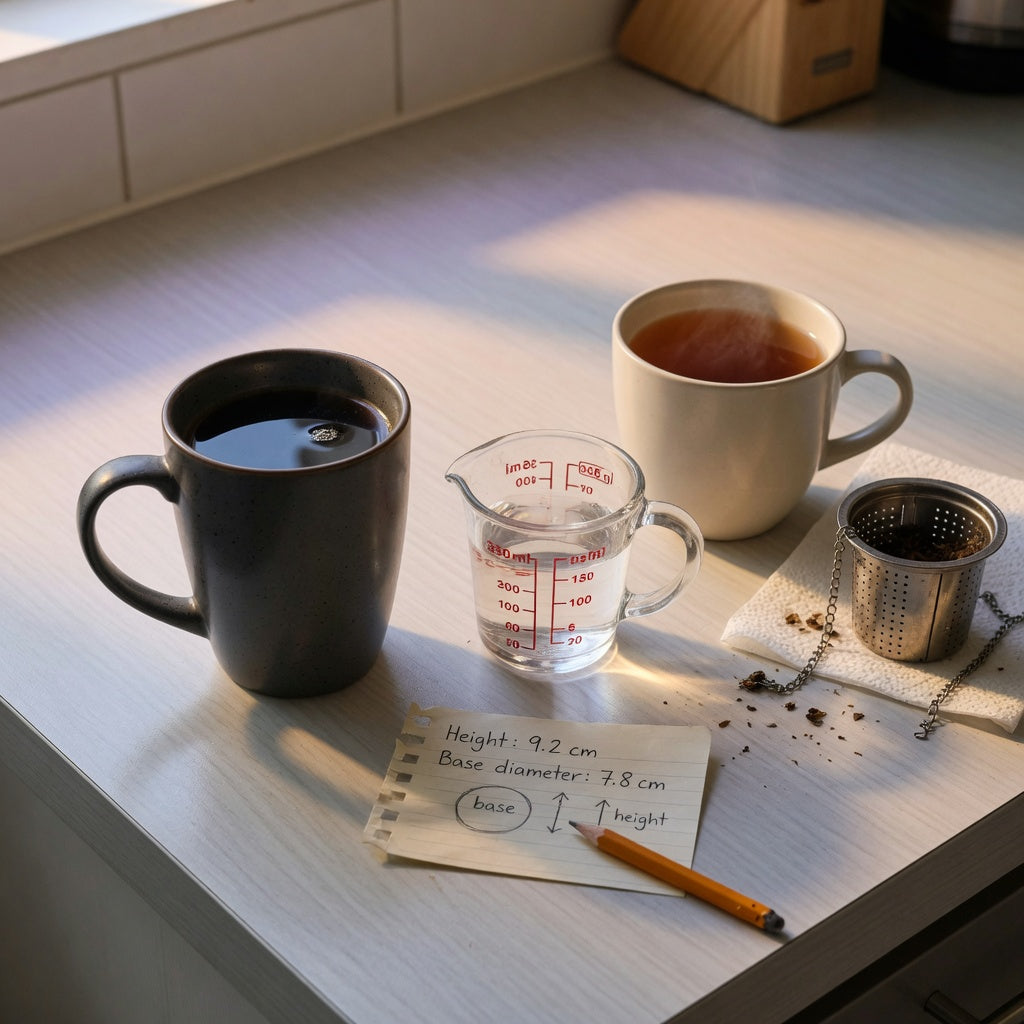
Everyday Coffee Tea Mug 350 ml: What Buyers Compare
A 350 ml mug is about 11.8 US fl oz at the brim, above the FDA’s usual 240 ml cup example, but the pour you can carry is smaller. We compare usable fill, fit, handle, glaze, and care before you buy...
Read more
Leave a comment
This site is protected by hCaptcha and the hCaptcha Privacy Policy and Terms of Service apply.