

Landscape Tea Mug vs Coffee Mug Size: Ounces, Fit & Trade-offs
Reading time: about 7 minutes
The question we field most about our landscape coffee tea mug sounds simple: is it a tea mug or a coffee mug, and how much does it actually hold? The landscape tea mug vs coffee mug size question trips buyers up because “landscape” describes proportions, not volume — and the tea and coffee categories overlap far more than people expect. A low, wide body can out-hold a taller one that looks bigger on the shelf. Here’s how we walk customers through it at our counter, plus the measurements that actually settle the purchase.
What “landscape” actually describes on a mug
The word is borrowed from photography and print, where landscape means wider than it is tall. On a mug, it signals a body that sits low and broad — a generous rim diameter relative to height — instead of the upright cylinder most people picture when they hear “mug.” Watch someone pick one up in our store and their hands curl around the body before finding the handle. There’s simply more body to hold.
Still comparing silhouettes? The full shape range sits one scroll away in our unique coffee mugs collection.
One caveat worth flagging: some makers use “landscape” to describe the orientation of the printed artwork rather than the mug’s proportions. Both usages exist in this category, so read listing photos and stated dimensions together — a profile shot next to a capacity spec tells you within seconds which kind of “landscape” you’re looking at. Our shape-versus-print explainer covers how that distinction plays out across the style.
Landscape tea mug vs coffee mug size in ounces and milliliters
Start with the number buyers get wrong most often: height. Volume comes from rim diameter multiplied by depth, so a low, wide mug can hold more liquid than a taller, slimmer one. When we size a mug for a customer, we pull three measurements in order — capacity first, rim diameter second, height last.
For orientation, these are the ranges we see most often across the category. Treat them as context, never as a substitute for the figures stated on a specific listing:
| Mug style | Typical capacity (US) | Typical capacity (metric) | Built around |
|---|---|---|---|
| Saucer-style teacup | 6–8 fl oz | 180–240 ml | Small, frequent pours |
| Standard tea mug | 10–15 fl oz | 300–450 ml | A full steep with headspace |
| Standard coffee mug | 10–14 fl oz | 300–410 ml | One brewed cup |
| Wide, low landscape-style mug | Set by the maker | Set by the maker | Rim width and stability over height |
The point most shoppers miss: tea does not automatically mean small. Saucer-style teacups run modest, but tea mugs routinely match or exceed standard coffee mugs on capacity — mixing up the teacup and the tea mug causes most of the sizing surprises we see at checkout. Our separate ounce-by-ounce mug size breakdown goes deeper on that pairing.
How a wide, low body changes the drink itself
Three functional differences surface every time we set a landscape-format mug next to an upright one:
- Heat behavior. A broad rim exposes more liquid surface to air, so drinks cool faster than the same volume in a tall, narrow body. That’s a feature for tea drinkers who steep hot and hate scalding their tongue, and a flaw for anyone who nurses desk coffee for an hour.
- Headspace for steeping. The wide interior gives an infuser basket room to open so leaves circulate instead of clumping. It also puts more steam and aroma at nose level when you lean in — pleasant with tea, less so while carrying the mug across the office.
- Handle clearance. Wide bodies often pair with open loop handles, and the spec to check is vertical finger clearance between the handle and the mug wall. Most listings bury that number and most buyers skip it, yet it decides whether the mug actually fits your hand.
If an infuser setup drives your decision, our crane-style mug comparison covers rim width, heat retention, and infuser fit in more detail.
Where a landscape mug earns its shelf space — and where it won’t
We’d rather talk a customer out of a mug than process a return on one. The wide, low format earns its keep here:
- Tea drinkers who pour, steep, and finish within the next twenty minutes
- Tip-prone desks and narrow side tables — the broad base drops the center of gravity and shrugs off knocks that would topple a tall silhouette
- Kitchen crossover duty — a wide bowl handles oatmeal, soup, or a latte-style pour in a way upright mugs can’t
Be just as clear about the misses:
- All-morning coffee — you’ll fight the faster cooling the whole way down
- Car cup holders and most mug trees, which are designed around upright bodies
- Tight cupboards — a wide base can eat the shelf depth two standard mugs would share, which is how mugs end up living on the counter
- Stacking storage — low, wide bodies rarely nest
- Small espresso-style servings — the format invites a full pour, not a 6 oz cup
- Crowded dishwasher racks — the lower prongs are spaced for upright bodies, and a broad base can rock between them
The five measurements to check on any listing before you order
A mug that doesn’t fit the shelf doesn’t get used. It becomes decor.
Product photos flatten everything, so we hand every gift buyer and first-time customer the same five-point check:
- Capacity in both fl oz and ml. The only volume that counts is the one in the spec details, not the one the photo implies. Both units matter if you’re ordering from outside the US.
- Rim diameter. It decides drinking feel, infuser fit, and how much of your face the mug involves on every sip.
- Overall height. Hold it against your dishwasher’s rack clearance and the shelf above your coffee station.
- Base width. Measure your cupboard’s shelf depth — a mug wider than the shelf becomes permanent counter clutter.
- Care instructions. Confirm dishwasher and microwave guidance on the listing rather than assuming, because glaze and print methods vary between designs and the wrong cycle is how decorations fade.
Run that check on our landscape-format mug before checkout, and if a measurement you need isn’t stated, message us through the store. We’ll measure it ourselves before you buy — a faster answer than a return.
Who we hand this format to at the counter
After enough of these conversations, the fit patterns hold steady:
- The tea-first drinker who finds standard mugs awkwardly tall and wants a stable, wide bowl for steeping and sipping. The format is built for exactly that routine.
- Mixed tea-and-coffee households who want one silhouette serving both drinks. The shape itself is drink-neutral, so match the stated capacity to the larger of your two pours.
- Gift buyers. Wide mugs read generous in an unboxing, and pairing one with a taller mug hands the recipient a shape for both drinks. The unique coffee mugs range makes that side-by-side comparison easy.
Frequently asked questions
How many ounces is a landscape tea mug?
There’s no single answer, because “landscape” describes proportions rather than volume — the landscape tea mug vs coffee mug size comparison always comes down to stated capacity, not the style name. Tea mugs commonly land between roughly 10 and 15 fl oz (300–450 ml), but a wide, low mug can hold more or less. That’s why the listing’s fl oz and ml figures are the only numbers to trust.
Are tea mugs smaller than coffee mugs?
Usually not. People picture a small saucer-style teacup, and those do run around 6–8 fl oz — but tea mugs typically match or exceed standard coffee mugs on capacity. The teacup-versus-tea-mug mix-up causes most of the sizing surprises at checkout.
Can a landscape mug work for coffee?
Yes. Nothing about the wide, low format is tea-specific. Match the stated capacity to your usual pour, and accept that the broad rim lets coffee shed heat faster than a tall mug would — if you sip slowly over an hour, an upright body will serve you better.
Will a wide mug fit my cupboards and dishwasher?
Measure before you order. Check the listing’s overall height against your dishwasher rack clearance and the space under your shelves, then check base width against your cupboard’s shelf depth. Two minutes with a tape measure prevents the most common sizing return we process.
The 60-second decision before checkout
Answer three things honestly: how many ounces you actually pour (measure a mug you already own), how deep your cupboard shelves are, and how long you take to finish a hot drink. Those three answers resolve the size question faster than any style name or product photo. Wide and low suits quick tea drinkers, tip-prone desks, and crossover kitchen duty; tall and upright suits slow coffee and tight storage. Run the five-point check against our landscape mug before you pay — and if the proportions don’t sound like your kitchen, our hand-picked unique coffee mugs are the better first click.
Read more

The Rock Mug Buying Guide: What Buyers Should Compare
Search results blend two unrelated mugs under one name, and that mix-up causes most returns in this niche. This guide covers the design check, 480 ml versus standard sizes, print durability, dishwa...
Read more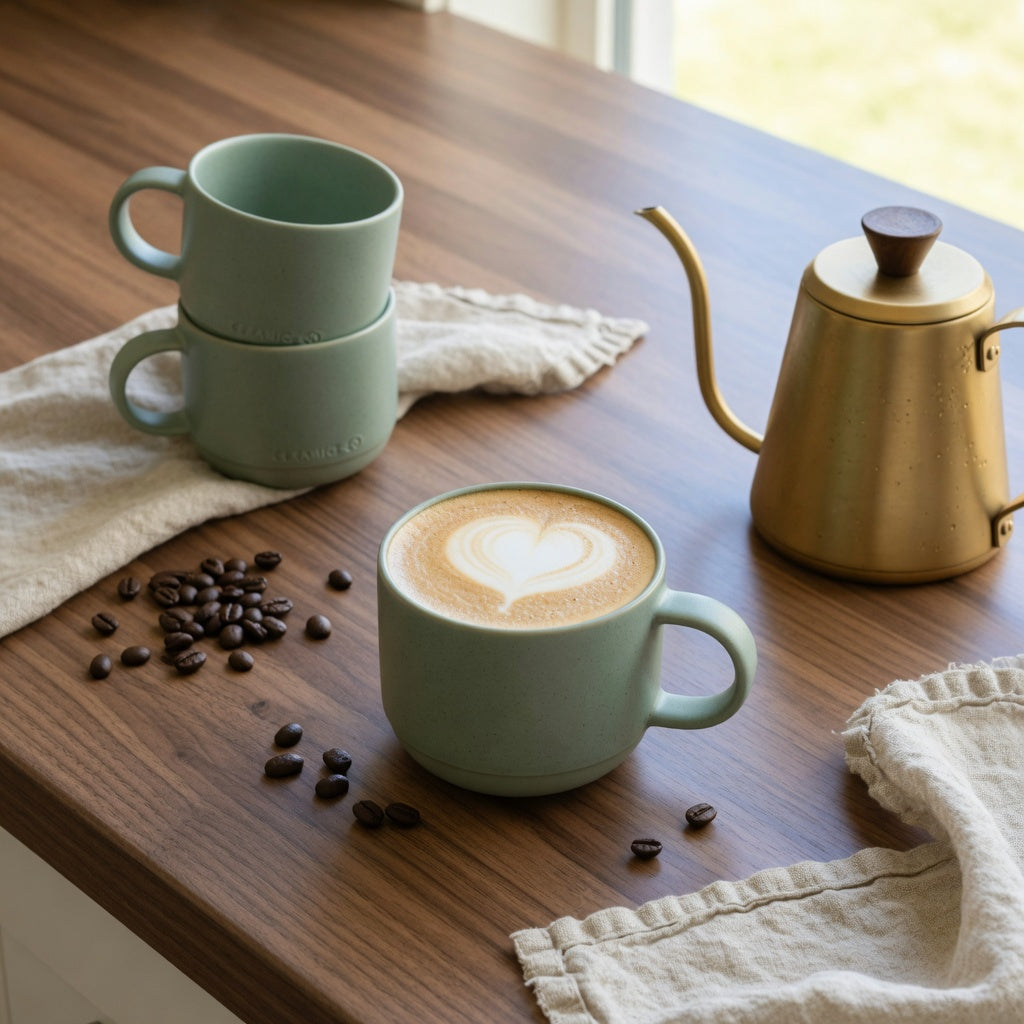
Round Coffee Mug for Coffee Lovers: What to Compare Before You Buy
Capacity, glaze safety, grip and heat behavior decide whether a round coffee mug earns a daily slot or shelf space. Here's the comparison checklist our store team runs on any round mug listing — in...
Read more
Leave a comment
This site is protected by hCaptcha and the hCaptcha Privacy Policy and Terms of Service apply.