

Green Ceramic Coffee Mugs: Home Station Purchase Checklist
Reading time: about 9 minutes
A mug can match the kitchen perfectly and still become awkward the first morning it has to fit under a dripper, share a scale, and clear the cabinet above it. Our green ceramic coffee mugs home coffee station practical purchase checklist starts with that real counter-space problem. It then separates the details you can verify on a product page from the measurements only you can take in your kitchen.
In our store, we handle mugs at the same points shoppers notice after several uses: the rim, handle joins, glazed body, and foot ring. We also know where online comparison stops being reliable. A photograph cannot prove working capacity, hand comfort, appliance clearance, or care compatibility. The linked product pages should remain the source of truth for every listed material, dimension, capacity, and care instruction; if a detail is absent, treat it as unknown rather than filling the gap with an assumption.
How much counter and shelf clearance does your mug need?
Measure the station in its normal brewing arrangement, including the scale, drip tray, station mat, or saucer you actually use. Appliance dimensions alone do not establish mug compatibility. The useful measurement is the open space from the surface supporting the mug to the lowest obstruction above it.
- Vertical clearance: Measure from the scale or drip tray to the brewer, cabinet, or dripper above the mug position.
- Working footprint: Trace the base and handle of your current mug on paper, then place that outline beside the kettle and grinder.
- Handle projection: Include the full sideways reach of the handle, especially if the station sits against a wall.
- Storage opening: Measure shelf height and depth with the cabinet door and neighboring mugs in place.
This paper-outline test catches a common mistake: comparing base diameter while ignoring the handle. It also shows whether the mug leaves a clear landing area for a spoon, filter, or small milk pitcher. Leave any direct-brewing compatibility claim open until the mug and brewing setup have both been measured.
Capacity and headroom should match the finished drink
Published capacity is useful only if you know how it was measured. A brimful volume and a comfortable carrying volume are not the same. Unless a listing defines the measurement, do not assume the stated capacity represents the amount you can carry without spilling.
Use your current favorite mug as a reference. Fill it to the level you normally drink from, pour that amount into a measuring cup, and record both fluid ounces and milliliters. Then account for everything added after brewing.
- A black coffee drinker can compare the recorded serving directly with the listed mug capacity.
- A milk-based drink needs room for milk and foam above the brewed coffee.
- Iced coffee needs space for ice displacement, not just the liquid portion.
- Tea drinkers using a basket infuser should also check rim opening and removal clearance.
A larger mug is not automatically more useful. Extra volume adds bulk to a small station and can encourage a serving that cools before it is finished. A smaller mug is a poor fit if it forces you to split one normal brew into two pours.
Rim, handle, foot ring, and glaze inspection points
Our handling checks focus on four areas because each has a different job. These are category inspection points, not claims that any linked mug has a particular defect or construction detail.
- Rim: Look for chips, sharp spots, glaze skips, or rough patches where the mug meets the mouth. A rim flaw matters more than a small cosmetic variation low on the body.
- Handle joins: Inspect both attachment points for hairline cracks. Measure the interior opening of a handle you already find comfortable instead of guessing finger clearance from a photo.
- Foot ring: A mug should sit without rocking on a flat surface. Check whether an exposed ceramic foot looks smooth enough for wood shelves or requires a coaster.
- Glaze: Pinholes are tiny pits; crazing is a network of fine glaze lines. Crackle effects can be intentional, but that should be identified by the seller rather than inferred from an image.
Green also changes under warm bulbs, daylight, and different screen settings. Use all available listing images to judge the presented color, but allow for normal display and lighting differences. If exact shade matching is critical, ask before ordering instead of trying to match a cabinet or backsplash from one photograph.
Which CoffeifyMug page matches your station situation?
These are starting points, not unverified rankings. We are mapping the visual role suggested by each product name to a shopper situation, then directing you to the listing where the current specifications and care details can be checked.
| Reader situation | Why this is a sensible first comparison | Relevant next step |
|---|---|---|
| You want green to be the main color anchor on a simple wood, white, or metal station. | The Emerald name makes this the clearest color-led candidate. Use its listing images to assess the presented shade, then verify the listed material, capacity, dimensions, and care. | Review the Emerald Coffee Tea Mug product page. |
| Your station is visually quiet and you want a pattern-led accent. | Green Waves provides the relevant design direction for comparison. Do not infer from the name or image whether the wave detail is raised, printed, or formed in the glaze; rely on the listing description. | Inspect the Green Waves Coffee Tea Mug details. |
| Your grinder, kettle, and storage already add plenty of visual detail. | The Round product is the logical form-led starting point. Compare its pictured profile and any listed measurements with your traced paper footprint. | Check the Round Coffee Tea Mug listing. |
| You are buying a gift or have not settled on a color and shape combination. | A broader comparison is more useful than forcing one of three candidates. Look across several forms, then return to the same capacity, clearance, and care checks. | Browse our unique coffee mug collection. |
For gifting, match the recipient's routine before choosing the strongest design. Green Waves makes sense for someone who already uses pattern in the kitchen. Emerald is a more direct color statement. Round is the more relevant page to open first when a simple profile matters, but its exact fit still depends on the published details and the recipient's available space.
Green ceramic coffee mugs home coffee station practical purchase checklist
Run this list with the station in front of you and each candidate product page open. A missing specification is not a hidden benefit; it is an item to confirm before purchase.
- Measure vertical clearance from the actual mug-supporting surface to the lowest obstruction.
- Trace the footprint and handle of your current mug to test the available landing area.
- Measure your usual finished drink at its comfortable fill line, not at the brim.
- Account for milk, foam, ice, or a tea infuser before deciding on capacity.
- Confirm the listing identifies the material you intend to buy rather than judging composition from appearance.
- Compare listed outer dimensions with the counter, shelf, and any direct-brewing clearance.
- Review handle photographs and compare any measurements with a handle you already like.
- Check the stated dishwasher, microwave, and hand-washing guidance without assuming ceramic means universal compatibility.
- Inspect listing images around the rim, handle joins, base, and glaze, then ask about any unclear area.
- Choose one visual role: color anchor, patterned accent, or quiet rounded form.
- Decide honestly whether a breakable, open ceramic mug suits the traffic around your station.
This green ceramic coffee mugs home coffee station practical purchase checklist works best in two passes. Eliminate candidates that fail the physical measurements first. Compare color and decoration only among the mugs that remain practical for your routine.
Care details to confirm before the first dishwasher cycle
Care instructions vary with the ceramic body, glaze, decoration, and manufacturing process. Product-specific directions always outrank general advice. We do not label a mug dishwasher-safe or microwave-safe unless the current product information supports that claim.
- Rinse coffee or tea residue promptly and use mild dish soap with a nonabrasive sponge.
- Avoid abrupt temperature changes, such as moving a very cold mug directly to very hot liquid.
- Place a dishwasher-approved mug so its rim and handle cannot knock against the rack or another cup during the cycle.
- Use a microwave only when the listing permits it, and never microwave drinkware with metallic decoration.
- Dry the foot ring before returning the mug to a wood shelf or station mat.
Retire a mug from drink service if the rim chips or a crack develops at a handle join. Stacking also deserves care: if one mug does not nest without pressure on the rim or handle, store it separately rather than forcing a neat tower.
When ceramic is the wrong material for your station
Green ceramic is a poor fit when the main requirement is impact resistance, sealed travel, or all-afternoon insulation. It can chip against stone counters, it is not a substitute for a lidded commuter cup, and its external shape may not suit a vehicle cup holder.
- Choose an insulated travel mug for long commutes or extended heat retention.
- Choose more impact-resistant drinkware for a busy shared counter used by young children or frequent guests.
- Choose a deliberately stackable set if cabinet density matters more than individual design.
- Choose a neutral or transparent style if a bold green gift would be too personal for the recipient.
Ceramic also makes less sense for direct brewing when no reliable height, rim, or base measurements are available. In that situation, confirm dimensions first or brew into a known-compatible vessel and decant.
Frequently asked questions
How do I use the green ceramic coffee mugs home coffee station practical purchase checklist?
Measure clearance, footprint, handle projection, and your usual finished drink before comparing decoration. Eliminate any mug that cannot be confirmed to fit, then use color and shape to decide among the remaining options. Treat absent dimensions or care details as questions, not permission to assume.
Are the Emerald, Green Waves, and Round mugs guaranteed to fit under my coffee maker?
No universal appliance compatibility should be assumed. Measure from your machine's actual drip tray or scale to its lowest obstruction, then compare that space with the dimensions stated on the relevant mug page. Ask our store if a required measurement is not listed.
Can I put a green ceramic mug in the dishwasher or microwave?
Only follow those methods when the product page or supplied care instructions allow them. Ceramic appearance alone does not prove dishwasher or microwave compatibility because glazes and decorations differ. Hand wash with mild soap if the approved method remains unclear.
Which green mug is the safest gift choice?
Start with the recipient's station rather than your own color preference. Emerald suits a color-led comparison, Green Waves is the pattern-led option, and Round is the form-led option to inspect first. If you do not know the recipient's taste or available space, compare the broader collection and keep the gift receipt or current return terms in mind.
Can a ceramic mug work for iced coffee at a home station?
Yes, provided the working capacity leaves room for both coffee and ice. Measure the finished drink after adding ice because liquid volume alone understates the space required. Use a coaster if condensation forms on the outside during a long drink.
Your next step: open the three product pages beside your measurements and record four items for each candidate: working capacity, outer dimensions, care directions, and visual role. If none can be confirmed against the station, return to the unique coffee mugs collection and apply the same checklist before buying.
More from our blog
Read more

Thick Ceramic Coffee Mugs Everyday Mug Rotation Product Shortlist Guide
Match three CoffeifyMug ceramic designs to a stationary desk, shared kitchen, or gift-focused rotation. This guide separates general fit and care checks from product-page facts, with clear reasons ...
Read more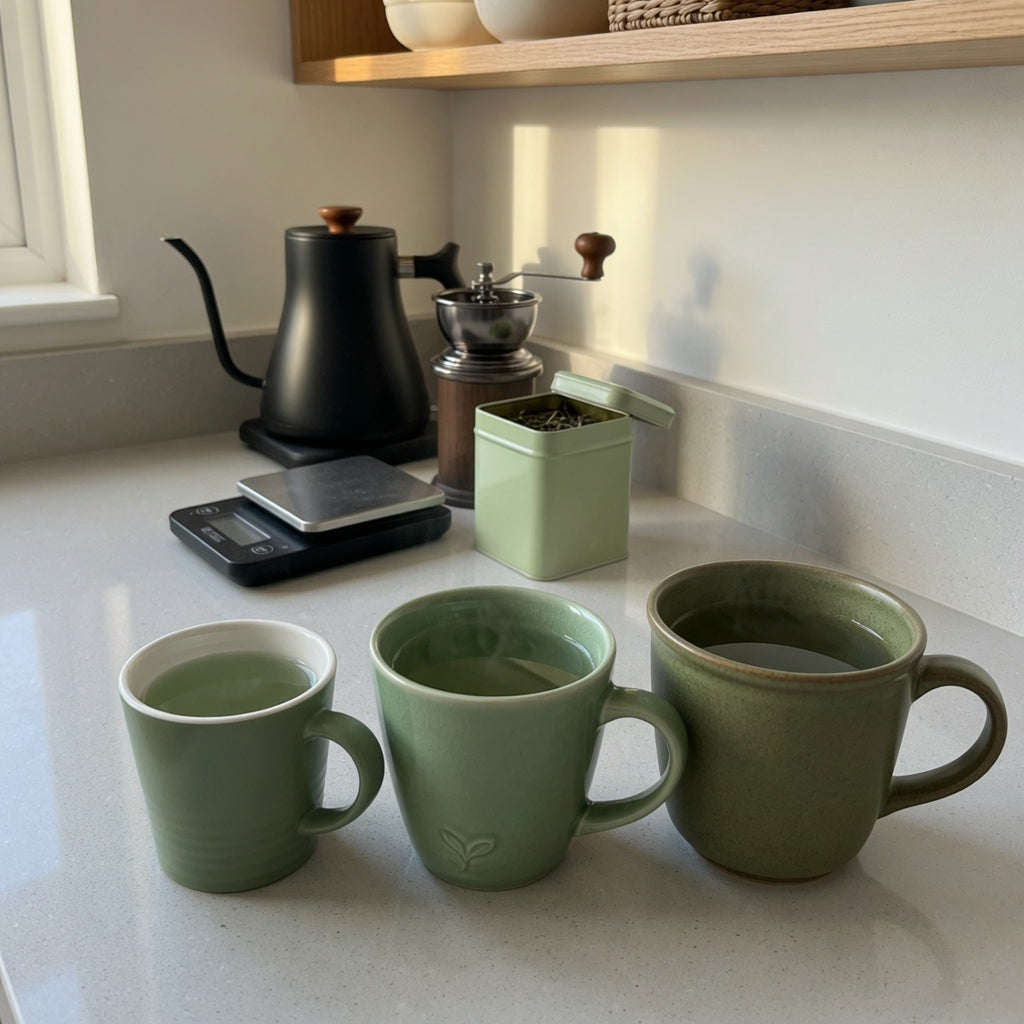
Green Tea Mug Home Coffee Station Practical Purchase Checklist
Compare the Retro 170 ml, Pleated 200 ml, and Emerald 270 ml by refill habits, visible shape, and the space around your coffee tools. This checklist also covers care verification and unboxing checks.
Read more
Leave a comment
This site is protected by hCaptcha and the hCaptcha Privacy Policy and Terms of Service apply.