



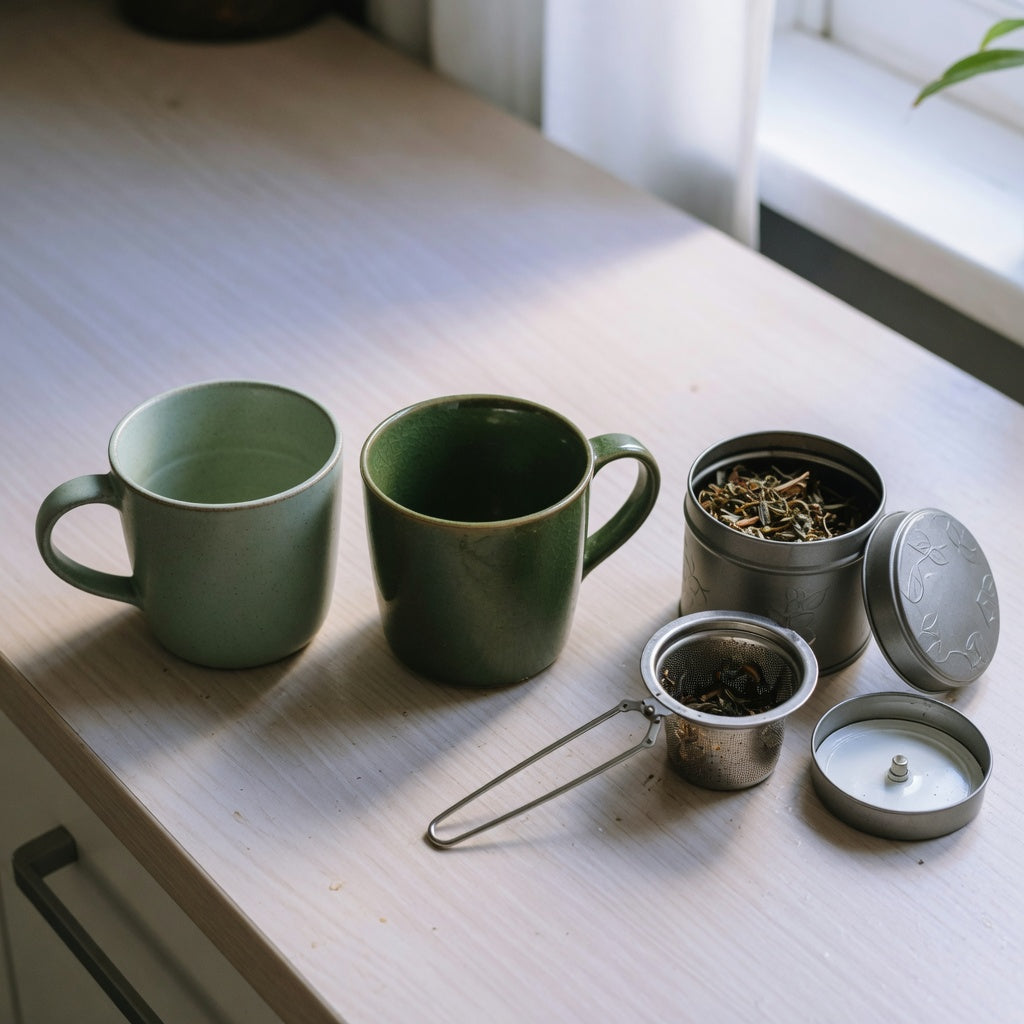
Green Ceramic Coffee Mug for Tea Comparison: Buyer Checks
Reading time: about 12 minutes
The follow-up we get after a green mug arrives is rarely about the glaze. It is a basket that rocks on the rim, a warning card in the tissue paper, or a metallic lip dulled by an office dishwasher. The photo showed sage, celadon, or emerald. It skipped capacity, the inside of the rim, and the care stamp on the base. Closing that gap is the job of a green ceramic coffee mug for tea comparison.
In our store that conversation starts at the packing bench. The box is open on a kitchen counter, the loose-leaf tin is already out, and the buyer wants to know if this piece will actually steep. We walk the same checks each time. We do not copy a capacity, a lid, or a dishwasher mark from a mug with a similar name.
Green ceramic coffee mug for tea comparison: six checks before color wins
Line the candidates up on these points before the glaze photo wins. If the current page is silent, the answer is unknown.
| Check | Why it changes the tea | Where to confirm it |
|---|---|---|
| Capacity in ounces or milliliters | Loose leaf needs headspace. A mug filled to the rim cannot hold swollen leaves and a basket. | The current product listing, not a collection thumbnail |
| Interior opening at the rim | A coffee-mug mouth can be too narrow for a basket to sit flat, so the leaves steep in a tilted pile. | Listed dimensions, or a question to the seller |
| Infuser, lid, or neither | A lid during the steep holds heat and aroma. A commuting lid may not fit a basket at all. | The line that says what is included |
| Interior glaze versus outside color | The surface that touches the tea matters more than the green in the photo. The lip is a separate surface. | Glaze notes and any food-contact wording |
| Microwave and dishwasher marks | These are different tests. A washer-safe body does not mean a metallic rim belongs in the microwave. | Care icons on the listing and on the base |
| Handle material | Wood changes washing. A thick ceramic handle changes balance when the mug is full. | The materials line on that same page |
The page we open for this pass is the Green Waves Coffee Tea Mug. Walk the six rows against the text on that listing today. Capacity, what is included, handle material, and appliance marks have to be written there. Do not fill a blank from the product name or from a photo of the glaze. Silence is not a yes.
If those lines show the wrong shape for the tea you brew, go to unique coffee mugs and repeat the six checks. A wider mouth or a deeper well often fixes a tilted basket faster than a new shade of green.
Sage, celadon, matte, and emerald are looks, not safety grades
Shoppers use those words as if they named different clays. On the mugs we handle, they name a color and a surface.
- Sage sits gray-green. Warm bulbs push it toward olive; a north window keeps it soft. It hides tea stains less than a dark glaze and more than white.
- Celadon is the pale blue-green associated with a translucent glaze over a light body. It pools in the foot ring and in carved lines. The name is not a test report.
- Matte cuts glare beside a laptop and shows hard-water spots after a rinse. Matte is not unglazed. Do not assume an unglazed patch is fine for hot tea.
- Emerald reads in a gift photo and shows every chip at the rim. That visibility is useful. It still says nothing about the interior glaze.
Regulators discussing ceramic color and heavy metals focus on bright orange, red, and yellow decoration, not on green. A green glaze is not inherently safer or riskier than another everyday commercial color. Intense paint on the lip is a separate question, whatever the body color is called.
Will the rim seat a basket, and is the ounce size honest for loose leaf?
A tea bag does not care much about mug geometry. Loose leaf does. Leaves swell, and a basket has to sit level so the mesh stays in the water. If the wall curves in under the lip, the basket tilts and small leaves slip past the edge. Fine mesh matters more for small green-tea leaves than for a chunky herbal mix.
A lid earns its place during a few minutes of steeping. It holds aroma and slows cooling. It does little if you drink immediately from an open cup. A commuting lid is another part entirely: it may seal for a walk and still refuse to clear a basket. People who write to us shortlist roughly 12 to 16 ounces because that range is already in the cupboard, not because a lab picked it. Near 12 ounces can be one cup once the leaves come out, with no room for a second infusion in the same pour. Near 16 ounces leaves headspace for the swell, then cools on a desk if you forget it.
Skip a standard coffee shape for a wide leaf spread, a tall infuser that needs a deep well, or a car cup holder. Ceramic on a commute chips. There is little independent evidence that a typical coffee rim seats common baskets, so check interior width on the listing, then try your own infuser. If you need a sealed travel cup, this is the wrong category.
Interior glaze, the lip, and the lead and cadmium limits people mix up
We are not a lab. A product photo is not a leach test. The public limits below are the ones shoppers collapse into a single worry. Keep the inside of the cup separate from the lip.
FDA's action level for lead leaching from ceramic cups and mugs is 0.5 µg/ml of leaching solution. Lead in a glaze or decoration can move into food and drink if the piece was not fired properly, and continued use of ware with extractable lead can cause chronic lead poisoning. Proper firing, in FDA's account, binds essentially all the lead into the glaze. Washing and boiling do not remove it. FDA has also reported traditional pottery labeled lead-free that still met or exceeded the action level. Higher concern sits with crude handmade ware, antiques, damaged or worn pieces, uncertain sources, and bright orange, red, or yellow decoration. Commercially made everyday pottery is described as much less likely to have a lead problem. That boundary is not a lab result for any single mug we sell.
Cadmium action levels are separate: 0.5 µg/mL of leaching solution for small hollowware and 0.25 µg/mL for large hollowware. Acidic food can pull cadmium out when it is available on the surface. Which bucket a mug falls into depends on the test and the volume, not on the green.
Proposition 65 is a different rule. California's department of public health says a warning is required when tableware would expose someone to a significant amount of a listed chemical, including lead, and that ware above that level may still be sold with a written warning. Lead-free, in that guidance, means the ware contains no lead. Lead-safe means some lead may be present but does not leach above the Proposition 65 standard. Read the card. See which chemical is named, and whether color or metal sits on the rim that meets the mouth. The insert is not a panic button, and it is not something to ignore.
Published tests do not rank green glazes. A 2017 pilot study measured lead in coffee and tea from five in-use ceramic mugs already known to contain lead. Results ran from 0.2 to 8.6 µg/L in coffee and from below 0.2 to 1.6 µg/L in tea. The cup drove the difference, not the choice of coffee, tea, or water, and not a 10-minute hold versus 60. For one of the five mugs, the estimated daily dose exceeded California's 0.5 µg/day maximum allowable dose level. Modeled blood-lead levels in that paper did not rise above the regulatory or guidance values the authors used.
A 2025 study of new and second-hand mugs, using 4% acetic acid for 24 hours, found more cadmium and lead from exterior lip areas than from interiors, especially where the rim was overglazed with decorative cadmium sulphoselenide pigments. Interior results in that sample stayed within the EU limits discussed in the paper and did not exceed about 9 µg/L cadmium or about 6 µg/L lead. Exterior lead often exceeded Proposition 65 limits. So an intact interior glaze is one question, and paint or metal on the lip is another. A lead-free phrase in a title answers neither. Green is not the pigment family those rim findings describe.
How a thicker wall behaves on a desk, and where ceramic stops
We do not publish a heat ranking we have not measured piece by piece. What shows up when we pour at the bench is simpler. A thicker wall feels steadier, and the outside stays comfortable in the hand a little longer than the thin porcelain cup we taste from. You pay for that in weight and in a heavier lip that can feel clumsy with a light tea.
Porcelain versus stoneware is not a flavor switch. In pieces we handle, porcelain is often thinner and stoneware often heavier. Neither times the steep. Green tea oversteeps in both. A lid only helps if the listing includes one that fits, and only for the minutes you intend to wait. After that, set a timer. Neither body will act like a vacuum bottle two hours later.
Thermal shock is the crack we warn about: a cold mug, a full boil onto a wet thin spot, or a move from the fridge into the microwave. Crazing, the fine crackle in a glaze, stains with tea. Retire that piece from daily hot drinks. Scrubbing will not close the crackle.
Dishwasher cycles, microwave marks, wood handles, and metal rims
The mug, the basket, the lid, and the handle are different materials, so their care marks often disagree. Confirm each one on the page you are buying. A missing icon stays unknown, even on a green piece our team has packed.
- If the listing does not say dishwasher safe, wash by hand. Heated dry is where on-glaze color and a weak surface wear first.
- Foil, gold, or other metal on the rim is its own microwave question. Confirm that exact mug. Metallic rims also dull in some dishwashers.
- A wood handle is not the ceramic body. Unless the listing clears the handle for the machine, keep it out. Wet wood against a stained wall holds the last brew's odor.
- A basket may be stainless, plastic, or partly unglazed ceramic. If a surface sitting in the tea is unglazed, ask whether it is meant for food contact. The green outside cannot answer that.
- Coffee and tea can share a mug when the interior glaze is smooth and you rinse between them. A crazed or rough interior keeps the previous cup. That leftover flavor is the surface, not the color.
Nothing on the Green Waves page, read as a title alone, promises a basket, a lid, or a machine-safe handle. If the included-parts line or the care line is blank, you do not have a yes.
Which tea routine fits a green ceramic mug, and which should leave
Match the job, then the green.
- Kitchen table, one loose-leaf cup. You need a stated capacity, a rim that lets your basket sit level, and an interior you can treat as a food-contact surface. If your basket will not seat, buy a dedicated infuser mug instead of forcing this shape.
- Office desk, second steep, no commute. Stability matters, and a lid matters only while the leaves are in. This will not hold heat like an insulated bottle through a long meeting.
- Gift. Pick a green that already lives in that kitchen, and be ready to explain a warning insert. In our experience an unexplained card causes more returns than the shade.
- Coffee at 8 and tea at 4. Choose a smooth glazed interior you can rinse. Skip a fragile metallic rim if an office dishwasher is in the picture.
This style is the wrong tool for a spill-proof commute, for a certificate that one green glaze is universally non-toxic, or for a wide bowl of large leaves. It is also the wrong tool if you want the drink still very hot an hour later.
For a page you can actually check, open the Green Waves listing and use it as the working green ceramic coffee mug for tea comparison: six checks against the text that is live today. If the fit fails, keep the same checklist inside the broader unique mug collection. Choose the green last.
Frequently asked questions
What belongs in a green ceramic coffee mug for tea comparison before I buy?
Compare stated capacity, the interior width at the rim, and whether a lid or strainer is actually included. Then separate the interior food-contact glaze from any color or metal on the lip, and read the microwave and dishwasher marks for each part. Confirm every line on the current listing. A green photo answers none of them.
Does a Proposition 65 warning mean the mug is unsafe for tea?
It means the seller is giving a California warning because exposure to a listed chemical hits the level that triggers that warning. Ware in that situation may still be sold with the warning, and the warning is not the same figure as an FDA action level. Read which chemical is named and whether decoration sits on the drinking rim. Do not panic, and do not skip the insert.
Does lead-free on the listing settle glaze safety?
No. FDA has reported traditional pottery labeled lead-free that still leached lead at or above the 0.5 µg/ml action level for cups and mugs. Proper firing is what binds lead into a glaze, and washing does not remove lead that can leach. Treat the phrase as a claim to set next to the maker's food-contact wording, not as the test.
Is a wider opening better for loose leaf than a typical coffee-mug rim?
Often, if you use a basket. Leaves need room to open, and the basket needs a level seat or small leaves slip past it. A narrower coffee rim can still be right for tea bags. If the listing does not give an interior width, ask before you assume your infuser fits.
Can I microwave a green ceramic mug with gold or other metallic decoration?
Do not assume so. Metal trim is a different question from the green glaze, and dishwasher wear on that trim is different again. Microwave the mug only when the current listing marks that exact piece as microwave safe. If the page is silent, leave it out.
More from our blog
Ready to pick your mug? Two ways to save on today's order:
Ordering 1–3 mugs? Get an extra 10% off your 1st order with code 10_OFF Apply 10% Off & Shop Wooden-Handle Mugs →
Gifting 4+ mugs? Buy 3, Get the 4th Free applies automatically at checkout (no code needed; offers do not stack) · Free standard shipping (Nov pre-Christmas delivery: 15–20 calendar days US) · Free replacement if chipped in transit.
Popular mug buying guides: Ceramic Tea Cups & Infuser Mugs · Ceramic Mugs with Lids Compared · Wooden-Handle Tea Infuser Mugs Compared · Christmas & Secret Santa Mugs 2026 · Espresso & Cortado Cups Guide · Cup & Saucer Gift Sets · All 25 Mugs Spec Table · Mug Size Guide · Shipping & Promo FAQ
FIRST ORDER 10% OFF (CODE: 10_OFF) · OR BUY 3, GET THE 4TH FREE


Read more
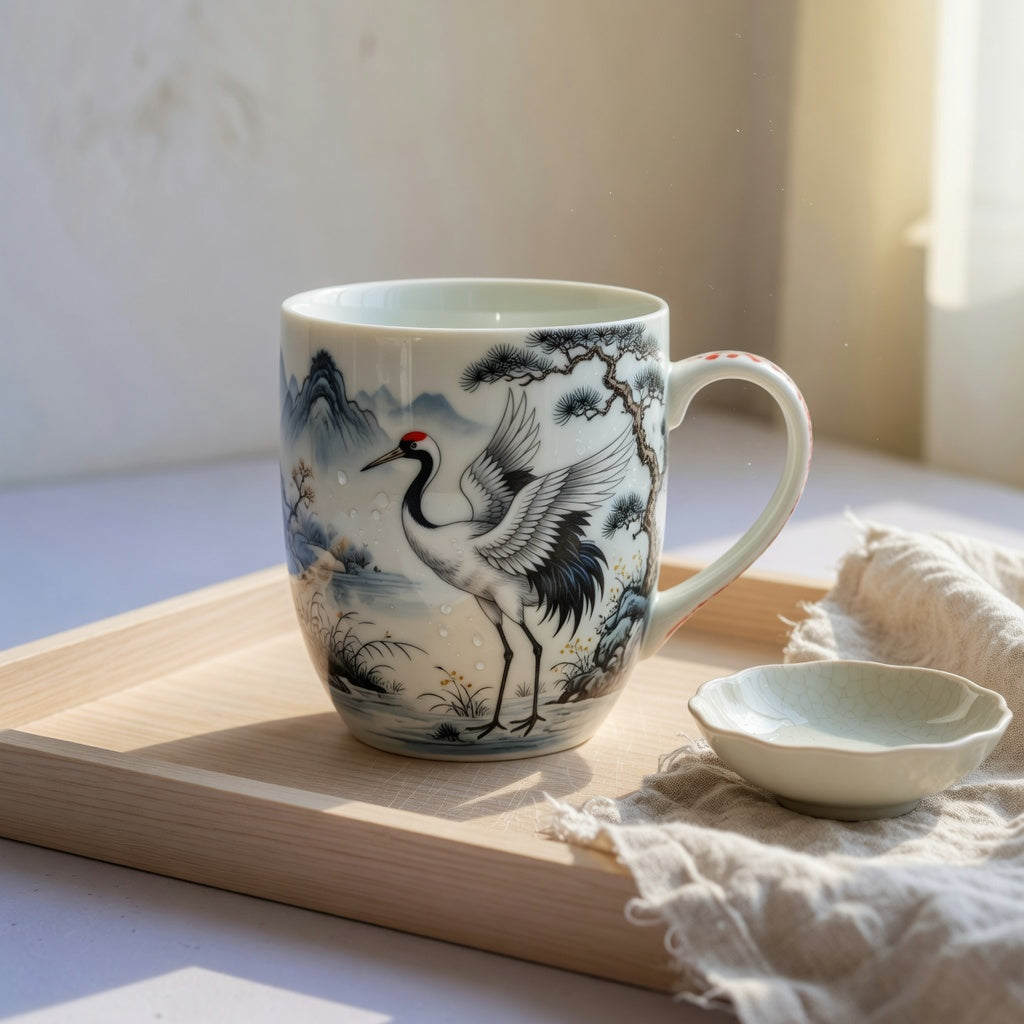
Home Decor Crane Ceramic Mug: What Buyers Should Compare
Crane mug searches mix East Asian bird cups with construction-crane novelty mugs. We compare motif, form, metallic care, and food-contact checks so you can judge a home decor crane ceramic mug befo...
Read more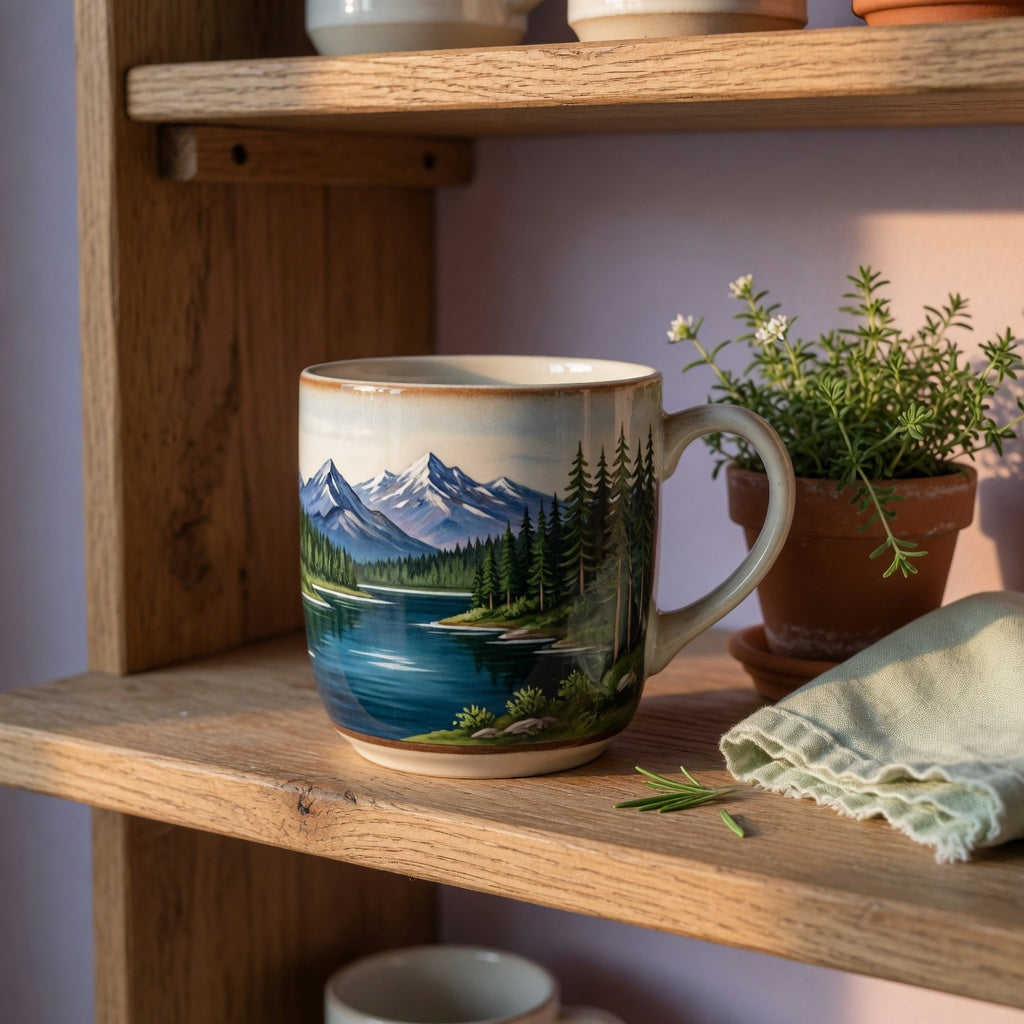
Landscape Mug Gift for Home Decor: Capacity, Glaze, and Care
Scenic landscape mugs are bought as a morning cup and as shelf art. Compare scene type, usable fill, wash care, and food-safe labeling before a housewarming or holiday gift goes out.
Read more
Leave a comment
This site is protected by hCaptcha and the hCaptcha Privacy Policy and Terms of Service apply.