




Emerald Ceramic Coffee Tea Mug Comparison: Buyer Checks
Reading time: about 14 minutes
In our store, two green mugs can land on the same counter and still be different tools. One is a tall open cup with room for a desk pour of coffee. The other is a low bowl that cools matcha faster and shows every sweep of glaze. Shoppers who want an emerald ceramic coffee tea mug comparison are usually trying to separate that color story from the clay, the handle, the lid, and the care marks that decide whether the mug lasts through real kitchen weeks.
The photo sells the color. Then the questions start. Will this take a full mug of coffee or only a short pour? Can it go in the microwave, or is metal sitting in the decoration? Does the listing say the piece is for drinks, or does it only call the glaze pretty? Our Emerald Coffee Tea Mug is the page we send people to when they want this color for both drinks. Read that live listing as the spec sheet. Ounce capacity, clay body, handle shape, metallic trim, and any microwave or dishwasher wording have to be printed there. We will not guess them from a similar green mug sold somewhere else.
What should an emerald ceramic coffee tea mug comparison cover first?
Emerald is a glaze color or a product-line name, not a clay body. A deep green stoneware cup, a thin-rimmed porcelain cup, and a lidded ceramic travel cup can all carry that word and still behave nothing alike once hot liquid hits them.
Independent head-to-head tests of named emerald mugs are scarce. Heat-hold rankings in ads are usually marketing lines, not a method you can repeat beside the kettle. A useful comparison is a checklist you finish before checkout, not a winner's podium.
Sort these before you commit to the greenest photo:
- Shape: open mug, wide tea or matcha bowl, or lidded ceramic travel cup.
- Stated capacity: the ounce figure on the current listing, not a guess from the crop.
- Body: stoneware, porcelain, earthenware, or a description that never names the clay.
- Surface: solid glaze, reactive or hand-applied glaze, or gold or silver decoration.
- Use marks: an explicit microwave line and a dishwasher line, or silence.
- Food contact: sold for drinks, or decorative ware that only looks like a mug.
If you want other silhouettes in the same pass, our unique coffee mugs collection is the wider shelf. Color is the easy part. Fit is not.
Open desk mug or lidded ceramic for the drive?
An open ceramic mug belongs on a counter or a desk, where a hand can set it down. It does not belong loose in a tote. In our experience, intact ceramic usually tastes cleaner for coffee and tea than stainless, which can taste metallic, or some plastics that keep old soap and old coffee. That advantage ends the moment the drink sloshes or the cup cracks on a console.
A lidded ceramic travel cup is a compromise, and we say so before anyone treats it like a steel tumbler. It usually loses to vacuum-insulated metal on long heat hold, on drops, and on a seal you can trust in a bag. It can beat an open mug in a car only if the listing states cup-holder fit and the lid still seals when you tip it over a sink. Do that tip test at home. A walking photo is not a leak test.
Leave ceramic at home if you need all-day heat, if the lid is a loose press fit, or if the base is wider than the holder. A short drive can still make sense when you want the drink to taste like the kitchen mug and you accept that ceramic chips on concrete. For clay and metal trade-offs beyond the green, our mug comparison on materials, size, and safety goes further than color.
Is 12 ounces enough next to a 14- or 16-ounce pour?
Capacity is the question we hear right after color, often while someone holds a mug under a drip spout. A 12-ounce cup is plenty for many tea drinkers, a smaller coffee, or anyone who refills from a carafe. It feels tight if you want a full drip serving plus milk without filling to the lip. A 16-ounce cup takes that larger pour. If the walls are thin and the mouth is wide, it also shows more liquid to the air, so the drink can cool faster even though there is more of it.
Do not convert a flattering crop into ounces. Check the stated fluid ounces, plus height or diameter when the maker publishes them. A missing number is part of the comparison. If the emerald page we link leaves capacity blank, the honest reading is unknown. Do not copy an ounce count from another green mug with a similar name.
Mouth shape changes tea more than glaze color does. A wide, low bowl gives matcha and loose leaf more aroma, and it cools quicker. A taller, narrower coffee mug keeps your nose over a smaller opening and slows that first drop in temperature a little. Neither shape is a thermos. An infuser basket and a lid are their own purchase. Do not assume a plain emerald cup includes them unless the current page says so.
Hands matter as much as ounces. A large cup with a small handle pinches bigger fingers and sore thumbs. In our experience, a slightly smaller mug with a real finger opening gets used more than a 16-ounce piece left in the cupboard after two sips. Grip, glaze shift, and daily care for this color are in our notes on emerald mug size, glaze, grip, and care. Gift buyers should match ounces to the way someone drinks, not to the way the box photographs. The mismatch we see most often is in our ounce-versus-fit gift size comparison.
How do stoneware, porcelain, glass, and enamel change the drink?
Stoneware is typically fired hot and feels substantial in the hand. It stands up to daily coffee better than a thin decorative shell, and it can still crack from thermal shock if boiling water hits a mug that just came off a winter sill. Porcelain is often lighter, with a tighter surface that shows chips as pale edges. When a listing actually names earthenware, the clay under the glaze is usually more porous, which is a poorer bet once crazing lets tea in.
Glass lets you see the drink and can feel thin against the lip. Skip it if a kettle pour has already cracked thin glass in your kitchen. Enamel on steel is lighter in a bag and closer to camp cookware than to a desk mug. Once the enamel chips, you are drinking against metal. None of this is a lab ranking of emerald pieces. We have not seen a shared test method that puts emerald stoneware, porcelain, double-wall ceramic, and lidded ceramic travel cups on one heat-hold chart. Minute claims on a photo stay marketing until the page shows how they were measured.
Reactive and hand-applied emerald glazes move. The same style can read blue-green in daylight and yellow-green under a kitchen LED. That shift is not automatically a defect. It is a problem when you need four mugs to match, or when the page shows one hero shot and never says color varies. Look at more than one angle before you promise a pair.
This category is a weak pick for an unpadded backpack, a microwave run with gold or silver on the piece, a set that must match one screenshot of green, and a long winter drive that needs vacuum-bottle heat.
| What you compare | Desk coffee | Tea or matcha | Short commute |
|---|---|---|---|
| Open ceramic mug | Strong default if capacity and handle fit | Good when the mouth leaves room for aroma | Weak unless you never tip it |
| Wide low bowl | Milk drinks cool fast | Useful whisking and infusion space | Poor fit for most car holders |
| Lidded ceramic travel cup | Fine at a desk with the lid off | A lid can mute aroma | Only if base size and seal are stated |
| Insulated steel tumbler | Stays hot longer; taste can read metallic | Often stays too hot, with less aroma | The practical default for leaks and drops |
We use that split when someone asks us to pick the emerald one. The drink and the trip choose the shape. The glaze only decides whether they want to look at it.
Will a gold rim, the dishwasher, or crazing end the mug?
A solid green glaze does not make a mug microwave-safe. The risks are metal in or on the piece, water trapped in a crack, and silence where a care line should be. Gold and silver decoration can spark. A metallic rim, a gold logo, or a luster band stays out of the microwave even when the rest of the glaze is a quiet emerald. Some pages mention it. Many never explain it. If the listing is silent, do not fill in a yes.
Dishwasher wording is just as narrow. Reactive glazes can dull, speckle in a new way, or lose the bright edge after hot cycles and detergent. A mug marked hand-wash only often crazes or stains faster when that instruction is ignored. Crazing is a fine crackle in the glaze. It gives coffee oils and tea tannin a path under the surface, which is how a neutral cup starts tasting like last Tuesday's roast.
Stop drinking from a mug when the food-contact surface is chipped, cracked through, or crazed so deeply that stains sit in the lines and will not scrub out. A chip on the foot scratches the table. A chip on the lip rests on your mouth and hides soil. Lip chips are the ones we pull off the drink shelf.
Preheating is the step a rushed morning skips. A cold ceramic wall steals heat from the first pour of kettle tea or coffee. Swirl in a splash of hot water, then dump it. That will not turn an open mug into a travel tumbler. It does stop the flat first sip.
What do lead and cadmium rules change about a green glaze?
Green glaze has a long craft history. Not every historic formula was meant for daily coffee. Lead compounds have been used in ceramic glazes. If firing is inadequate or poorly controlled, lead may not lock in and can leach into food. A decor-aisle cup is not automatically a drink mug.
Read badges in that light. For cups and mugs, FDA compliance guidance sets an extractable-lead action level of 0.5 micrograms per milliliter of leaching solution when any one of six units tested reaches it, using methods that include ASTM C738. Cadmium action levels are 0.5 micrograms per milliliter for small hollowware and flatware and 0.25 micrograms per milliliter for large hollowware. The cadmium guidance notes that extractable cadmium from acid foods could cause chronic cadmium poisoning with continued use. Those are enforcement benchmarks for leach tests, not a score for any mug photo in our store.
FDA has said ceramicware that still shows extractable lead under the referenced test should not be labeled lead free, and that such a label may be false or misleading. A lead-free, food-grade, or non-toxic line with no method named is marketing. It is not an ASTM C738 report. If the page does not link a lab sheet, you have not seen one.
Under 21 CFR 109.16, decorative ceramicware that looks suitable for food is treated as foodware unless it carries the specified conspicuous "Not for Food Use" warnings, because lead in glaze or decoration may leach. The warning has to stay on the piece, not on a hang tag you discard.
A pilot study of mugs already in routine use found lead in coffee at 0.2 to 8.6 micrograms per liter and in tea from below 0.2 to 1.6 micrograms per liter. Intake estimated from one of five mugs exceeded California's 0.5 microgram-per-day Maximum Allowable Dose Level, while modeled blood lead did not rise above the regulatory or guidance values used in that study. Separately, a University of Plymouth study found cadmium and lead migration into 4 percent acetic acid was higher from exterior lip areas than from interiors. In those samples, 24-hour interior results did not exceed 9 micrograms per liter for cadmium or 6 micrograms per liter for lead, and some exterior results were much higher. The rim your lip touches matters as much as the inside wall.
That research is not a head-to-head of today's emerald mugs. It does not certify our listing. It tells you which questions a product page still has to answer: food-use intent, metal decoration, and whether any safety claim names a method.
Can one mug take coffee and tea without carrying flavor?
You can pour coffee and tea in one sound ceramic mug. Plenty of kitchens do. Flavor carry is leftover oil, tannin stain, and a rinse that never happened. The clay does not store the last drink. Coffee oils cling. Strong black tea stains. Crazed or scratched glaze holds both. A smooth, intact surface that actually gets washed usually will not make afternoon tea taste like the morning roast.
A second mug still earns shelf space in a few cases. Someone wants a cup that never sees coffee. A wide bowl stays reserved for matcha. An office shares a mug that never quite comes clean. If you need an infuser and a lid, buy those parts on purpose.
The stain routine we use at the sink is short:
- Rinse before the ring dries.
- Skip abrasive pads that dull the glaze.
- Hand-wash when the maker says to.
- Use a baking-soda paste on a brown line only if the glaze is intact.
- Retire the mug from hot drinks if the stain lives inside crackle. Paste will not repair crazing.
Which habit should send you to this emerald mug?
Match the situation, then the listing, then the cart. Run the emerald ceramic coffee tea mug comparison against the live page, not against the photo.
- Daily home coffee and tea. You want a stated capacity you will finish, a handle that fits the hand that will hold it, and explicit microwave and dishwasher language. Start with the emerald coffee tea mug we list and read those fields on the live page. A blank field is unknown, not a quiet yes.
- Mostly tea or matcha. Favor mouth width and a lip you can see is free of chips. A tall coffee silhouette is fine. A wide bowl is often nicer for whisking, and it will cool faster.
- Commute. Do not force an open ceramic mug into that job. Pick a lidded ceramic cup only when holder fit and a real seal are stated. Otherwise steel is the honest tool, even if ceramic tastes better at the kitchen table.
- Gift. Match ounces and wash habits to the person, not to the hero photo. Reactive emerald will not clone itself across a set of four. Say that if you are sending one mug rather than a matched suite. If green is not the only shape they would use, browse the unique coffee mug collection before you settle.
Before checkout, confirm each line:
- Fluid ounces are printed, and height or diameter too if the shelf space is tight.
- The clay body is named, or you accept that it is not.
- Metallic decoration is absent, or you have already ruled out the microwave.
- Dishwasher or hand-wash instruction is explicit.
- The piece is sold for food, not as decor missing a permanent not-for-food-use warning.
- Any lead-free line is tied to a named test, or you treat the badge as empty.
- You have a plan for chips, crazing, and glaze that will not match a screenshot.
Color gets someone to the page. That list is what keeps a mug in the cupboard after a month of morning pours and dishwasher cycles.
Frequently asked questions
What should an emerald ceramic coffee tea mug comparison include before checkout?
Compare shape, stated ounces, clay body, handle opening, reactive versus solid glaze, metallic trim, and the exact microwave and dishwasher words on the current listing. Then check whether the mug is sold for food use. A green photo answers none of those. If capacity or care is missing, pause. Do not assume the friendly answer.
Does a solid emerald glaze mean the mug is microwave-safe?
No. Microwave risk comes from metal in the decoration or body, from cracks that trap moisture, and from whatever the maker states. It does not come from how even the green looks. Gold or silver rims and luster details do not belong in a microwave. If the listing is silent, leave the answer as unknown.
Is 12 ounces too small for everyday coffee and tea?
It is enough for many tea drinkers and for smaller coffee pours. It feels tight if you want a large drip serving plus milk without filling to the lip. Compare stated 12-, 14-, and 16-ounce options with the pour you actually make, and check handle room at the same time. A bigger cup with a painful grip gets used less.
Can one ceramic mug be used for both coffee and tea?
Yes, if the glaze on the drinking surface is intact and you wash it. Flavor carry is usually leftover oil and tannin, especially in crazed or scratched glaze, not a property of the color. Keep a second mug if you want a wide matcha bowl, a lidded infuser, or a cup that never sees coffee oils.
Does a lead-free label on a green ceramic mug prove it passed a leach test?
Not by itself. FDA guidance says ware that still shows extractable lead under the referenced test should not be labeled lead free, and that this labeling may be false or misleading. A useful claim names a method, such as the ASTM C738 approach used in FDA ceramic foodware checks. Decorative cups that look usable need a clear not-for-food-use warning rather than a soft marketing line.
Shop Popular In-Stock Mugs — Extra 10% Off 1st Order (10_OFF) + Free Shipping
 Pleated Ceramic Coffee Cup, Crumpled Paper Cup Style, 200 ml
Default color: Green
 Christmas Tree Coffee Mug with Lid and Spoon, 460 ml
Default color: Red
 Handbag Shaped Coffee Mug with Saucer and Spoon, 310 ml
Default color: Pink
 Elk & Moon Deer Coffee Mug with Tea Infuser & Lid, 420 ml
Default color: Dark Blue
Browse by budget & style: Cute & Gift Cups (10% Off Applied) · Wooden-Handle Bestsellers · Large 14–15.5 oz Mugs · Holiday Gift Mugs · 8–9 oz & Espresso Cups
Popular mug buying guides: 2026 Mug Gift Ideas · 4-Piece Mug & Espresso Cup Sets · 8 oz & 9 oz Mugs · Cute & Aesthetic Mugs · Ceramic Tea Cups & Infuser Mugs · Ceramic Mugs with Lids Compared · Wooden-Handle Tea Infuser Mugs Compared · Christmas & Secret Santa Mugs 2026 · Espresso & Cortado Cups Guide · Cup & Saucer Gift Sets · All 25 Mugs Spec Table · Mug Size Guide · Shipping & Promo FAQ
1ST ORDER: EXTRA 10% OFF (CODE: 10_OFF) · OR BUY 3, GET 1 FREE


Read more
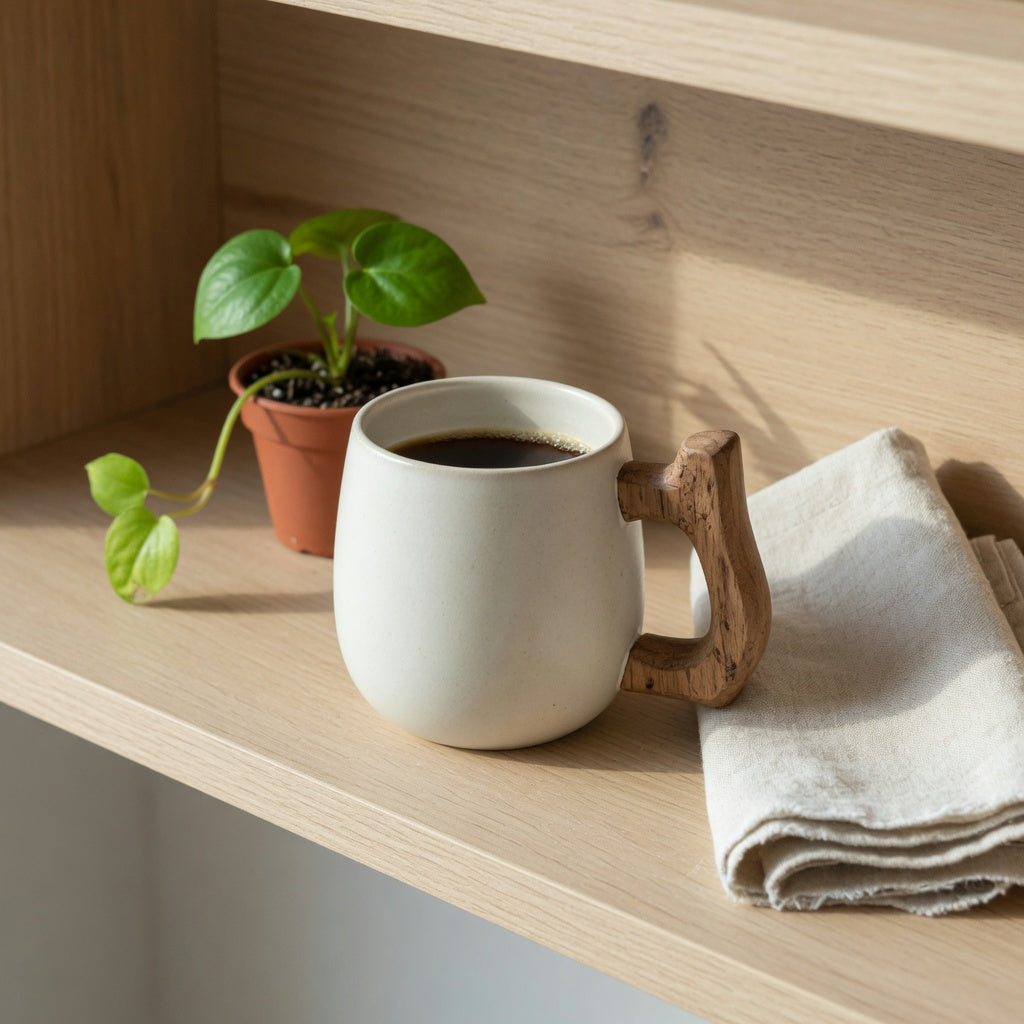
Home Decor Ceramic Mug Wooden Handle: What to Compare
A wooden handle changes how a ceramic mug should be washed, heated, and trusted with hot coffee. We compare capacity, grip, the joint, appliance limits, and glaze questions to settle before you buy...
Read more
Planet Coffee Tea Mug for Coffee Lovers Home Decor: Compare
A planet coffee tea mug for coffee lovers home decor has to survive a real pour and still look right on a shelf. We compare heat-changing coatings with printed art, care labels, capacity, Pluto on ...
Read more
Leave a comment
This site is protected by hCaptcha and the hCaptcha Privacy Policy and Terms of Service apply.