



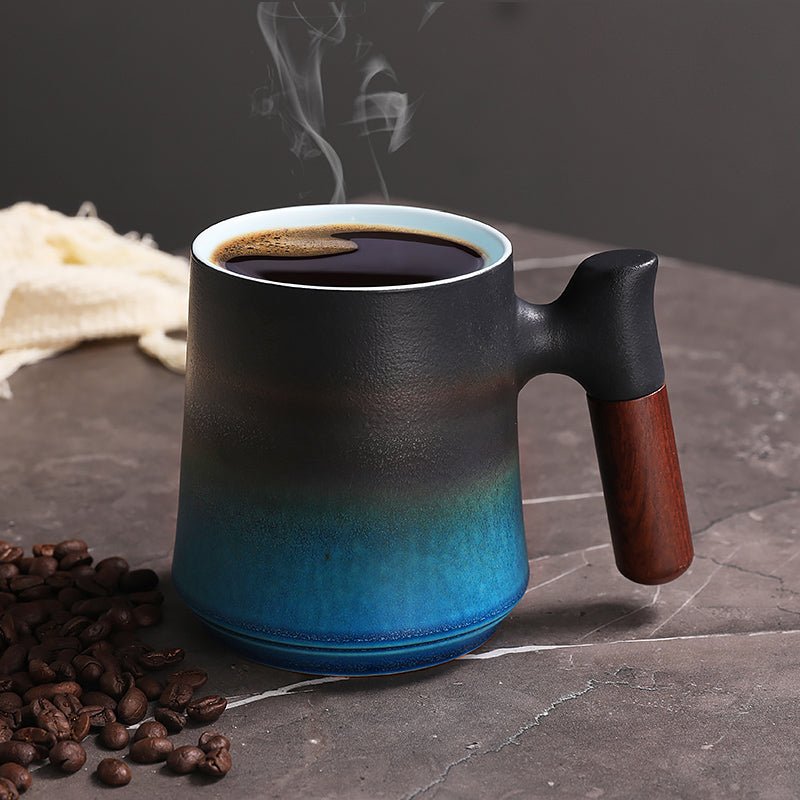
Gradient Mug Gift Checklist: What to Compare Before You Buy
Reading time: about 10 minutes
A gradient mug looks like a safe gift. That is the trap. Two mugs with near-identical ombre photos can be a kiln-fired glaze, a print sitting on top of the glaze, a coated glass tumbler, or a heat-reveal coating — and only one of those survives the way the recipient actually treats a mug.
We sell these mugs and answer the messages that come back afterward, and the complaints are rarely about the color. They are about a dishwasher cycle nobody flagged, a name with the wrong vowel, or a chip that appeared in transit. So this is the gradient mug gift checklist we would use ourselves, ordered the way the decisions actually surface in our inbox.
Which kind of gradient mug is actually in the listing?
Identify the decoration method before you compare anything else. It drives care limits, durability, and what counts as a fair price.
| Gradient style | How the color is made | Typical failure mode | Best fit |
|---|---|---|---|
| Fired reactive or ombre glaze on ceramic or stoneware | Color is part of the glaze, fused in the kiln | Shade shifts piece to piece; glaze can craze after years of thermal cycling | Daily coffee, anyone willing to read a care line |
| Printed ombre or decal ceramic | Color is applied over the glaze and set | Dulling, scratching, or lifting near the rim with abrasive washing | Design-led gifts, lighter use, desk display |
| Gradient glass | Color coating usually applied to the outside | Coating wear; many are hand wash only and not microwave safe | Iced coffee, tea, a desk that gets photographed |
| Heat-reveal (thermochromic) | A temperature-reactive coating | Dishwasher heat and scouring erase the reveal | Novelty gifts, kids, an office joke that lands |
Use that table as a starting point, not a verdict. The only care statement that counts is the one printed on the exact listing or hangtag of the mug in your cart — not the category, not another seller’s photo, and not a similarly named product on a marketplace. If a listing shows a gorgeous ombre and says nothing about how the color was applied, that silence is itself a comparison point.
Will the recipient use it daily, or will it live on a shelf?
Capacity is the most misread number in mug shopping. FDA’s reference for a cup or mug is a small ceramic hollowware piece of roughly 240 mL, or 8 fl oz, usually with a handle — a useful anchor precisely because most gift mugs run larger. A listing’s ounce figure can mean the comfortable fill level or the brim capacity, and those are not the same number. Someone who drinks one short flat white has different needs from someone who fills to the top and microwaves it twice before nine in the morning.
Handle geometry matters as much as volume. A thick, rounded handle suits large hands and feels clumsy in small ones; a slim two-finger opening is pleasant for tea sipping and miserable on a heavy mug full of coffee. Wide mouths cool coffee faster and clean more easily. Narrow mouths hold heat longer and suit tea. And a mug that is beautiful but too tall for the cupboard shelf, or too heavy when full, quietly becomes a shelf mug — we see that outcome often enough to flag it before checkout rather than after.
Occasion shapes the answer too. A teacher gift or housewarming present is usually judged on looks and box presentation, because the giver rarely watches it being used. A birthday or Mother’s Day mug gets judged on the second Monday, after two dishwasher cycles.
Our Gradient Coffee & Tea Mug is the piece to measure those questions against — open the current listing and read its stated capacity and care line against the recipient’s habits before you commit, because the listing is the authority here and not this article. If the silhouette is still open, our unique coffee mugs collection shows gradient finishes alongside other shapes, which makes the size and weight decision much easier to see side by side.
If the handle construction itself is the deciding feature, our cloud ceramic mug wooden handle buying checklist covers grip, balance, and washing for that build.
Is the mug sold for drinking, or is it decorative-only?
This is the check most gift guides skip, and it matters because coffee and tea are acidic drinks. The California Department of Public Health notes that acidic drinks leach lead from a dish’s glaze or decoration faster than non-acidic ones, and that microwaving or cooking speeds leaching from any dish that contains or might contain lead.
FDA sets an action level of 0.5 micrograms per milliliter of leaching solution for lead in ceramic cups and mugs, applied to any one of six units tested, and 0.5 micrograms per milliliter for cadmium in ceramic small hollowware. Those numbers are a regulatory backstop, not something you can confirm from a product photo. What you can do is four checks:
- Look for a food-use statement. A maker who intends a mug for drinking usually says so plainly and often names the glaze type.
- Read the base. Under 21 CFR 109.16, ornamental or decorative ceramicware that looks suitable for food is treated as food-use ware unless it carries a conspicuous “not for food use” warning and a permanent base statement, or has a hole through the potential food-contact surface.
- Question “lead free.” FDA guidance says ceramicware containing extractable lead should not be labeled “lead free,” and using that term when extractable lead is present may be false or misleading. It is a claim worth asking a seller to stand behind in writing.
- Be careful with unknown pottery. FDA advises checking traditional pottery for a base warning such as “Not for Food Use — May Poison Food,” and skipping it for drinks if testing or the maker’s reliability cannot show it is suitable.
For a deeper pass on how glaze and finish change the buying decision, our gradient ceramic coffee mug buying checklist works through the same material questions in more detail.
Does “dishwasher safe” on a gradient mug mean dishwasher-proof?
No, and the gap usually shows up around month three. A fired glaze and a surface print can both carry a dishwasher-safe claim and still age very differently: abrasive detergent, a hot dry cycle, and mugs stacked rim-to-base will wear a printed gradient long before they wear a glazed one. The California Department of Public Health also warns that dishwashing a lead-containing dish can damage the glaze, make later leaching more likely, and in some cases contaminate other dishes in the same load.
Microwave is a separate question entirely. FDA’s guidance is that only ceramic or other cookware labeled microwave-safe should be used for microwave heating — being kiln-fired does not make a mug microwave-safe by default. Heat-reveal coatings and any metallic trim are the usual exceptions, and both deserve a direct question to the seller rather than an assumption from a sticker.
Three habits protect a gradient mug whatever the type: skip the heated dry setting, rinse it alone for the first few washes if the finish is new to you, and hand wash anything with a color-change coating or a printed band.
Will the personalized name and the glaze match the photo?
Two separate risks hide in that question. The first is text. Type the name exactly as it should appear, then read it back out loud — apostrophes, accents, capitalization, and the difference between “ie” and “ei.” Check character limits before you commit to a long name, and confirm which color name maps to which swatch, because “blush” and “rose” are not universal. Where a proof or approval step exists, use it. Where the item is made to order, assume the window for fixing a spelling error is narrow or already closed.
The second risk is glaze variation. Reactive and handmade glazes break differently on every piece, so a mug can arrive with a stronger color band, a lighter shoulder, or visible pooling that the hero photo never showed. That is a characteristic rather than a defect — but decide in advance whether the recipient would find it charming or disappointing. Our coffee mug gift buying checklist goes further into personalization and finish questions if you are ordering against a specific date.
Will it arrive intact and look gift-ready unopened?
Ceramic travels badly when packed loosely, and a gradient finish shows scuffs more than a plain white body does. Check whether the listing mentions double-boxing or molded pulp inserts, and keep the original packaging until the recipient has used the mug at least once — most carriers want it for a damage claim. If the piece is personalized or made to order, confirm the breakage and return terms before paying, because “custom” often means “not returnable.”
Gift-readiness is a separate line item. A printed gift box and card cost less than buying them separately, but a plain kraft box with tissue is often enough and travels lighter. If you plan to fill the mug, keep fillers small and dry: cocoa sachets, individually wrapped tea bags, a folded note, a small bag of whole beans. Loose grounds and a metal scoop sound charming and usually end up scratching the interior glaze on the way over.
The gradient mug gift checklist before you hit checkout
- Identify the gradient type: fired glaze, printed ombre, coated glass, or heat-reveal.
- Confirm the mug is sold for drinking — look for a food-use statement and a base stamp.
- Read the exact dishwasher and microwave wording on that listing, not on a category page.
- Match capacity to how the recipient pours, and check whether the ounces mean fill or brim.
- Test the handle description against hand size and the mug’s weight when full.
- Verify name spelling, character limits, font, and color-option names in writing.
- Ask whether reactive glaze variation is expected on the specific piece you are buying.
- Check packaging, whether a gift box is included, and the damage-claim window.
- Confirm the return policy for personalized or made-to-order mugs.
- Choose one or two fillers that fit through the mouth without touching the glaze.
Frequently asked questions
What belongs on a gradient mug gift checklist before I pay?
Five items carry the most weight: how the gradient was made, whether the mug is labeled for food use, the exact dishwasher and microwave wording, the capacity and handle fit, and whether any personalization was proofed. Packaging and return terms round it out. A gradient mug gift checklist that skips the care line is really just a color comparison.
Is a gradient mug microwave safe?
It depends entirely on the decoration and the maker’s statement. FDA advises using only ceramic or other cookware labeled microwave-safe for microwave heating. Heat-reveal coatings and metallic trim are the most common exceptions, so ask before the first reheating.
Will the gradient color fade or peel in the dishwasher?
Printed gradients and heat-reveal coatings are the ones most likely to dull or lift under abrasive detergent and hot dry cycles; a fired glaze generally holds up better. Follow the care line on the exact listing, and hand wash if the finish is the reason you are buying the mug at all.
How many ounces should a gift mug be?
There is no universal number. FDA’s reference mug is about 8 fl oz, and many gift mugs run considerably larger. Match the figure to the person’s actual pour — a 16 oz mug is generous for a long black coffee and unwieldy for a single espresso.
Can I return a personalized gradient mug if the name is wrong?
Usually not, which is why the proof matters more than the photo. Confirm the spelling in writing and check the return policy for made-to-order items before paying, since many sellers exclude customization errors from returns.
Pick the mug first, then build the gift around it
Start with the care line and the base stamp, then the size, then the color. Buyers who work in that order rarely come back with a dishwasher story or a spelling problem. Browse the full collection of unique coffee mugs with this gradient mug gift checklist open beside you, and if the ombre finish is the one you want, check the current details on the Gradient Coffee & Tea Mug before you decide.
Ready to pick your mug? Two ways to save on today's order:
Ordering 1–3 mugs? Get an extra 10% off your 1st order with code 10_OFF Apply 10% Off & Shop Wooden-Handle Mugs →
Gifting 4+ mugs? Buy 3, Get the 4th Free applies automatically at checkout (no code needed; offers do not stack) · Free standard shipping (Nov pre-Christmas delivery: 15–20 calendar days US) · Free replacement if chipped in transit.
Popular mug buying guides: Ceramic Tea Cups & Infuser Mugs · Ceramic Mugs with Lids Compared · Wooden-Handle Tea Infuser Mugs Compared · Christmas & Secret Santa Mugs 2026 · Espresso & Cortado Cups Guide · Cup & Saucer Gift Sets · All 25 Mugs Spec Table · Mug Size Guide · Shipping & Promo FAQ
FIRST ORDER 10% OFF (CODE: 10_OFF) · OR BUY 3, GET THE 4TH FREE


Read more
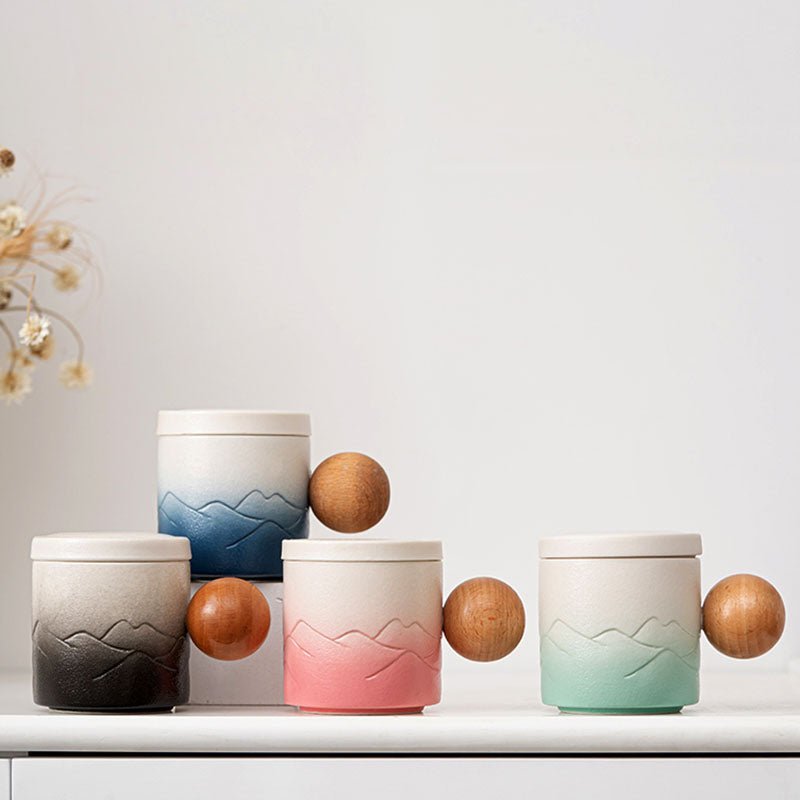
Ball Handled Ceramic Tea Mug Gift: What Buyers Should Compare
A ball handle changes how a mug is picked up, how it balances when full, and how it survives shipping. Here is what to confirm about handle material, comfortable capacity, glaze testing, and applia...
Read more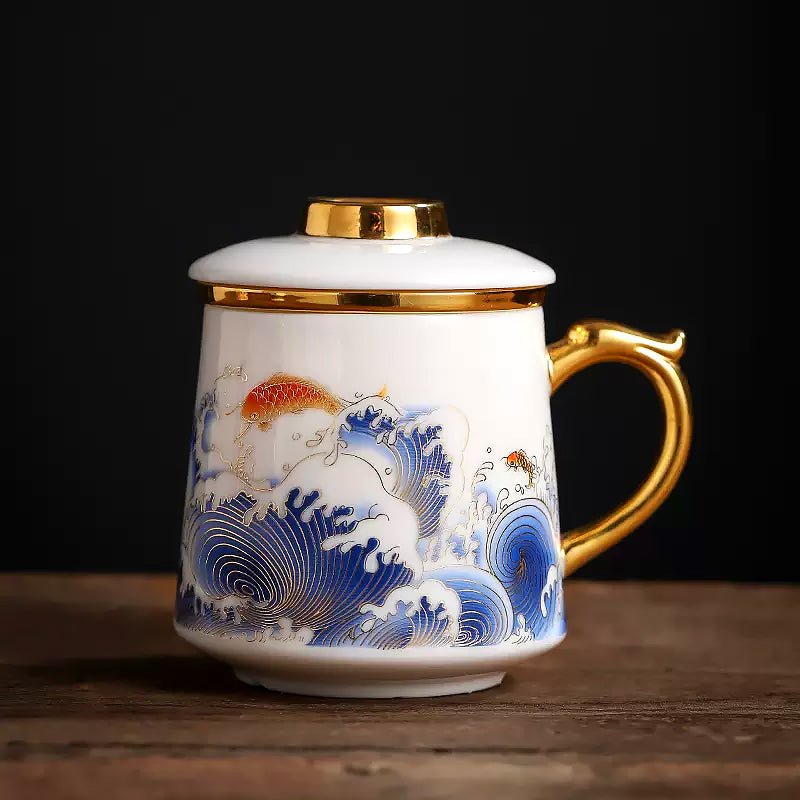
Golden Waves Kio Mug Size Guide: 400 ml, Fit Checks, and Care
The live listing puts the Golden Waves Kio at 400 ml but stays quiet on height, base width, and care. This guide shows how to test fit against your shelf, desk, and brewer before you order.
Read more
Leave a comment
This site is protected by hCaptcha and the hCaptcha Privacy Policy and Terms of Service apply.