

Gradient Coffee Mug Gift: Compare Size, Finish, and Care
Reading time: about 9 minutes
Gift mugs fail quietly. They look polished in tissue paper, then spend months behind the chipped cup the recipient already prefers because the new handle pinches, the capacity feels wrong, or the finish demands hand-washing nobody plans to do. A gradient coffee mug gift has more visual character than a plain cup, but the color fade is only the first filter. Daily fit still comes down to construction, volume, grip, care, and where the mug will actually be used.
In our store, we compare mugs at the counter and packing table, not only in lifestyle photos. For someone who drinks from an open ceramic cup at a desk or kitchen table, start with The Gradient Coffee Tea Mug. Our catalog title identifies it as a gradient ceramic mug. Use the live listing to verify its exact capacity, current finish options, food-contact information, microwave and dishwasher directions, personalization, and packaging; those details are not established by the title alone.
Which gradient coffee mug gift fits the recipient’s routine?
Start with the drinker, not the occasion. A birthday, housewarming, or holiday does not tell you whether the mug needs to sit beside a laptop, ride in a cup holder, or survive a shared-office sink. The same gradient appearance can be applied to very different types of drinkware.
| Recipient’s routine | Category to compare | Reason |
|---|---|---|
| Seated coffee or tea at home | Ceramic or stoneware gradient mug | An open cup suits the routine and keeps the decorative finish visible. |
| Car or train commute | Lidded stainless travel mug | Confirmed lid performance, cup-holder fit, and insulation matter more than a traditional mug shape. |
| Novelty-focused gift | Heat-sensitive color-changing mug | The changing design is part of the experience, though its care rules may be stricter. |
| Limited grip or rough handling | Lighter, durable drinkware | Filled weight, handle clearance, and impact resistance should take priority over the fade. |
If the recipient uses open mugs but you are unsure about their style, browse our unique coffee mugs to compare shapes and decorative approaches. A collection helps with visual comparison, but it does not replace checking each listing. If every drink happens in a car, an open ceramic mug is the wrong gift even if its gradient is perfect.
Which is better: ceramic fade, stainless travel, or heat-sensitive color?
Gradient describes appearance, not performance. Separate the three main constructions before comparing colors.
- Ceramic or stoneware with a static gradient: The fade may come from glaze or another decorative process. This category offers a familiar open-cup experience, but ceramic can chip if dropped. Do not assume insulation, dishwasher use, or microwave use unless the listing states it.
- Stainless steel travel drinkware: This is the practical direction for commuting, outdoor use, or anyone who needs a lid. Verify whether the mug is insulated or leak-resistant rather than inferring those features from its travel shape. Stainless steel must not be placed in a microwave.
- Heat-sensitive color-changing mugs: These are designed to alter their appearance as the surface temperature changes. They fit a recipient who enjoys a visual reveal, but not someone who wants the mug to look consistent all day. Follow the listing’s exact washing and heating instructions because the reactive layer can have different restrictions from a static finish.
A static ceramic design usually makes more sense for a calm desk or kitchen gift. A travel mug is the better choice for movement, while a color-changing version works best when novelty is the point rather than long-term visual consistency.
What capacity, handle, and rim will feel right every morning?
Across this category, shoppers commonly encounter labels around 11–16 US fl oz and 260–400 ml. Those are not equivalent endpoints: 11 US fl oz is about 325 ml, 16 oz is about 473 ml, and 400 ml is about 13.5 oz. Check the exact figure on the product page rather than estimating from a styled photo.
Our most practical sizing method is to measure the recipient’s current favorite mug. Fill it to the level they normally use, then pour that amount into a measuring jug. Measuring the normal fill instead of the brim capacity accounts for milk, stirring room, and the space people leave to avoid spilling on the walk from the kitchen to a desk.
- Handle clearance: Check whether the recipient prefers a one-finger hold or room for two or three fingers. A small loop can pinch larger hands, while an oversized handle can pull an already heavy mug off balance.
- Handle attachments: Inspect the upper and lower joints. A visible crack at either attachment point is not decorative variation.
- Drinking rim: It should feel smooth all the way around. A rough spot or sharp chip at the rim is a reason not to use or gift the mug.
- Base and foot ring: Place the empty mug on a flat counter and check for rocking. Also inspect an unglazed foot for rough areas that could mark a desk.
Weight deserves equal attention. Thick ceramic can feel substantial during unboxing but tiring once filled. For someone with limited hand strength, prioritize a lighter body and generous grip instead of choosing by color alone.
What should the listing confirm about food contact and appliance use?
Ceramic does not automatically mean food-safe, microwave-safe, or dishwasher-safe. Decorative metals, decals, reactive coatings, lids, and other components can change the instructions. We do not treat a product photo or a similar marketplace listing as evidence for any of those claims.
The FDA explains that lead can be present in some traditional or improperly manufactured ceramic glazes or decorations and may leach if pottery is not fired correctly. Its action level for lead in ceramicware cups and mugs is 0.5 µg/ml in a leaching solution when any one of six tested units reaches that level. That regulatory benchmark does not prove that a particular mug has been tested or certified.
Before ordering, look for separate answers to these questions:
- Is the mug explicitly intended for food and beverage contact?
- Are microwave and dishwasher directions stated separately?
- Do any decorations, lids, or coatings require removal or special care?
- Does the seller provide a relevant testing or compliance statement, and what exactly does it cover?
Check those points on the current Gradient Coffee Tea Mug listing. If a detail is missing, leave it unresolved or ask before buying. Do not fill the gap with specifications from a similarly named mug.
How do you keep the fade presentable after unboxing?
At the packing table, our team checks the rim, outer wall, handle joints, and foot under side lighting. Small tonal variations can be part of a decorative finish, especially on studio-style pieces. A sharp chip, a crack through the body, a rough drinking edge, or a base that rocks on a flat surface is different and should not be dismissed as character.
- Follow the care line on the exact listing. If it says hand-wash, do not use the gift as a dishwasher experiment.
- Use a soft sponge on the exterior. Skip steel wool, gritty powders, and aggressive scouring pads.
- If dishwasher use is permitted, load the mug so its handle cannot strike a rack tine or another cup during the cycle.
- Avoid tight foot-to-rim stacking, which puts a hard base directly against the decorated wall or drinking edge.
- Avoid sudden extreme temperature changes unless the manufacturer specifically allows them.
A decorative ceramic mug is not the best choice for camping, a young child, or someone who routinely drops drinkware into a crowded sink under heavy pans. A durable lidded cup may be less ceremonial, but it will fit that recipient better.
Does personalization make the gift better—or harder to deliver?
A name, date, or short message can make a mug feel personal. It can also cover part of the gradient, add production time, affect return eligibility, or face the wrong direction for a left-handed drinker. Never assume customization is offered on a particular product; confirm the option, preview, orientation, timing, and care instructions on the live page.
- For a seated coffee or tea drinker: Review The Gradient Coffee Tea Mug because the ceramic format matches the routine, then verify all current specifications.
- For someone led by color and design: Compare the unique mug collection before committing to one finish.
- For a commuter: Choose a lidded option with confirmed cup-holder fit, insulation, and closure performance instead of forcing an open ceramic mug into the role.
- For a recipient who owns too many mugs: Skip the category unless this one replaces a size, shape, or use case they currently lack.
A successful gradient coffee mug gift also needs to arrive intact. If you are rewrapping it, gently tilt the closed box before adding paper. The mug should not rattle against the sides, and the rim and handle need padding. If the order is shipping directly to the recipient, verify gift wrapping or gift-note options rather than assuming the parcel arrives ready to present.
Frequently asked questions
Is a gradient coffee mug gift good for someone who already owns several mugs?
Yes, if it matches a routine or size their current mugs do not cover. A distinctive finish alone is not enough for someone with a full cabinet. Compare their favorite mug’s capacity, handle, and care needs before adding another.
Is The Gradient Coffee Tea Mug dishwasher and microwave safe?
The supplied catalog evidence does not establish either detail. Check the current product page for separate dishwasher and microwave instructions, and do not assume that a ceramic body makes both uses acceptable.
What size gradient mug should I buy as a gift?
Category listings often use sizes around 11–16 US fl oz or 260–400 ml, but the exact mug may fall elsewhere. Measure the recipient’s normal pour if possible, then confirm the listed capacity rather than judging from photos.
Will an ombre mug’s color fade or scratch?
Durability depends on whether the color comes from glaze, printed decoration, powder coating, or a heat-sensitive layer. Abrasive cleaning, unsupported dishwasher cycles, and tight stacking can damage decorative surfaces, so follow the care instructions for the exact mug.
How can I tell if a ceramic gradient mug is food-safe?
Look for a clear statement that the mug is intended for food or beverage contact and review any relevant testing information the seller provides. Ceramic appearance alone is not proof. If the listing is silent, ask the seller before using the mug for daily coffee or tea.
What should you verify before clicking buy?
Keep the product page open and confirm each point instead of relying on the mug’s appearance:
- The construction fits an open-cup, travel, or novelty routine.
- The capacity is stated in ounces or milliliters and matches the recipient’s normal pour.
- The handle, rim, base, and filled weight suit the intended user.
- Food-contact information is explicit rather than implied.
- Dishwasher and microwave directions are stated separately.
- The finish care is realistic for the recipient’s habits.
- Personalization, production timing, and return terms are clear if customization is needed.
- Packaging or gift-wrap details match how the present will be delivered.
If those answers point to an open ceramic mug, review The Gradient Coffee Tea Mug against the checklist. If the routine or style does not line up, continue comparing our unique coffee mugs and choose the cup the recipient will reach for tomorrow morning—not merely the one that looks best in the box.
More from our blog
Read more

Pleated Mug Gift Ideas: Compare Size, Care, and Recipient Fit
A pleated cup can look gift-ready yet still be wrong for a large-coffee drinker. Compare the confirmed 200 ml ceramic format with real serving size, care, storage, wrapping, and recipient needs.
Read more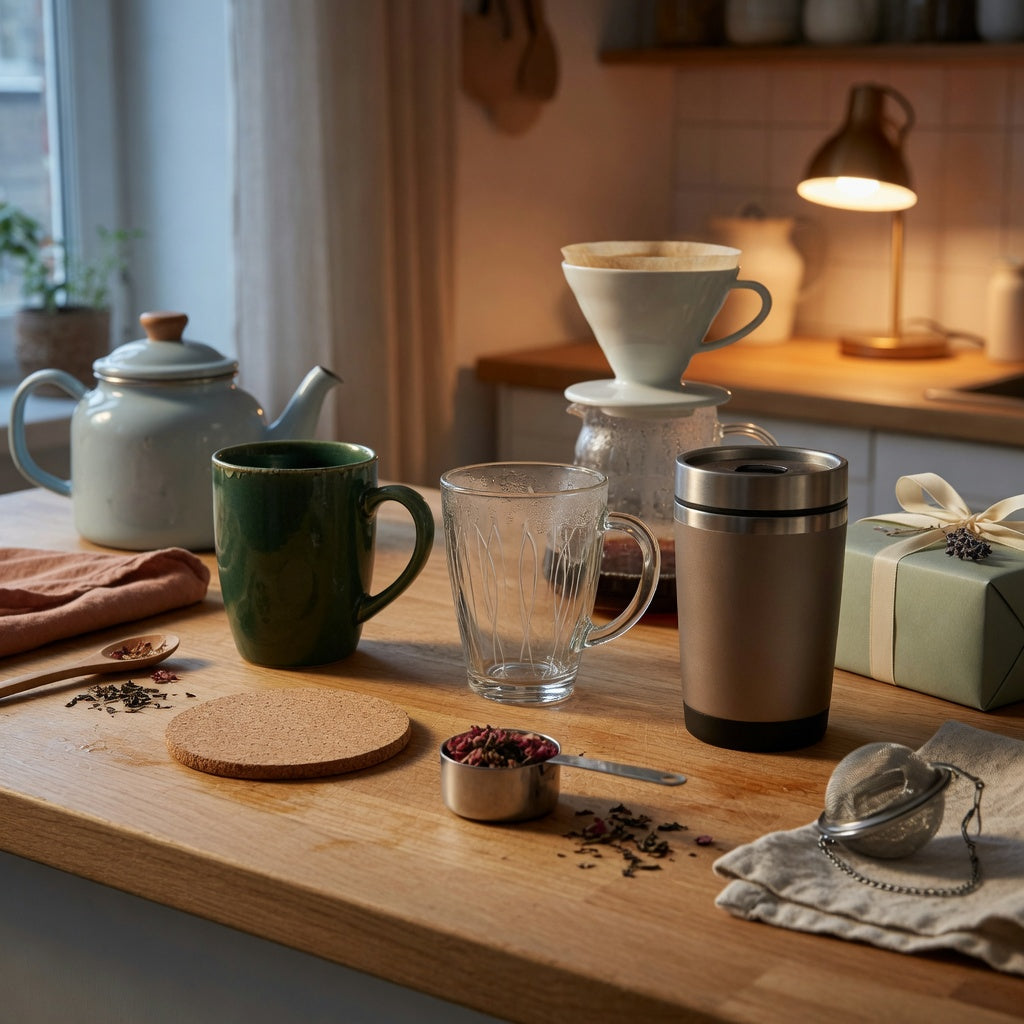
Best Mugs for Coffee and Tea Gifts: Size, Material, Care
Choose a mug gift around the recipient’s actual pour, grip, coffee or tea setup, and care routine. Compare capacity, handle and rim geometry, materials, safety documentation, and single-versus-set ...
Read more
Leave a comment
This site is protected by hCaptcha and the hCaptcha Privacy Policy and Terms of Service apply.