
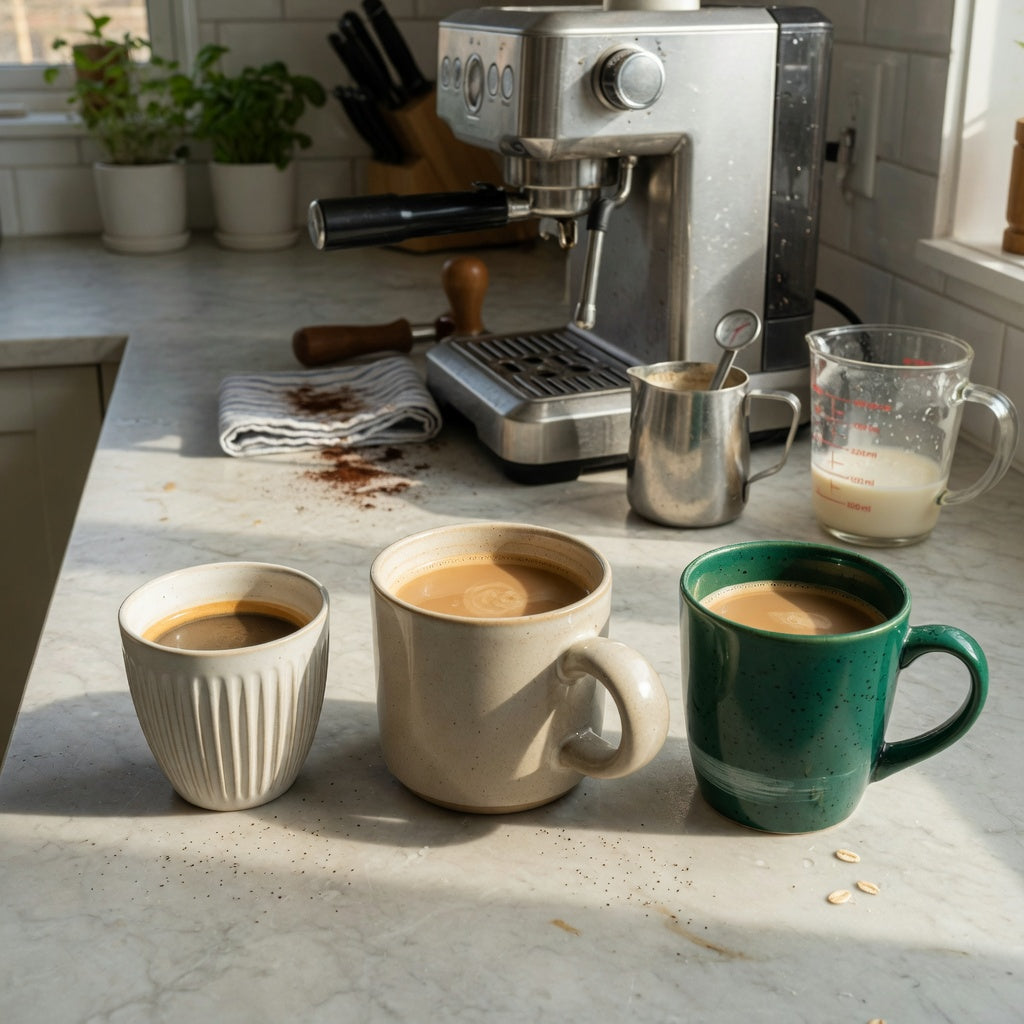
Flat White Cup Home Coffee Station Product Shortlist Guide: 3 Sizes
Reading time: about 11 minutes
A cup can look compact online and still create problems beside an espresso machine. The handle may need more side clearance than expected, the finished drink may sit too close to the rim, or the cup may not fit the shelf where the rest of the coffee gear lives. This flat white cup home coffee station product shortlist guide starts with the details that can be verified before ordering: three capacities, the way each capacity suits a different routine, and the measurements that still need checking at home.
At CoffeifyMug, we sell cups to shoppers working with real counters, not empty display kitchens. Espresso machines share space with grinders, scales, milk pitchers, knock boxes and drying dishes. That is why our shortlist does not name one universal best cup for flat white drinks. It connects each option to a specific situation and states where that option may fall short.
How to use a flat white cup home coffee station product shortlist guide at your counter
Begin with your finished drink rather than a prescribed cafe ratio. The verified catalog facts for this comparison are straightforward: the Pleated holds 200 ml, the Ball Handle holds 250 ml, and the Emerald holds 270 ml. We do not use those capacities to infer external dimensions, material, dishwasher suitability, microwave suitability or compatibility with a particular appliance.
A simple measuring-jug check gives you a more useful starting point than guessing from photographs:
- Prepare your flat white in the cup you currently use and note the normal fill line.
- After the cup is empty and rinsed, refill it with water to that same line.
- Pour the water into a graduated measuring jug and record the approximate finished volume.
- Compare that number with 200 ml, 250 ml and 270 ml, allowing extra capacity for the carrying margin you prefer.
For example, if your measured fill is approximately 170 ml, the nominal unused capacity would be about 30 ml in the Pleated, 80 ml in the Ball Handle and 100 ml in the Emerald. That is only a capacity comparison, not a required recipe. It also does not tell you the vertical distance between the drink and rim because cup shape affects that freeboard. Still, the calculation quickly removes options that are too close to your usual fill volume.
Pleated 200 ml: is your usual pour compact and repeatable?
The Pleated 200 ml coffee and tea cup is the lowest-capacity option in this three-cup shortlist. Put it first if your measuring-jug test stays comfortably below 200 ml and you want a cup dedicated mainly to shorter drinks. A consistent single-person routine makes that decision easier because the required capacity does not change from one user to the next.
Choose it for: a measured pour that leaves a deliberate buffer below 200 ml, a station where the cup is used for compact hot drinks, or a buyer who prefers the Pleated design and does not need one vessel to cover several drink sizes.
Skip it for: recipes that already approach 200 ml, drinks with extra milk or syrup, or iced coffee. Ice occupies part of the available volume, so a cup that works for a short hot drink can become restrictive once cubes and additional liquid are added.
Do not assume that the lowest capacity automatically means the smallest external footprint. Capacity describes internal volume, not width, height or handle clearance. If counter space is the reason you are considering this option, compare the product dimensions shown on the live page with the space beside your machine before ordering.
Ball Handle 250 ml: does a middle capacity suit a shared station?
The Ball Handle 250 ml coffee and tea mug adds 50 ml of nominal capacity over the Pleated and sits 20 ml below the Emerald. That middle position is useful in a household where one person makes a shorter drink and another adds more milk, but neither needs the largest option in this group.
Choose it for: a shared station with modest variation between recipes, a measured finished drink that is too close to the 200 ml limit, or a buyer who specifically likes the ball-handle design. The additional 50 ml over the Pleated provides more potential headroom without moving all the way to 270 ml.
Skip it for: a tightly measured compact drink that looks and feels better in a lower-capacity cup, or a station where the handle position could interfere with nearby tools. A distinctive handle can be part of the appeal, but it also deserves a side-clearance check against the grinder, milk pitcher and cupboard shelf.
For a gift, 250 ml may appear to be the easy compromise, but capacity alone does not settle the choice. Check what the recipient normally drinks and where cups are stored. Someone who makes iced drinks or longer coffee may find 250 ml limiting, while someone who prefers very short pours may not use the extra room.
Emerald 270 ml: will 20 ml more make a practical difference?
The Emerald 270 ml coffee and tea mug has the largest verified capacity in this shortlist. It holds 70 ml more than the Pleated and 20 ml more than the Ball Handle. Choose it when your usual recipe varies, when you deliberately want the greatest potential headroom of these three options, or when the cup may also be used for a somewhat longer coffee or tea.
Choose it for: finished drinks that exceed the comfortable range of a 200 ml cup, households that prefer a little more carrying margin, or a station where one cup needs to cover several non-iced drink volumes.
Skip it for: a consistently small flat white, a storage area with uncertain height or width, or a buyer expecting a large iced-coffee vessel. At 270 ml, it is the largest option here, but it is still a compact capacity compared with many general-purpose mugs. Ice, milk and flavor additions can use that volume quickly.
The 20 ml difference between the Ball Handle and Emerald is relatively narrow. If both capacities exceed your measured drink by a comfortable amount, external dimensions, handle preference, care instructions and visual style may be more useful deciding factors than capacity alone.
Capacity and potential headroom across the three cups
This table keeps the verified numbers separate from the fit judgments you still need to make. Our flat white cup home coffee station product shortlist guide uses capacity as the first filter, not as proof of appliance clearance or a particular drinking experience.
| Option | Verified capacity | Capacity difference | Situation to shortlist it | Reason to skip it |
|---|---|---|---|---|
| Pleated | 200 ml | Baseline | Your repeatable finished pour sits comfortably below 200 ml | Your recipe, add-ins or ice leave little unused capacity |
| Ball Handle | 250 ml | 50 ml above Pleated | A shared station needs moderate flexibility and you like the handle design | You need maximum capacity or have unresolved side-clearance concerns |
| Emerald | 270 ml | 70 ml above Pleated and 20 ml above Ball Handle | You want the largest nominal capacity of these three | Your drinks stay compact or the cup must fit a tightly measured space |
If none of those situations matches your routine, do not force the decision. A larger vessel may suit iced drinks, long coffees or generous tea servings better. The unique coffee mugs collection is the practical next stop when you need a different capacity or handle style rather than one of these three compact options.
Machine clearance, shelf height and handle space: what must you measure?
A capacity label cannot confirm that a cup fits beneath an espresso outlet. Machines differ, drip trays move, and accessories can reduce the usable space. Measure from the surface where the cup stands to the lowest fixed point above it. Then compare that clearance with the external cup height stated on the current product page. Leave enough room to place and remove the cup without tilting it into the outlet.
Take three more measurements around the station:
- Working width: measure the open area beside the machine after the milk pitcher, scale and other daily tools are in their normal positions.
- Shelf opening: record both height and depth. Internal capacity does not reveal whether a cup fits under a low shelf.
- Handle clearance: check the side space available when the cup faces the direction you naturally grab it.
- Storage arrangement: measure the current cup rather than assuming the new one will stack or nest with an existing set.
These checks matter most for the Ball Handle because handle shape is an explicit part of that product choice, but they apply to all three. We would not claim that any option fits most home machines without the relevant external dimensions and a measurement from the buyer's own setup.
Care instructions and unboxing checks: what should you verify first?
Material and care claims should come from the live product listing, packaging or instructions supplied with the item. Do not assume a cup is dishwasher-safe or microwave-safe simply because another cup with a similar appearance is. If the care guidance changes or two sources conflict, follow the instructions supplied with the specific item and ask our store before using an appliance.
At unboxing, inspect the cup in strong side light before the first drink. Common drinkware issues are easiest to spot around the rim, the handle attachment and the base.
- Run a visual check around the rim for chips or sharp irregularities.
- Look for hairline cracks across the body and around any handle connection.
- Place the empty cup on a flat, dry counter and check that it sits steadily.
- Wash it according to the stated care instructions before first use.
- If hand-washing is required or preferred, use a nonabrasive sponge and keep the cup from striking metal utensils or neighboring drinkware in the sink.
- Let cups dry before close stacking so rims and handles are not pressed together while being moved.
A visibly chipped or cracked cup should not be used for hot drinks. For gift unboxings, perform the same inspection before discarding protective packaging so any issue can be documented clearly.
Which cup belongs on your final product shortlist?
Use these choose-or-skip rules after measuring your normal drink and available space:
- Shortlist the Pleated 200 ml if your finished volume stays comfortably below 200 ml and you do not need room for ice or frequent additions.
- Shortlist the Ball Handle 250 ml if two routines share the station, the 50 ml increase over the Pleated is useful, and the handle works with your available side clearance.
- Shortlist the Emerald 270 ml if you want the greatest nominal capacity in this group and your shelf and machine measurements support it.
- Pause the purchase if external dimensions, material or care instructions are essential but not confirmed on the current listing.
- Move to the broader collection if all three capacities are too compact for your usual iced coffee, long drink or tea serving.
This approach keeps style in the decision without letting appearance override practical fit. It also prevents a common mistake: choosing the largest capacity automatically, even though a smaller measured drink and limited storage point toward a different option.
Frequently asked questions
What size cup is best for a flat white at home?
There is no required capacity that suits every home recipe. Measure your normal finished drink, then choose a cup that leaves the unused capacity you prefer: 200 ml for a compact and repeatable pour, 250 ml for moderate flexibility, or 270 ml for the largest option in this shortlist.
Does a 200 ml flat white coffee cup leave enough headroom?
It can if your finished drink is comfortably below 200 ml. Subtract your measured drink volume from 200 ml to estimate unused capacity, but remember that vertical freeboard also depends on the cup's shape and cannot be calculated from capacity alone.
Will these cups fit beneath my home espresso machine?
Capacity does not establish appliance compatibility. Measure the vertical distance from the cup platform or drip tray to the lowest outlet, then compare it with the external height on the live product page. Check removal space as well as static clearance.
Which details should I compare before ordering a flat white cup?
This flat white cup home coffee station product shortlist guide compares verified capacities and scenario fit first. Before ordering, also confirm external dimensions, handle clearance, material and care instructions on the current listing because those details cannot be inferred from a 200 ml, 250 ml or 270 ml label.
Can I put these cups in a dishwasher or microwave?
Use a dishwasher or microwave only when the specific product listing or supplied care instructions say it is permitted. Similar-looking drinkware can have different materials, finishes and care limits, so a general category assumption is not reliable.
Make the decision with one final counter check: measure your usual fill line, record machine and shelf clearance, and decide how much spare capacity you genuinely use. Then compare the available unique coffee mugs and choose the option that keeps the whole station workable, not merely the cup that looks best on its own.
More from our blog
Read more
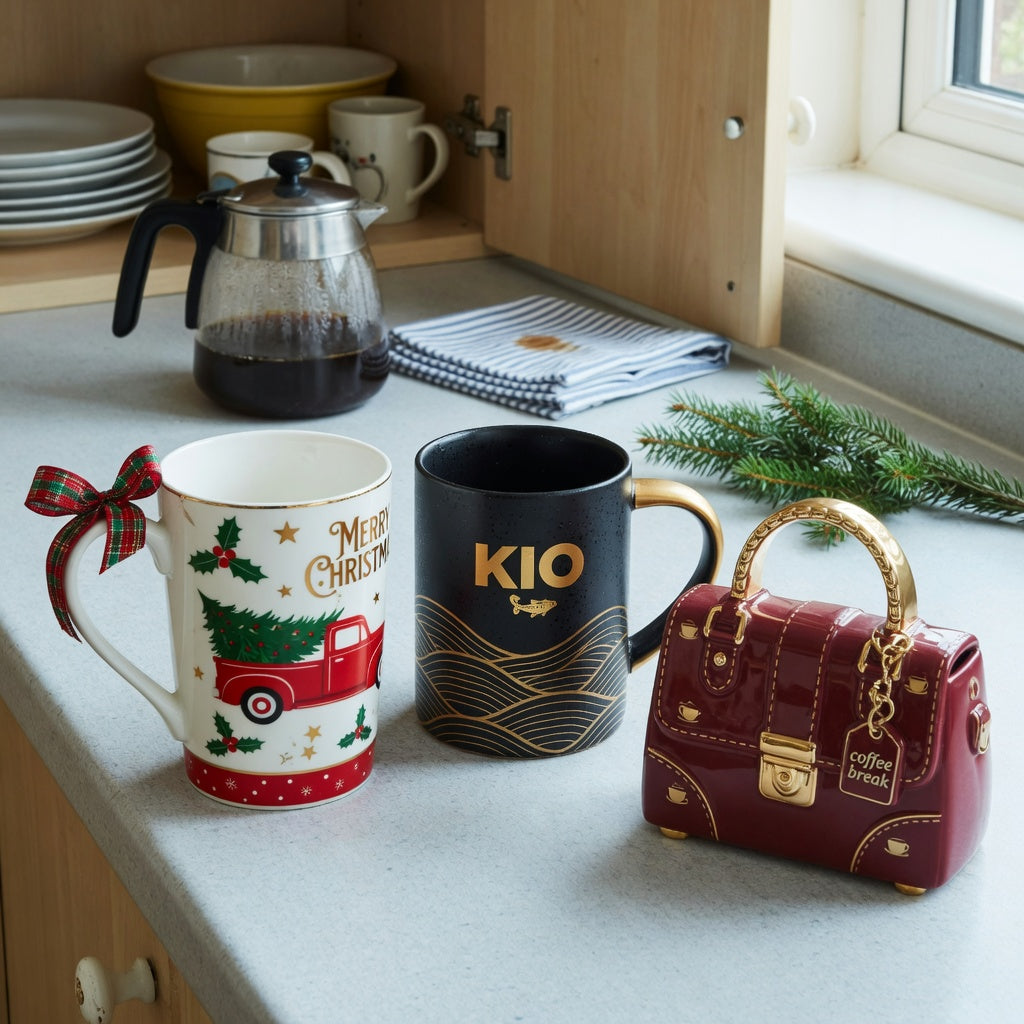
Unique Christmas Coffee Mugs Gift Choice Product Shortlist Guide
Compare three distinctive coffee and tea mugs by recipient routine, seasonal style, cupboard space, and care expectations, with a clear reason to choose or skip each design.
Read more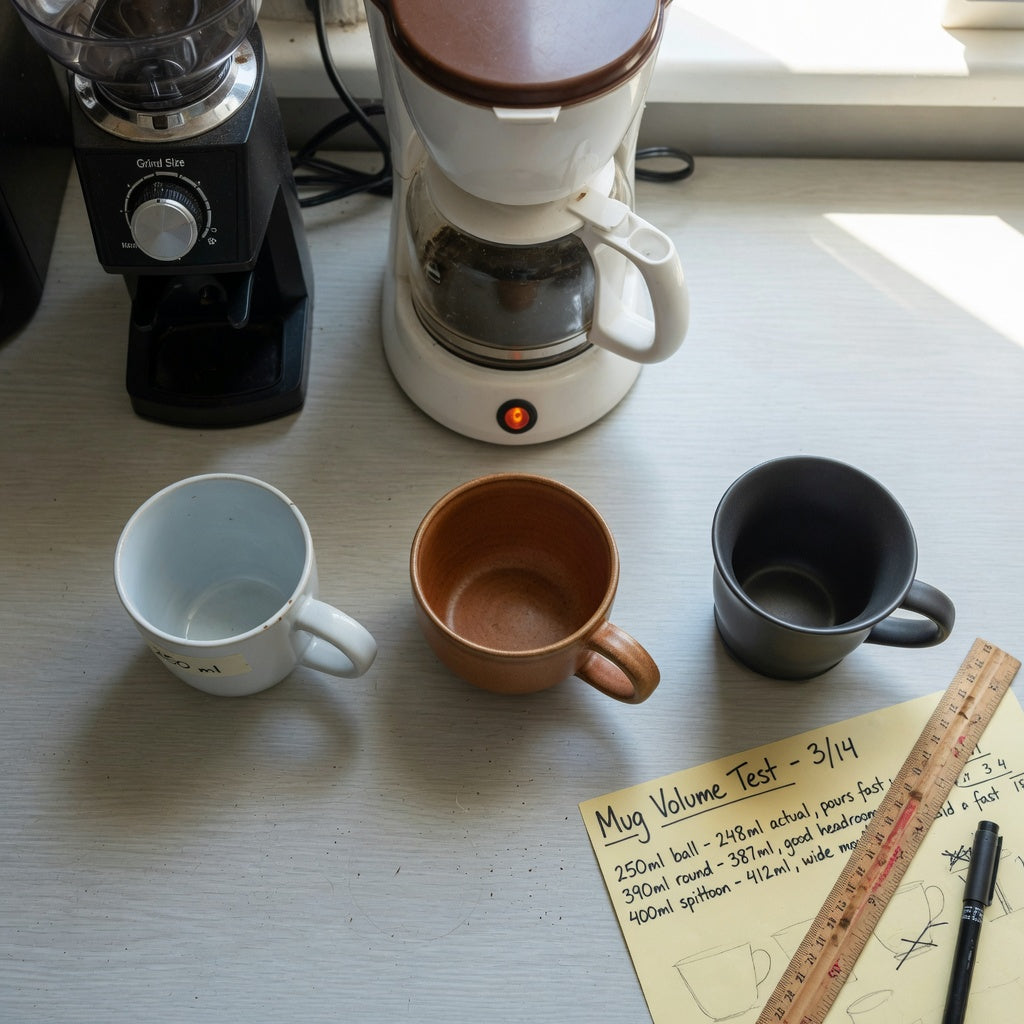
Loose Leaf Tea Mug Home Coffee Station Product Shortlist Guide: 3 Picks
Compare three drinkware-only mugs by listed capacity, the Ball Handle mug's listed 11.2 cm diameter, and visible opening. Each pick includes a reason to choose it, a reason to skip it, and the brew...
Read more
Leave a comment
This site is protected by hCaptcha and the hCaptcha Privacy Policy and Terms of Service apply.