
Your flat white cup morning routine practical purchase checklist
Reading time: about 9 minutes
At 7:10 a.m., a cup that looked right online can become awkward for one ordinary reason: your usual coffee-and-milk pour sits near the rim, and you have thirty seconds to carry it past a laptop, a staircase, or a school bag. This flat white cup morning routine practical purchase checklist starts with that real morning, not with a claimed café rule.
In our store, we find that shoppers often compare style first and discover capacity friction later. The smallest current reference is the Pleated 200 ml Coffee Tea Cup. If your normal drink is already larger than 270 ml, browse the unique coffee mugs collection early instead of forcing a compact option to fit. For the three products discussed here, we can verify capacity; we are not claiming a required drink ratio, barista standard, purpose-built geometry, café testing, exact working fill line, or unlisted material and care details.
Your flat white cup morning routine practical purchase checklist
Run these checks in order. They turn a style preference into a decision you can use before the first rushed morning.
- Record your timing. Note whether you drink at the counter, carry the cup to a desk, or leave immediately.
- Measure the finished drink. Include coffee, milk, foam, and anything else that raises the final level.
- Calculate nominal headroom. Subtract your usual finished volume from 200, 250, and 270 ml.
- Allow for the carry route. Stairs, pets, bags, and electronics make extra rim clearance more useful.
- Set your refill tolerance. Decide whether a second kitchen trip is acceptable or consistently irritating.
- Resolve the unknowns. Verify dimensions, material, handle fit, empty weight, and care instructions on the live product page.
How much do you actually pour before 8 a.m.?
Measure the drink you make, not the recipe you intend to make. A simple method avoids transferring a hot beverage: note the fill line on your current cup, then, after the cup is empty and cool, refill it to that line with cool water and pour the water into a metric measuring jug.
- Recreate one normal weekday drink rather than a special weekend version.
- Measure on two or three mornings if your milk or coffee volume varies.
- Use the upper end of your normal range, not an unusually large refill.
- Add any foam or topping that normally reaches above the liquid line to your visual headroom check.
Your planning calculation is simple: listed capacity minus usual finished volume equals nominal headroom. Treat the result as a comparison tool, not a guaranteed safe fill. We have not verified whether each listed number represents brim capacity or a recommended working level.
What do 200, 250, and 270 ml leave above your drink?
The table uses two example pours so you can see the capacity differences without adopting someone else's flat white recipe.
| Current option | Verified listed capacity | Nominal room after 160 ml | Nominal room after 200 ml |
|---|---|---|---|
| Pleated Coffee Tea Cup | 200 ml | 40 ml | 0 ml |
| Ball Handled Coffee Tea Mug | 250 ml | 90 ml | 50 ml |
| Emerald Coffee Tea Mug | 270 ml | 110 ml | 70 ml |
A planned 200 ml drink theoretically reaches the full listed capacity of the Pleated option, leaving no calculated buffer. The Ball Handled mug adds 50 ml over the Pleated capacity, while the Emerald adds 20 ml over the Ball Handled mug. That last difference is useful but modest; it will not solve a major volume mismatch.
For more examples using the same verified sizes, see our 200, 250, or 270 ml flat white cup capacity guide. It provides additional context without turning any size into a universal standard.
How much headroom does your morning carry route need?
A flat white coffee cup used only at the breakfast counter has a different job from one carried upstairs. We cannot prescribe one safe headroom figure for every person, but the route makes the trade-off clear.
- Counter to table: A modest buffer may be enough if the surface is clear and you sit down immediately.
- Kitchen to home office: More headroom may be worth choosing, especially around doors, stairs, pets, and electronics. Our flat white cup guide for desk use covers that routine in more detail.
- Out the door: These verified facts do not establish a sealed lid or insulation. A confirmed travel mug is a better choice for commuting and bag transport.
Judge headroom from the highest normal surface of the drink, not only the measured liquid underneath foam. If you regularly wipe the rim or slow down to prevent spills, the current cup is probably too close to your practical limit.
Does a 20 ml difference change your refill tolerance?
Refill tolerance is about the whole routine: brewing again, returning to the kitchen, or carrying enough on the first trip.
- At a 160 ml finished volume, all three options hold the drink on paper; the decision shifts to headroom, handle preference, and size details.
- At 200 ml, the 250 ml and 270 ml options leave 50 ml and 70 ml of nominal room respectively.
- At 220 ml, those figures fall to 30 ml and 50 ml. The 200 ml option is already below the intended volume.
- Above 270 ml, none of these options offers listed surplus capacity. A genuinely larger vessel is the practical next step.
Moving from 250 ml to 270 ml adds only 20 ml. If your shortfall is larger than that, changing style or capacity range will help more than choosing the largest of these three.
The best cup for flat white use is not automatically the largest one. It is the option that accommodates your measured drink, preferred carrying buffer, and acceptable number of kitchen trips.
What must you verify about handle fit, material, and care?
Capacity is confirmed for this comparison, but capacity cannot tell you how a cup fits beneath a machine, sits in a dishwasher rack, or feels in your hand. We would rather mark those details as unknown than infer them from a product name or photograph.
- Material and finish: Confirm the exact composition and finish on the live listing. Do not assume ceramic, stoneware, or a particular glaze from broad category wording alone.
- External measurements: Check overall height, maximum width including the handle, and base diameter. Measure your shelf and the clearance beneath your coffee machine with the tray or scale in its usual position.
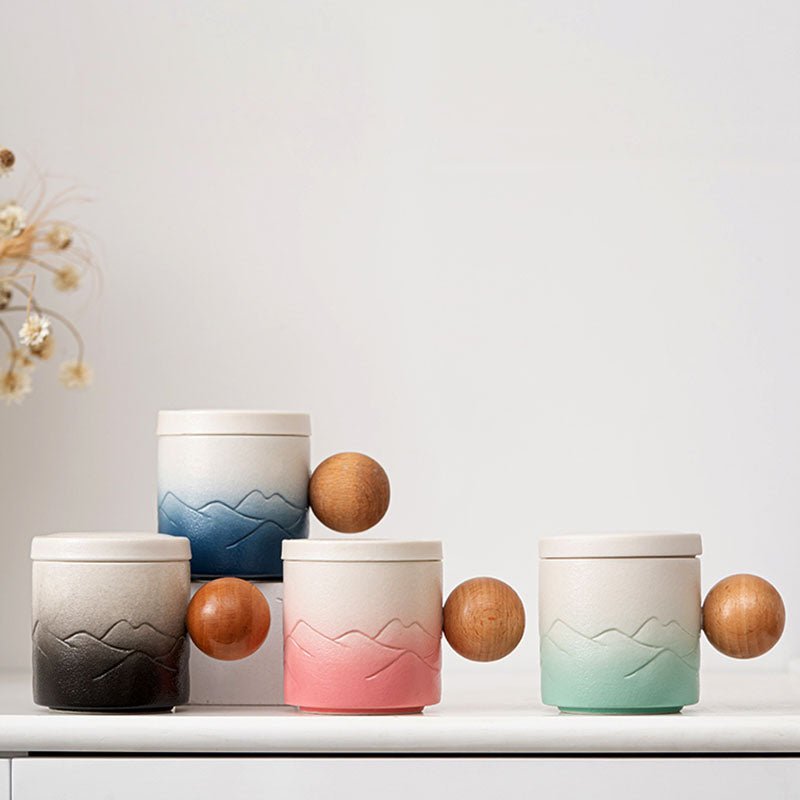
- Handle grip: The Ball Handled mug makes handle style part of the buying decision. Study the current photos for finger clearance and grip orientation; our flat white cup shape and handle comparison explains the practical checks.
- Care status: Look for explicit dishwasher and microwave guidance. If a method is not confirmed, hand-washing with mild dish soap and a soft sponge is the conservative choice.
- Delivery condition: Inspect the rim for chips, the body for hairline cracks, the handle joints for separation, and the base for rocking on a dry, level counter.
Before the first hot drink, run a room-temperature water check over the sink and wash the cup according to its listed instructions. If dishwasher use is approved, position the cup so its handle cannot knock against heavier pieces during a cycle. For a gift, inspect it before the gifting day and keep the protective packaging until you are satisfied with its condition.
Which current option fits each morning pattern?
These volume ranges are planning examples based on simple capacity arithmetic, not prescribed flat white sizes.
A 140–160 ml drink with a short counter-to-table move
The Pleated 200 ml cup is the closest capacity match of the three. A 160 ml drink leaves 40 ml of nominal room, which may suit a controlled pour and short carry. It is not a strong fit if your normal drink approaches 200 ml or you want a generous spill buffer.
A 180–200 ml drink with a regular walk to your desk
The Ball Handled 250 ml mug provides 50–70 ml of nominal headroom across that example range. It is the middle capacity and avoids the zero-buffer problem of placing 200 ml into a listed 200 ml cup. Choose it only after confirming that its distinctive handle works for your grip.
A 200–220 ml drink with low refill tolerance
The Emerald 270 ml mug leaves 50–70 ml of nominal room across that example range and has the largest verified capacity here. Its limitation is equally clear: it adds only 20 ml over the Ball Handled option. If your usual drink is near 270 ml before allowing headroom, move to a larger capacity range.
A tall iced coffee, a large morning tea, or a commute requiring a sealed lid may call for another style entirely. In those cases, use the CoffeifyMug collection to check whether a larger or differently equipped option is currently available.
Frequently asked questions
Is a 200 ml cup large enough for my morning flat white?
It can be if your measured finished drink stays meaningfully below 200 ml and your carry route does not require much extra buffer. A 200 ml drink in a cup listed at 200 ml leaves zero nominal headroom, so the Pleated option would not be our practical recommendation for that fill.
Is 250 ml or 270 ml better for carrying coffee to my desk?
The 270 ml option provides 20 ml more listed capacity. That can add a little headroom, but handle comfort, overall dimensions, and base stability may matter more on a daily desk route. Verify those unconfirmed details on the live pages.
What does the flat white cup morning routine practical purchase checklist include?
Measure your highest normal finished volume, subtract it from each listed capacity, and decide whether the remaining headroom suits your carry route. Then check refill tolerance, machine and shelf clearance, handle fit, material, and care instructions before ordering.
Are these cups confirmed as dishwasher and microwave safe?
The verified facts supplied for this comparison establish capacities, not universal dishwasher or microwave status. Check each current product page for explicit care guidance. If a method is not stated, do not assume compatibility.
What should I buy for iced coffee or a lidded commute?
Ice takes up part of the cup's capacity, and the verified facts here do not establish insulation or spill-resistant lids. A larger tumbler or confirmed travel mug is likely a better category for those routines. Check dimensions, lid type, and care instructions before buying.
Your 30-second checkout decision
- Write down your upper normal finished-drink volume.
- Calculate the nominal headroom in 200, 250, and 270 ml.
- Reject any option that does not suit your carry route or refill tolerance.
- Verify dimensions, material, handle fit, and care on the live listing.
- Inspect the delivered cup before using it with a hot drink or wrapping it as a gift.
If one current option clears all five checks, follow its product link above. If not, return to the unique coffee mugs collection and choose a genuinely different capacity or format rather than asking a compact cup to perform the wrong morning job.
Read more
A cappuccino coffee mug morning routine product shortlist guide
Compare CoffeifyMug's 170 ml, 200 ml, and 270 ml options by morning timing, usual drink volume, and refill tolerance. Each pick includes a clear reason to choose it, skip it, or move to a larger st...
Read more
A flat white cup morning routine product shortlist guide: 200–270 ml
Compare the Pleated 200 ml, Ball Handle 250 ml, and Emerald 270 ml against your measured morning drink, carry time, and refill tolerance. The shortlist gives a clear reason to choose—or skip—each o...
Read more
Leave a comment
This site is protected by hCaptcha and the hCaptcha Privacy Policy and Terms of Service apply.