
Espresso Cup vs Coffee Mug: Which Size Should You Buy?
Reading time: about 10 minutes
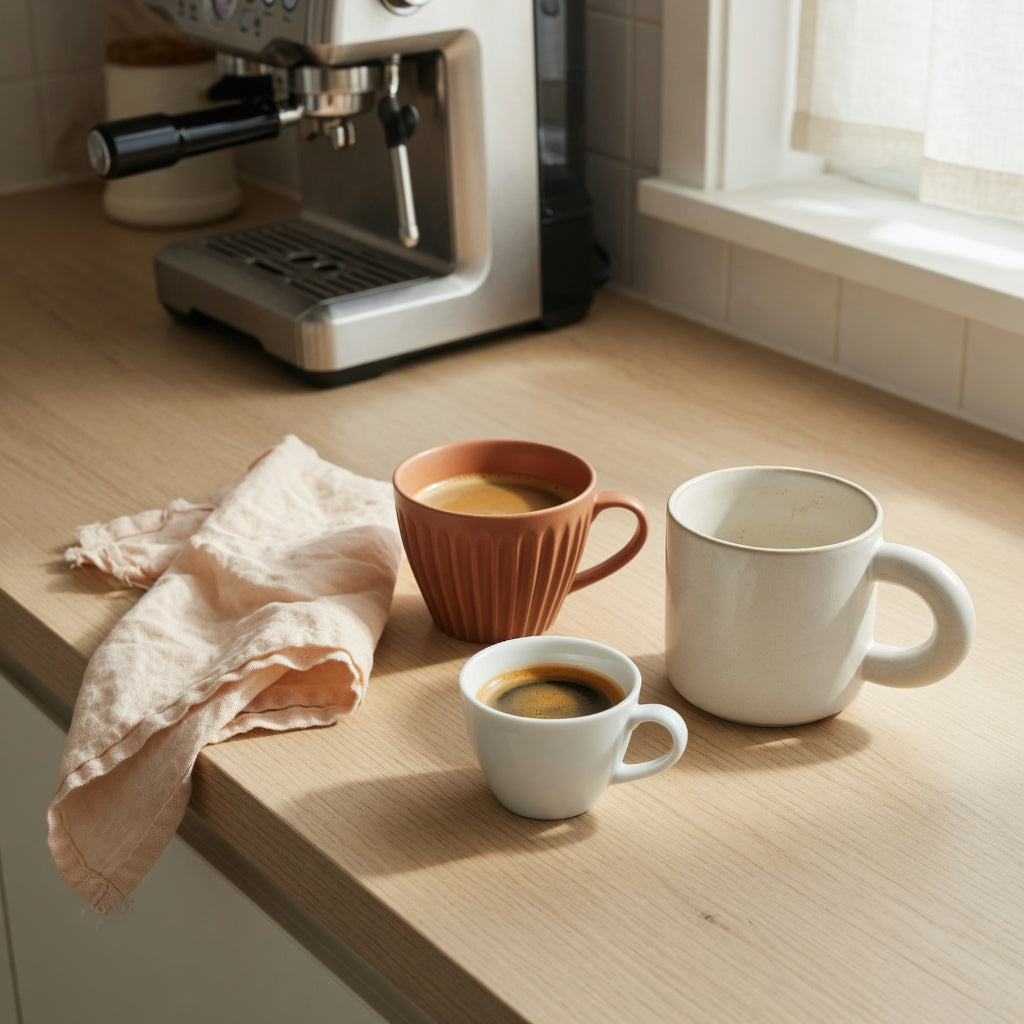
A short espresso can look almost accidental in a tall breakfast mug: a shallow pool at the bottom, a wide ring of exposed ceramic, and far more vessel than drink. That mismatch is the practical core of the espresso cup vs coffee mug decision.
At CoffeifyMug, we ask shoppers to set the product name aside and start with three facts: finished drink volume, opening shape, and where the cup will spend most of its time. A vessel chosen for quick shots at the kitchen counter may be awkward for a slow office coffee, while a generous mug can leave a straight espresso looking undersized.
Espresso cup vs coffee mug: what changes after the pour?
A small espresso cup changes the proportions around the drink; it does not change the extraction. A traditional demitasse holds a concentrated serving in a compact bowl, while a mug provides room for a larger coffee, tea, or milk-based drink.
- Surface area: The same shot spreads more thinly across a wide bowl. Its crema may look shallower, and more of the cup remains exposed.
- Cup temperature: A small amount of hot coffee has to warm every surface it touches. An oversized, cold mug can take noticeable heat from the drink.
- Headspace: A compact cup places your nose closer to the coffee. A tall mug leaves more empty space between the drink and the rim.
- Drinking pace: Espresso is generally served for a few prompt sips. A mug is more practical for a drink that will sit beside a keyboard, book, or breakfast plate.
A smaller cup is not a cure for an unpleasant shot. It cannot correct stale beans, poor extraction, or overheated milk. It is also a poor choice for a large drip coffee or a drink carrying plenty of foam. The useful question is not which vessel is more authentic; it is which one matches the amount and style of coffee you actually prepare.
Capacity check: is 170 ml still an espresso cup?
If you search for a coffee cup for espresso, similar product names can hide very different capacities. A traditional single-shot demitasse is commonly around 60 ml, although makers and coffee traditions vary. The Retro Coffee Tea Cup is listed at 170 ml, the Pleated Coffee Tea Cup at 200 ml, and the Ball Handled Coffee Tea Mug at 250 ml.
All three CoffeifyMug capacities are larger than a traditional single-shot demitasse. They can still hold espresso, but they provide a roomier presentation and more space for added milk or water.
| Vessel | Capacity | Practical match | Main trade-off |
|---|---|---|---|
| Traditional demitasse | Often around 60 ml; sizes vary | Straight espresso with an almost-full appearance | Little room for milk, water, or a larger serving |
| Retro Coffee Tea Cup | 170 ml listed | Short coffee with headroom or a small tea serving | A straight shot will not fill it like a classic demitasse |
| Pleated Coffee Tea Cup | 200 ml listed | Smaller coffee, tea, or a short milk-based drink | Too roomy for a traditional single-shot presentation |
| Ball Handled Coffee Tea Mug | 250 ml listed | Everyday coffee or tea and longer espresso-based drinks | A straight espresso will sit low in the vessel |
Listed capacity is not a target fill line. A drink carried from the kitchen to a desk needs headroom, and milk or foam can use the remaining space quickly. If visual fullness matters, choose a capacity close to your finished drink volume. If spill resistance and flexibility matter more, leave a larger margin.
Photos can make compact cups look nearly identical in size. Use the listed milliliters first, then compare the visible forms in our unique coffee mugs collection.
Ceramic, glass, and preheating: which variable matters most?
The three CoffeifyMug options discussed here are ceramic. Shoppers often ask if ceramic automatically keeps espresso hotter than glass, but material alone does not settle the question. Wall thickness, total cup mass, starting temperature, opening size, and drink volume all affect how the serving feels by the final sip.
For a short espresso, preheating is a practical step. Add hot water to the ceramic cup, allow the vessel to warm briefly, empty it completely, and then pour the coffee. The emptying step matters: a small amount of forgotten preheating water can noticeably dilute a concentrated serving.
Avoid moving a refrigerator-cold cup directly to very hot liquid. Sudden temperature changes can stress ceramic and glass. Preheating should warm the vessel gradually, not expose it to an extreme jump.
Clear glass lets you see the crema and color layers. Opaque ceramic keeps those details out of view but offers a different rim and hand feel. A thick glass cup may behave differently from a thin ceramic one, so we do not assign a blanket heat-retention or flavor winner. We have not run controlled thermal testing on these products, and we will not attach unsupported performance scores to them.
Rim, bowl, and handle: what will your hand notice?
Capacity does not describe the whole experience. Two 200 ml cups can feel unrelated if one is tall and narrow while the other is broad and shallow. From handling compact ceramic drinkware, these are the details we tell buyers to inspect closely:
- Bowl opening: A narrower opening keeps a small serving visually deeper. A wider opening provides easier access for adding milk and sipping foam, but it makes a straight shot look shallower.
- Rim profile: A thick, rounded rim puts more ceramic against the lip. A finer rim can feel more precise but deserves careful handling and stacking.
- Handle form: A small loop often calls for a pinch grip. A rounded ball handle uses a different grip entirely and may not suit someone expecting room for several fingers.
- External footprint: Capacity does not reveal cup height, width, shelf clearance, or espresso-machine clearance. Never assume machine fit from milliliters alone.
The Pleated cup’s visible ridges add tactile surface to the exterior, but they do not change the coffee itself. The Ball Handled mug has a prominent rounded handle that becomes part of the grip and silhouette. These are meaningful form choices, not claims of certified drink performance.
If a cup must sit beneath an espresso machine, measure the available height and compare it with any dimensions provided on the current listing. If dimensions are not shown, do not treat capacity as proof that the cup will fit beneath the spouts.
Which CoffeifyMug capacity fits your actual routine?
For most households, the espresso cup vs coffee mug choice becomes easier once the daily drink is named precisely. Straight espresso, espresso with a little milk, tea, and a slow desk coffee place different demands on the same vessel.
- You drink straight shots and want classic demitasse proportions. The current 170 ml, 200 ml, and 250 ml options are likely larger than you want. A purpose-made, traditional single-shot demitasse is the more honest recommendation.
- You want the smallest current CoffeifyMug option, with room for a short coffee plus milk or water. The 170 ml Retro Coffee Tea Cup is the closest match by listed capacity. It remains roomier than a traditional demitasse.
- You alternate between smaller coffee and tea and prefer a ridged exterior. The 200 ml Pleated Coffee Tea Cup adds capacity and a visible pleated form. It is not intended to create the almost-full look of a single-shot cup.
- You want a compact daily mug rather than a demitasse. The 250 ml Ball Handled Coffee Tea Mug sits firmly on the mug side of the comparison. Its listed volume is better suited to coffee or tea drinkers who want more than a short shot.
- You are buying a gift and do not know the recipient’s exact drink. Ask whether they use a straight espresso, add milk, or keep a mug at their desk. Then compare capacities and visible handle forms in the CoffeifyMug unique mug collection.
These compact ceramic vessels are not strong matches for large iced coffees packed with cubes, oversized lattes, or travel use requiring a lid. Do not assume a saucer, lid, spoon, or other accessory is included unless the current listing explicitly says so.
Before adding a cup to your cart, check five points:
- Estimate the finished drink volume, including milk, water, foam, or ice.
- Decide if you prefer an almost-full presentation or carrying headroom.
- Choose between a quick kitchen-counter serving and a slower desk drink.
- Check the visible handle against the way you naturally grip a cup.
- Confirm external dimensions and care instructions on the current listing where available.
How should ceramic cups be checked and cared for?
A cup deserves a quick inspection before its first drink, especially after shipping or before a gift is rewrapped. Our team pays attention to areas that can be missed under soft room lighting.
- Inspect the rim under angled light. Look for a sharp chip or structural crack. Do not use a vessel with damage at the drinking edge.
- Check the handle junction. Examine both points where the handle meets the cup body. A hairline crack there can become more noticeable after regular lifting and washing.
- Set the cup on a flat, dry counter. Confirm that it sits as expected and does not rock enough to be distracting at a desk or table.
- Read the listing’s care guidance. Ceramic material alone does not prove dishwasher or microwave suitability. Do not assume either unless the product information confirms it.
- Prevent cup-on-cup impacts. If dishwasher use is permitted, leave space so rims and handles do not knock against other pieces. For storage, avoid tight rim-to-rim nesting that puts pressure on the drinking edge.
If handwashing is required or preferred, use a soft sponge rather than an aggressive abrasive. Let a cold vessel warm gradually before adding very hot liquid. These habits are less exciting than choosing a color or shape, but they protect the rim, handle, and visible finish through repeated use.
Frequently asked questions
Why use a small cup for espresso instead of a coffee mug?
A small cup keeps a concentrated serving visually compact and places the rim closer to the drink. It also reduces the amount of cold, empty vessel surrounding the espresso. It cannot improve a poorly extracted shot, but it can make a good one more pleasant to serve and sip promptly.
Espresso cup vs coffee mug: what size works for a double shot?
Double-shot volume varies by recipe, so there is no single perfect capacity. A traditional demitasse gives a fuller appearance for straight espresso, while a 170 ml cup provides more headroom for water or milk. A 250 ml mug is the better choice only if you regularly prepare a longer drink.
Is a 170 ml cup too large for espresso?
It is larger than a traditional single-shot demitasse, and a straight shot will sit lower in it. It can still be practical for a short espresso-based drink with added milk or water. Choose a smaller demitasse if the classic nearly-full presentation is your priority.
Does ceramic keep espresso hotter than glass?
Not in every comparison. Wall thickness, vessel mass, starting temperature, and opening shape matter alongside material. Preheating a ceramic cup can reduce the immediate temperature drop, but we do not claim that these products outperform every glass cup.
Will a 170 ml, 200 ml, or 250 ml cup fit under my espresso machine?
Capacity alone cannot confirm equipment fit. Measure the clearance from the drip tray to the spouts, then compare it with published cup dimensions if the current listing provides them. CoffeifyMug does not claim universal compatibility with espresso machines.
Your next step: write down the finished volume of the drink you make most often. If it falls in the compact 170–250 ml range, compare the listed capacities and visible forms in our unique coffee mugs collection. If you want a traditional single-shot demitasse, shop specifically for that smaller format rather than compromising on a roomier cup.
More from our blog
Read more

Is the Morning & Night mug a practical gift? A 440 ml fit check
Practicality depends on the recipient's real cup size, grip, storage, and drinking routine. This guide checks the 440 ml ceramic mug against those details and shows who should choose a different fo...
Read more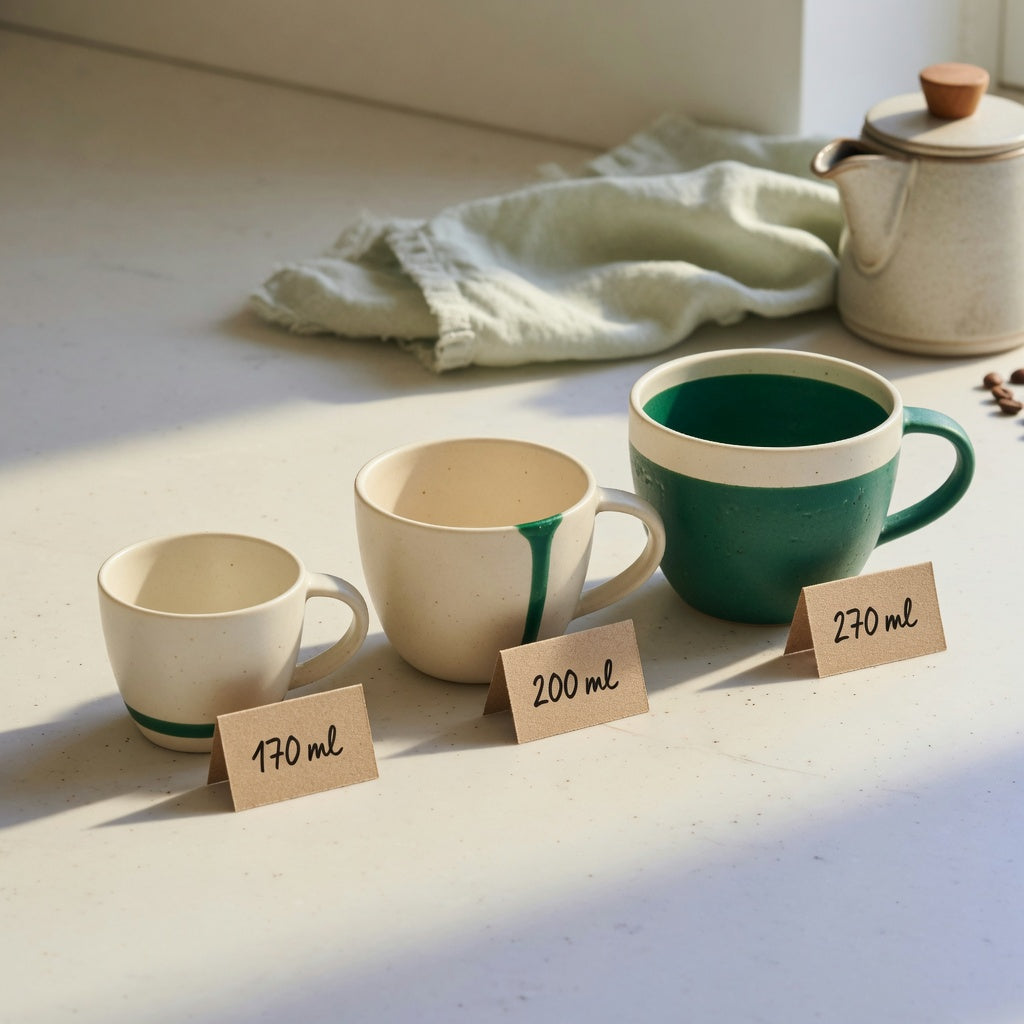
Ceramic Cappuccino Mugs: Compare 170, 200, and 270 ml
Compare 170 ml, 200 ml, and 270 ml options by measured drink volume, handle and cabinet fit, glaze claims, and care-label evidence. We also flag the routines these compact cups do not suit, from ic...
Read more
Leave a comment
This site is protected by hCaptcha and the hCaptcha Privacy Policy and Terms of Service apply.