
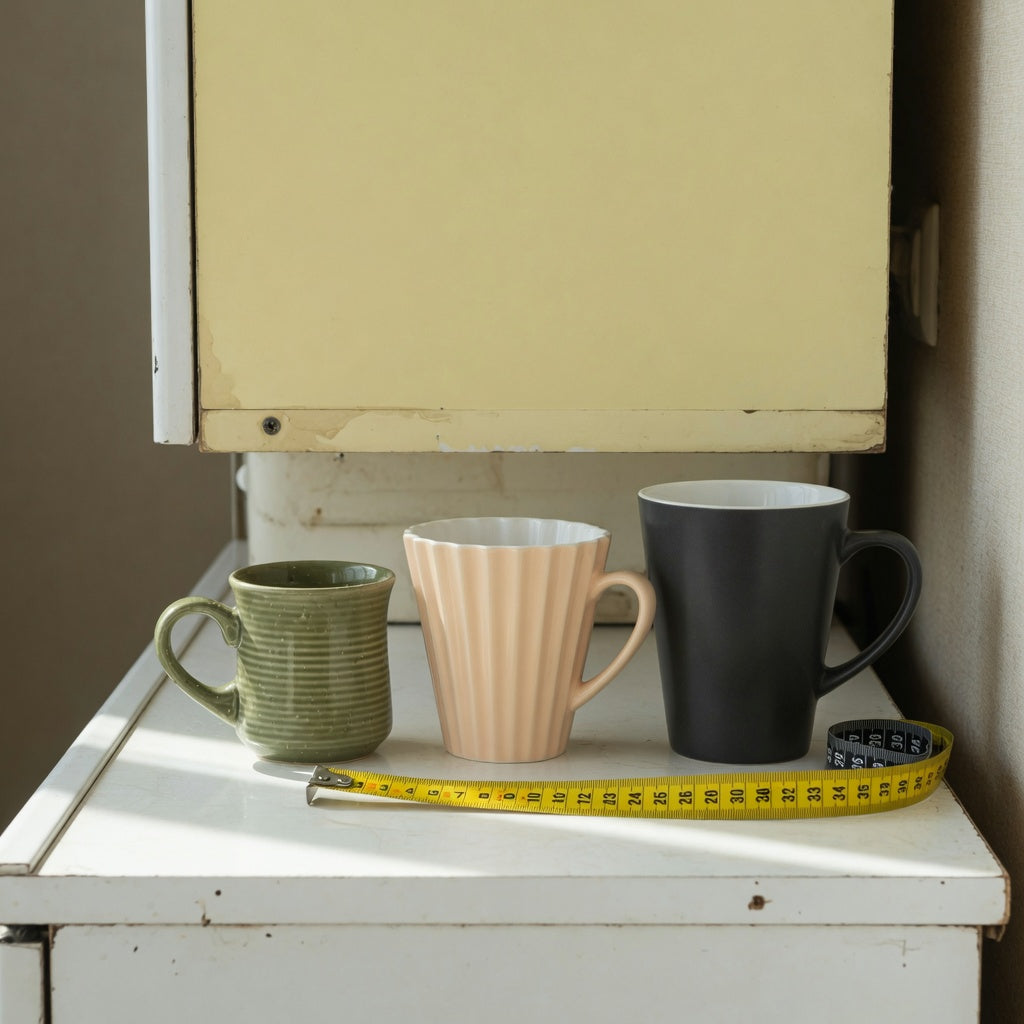
Eggnog Mug Compact Kitchen Product Shortlist Guide: 3 Picks
Reading time: about 9 minutes
A narrow shelf can turn a good-looking mug into a daily nuisance. The handle catches the cabinet door, the rim crowds the cup beside it, or the mug occupies the only clear landing spot on the counter. This eggnog mug compact kitchen product shortlist guide keeps the decision grounded in the verified catalog measurements available for these three options: Retro at 170 ml, Pleated at 200 ml, and Emerald at 270 ml.
In our store, shoppers often describe their space in practical terms: one open slot beside the plates, a cabinet door that closes close to the handles, or a counter already shared with a kettle and dish rack. We use those details to narrow the serving size and visible shape. We do not convert capacity into assumed external dimensions. A 170 ml cup holds less than a 270 ml mug, but that fact alone does not prove it is shorter, narrower, or easier to stack.
What do 170 ml, 200 ml, and 270 ml change?
Capacity answers one useful question: how much eggnog you intend to serve at a time. It does not answer cabinet clearance. Before choosing, pour each listed amount into a mug you already own. That quick test makes the difference between 170 ml and 270 ml much easier to judge than a product photo alone.
| Option | Verified capacity | Best match | Reason to skip |
|---|---|---|---|
| Retro | 170 ml | A modest, measured serving | You regularly want more volume and dislike refilling |
| Pleated | 200 ml | A middle-ground serving with a visibly pleated style | You want either the lowest or highest capacity in the shortlist |
| Emerald | 270 ml | A fuller serving from one mug | Your usual portion is small or you have not verified physical clearance |
The difference between each step is meaningful without being dramatic. Retro holds 30 ml less than Pleated. Pleated holds 70 ml less than Emerald. Retro and Emerald are 100 ml apart. Those are serving comparisons only; none establishes the height, base width, handle projection, or stackability of the mug.
Use this eggnog mug compact kitchen product shortlist guide by scenario
The strongest shortlist starts with the amount you actually finish, then uses the product images to screen for shape conflicts. Each option below has a clear reason to choose it and an equally clear reason to leave it out.
Retro 170 ml: for a modest single serving
If 170 ml matches the amount you normally pour, the Retro coffee tea cup is the most direct option. It has the lowest verified capacity in this three-product group, making it suitable for someone who prefers a measured serving and does not want excess drink left in the mug. Review the visible retro cup outline and handle against the space you have available. Skip it if 170 ml looks too small in your at-home pour test or if frequent refills would be irritating.
Pleated 200 ml: for the middle ground and a textured look
If 170 ml feels restrictive but 270 ml is more than you usually serve, the Pleated coffee tea cup provides a 200 ml midpoint. Its visible pleated exterior is also the clearest stylistic difference in this shortlist. Choose it if that textured profile suits your other drinkware and your preferred serving lands near 200 ml. Skip it if you prefer a smooth-looking body or if your cabinet requires exact external measurements that the capacity cannot provide.
Emerald 270 ml: for the fullest serving on this list
If your pour test shows that 270 ml is the amount you are likely to finish, consider the Emerald coffee tea mug. It has the highest verified capacity among these three candidates, so it is the logical pick for a fuller serving. That does not automatically make it physically larger in every direction, and we would not promise compact cabinet fit from capacity alone. Skip it if you prefer a modest portion or cannot confirm that its visible mug profile works with your shelf and neighboring cups.
How can you check low shelves without external mug dimensions?
Compact-kitchen fit depends on the usable space, not the nominal size of the cabinet. Fixed shelf edges, door hardware, nearby bowls, and outward-facing handles can all reduce the opening. We recommend checking the exact storage position rather than measuring an empty cabinet in general.
- Measure the narrowest part of the shelf opening, the usable shelf depth with the door closed, and the width between neighboring items.
- Place a mug you already own in that position. Note where its rim, body, base, and handle come closest to the cabinet or other drinkware.
- Compare that known mug with the product photographs. Look specifically at handle projection, rim flare, body taper, and the area where the base meets the shelf.
- Plan to store the new mug upright unless the current product listing explicitly confirms nesting or stackability. A similar-looking cup is not proof that two mugs can be stacked securely.
- Check the counter landing zone below the cabinet. A mug may fit on the shelf yet still feel awkward if a kettle, appliance, or drying rack blocks the space where you set it down.
Capacity narrows the serving choice. Your own shelf measurements decide the physical fit.
If every millimeter matters, do not buy from the capacity label alone. Product photos help with shape comparison, but they are not scale drawings. An option with published external dimensions would suit that situation better.
Which visible shape details matter on a crowded counter?
We focus on four parts of a mug silhouette when a shopper describes a tight shelf. These details can affect daily placement even when two mugs hold a similar amount.
- Handle projection: A handle can consume side clearance, meet the cabinet door, or force the mug to face one direction. Judge only what is clearly visible in the product images.
- Rim profile: An outward-looking rim can sit closer to neighboring cups than the body does. Do not use the base alone to estimate the required shelf width.
- Body and base: A tapered or straight-looking body changes how closely pieces appear able to stand together. Photos can reveal the profile, but not an exact diameter.
- Surface treatment: Pleated styling creates a different visual profile from a smooth-looking mug. We treat that as a design choice and do not claim that texture guarantees better grip or performance.
In our experience, the common mistake is treating a compact serving capacity as proof of compact dimensions. The product pages let you compare visible shape, while your kitchen measurements provide the missing half of the decision.
Who should skip these three compact-kitchen candidates?
A different product style or a listing with more specifications will be more useful in several situations. These three options are not a complete answer for every small kitchen.
- Skip this shortlist if you need confirmed height, width, base diameter, or handle clearance before ordering.
- Choose a purpose-designed stackable style if vertical stacking or nesting is essential. We make no stackability claim for Retro, Pleated, or Emerald.
- Look beyond these three if your preferred serving exceeds 270 ml. Emerald is only the highest-capacity option in this shortlist, not a universal maximum.
- Use a listing with explicit care and material information if dishwasher, microwave, or specific material compatibility is a deciding requirement.
- Do not assume that eggnog, food, a spoon, a saucer, gift packaging, or any other accessory is included. This comparison covers the listed mug or cup only.
The same restraint applies to heat retention and licensed artwork. This article makes no special temperature-performance or licensing claims. Base the purchase on the current product page, the verified capacity, and the visible design.
What changes when the mug is a gift?
A gift buyer usually cannot measure the recipient's cabinet. That makes serving habit more reliable than guessing at shelf fit. The 200 ml Pleated option is the midpoint by capacity, but it is not automatically the safest physical fit because midpoint capacity does not establish midpoint dimensions.
- Choose Retro when the recipient prefers modest servings and the 170 ml capacity is more useful than a fuller pour.
- Choose Pleated when 200 ml suits the serving and the recipient is likely to appreciate its visible pleated styling.
- Choose Emerald when the recipient tends to use a fuller 270 ml serving and has room for the visible mug profile shown on its page.
For any mug purchased online, a basic arrival check is sensible. Inspect the rim for chips, look at both points where the handle meets the body for hairline damage, and place the mug on a flat counter to check that the base sits steadily. Follow only the care directions supplied on the current product page or packaging; do not infer dishwasher or microwave suitability from the mug's appearance.
Frequently asked questions
Which eggnog mug capacity is best for a small kitchen?
Choose by the amount you finish rather than assuming the lowest capacity has the smallest exterior. Retro is 170 ml, Pleated is 200 ml, and Emerald is 270 ml. Pour those amounts into a mug at home, then shortlist the capacity that matches your normal serving.
How does the eggnog mug compact kitchen product shortlist guide judge shelf fit?
It uses verified capacity for serving comparisons and visible product shape for an initial storage screen. It does not claim that milliliters reveal a mug's external height or width. Measure your shelf and compare the product image with a mug that already fits.
Can I assume the Retro 170 ml cup fits the lowest cabinet shelf?
No. It has the lowest capacity in this shortlist, but capacity does not prove that it has the lowest height or narrowest handle. Confirm physical dimensions if the available clearance is exact and cannot tolerate variation.
Is the Pleated 200 ml cup automatically the safest gift choice?
No. It is the middle option by serving capacity and has a visibly pleated style, which may make it a useful compromise for some recipients. It is not a guaranteed middle size externally, so avoid presenting it as the safest shelf fit without measurements.
Can I assume these mugs are dishwasher-safe or include accessories?
No such claims are part of this comparison. Check the current product listing or supplied packaging for care directions and exact product contents. The mug name, image, or eggnog use case should not be treated as proof of dishwasher suitability, bundled accessories, or included food and drink.
Your next step: pour 170 ml, 200 ml, and 270 ml into a mug you already own, eliminate the capacities that do not match your serving, and compare the remaining product images with your measured shelf. If none can be verified against the available space, browse our unique coffee mugs collection and apply the same capacity-and-shape checklist before ordering.
More from our blog
Read more
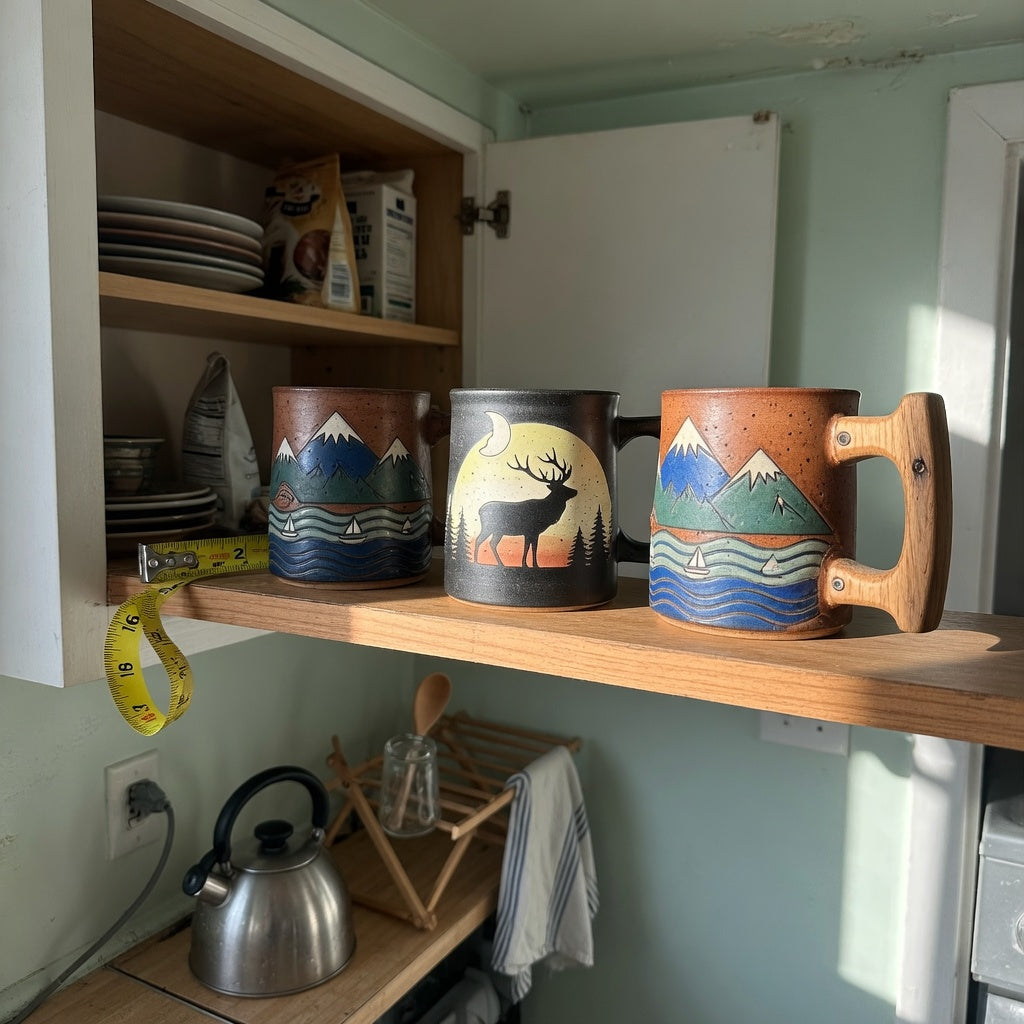
Rustic Ceramic Coffee Mugs Compact Kitchen Product Shortlist Guide
Measure the shelf, counter zone, and handle clearance first. Then compare three CoffeifyMug designs by kitchen scenario, with clear reasons to choose, skip, or keep browsing.
Read more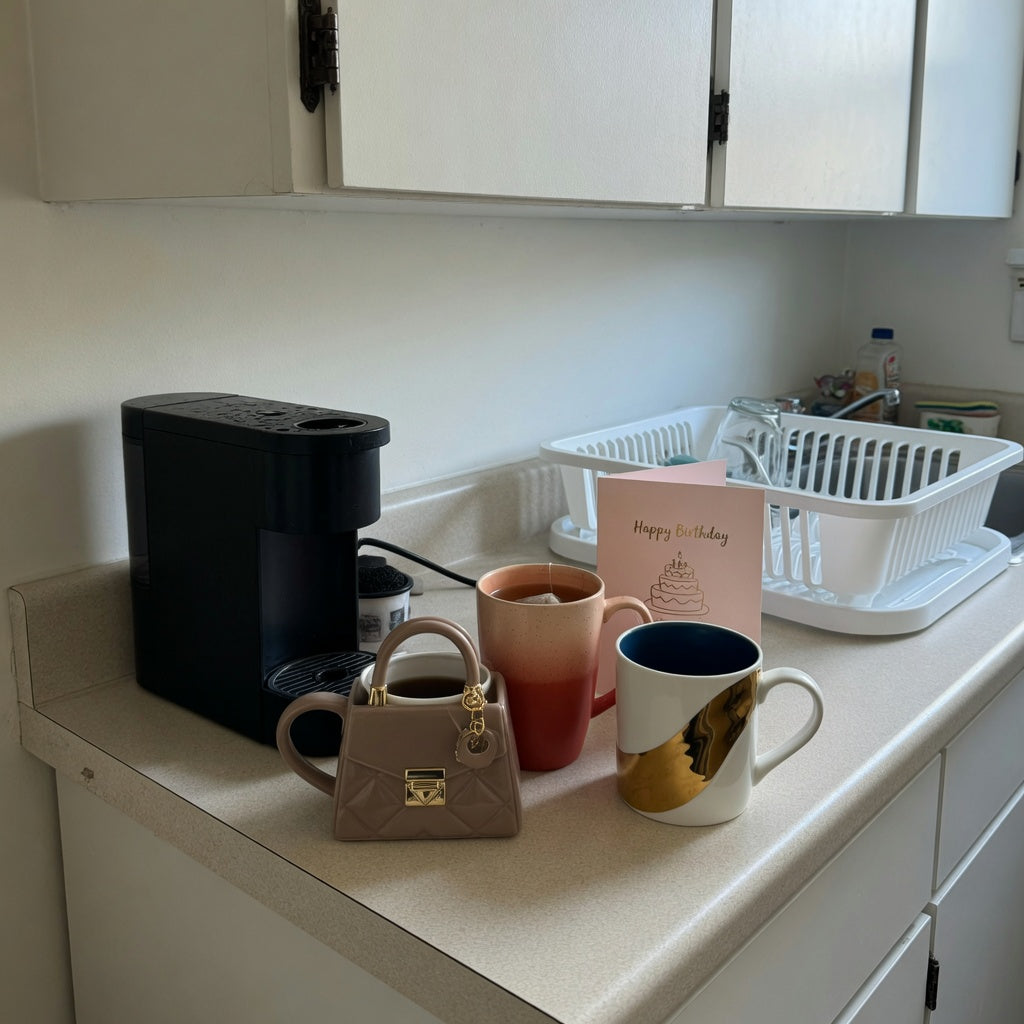
Coffee Mug Birthday Gift Ideas Compact Kitchen Product Shortlist Guide
A practical three-product shortlist for birthday shoppers working around tight counters, shelves, and cabinets. Compare the Handbag, Gradient, and Golden Waves Kio mugs with clear reasons to choose...
Read more
Leave a comment
This site is protected by hCaptcha and the hCaptcha Privacy Policy and Terms of Service apply.